
mRNA Therapy
mRNA therapy enables transient, programmable protein expression for vaccination, protein replacement, genome editing, cancer immunotherapy, and regenerative medicine without permanently altering genomic DNA. Therapeutic performance depends on coordinated optimization of the coding sequence, untranslated regions, poly(A) tail, nucleoside modifications, purification, formulation, and delivery route. Candidates must also be evaluated for RNA stability, translation efficiency, expression duration, biodistribution, innate immune activation, and functional activity.
Introduction
mRNA therapy is a non-viral gene expression technology that delivers synthetic, in vitro-transcribed messenger RNA into target cells to temporarily produce functional proteins or antigens without integrating into or permanently altering host genomic DNA.
Why mRNA Therapy Has Become a Platform Modality
mRNA therapy is best understood as a programmable expression platform rather than a single product type. The same basic logic can be adapted for vaccination, protein replacement, immune modulation, cell engineering, genome editing enzyme delivery, or transient expression of regulatory proteins. Its strength is speed and flexibility. Its constraints are delivery, stability, innate immune activation, translation efficiency, and the short-lived nature of RNA and expressed protein.
- The payload is defined by sequence, but performance depends on UTRs, cap structure, nucleoside modification, poly(A) length, and purity.
- The delivery vehicle determines which tissues and cells are exposed to the RNA.
- Transient expression can be an advantage for immune or editing applications, but a limitation for chronic protein replacement.
- Analytical testing must connect RNA integrity, formulation quality, protein output, and biological function.
How an mRNA Medicine Produces a Biological Effect
After delivery into the cytoplasm, mRNA is translated by host ribosomes into the encoded protein. The biological effect may come from antigen presentation, replacement of a missing protein, secretion of a therapeutic factor, expression of a receptor or cytokine, or transient production of an editing enzyme. Because mRNA is eventually degraded, the duration of effect depends on RNA stability, translation efficiency, protein half-life, cell turnover, and repeat dosing feasibility.
- The 5' cap supports translation initiation and stability, so capping efficiency should be linked to protein-output assays.
- UTRs regulate translation and RNA stability, but their effect can vary by cell type and encoded payload.
- Modified nucleosides can reduce innate immune sensing and improve translation, although the desired immune profile depends on application.
- Poly(A) tail length, RNA integrity, and dsRNA impurity levels are practical quality attributes that influence potency and tolerability interpretation.
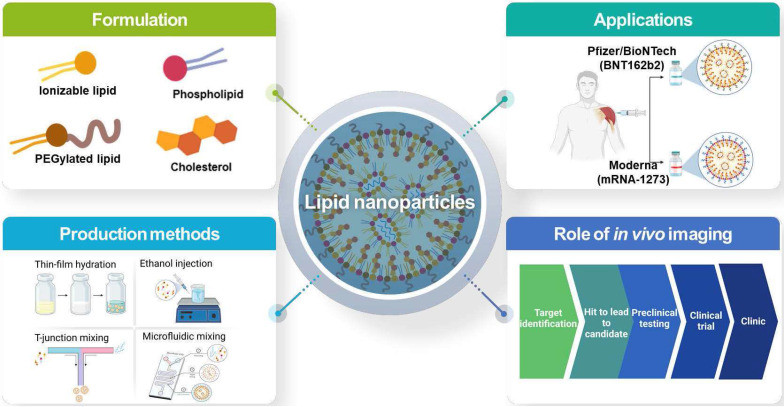 Figure 1. Overall schematic illustration of lipid nanoparticles for delivery of RNA therapeutics.1
mRNA Delivery Systems
Delivery is the central determinant of mRNA therapy performance. Naked mRNA is unstable and poorly taken up by most cells, so delivery systems must protect the RNA, enable cellular uptake, support endosomal escape, and produce an acceptable biodistribution and safety profile. Lipid nanoparticles are the most established nonviral option, but polymers, peptides, exosomes, local delivery routes, and physical delivery methods may be relevant depending on the application.
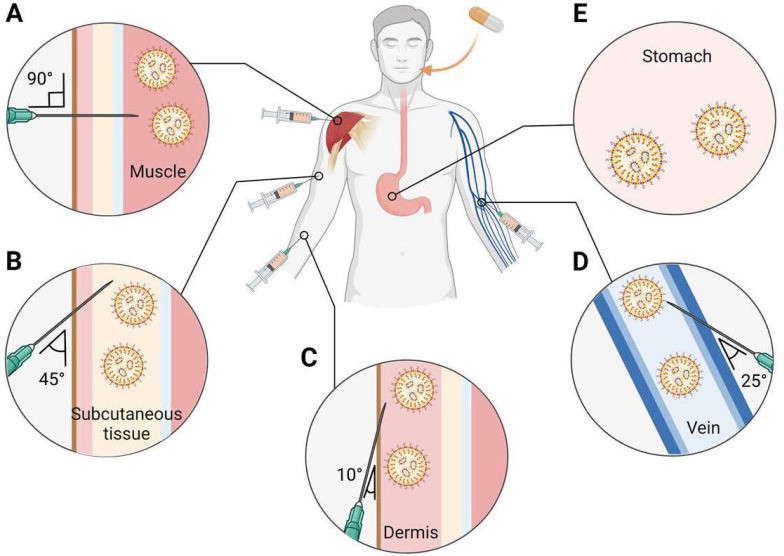 Figure 2. Major systemic delivery routes for RNA-loaded lipid nanoparticles and how administration route affects exposure.1
| Delivery system | Strength | Limitation | Common research fit |
|---|---|---|---|
| Lipid nanoparticles | Strong precedent for systemic and vaccine applications | Liver tropism, reactogenicity, and repeat-dose questions may arise | Vaccines, liver-directed expression, and formulation benchmarking |
| Polymeric nanoparticles | Tunable charge, degradation, and release properties | Material toxicity and reproducibility need careful testing | Comparative delivery studies and local administration |
| Exosomes or extracellular vesicles | Biological membrane features may aid compatibility | Loading, heterogeneity, and scale-up remain challenging | Exploratory targeted delivery and tissue-interface studies |
| Local delivery | Can reduce systemic exposure and focus expression | May not suit diseases requiring broad distribution | Muscle, tumor, lung, eye, or tissue-accessible applications |
mRNA Therapy Pros and Cons
The advantages and limitations of mRNA therapy are linked. Transient expression can improve controllability and reduce long-term persistence risk, but it may require repeat dosing. Rapid sequence redesign supports platform development, but the final candidate still depends on formulation, purity, and biological context. A realistic development plan treats mRNA as a system consisting of sequence, manufacturing process, delivery vehicle, route, dose, and readout strategy.
| Decision question | Potential advantage | Potential constraint | Planning note |
|---|---|---|---|
| Is transient expression acceptable? | Useful for vaccines, cytokines, receptors, and editing enzymes | May be insufficient for chronic replacement needs | Define desired protein duration early. |
| Can target cells be reached? | LNPs and local routes provide multiple options | Biodistribution may favor liver or injection-site tissues | Use delivery readouts before interpreting low activity. |
| Is immune activation helpful or harmful? | Innate sensing may support vaccine activity | It can reduce tolerability or confound protein expression | Match nucleoside modification and purification to application. |
| Can the assay measure function? | Protein output can be quantified rapidly | Protein presence may not equal biological correction | Add functional assays and dose-response design. |
Selection Guide for Research Use
A useful mRNA program starts by choosing the biological effect, then working backward to construct and delivery design. For example, a vaccine study may tolerate or benefit from immune stimulation, whereas protein replacement usually requires lower innate activation and consistent translation. Programs involving organelle-localized proteins may need specialized sequence and targeting strategies, such as mitochondrial-targeting mRNA design, before delivery optimization becomes meaningful.
- For vaccine research, prioritize antigen design, expression kinetics, immune activation, and formulation reproducibility.
- For protein replacement, prioritize secretion or localization, protein function, repeat dosing, and tissue exposure.
- For genome-editing support, prioritize transient nuclease expression, dose control, editing efficiency, and off-target assessment.
- For local therapy concepts, prioritize retention at the administration site, tissue tolerability, and functional expression.
Readouts That Connect RNA Delivery to Function
mRNA delivery studies should avoid relying on a single expression endpoint. A complete readout set may include RNA integrity, encapsulation efficiency, particle size, zeta potential, protein expression level, expression duration, cell viability, cytokine induction, biodistribution, and the functional activity of the encoded protein. When results are weak, these measurements help determine whether the problem is RNA design, formulation, uptake, endosomal escape, translation, or protein biology.
Research Planning Notes for mRNA Programs
A strong mRNA therapy research plan begins by defining the required expression window. Vaccine applications may need a burst of antigen expression together with immune stimulation, while protein replacement concepts may require lower reactogenicity and a more predictable exposure profile. Genome-editing applications often need a narrow window of nuclease expression to balance editing efficiency with safety.
Interpreting mRNA data requires separating delivery from translation. A formulation may deliver RNA efficiently but fail to release it from endosomes; another may express protein strongly but trigger cytokine responses that limit usefulness. For that reason, delivery programs should include particle characterization, RNA recovery or reporter assays, protein quantification, innate immune markers, and cell-health measurements.
For early platform evaluation, it is often better to define a narrow but well-controlled mRNA package than to expand too quickly into unrelated delivery or disease models. A focused program can compare construct variants, confirm RNA quality, measure expression kinetics, and identify whether the payload needs additional localization or secretion engineering. Once those data are interpretable, delivery and disease-specific studies become much easier to prioritize.
Choose the Right mRNA Development Path
Successful mRNA development depends on more than selecting a coding sequence. Delivery, intracellular release, expression profile, tolerability, and manufacturability must be considered together from the start. Creative Biolabs supports these connected decisions, helping researchers select an appropriate delivery approach and determine whether mRNA is the right modality for their target and application.
- If delivery is the main challenge, mRNA Delivery Systems presents formulation and administration options, including LNPs, polymers, extracellular vesicles, tissue targeting, and endosomal escape, to help identify an approach aligned with your payload and target tissue.
- If you are still choosing the platform, mRNA Therapy Pros and Cons helps you weigh rapid programmability and transient, nonintegrating expression against immune activation, repeat dosing, delivery constraints, and manufacturing complexity.
Whether you need to optimize an existing candidate or build an mRNA program from the ground up, contact Creative Biolabs to discuss a solution tailored to your development goals.
Frequently Asked Questions
Q: Does mRNA therapy integrate into the genome?
A: No. Synthetic mRNA generally acts in the cytoplasm and is translated without integrating into genomic DNA.
Q: Why are lipid nanoparticles common in mRNA therapy?
A: They protect mRNA from degradation, promote cellular uptake, and can support endosomal escape, making them a practical nonviral delivery system.
Q: Is longer mRNA expression always better?
A: Not always. Longer expression may help protein replacement, but transient expression can be preferable for vaccines, immune modulators, or genome-editing enzymes.
Q: What makes mRNA therapy different from viral gene therapy?
A: mRNA therapy delivers a transient RNA instruction, whereas viral gene therapy often aims for longer-lasting genetic payload expression. Delivery, durability, and safety questions therefore differ.
Q: What quality attributes matter for mRNA research?
A: Important attributes include RNA integrity, capping efficiency, poly(A) profile, dsRNA impurity level, formulation size, encapsulation efficiency, potency, and immune activation profile.
Overview of What Creative Biolabs Can Provide
Creative Biolabs can support mRNA therapy research most directly through custom mRNA synthesis and specialized construct preparation for localization-sensitive payloads. The approved GT promotion Excel contains a narrower mRNA-specific service set than the ASO or circRNA branches, so this module keeps the links focused on directly relevant mRNA pages instead of adding weakly related RNA services.
For research teams comparing payload design, expression duration, and delivery readouts, a focused mRNA workflow can start with sequence-to-RNA production and then evaluate whether specialized targeting, such as mitochondrial-targeting mRNA synthesis, is needed before broader formulation or model studies.
| Research Need | Related Creative Biolabs Support | How It Connects to the Current Resource Topic |
|---|---|---|
| Generate research-grade mRNA constructs | Custom mRNA Synthesis | Supports sequence-to-RNA production when construct architecture, RNA quality, and expression goals must be tested. |
| Design specialized localization-oriented payloads | Custom Mitochondrial Targeting mRNA Synthesis | Connects mRNA synthesis with mitochondrial localization needs for payloads requiring organelle-focused expression. |
Researchers can contact us today to discuss how these capabilities may be aligned with the current Resource topic, project stage, and experimental readout plan.
Reference
- Jung HN, Lee SY, Lee S, Youn H, Im HJ. Lipid nanoparticles for delivery of RNA therapeutics: Current status and the role of in vivo imaging. Theranostics. 2022;12(17):7509-7531. 10.7150/thno.77259. Distributed under Open Access license CC BY 4.0, with modification.
