
ASO Conjugation Strategies
ASO conjugation strategies improve therapeutic performance by directing antisense oligonucleotides to the tissues and cells where productive gene regulation is required. Conjugating ASOs to GalNAc, peptides, lipids, antibodies, aptamers, or polymers can enhance tissue distribution, receptor-mediated uptake, cellular entry, endosomal release, stability, and pharmacodynamic durability, but the optimal design must match the target tissue, delivery barrier, linker, ASO chemistry, and mechanism while limiting toxicity, immune activation, and manufacturing complexity.
Introduction
ASO conjugation improves targeted delivery by linking oligonucleotides to ligands such as GalNAc, peptides, lipids, antibodies, aptamers, or polymers. Creative Biolabs examines conjugate design, productive uptake, linker selection, evaluation, safety, and comparison with encapsulation. Creative Biolabs provides ASO conjugate development services, covering strategy design, synthesis, analytical confirmation, cellular testing, and delivery studies.
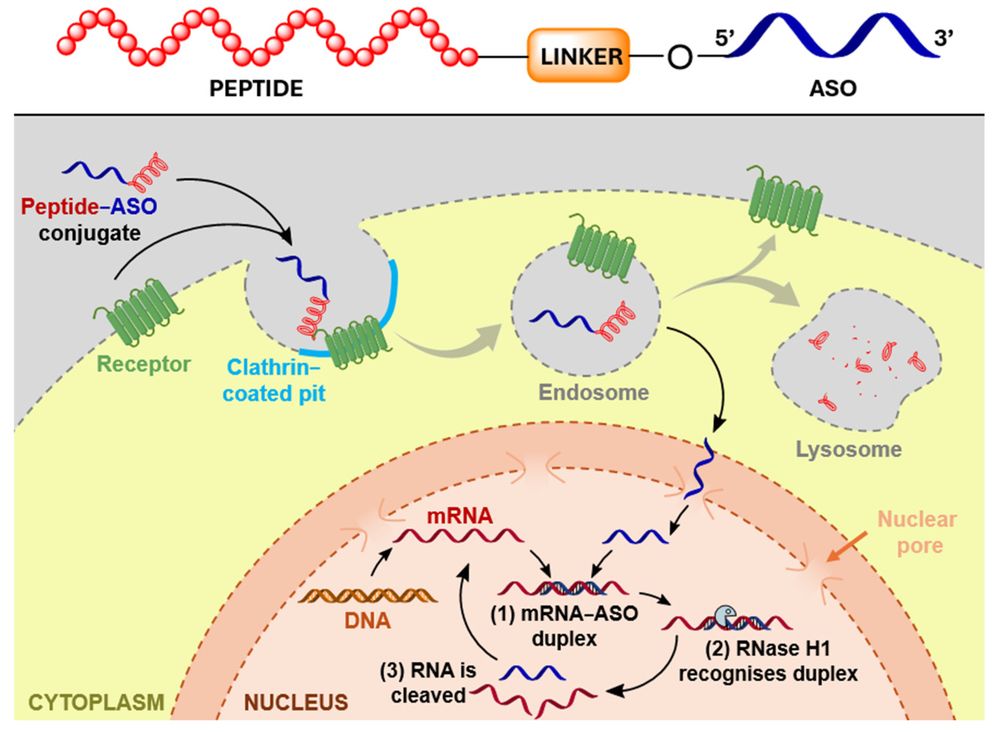 Figure 1. Mechanism of receptor-mediated targeted delivery of peptide–ASO conjugates.1
Conjugation as a Delivery System
An ASO conjugate is a delivery system assembled at molecular scale. Its performance depends on a linked sequence of events rather than a single uptake value. A ligand that improves one step may expose the next bottleneck, so each stage should have a measurable criterion and an appropriate control.
- Remain intact and soluble during formulation, storage, administration, and early circulation while retaining ligand presentation.
- Distribute to a tissue in which the target RNA and the chosen receptor or transport pathway coexist.
- Bind and internalize into the intended cell population without being dominated by receptor saturation or uptake into irrelevant cells.
- Traffic through endosomal compartments without being diverted completely to recycling or lysosomal degradation.
- Release or present an active ASO in the cytosol or nucleus while preserving hybridization and the intended RNA mechanism.
- Produce a pharmacodynamic response at a tolerable exposure and with a conjugate identity, loading state, and purity that can be manufactured consistently.
Productive uptake is the decisive endpoint
Productive uptake is the fraction that reaches the compartment in which the ASO can engage RNA. Bulk fluorescence, radiolabel, or tissue mass spectrometry can overestimate this fraction because signal includes vascular material, surface-bound ligand, degraded fragments, and endosomal or lysosomal pools. Evidence improves when cell types are separated, intact conjugate and metabolites are distinguished, receptor dependence is tested, and pharmacodynamic activity is measured in the same cells. For an RNase H1 gapmer, the relevant endpoint is RNA reduction in target cells. For a splice switcher, nuclear access and isoform change are decisive. Conjugation cannot rescue an ASO whose sequence or chemistry is intrinsically inactive.
What an ASO Conjugate Must Accomplish?
- Remain sufficiently intact during formulation, storage, and circulation while avoiding aggregation or loss of ligand presentation.
- Reach a tissue in which the target RNA and the relevant receptor or transport pathway coexist at the intended disease stage.
- Bind and internalize at concentrations that are not dominated by receptor saturation, rapid recycling, or uptake into an irrelevant cell population.
- Escape or productively traffic from endosomal compartments, because extensive internalization can coexist with little RNA engagement.
- Preserve ASO hybridization and mechanism after conjugation or release, with a metabolite profile that is both active and tolerable.
- Produce a useful exposure margin over off-target tissues and remain manufacturable with controlled conjugate identity, loading, and purity.
Receptor context can overturn an attractive ligand hypothesis
The receptor is only one design variable. Its abundance, cell specificity, internalization rate, recycling behavior, ligand competition, disease-related regulation, and species conservation all affect translation. A receptor highly expressed in cultured cells may be lower in primary tissue. Conversely, a receptor with moderate abundance may be efficient if it recycles rapidly and directs cargo into a productive route. Cross-species differences can make a standard animal model misleading, especially for antibodies and aptamers. Early experiments should confirm receptor expression and ligand binding in the actual model, then use receptor-blocking, knockout, or competition controls to show that uptake and pharmacology depend on the intended pathway.
Major ASO Conjugate Families
| Conjugate family | Primary delivery logic | Best-fit context | Principal question |
|---|---|---|---|
| GalNAc | ASGPR-mediated hepatocyte uptake and receptor recycling | Liver targets expressed in hepatocytes | Is receptor abundance preserved in the disease model and target population? |
| Peptide | Cell penetration, receptor targeting, or endosomal disruption | Muscle, CNS, or cell-specific delivery depending on peptide | Does functional gain occur below membrane-toxicity and immune thresholds? |
| Lipid or hydrophobe | Lipoprotein, albumin, membrane, or lipid-receptor association | Broader distribution or selected lipid-handling tissues | Does added exposure remain selective and colloidally stable? |
| Antibody or fragment | High-affinity cell-surface recognition and internalization | Receptor-defined cell types with validated trafficking | Can the cargo escape a degradative pathway and is conjugation homogeneous? |
| Aptamer or small molecule | Compact receptor or transporter recognition | Targets with a validated internalizing ligand | Is ligand affinity retained after attachment and across species? |
| Polymer or reporter | Charge, circulation, release, or measurement control | Formulation-linked delivery or mechanistic tracing | Does the added material change the ASO behavior being measured? |
| Fluorophore | Optical tracking of distribution, cellular uptake, and intracellular trafficking | Mechanistic localization, uptake, and biodistribution studies | Does the label preserve ASO activity and report intact conjugate rather than transferred or persistent fluorescence? |
Linker, Valency, and Attachment-Site Design
Linker stability defines the active molecular species
A non-cleavable linker keeps ligand and ASO connected during trafficking; a cleavable linker releases the ASO in response to enzymes, reducing conditions, acidity, or hydrolysis. Neither is inherently superior. A non-cleavable design may preserve receptor-mediated routing but leave a bulky group on the ASO or its metabolites. A cleavable design can restore a parent-like ASO, yet premature cleavage erases targeting and overly stable cleavage chemistry prevents release. Plasma, tissue homogenate, endosomal, and intracellular stability should be measured separately. The active species must be identified: intact conjugate, partially degraded conjugate, released ASO, or an ASO carrying a linker remnant.
Valency and attachment site change the complete conjugate
Attachment at the 5' end, 3' end, or an internal position can affect exonuclease protection, hybridization, RNase H1 geometry, and synthesis. Multivalent ligands may strengthen receptor avidity or clustering but increase size and alter clearance. GalNAc commonly uses clustered multivalency to engage ASGPR efficiently, whereas an antibody may carry several oligonucleotides with a distribution of loading states unless site-specific chemistry is used. A higher drug-to-carrier ratio is not automatically better: it can reduce solubility, antigen binding, tissue penetration, or manufacturing consistency. Design-of-experiments studies should vary one parameter at a time while keeping ASO sequence and active dose constant.
Selecting a Conjugate by Tissue and Mechanism
Selection starts with a tissue-cell-receptor map. Investigators should define which cell type drives the disease, how much RNA modulation is needed there, which receptors are accessible from the chosen route, and whether those receptors internalize productively.
Five decisions for comparative screening
- Validate target RNA and candidate receptor in the same disease-relevant cell type, including expression changes caused by disease or treatment.
- Confirm that the parent ASO is intrinsically active after direct intracellular delivery so that conjugate screening measures delivery rather than sequence failure.
- Compare ligand, linker, valency, and attachment site with an unconjugated ASO and a non-targeting or nonbinding conjugate control.
- Measure intact material, cell-type distribution, endosomal trafficking, and pharmacodynamic activity across a concentration and time range.
- Advance only designs that improve the dose-to-effect relationship without unacceptable nonspecific exposure, membrane injury, immune activation, or manufacturing complexity.
Conjugation versus Encapsulation
Covalent conjugation and particle encapsulation address delivery differently. Conjugates are defined molecular entities whose ligand and ASO travel together until cleavage or metabolism. They can offer receptor specificity, relatively simple dosing, and well-defined stoichiometry when synthesis is controlled. Nanoparticles can protect many ASO molecules, co-deliver helper components, and provide strong endosomal disruption, but size distribution, encapsulation efficiency, component toxicity, and organ-level uptake must be controlled. ASO delivery strategies should compare the two formats using the same active sequence and mechanism whenever feasible. Apparent potency must be normalized to delivered ASO, not only total formulation mass.
| Decision factor | Covalent ASO conjugate | Encapsulated ASO |
|---|---|---|
| Physical form | Defined ASO-ligand molecule; size and stoichiometry set by conjugation chemistry | Multicomponent particle with size, charge, morphology, and loading distributions |
| Targeting | Usually driven by ligand-receptor or carrier interactions | Often driven by particle composition and protein corona; ligands may also be added |
| Cargo capacity | One ASO per ligand unit or a controlled multivalent architecture | Multiple ASO molecules per particle and potential co-delivery of helper cargo |
| Endosomal behavior | Depends on ligand route, ASO chemistry, and any endosomolytic feature | Ionizable or membrane-active components can be designed for endosomal release |
| Key analytics | Conjugate identity, loading, linker stability, free ASO, free ligand, metabolites | Particle size, polydispersity, encapsulation, leakage, component identity, potency |
| Typical risk | Receptor saturation, linker failure, off-target ligand binding, altered ASO activity | Particle heterogeneity, inflammatory components, organ sequestration, storage instability |
A Stage-Gated Evaluation Strategy
Cell-based gate: prove receptor dependence and RNA activity
Early evaluation should use receptor-positive and receptor-negative cells, preferably with endogenous expression, and include competition with free ligand or receptor knockdown. Flow cytometry and microscopy can document association and trafficking, but pharmacodynamic activity is the gate. Subcellular fractionation, hybridization assays for intact ASO, or microscopy with colocalization controls can help distinguish productive access from endosomal storage. Serum stability and protein binding should be assessed before prolonged animal studies. If a conjugate appears more potent only under transfection, the ligand is not demonstrating delivery value. If uptake rises without RNA modulation, endosomal escape or ASO release is likely limiting.
In vivo gate: connect exposure to the correct cell type
In vivo studies should quantify plasma pharmacokinetics, tissue distribution, cell-type localization, intact conjugate, released ASO, and pharmacodynamics over time. Receptor expression and species cross-reactivity must be documented. Dose fractionation can reveal receptor saturation or a narrow safety margin. The unconjugated ASO, ligand alone, linker-related control, and a chemistry-matched non-targeting conjugate answer different questions and should be selected deliberately. Histopathology and clinical chemistry should be interpreted with local exposure. A liver signal in a conjugate intended for muscle, for example, may indicate systemic clearance rather than productive targeting and should trigger design revision.
Future Directions for Targeted ASO Delivery
Next-generation conjugates are moving beyond simple receptor binding toward coordinated trafficking. Bispecific or multivalent ligands may combine tissue targeting with endosomal escape; cleavable masks may limit membrane activity until the conjugate reaches an acidic or enzyme-rich compartment; and site-specific antibody conjugation can reduce loading heterogeneity. Screening increasingly uses human organoids, spatial assays, and single-cell pharmacodynamic measurements to identify which cells receive functional cargo. Progress will depend on quantitative standards for productive exposure and on chemistry that can be manufactured consistently. The central design question will remain unchanged: does each added component improve the amount of correctly localized, active ASO per tolerated dose?
Published Data
Case 1: Modular Self-Assembled Antibody-Oligonucleotide Conjugates for Targeted ASO Delivery
This 2025 study introduces a modular antibody-oligonucleotide conjugate (MAOC) self-assembly platform for tissue-targeted antisense oligonucleotide (ASO) delivery. Utilizing L-DNA scaffolds as precise molecular templates, researchers assembled uniform MAOCs with controllable drug-to-antibody ratios (DAR) via complementary base pairing. To achieve targeted delivery, a single-domain antibody (sdAb) was engineered against transferrin receptor 1 (TfR1). Cryo-EM structural analysis confirmed that this sdAb binds a non-overlapping epitope, avoiding competitive inhibition from endogenous transferrin. In a transgenic Duchenne muscular dystrophy (DMD) mouse model, TfR1-targeted MAOCs delivering exon-skipping ASOs achieved significantly higher cardiac and skeletal muscle accumulation and superior exon-skipping efficiency compared to naked ASOs. Crucially, the platform enabled dual-exon skipping by co-delivering two distinct ASOs simultaneously, maintaining high safety with no treatment-related toxicity. This case establishes a robust paradigm for AOC technology, demonstrating that receptor-mediated endocytosis dramatically enhances muscle bioavailability and supports multi-ASO combination therapies.
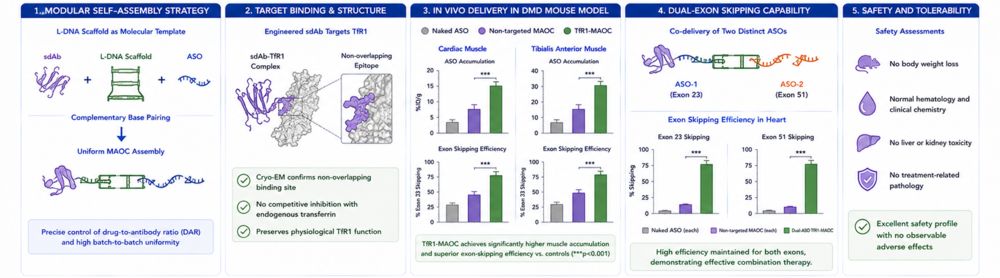 Figure 2. Self-assembled antibody-ASO conjugates.
Frequently Asked Questions
Q: What is the main purpose of conjugating an ASO?
A: Conjugation is used to alter tissue distribution, receptor-mediated cellular uptake, intracellular trafficking, endosomal release, or experimental tracking. The goal is greater productive ASO exposure in the intended cell, not simply higher total uptake.
Q: Why is GalNAc effective for liver-directed ASOs?
A: Clustered GalNAc binds ASGPR on hepatocytes, a highly expressed receptor that internalizes and recycles efficiently. It is hepatocyte directed rather than universally liver directed, and productive endosomal escape is still required.
Q: Do cell-penetrating peptides always improve ASO delivery?
A: No. Some peptides improve uptake or endosomal escape, but cationic and membrane-active sequences can also aggregate, damage membranes, or cause systemic toxicity. Benefit must be demonstrated as functional RNA modulation within a tolerable exposure range.
Q: Should an ASO conjugate use a cleavable linker?
A: It depends on whether the intact conjugate remains active and where release is needed. A cleavable linker can restore a parent-like ASO, but premature cleavage loses targeting and incomplete cleavage may prevent activity.
Q: How is productive uptake measured?
A: Productive uptake is supported by intact-ASO measurements in the relevant cell and compartment together with the expected RNA, protein, and functional response. Total fluorescence or tissue concentration alone is insufficient.
Q: When is encapsulation preferable to covalent conjugation?
A: Encapsulation may be preferable when cargo protection, co-delivery, high payload, or engineered endosomal disruption is required. Conjugation may be preferable for a defined receptor-ligand route and a smaller, chemically discrete product.
Overview of What Creative Biolabs Can Provide
Creative Biolabs can support ASO conjugation programs from ligand and linker strategy through conjugate synthesis, analytical confirmation, cell-based uptake and activity testing, and route-matched delivery studies. Platform choice can be guided by target tissue, receptor biology, ASO mechanism, endosomal barrier, and the analytical complexity acceptable for the project.
| Research Need | Related Creative Biolabs Support | How It Connects to the Current Resource Topic |
|---|---|---|
| Conjugate platform strategy | Antisense Oligonucleotide (ASO) Conjugate Development Services | Integrates ASO, ligand, linker, valency, attachment site, analytical controls, and biological validation. |
| Hepatocyte-directed delivery | GalNAc-Conjugated Antisense Oligonucleotide (ASO) Development Service | Develops GalNAc-ASO formats for ASGPR-mediated uptake when the target is expressed in hepatocytes. |
| Peptide-enabled uptake or escape | Peptide-Conjugated Antisense Oligonucleotide (ASO) Development Service | Evaluates peptide functions such as cell penetration, receptor targeting, or endosomal release. |
| Hydrophobic delivery enhancement | Lipid-Conjugated Antisense Oligonucleotide (ASO) Development Service | Uses lipid moieties to alter carrier association, tissue exposure, membrane interaction, and trafficking. |
| Receptor-defined antibody targeting | Antibody-Conjugated Antisense Oligonucleotide (ASO) Development Service | Connects antibody recognition and internalization with controlled ASO loading and pharmacodynamic testing. |
| Compact ligand targeting | Aptamer-Conjugated Antisense Oligonucleotide (ASO) Development Service | Develops aptamer-ASO formats where receptor recognition, folding, and internalization can be validated. |
| Polymer-linked ASO delivery | Polymer-Conjugated Antisense Oligonucleotide (ASO) Development Service | Explores polymer properties that influence charge, circulation, cellular entry, and intracellular release. |
| Formulation alternative | Antisense Oligonucleotide (ASO) Delivery Services | Provides a comparison route when encapsulation or another delivery format better addresses the biological barrier. |
Conjugation studies can be organized around a receptor hypothesis, an existing ligand, or a lead ASO whose tissue exposure is limiting. Researchers may contact us today to discuss comparative conjugate and delivery designs.
References
- Malinowska A L, Huynh H L, Bose S. Peptide–oligonucleotide conjugation: chemistry and therapeutic applications. Current issues in molecular biology, 2024, 46(10): 11031-11047. https://doi.org/10.3390/cimb46100655 Distributed under Open Access license CC BY 4.0, with modification.
- Zhou L, Bi J, Chang S, et al. Self-Assembled Antibody-Oligonucleotide Conjugates for Targeted Delivery of Complementary Antisense Oligonucleotides. Angewandte Chemie International Edition, 2025, 64(3): e202415272. https://doi.org/10.1002/anie.202415272
