
Antisense Oligonucleotide Synthesis
Antisense oligonucleotide (ASO) synthesis enables sequence-specific RNA regulation through transcript degradation, splice switching, exon skipping, or steric blocking. Programmable targeting, reversible gene control, optimized chemical modifications, high purity, and batch consistency can improve ASO stability, tissue exposure, potency, and tolerability for gene-function studies and therapeutic development without permanently altering genomic DNA.
Introduction
ASO synthesis is the process of producing short, sequence-specific oligonucleotides through solid-phase assembly, chemical modification, cleavage, deprotection, and purification. Analytical testing is then used to confirm the identity, purity, and quality of the final ASO product. Creative Biolabs supports this workflow with custom antisense oligonucleotide synthesis, covering molecular design, chemical modification, purification, quality confirmation, and scale transition.
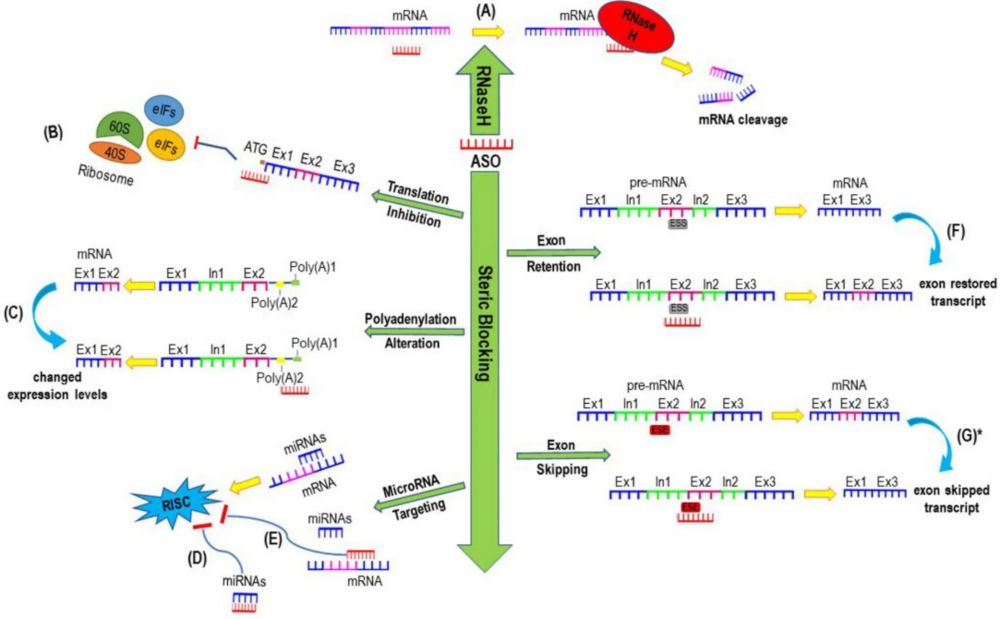 Figure 1. Examples of mechanisms of actions induced by antisense oligonucleotides.1
Define the Product Before the Cycle
A synthesis request should begin with an explicit molecular description rather than sequence alone. The record should identify strand orientation, nucleoside chemistry at every position, internucleotide linkage at every junction, terminal groups, stereochemical requirements, conjugation handles, counterion, target scale, purity method, and intended study. That definition separates the desired product from closely related failure species and determines whether routine phosphoramidite reagents are sufficient. It also prevents late changes in chemistry from being treated as minor substitutions when they alter mechanism or analytics.
| Product Attribute | Question to Resolve | Why It Changes Synthesis | Release Evidence |
|---|---|---|---|
| Sequence and length | Is the strand orientation and full sequence frozen? | Longer strands amplify incomplete coupling and deletion impurities. | Mass plus sequence-sensitive or digest-based confirmation |
| Backbone map | Which junctions are phosphodiester, phosphorothioate, or another linkage? | Sulfurization, oxidation, and stereochemical complexity change by junction. | Mass, phosphorus/sulfur-sensitive evidence, impurity profile |
| Sugar pattern | Where are DNA, 2'-OMe, 2'-MOE, LNA, or other units placed? | Each monomer can require different coupling and deprotection behavior. | Identity, purity, duplex or functional comparability |
| Terminal functionality | Are 5', 3', amine, thiol, phosphate, lipid, dye, or ligand groups required? | Terminal chemistry changes support selection, coupling order, and purification. | Conjugate or handle identity and residual free component |
| Intended use | Is the material for screening, mechanistic work, or in vivo dosing? | Scale, endotoxin control, counterion, residual limits, and documentation differ. | Fit-for-purpose certificate and study-specific tests |
Solid-Phase Synthesis of Antisense Oligonucleotide
01. Detritylation exposes the next reactive hydroxyl
The support-bound chain is commonly protected with an acid-labile dimethoxytrityl group. Controlled detritylation removes that group and exposes the hydroxyl for the next addition. Incomplete deprotection lowers the available reactive sites; overly harsh treatment can promote depurination or other damage. Monitoring trityl release can provide a cycle-level process signal, but it does not identify every chemical defect. Contact time, acid strength, solvent composition, temperature, and wash efficiency should be qualified for the sequence and chemistry class.
02. Coupling adds one activated monomer
A protected nucleoside phosphoramidite is activated and reacts with the growing chain. Because overall full-length yield compounds across many cycles, a small loss per coupling becomes important over a 15- to 30-mer. Sterically demanding monomers, moisture, reagent aging, poor mixing, or insufficient activation can increase n-minus-one material. Longer contact or double coupling may help selected positions, but more reagent and time can also increase side reactions. Position-specific process knowledge is more useful than applying one aggressive cycle to every monomer.
03. Capping blocks failed chains from re-entering growth
Unreacted hydroxyl groups are acetylated or otherwise capped so deletion sequences do not resume elongation in later cycles. Effective capping converts an uncontrolled family of near-full-length products into impurities that are usually easier to separate from the target. Weak capping allows complex deletion patterns; excessive exposure can damage sensitive groups. A rising n-minus-one peak may originate from coupling, detritylation, capping, or downstream processing, so root-cause work should examine cycle logs and impurity identity together.
04. Oxidation or sulfurization stabilizes the linkage
The newly formed phosphite triester is converted to a stable phosphate or phosphorothioate linkage. Oxidation is used for phosphodiester bonds, whereas sulfur transfer reagents create phosphorothioates. Incomplete conversion can leave unstable or mixed linkage species. Sulfurization conditions also influence side products and, unless stereocontrolled chemistry is used, each phosphorothioate linkage creates Rp and Sp configurations. The result is a diastereomeric mixture whose biological behavior depends on the complete sequence and chemistry, not on a single nominal linkage label.
Encoding ASO Architecture in Chemistry
Mechanism determines where modification can be tolerated. RNase H gapmers usually retain a central DNA-like region that supports enzyme recognition and place affinity-enhancing, nuclease-resistant units in the wings. Steric-blocking or splice-switching ASOs can use more uniformly modified sugars because they do not require RNase H cleavage. A phosphorothioate backbone can improve nuclease resistance and protein-mediated distribution, yet it also changes protein binding and can contribute to sequence-independent effects. Custom oligonucleotide modification should therefore be planned as an architecture, not a menu of independent features.
- Map mechanism to chemistry: confirm whether RNase H recruitment, splice redirection, or steric blockade is the intended biological action.
- Protect the active region: avoid placing high-affinity or bulky modifications where they disrupt enzyme recognition, target binding, or required protein interactions.
- Use matched controls: retain an identical sequence with a defined chemistry change so activity differences can be assigned to the modification.
- Treat terminal handles as product attributes: amines, thiols, lipids, dyes, or ligands can change retention, solubility, and recovery even before conjugation.
- Track linkage pattern explicitly: phosphorothioate modification can be full, partial, alternating, or stereodefined, and those designs are not interchangeable.
Cleavage, Deprotection, and Purification of Antisense Oligonucleotide
Cleavage and Deprotection: A Chemical Stress Test
Following solid-phase chain assembly, the oligonucleotide must be cleaved from the support and all protecting groups removed. However, base-, sugar-, phosphate-, and conjugation-handle protections differ markedly in their lability. A single "universal" condition therefore often faces a dilemma: either residual protection remains, or a sensitive modification undergoes degradation. Critical variables include temperature, reaction time, reagent composition, dissolved oxygen, and concentration. Prior to scale-up, small-scale scouting experiments are strongly advised to systematically distinguish whether a late-eluting impurity originates from under-deprotection, cleavage-related by-products, depurinated species, or oxidative damage. This diagnostic step is essential for guiding robust process development.
Purification Strategy: Tailoring to the Impurity Landscape
The selection of a purification method must be driven by the physicochemical properties of the impurities present:
- Reversed-phase HPLC exploits hydrophobicity differences and is particularly effective when the full-length product retains a trityl group or carries a hydrophobic conjugate.
- Ion-exchange HPLC separates by charge density and offers excellent resolution for closely related oligonucleotide sequences (e.g., failure sequences differing by one nucleotide).
- Preparative polyacrylamide gel electrophoresis provides high resolving power but is practically limited to small-scale applications due to poor scalability and low quantitative recovery.
The optimal choice depends on multiple factors: chain length, backbone charge, hydrophobic moieties, the profile of failure sequences, and required throughput. Importantly, purity and recovery must be evaluated together—overly narrow fraction collection may discard a substantial portion of the desired product in pursuit of marginal purity gains.
Desalting and Counterion Exchange: Fine-Tuning the Final Product
Chromatographic buffers and synthesis reagents inevitably leave behind salts, organic solvents, and non-native counterions. These residuals can adversely affect concentration determination, solubility, osmolality, mass spectrometry, and biological assay performance. Depending on scale and chemistry, desalting, ultrafiltration, size-exclusion chromatography, dialysis, or repeated precipitation can be employed. Final lyophilization simplifies handling and storage, but carries risks: it may concentrate volatile or nonvolatile contaminants and alter the reconstitution behavior of the product. At this stage, critical parameters—counterion identity, water content, residual solvent levels, and overall recovery—should be measured empirically rather than assumed from the purification procedure alone.
Analytical Control and Release of Antisense Oligonucleotide
No single assay proves that an ASO is correct. Mass spectrometry can confirm molecular mass but may not distinguish all positional or sequence isomers. Chromatography estimates purity only within the resolving power and detection response of the method. UV absorbance measures total nucleic-acid-like material, not necessarily intact target. Orthogonal methods should answer identity, content, purity, and biological suitability as separate questions. Nucleic acid analysis becomes strongest when methods are linked to known process impurities and to the next study decision.
- Identity: combine intact mass with sequence-sensitive digestion, tandem methods, or another orthogonal approach when near-isobaric failures matter.
- Purity: report the method, detection mode, integration rules, major impurity peaks, and whether free ligand, unconjugated ASO, or shortmers are resolved.
- Content: distinguish absorbance-derived concentration from dry mass, water, salts, and counterions; use a justified extinction coefficient.
- Physical behavior: test appearance, reconstitution, solubility, aggregation or particulates, container adsorption, and freeze-thaw behavior at use concentration.
- Biological suitability: add endotoxin, bioburden, sterility, residual solvent, elemental, or potency-related tests only where the intended study requires them.
- Stability: use an assay capable of detecting shortening, oxidation, deconjugation, aggregation, and loss of potency rather than monitoring concentration alone.
Scale-Up Changes the Process
A process that yields milligrams in a research synthesizer may not transfer linearly to gram scale. Reagent delivery, bed mixing, heat removal, pressure, solvent exchange, waste handling, preparative loading, fraction volume, and drying all change with scale. The synthesis itself may remain chemically similar while purification becomes the capacity-limiting step. Large-scale oligonucleotide production therefore requires process ranges and acceptance criteria that are demonstrated at representative scale, not copied from a small batch.
- Freeze the molecular definition and analytical methods before comparing scale, so a process change is not confounded with a product change.
- Identify high-risk cycles using trityl monitoring, crude impurity profiles, monomer class, sequence motifs, and prior small-scale failures.
- Run an intermediate scale that challenges mixing, reagent delivery, cleavage, and preparative chromatography without consuming the full material budget.
- Establish mass balance from support loading through purified dry material, including target discarded in washes and nonconforming fractions.
- Compare batches by orthogonal purity, impurity identities, content, counterion, physical behavior, and a mechanism-matched biological assay.
- Document allowable process ranges and hold times, then use deviations to trigger targeted analysis rather than automatic batch rejection or release.
Frequently Asked Questions
Q: Why are most phosphoramidite ASOs synthesized from the 3-prime end toward the 5-prime end?
A: The first nucleoside is attached to a solid support through its 3-prime position, leaving a protected 5-prime hydroxyl for iterative detritylation and coupling. Alternative platforms exist, but this orientation is standard for solid-phase phosphoramidite chemistry.
Q: Does a correct molecular mass prove that the ASO sequence is correct?
A: No. Some deletion, substitution, or positional isomers can be difficult to distinguish by intact mass alone. Sequence-sensitive or digest-based methods and a well-resolved impurity profile provide stronger identity evidence.
Q: Why does coupling efficiency matter more as ASO length increases?
A: Full-length yield is the product of performance across every cycle. Even a small loss at each coupling compounds over many positions, increasing deletion sequences and the burden on purification.
Q: Is phosphorothioate ASO material one stereochemically pure compound?
A: Not unless stereocontrolled chemistry is used. A conventional phosphorothioate linkage can have Rp or Sp configuration, so multiple linkages create a diastereomeric mixture.
Q: Which purification method is best for ASOs?
A: There is no universal method. Ion-exchange, reverse-phase chromatography, and other approaches separate different impurity attributes. Length, charge, hydrophobic modifications, conjugation, scale, and required recovery determine the best process.
Q: What additional controls are important before in vivo dosing?
A: Beyond identity and purity, consider content, counterion, water, residual solvents, endotoxin, reconstitution, dosing-matrix stability, particulates or aggregation, container adsorption, and concentration accuracy.
Published Data
Case 1: Lipophilic Compound-Conjugated ASOs for DMD Exon 51 Skipping
This study by Marchesi et al. evaluates lipophilic compound-conjugated antisense oligonucleotides (ASOs) designed to enhance exon 51 skipping for Duchenne muscular dystrophy (DMD). To improve muscle tissue uptake, researchers conjugated various lipophilic moieties—including ursodeoxycholic acid (UDCA), its derivatives (HDCA, TUDCA), and omega-3 fatty acids (DHA, EPA)—to the 3'-terminus of an ASO targeting DMD exon 51. Thermal stability analyses and in vitro evaluations in human myogenic cells revealed that 3'-UDCA conjugation significantly enhanced exon 51 skipping efficiency compared to unmodified ASOs. The lipophilic modification alters the supramolecular self-assembly of ASOs, facilitating superior cellular membrane interaction and functional intracellular delivery. This work provides concrete proof-of-concept for lipophilic conjugation as an effective chemical modification strategy to boost the bioactivity and exon-skipping potency of ASO therapeutics in neuromuscular disease models.
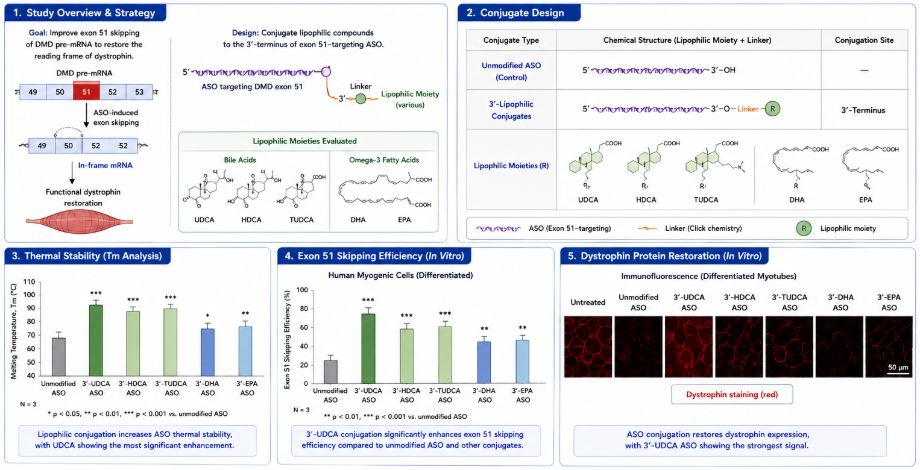 Figure 2. Lipophilic ASO conjugates for DMD exon 51 skipping.
Overview of What Creative Biolabs Can Provide
Creative Biolabs can support ASO material generation from molecular definition and modification planning through synthesis, purification, analytical confirmation, and scale transition. The services below were selected from the Services branch of the supplied GT link inventory and map to distinct synthesis decisions discussed in this resource.
| Research Need | Related Creative Biolabs Support | How It Connects to the Current Resource Topic |
|---|---|---|
| Design and prepare mechanism-matched ASOs | Antisense Oligonucleotide (ASO) Design and Synthesis Service | Connects target site and ASO mechanism with sequence, chemistry pattern, controls, synthesis, and initial QC. |
| Synthesize custom antisense sequences | Custom Antisense Oligonucleotide Synthesis | Supports defined sequences, backbones, sugar patterns, terminal groups, purification, and study scale. |
| Introduce custom chemical features | Custom Oligonucleotide Modification Service | Adds backbone, sugar, base, terminal, or functional-handle modifications under a controlled product map. |
| Develop broader oligonucleotide production | Custom Oligonucleotide Synthesis & Modification Services | Provides a synthesis and modification route when a program includes ASO and related nucleic-acid constructs. |
| Transfer to larger production scale | Large Scale Oligonucleotide Production | Addresses scale-dependent synthesis, preparative purification, recovery, consistency, and documentation. |
| Confirm nucleic-acid identity | Identity of Nucleic Acid | Provides an identity-focused analytical layer beyond an assumed sequence or nominal synthesis record. |
| Assess nucleic-acid purity | Purity of Nucleic Acid | Supports orthogonal impurity evaluation and release decisions tied to intended research use. |
To discuss an ASO sequence, chemical architecture, scale, or fit-for-purpose analytical package, contact us today to connect with our scientific team.
References
- McDowall S, Aung-Htut M, Wilton S, et al. Antisense oligonucleotides and their applications in rare neurological diseases. Frontiers in neuroscience, 2024, 18: 1414658. https://doi.org/10.3389/fnins.2024.1414658 Distributed under Open Access license CC BY 4.0, with modification.
- Marchesi E, Cortesi R, Preti L, et al. Antisense oligonucleotides conjugated with lipophilic compounds: Synthesis and in vitro evaluation of exon skipping in Duchenne muscular dystrophy. International Journal of Molecular Sciences, 2022, 23(8): 4270. https://doi.org/10.3390/ijms23084270
