
Circular RNA Overview
Circular RNA offers durable expression, enhanced molecular stability, and flexible engineering potential for RNA therapeutics. Its resistance to exonuclease-mediated degradation can extend functional activity while supporting applications in protein replacement, vaccination, gene regulation, and regenerative medicine. However, successful circRNA development depends on optimized sequence design, efficient circularization, removal of immunostimulatory impurities, appropriate delivery, and rigorous validation of expression and biological activity.
Introduction
Circular RNAs (circRNAs) are covalently closed RNA molecules produced by back-splicing or engineered circularization. Their topology distinguishes them from conventional linear transcripts and has made them an increasingly important part of therapeutic nucleic acid research. Endogenous circRNAs can regulate gene expression, interact with proteins, or occasionally encode peptides, whereas synthetic circRNAs are being developed as durable expression and vaccine platforms. To support projects across this spectrum, Creative Biolabs provides integrated circular RNAs (circRNAs) services, including custom synthesis, molecular analysis, in vitro functional validation, and delivery formulation.
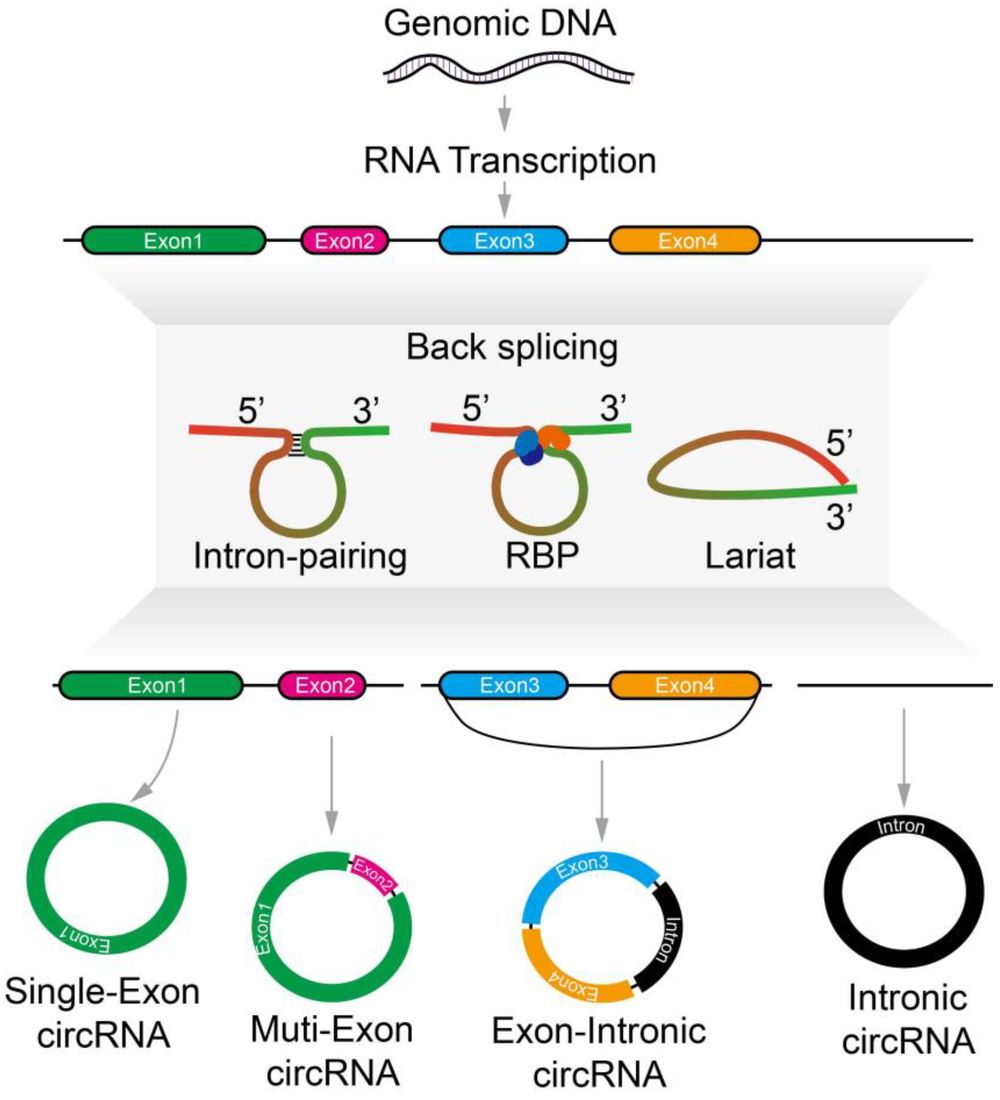 Figure 1. Biogenesis of different types of circRNAs.1
Why Circular RNA Is a Distinct RNA Platform?
The defining feature of a circRNA is not simply that its ends are joined. Circular topology changes how the molecule is processed, degraded, detected, localized, and translated. Within the broader field of non-coding nucleic acids, many exon-derived circRNAs lack a 5-prime cap and a 3-prime poly(A) tail, so they do not follow the standard rules used to interpret messenger RNA. Their resistance to many exonucleases can extend intracellular persistence, but half-life varies with sequence, structure, associated proteins, cell state, and the endonucleolytic pathways available in a particular model.
CircRNAs also occupy two related but different research spaces. Endogenous circRNAs are products of regulated RNA processing and may report cell identity, development, stress, or disease. Engineered circRNAs are designed molecules whose properties can be tuned for protein production or regulatory activity. Conclusions from one space should not automatically be transferred to the other: an abundant endogenous circle is not necessarily therapeutic, and a productive synthetic circle does not prove that natural circRNAs generally function through translation.
CircRNA Biogenesis and Molecular Architecture
Back-splicing routes
Back-splicing joins a downstream splice donor to an upstream splice acceptor. Exonic circRNAs contain one or more exons; exon-intron circRNAs retain intronic segments; and circular intronic RNAs arise when intron lariats escape debranching and are stabilized. Exon skipping can also create a lariat that undergoes internal back-splicing. These routes can produce circles with different nuclear or cytoplasmic distributions and therefore different candidate functions.
Cis-elements and trans-acting factors
Circularization is favored when flanking introns bring splice sites into proximity. Inverted repeats, including Alu elements in human transcripts, can provide complementary pairing, while RNA-binding proteins can bridge introns or alter splice-site use. QKI, FUS, heterogeneous nuclear ribonucleoproteins, and SR proteins have been implicated in context-dependent circRNA control. ADAR-mediated editing and the helicase DHX9 can oppose circles that depend on double-stranded intronic pairing. Because canonical splicing and back-splicing compete, promoter choice, transcription rate, intron length, and cell type can alter the circular-to-linear ratio.
| CircRNA class | Defining architecture | Typical localization | Key research question |
|---|---|---|---|
| Exonic circRNA | One or more exons joined by a back-splice junction | Often cytoplasmic | Does the circle regulate RNA/protein networks or support translation? |
| Exon-intron circRNA | Circularized exons with retained intronic sequence | Frequently nuclear | Does it influence transcription of the parental or related genes? |
| Circular intronic RNA | Stable intron lariat-derived circle | Nuclear | Is it a regulated intronic product with transcriptional effects? |
| Engineered circRNA | Designed sequence circularized in vitro or expressed from a precursor | Application-dependent | Does the chosen architecture provide the intended persistence and activity? |
Functional Modes of Endogenous circRNAs
RNA and protein interactions
Some circRNAs contain repeated binding sites for a microRNA or protein and can change the availability of that partner. CDR1as/ciRS-7 is the best-known example of a miR-7-associated circle, but it is an exceptional architecture; most circRNAs do not contain dozens of high-affinity sites. Other circles act as protein decoys, scaffolds, or recruitment platforms, thereby changing localization, complex assembly, or enzymatic activity. These mechanisms require stoichiometric evidence: the circRNA must be sufficiently abundant and accessible relative to its proposed binding partner.
Transcription and translation
Nuclear exon-intron and intronic circles can interact with transcriptional machinery and may influence expression of their parental genes. A subset of cytoplasmic circRNAs can be translated through internal ribosome entry sites, short IRES-like motifs, N6-methyladenosine-associated initiation, or other cap-independent mechanisms. Translation claims require especially careful controls because linear concatemers, read-through transcripts, trans-splicing products, or plasmid-derived artifacts can produce the same reporter protein. Protein evidence should therefore be linked to verified circular RNA, junction-dependent translation, and appropriate linear controls.
Research and Therapeutic Applications of circRNAs
Endogenous circRNA profiling is used to study development, aging, cancer, cardiovascular disease, neurological disorders, and immune states. Their relative stability and tissue-selective expression can make some circles attractive biomarker candidates, including in plasma or extracellular vesicles. Biomarker development still requires reproducible preanalytics, absolute or well-normalized quantification, independent cohorts, and evidence that the signal adds value beyond established markers. A disease-associated back-splice junction may reflect altered proliferation or splicing rather than drive pathology.
Synthetic circles extend the field from observation to engineering. Candidate applications include sustained protein replacement, transient genome-engineering support, vaccines, local cytokine expression, and regulatory RNA delivery. The relevant comparison is not simply circRNA versus mRNA; it is a complete system comparison that includes dose, purity, translation duration, innate sensing, formulation, tissue exposure, and reversibility. Projects that move toward production should align molecular design with established circular RNA synthesis strategies rather than assuming that one circularization method is suitable for every sequence.
Critical Experimental Readouts
CircRNA studies are vulnerable to false positives because standard RNA assays were developed for linear transcripts. Robust work separates identity, abundance, localization, stability, and function instead of treating a single divergent RT-PCR band as proof. RNase R enrichment can support circularity but is not definitive: some structured linear RNAs resist digestion, and some circles are sensitive. Northern blotting, junction sequencing, exonuclease controls, and topology-sensitive electrophoresis or chromatography provide complementary evidence.
Spatial context is equally important. Bulk sequencing cannot show whether a circle is concentrated in a rare cell population, nucleus, cytoplasm, synapse, or pathological compartment. Junction-specific probes and spatial circRNA detection can connect abundance with cell identity and tissue architecture. For synthetic molecules, analytical confirmation should be followed by time-course expression, protein quantification where relevant, cell viability, cytokine or innate immune readouts, and a functional assay tied to the intended mechanism.
| Decision question | Useful readouts | Common interpretation risk |
|---|---|---|
| Is the product genuinely circular? | Back-splice junction sequencing; northern blot; RNase R with controls; topology-sensitive gel or HPLC | A divergent PCR product may originate from template switching or non-circular by-products. |
| How much circRNA is present? | Absolute RT-qPCR or digital PCR; RNA-seq with junction-aware analysis | Relative junction counts can be distorted by library preparation and low abundance. |
| Where is it located? | Cell fractionation; junction-specific ISH; imaging with cell markers | Bulk tissue data can hide cell-type-specific localization. |
| Does it perform the proposed function? | Perturbation-rescue design; partner occupancy; protein or pathway readout | Correlation or overexpression alone does not establish mechanism. |
| Is activity durable and tolerated? | Time course; viability; cytokines; stress markers; repeated-dose comparison | Long persistence can prolong both desired and undesired effects. |
Advantages, Limitations, and Interpretation Boundaries
CircRNAs offer attractive properties: they can be more persistent than comparable linear RNAs, permit modular sequence engineering, and support cap-independent translation or non-coding functions. Yet circularization can introduce scars, intronic remnants, nicked species, concatemers, double-stranded contaminants, or topology-dependent structures that alter potency and innate sensing. Purity and architecture may matter as much as nominal sequence. Delivery remains a separate constraint because a stable molecule is not useful if it cannot reach the relevant cytosolic compartment.
The field also faces generalizability limits. Conclusions obtained in HEK293 cells may not hold in primary immune cells, neurons, hepatocytes, or in vivo tissues. High reporter output can mask non-physiological initiation, and endogenous circRNA knockdown reagents can affect the corresponding linear transcript. Strong studies use junction-specific perturbations, multiple independent reagents, rescue experiments, and orthogonal molecular assays. A conservative interpretation is usually more valuable than assigning a universal "miRNA sponge" or "coding circRNA" label from sequence prediction alone.
Published Data
Case 1: natural circRNAs as regulated RNA molecules
This 2022 study pioneers a circular RNA (circRNA) vaccine against SARS-CoV-2. The LNP-delivered vaccine (circRNARBD) expresses the Spike RBD trimer. Its closed-ring structure resists exonuclease degradation, ensuring a longer half-life and more durable antigen expression than linear mRNA.
In animal models, circRNARBD induced stronger, Th1-biased immune responses, outperforming conventional mRNA vaccines at equivalent doses. Furthermore, a Delta-specific version successfully neutralized both Delta and Omicron variants, proving highly effective as a broad-spectrum booster.
Ultimately, circRNA's superior durability and enhanced thermal stability could enable lower doses, fewer injections, and easier global distribution, cementing its massive potential as a next-generation alternative to current mRNA platforms.
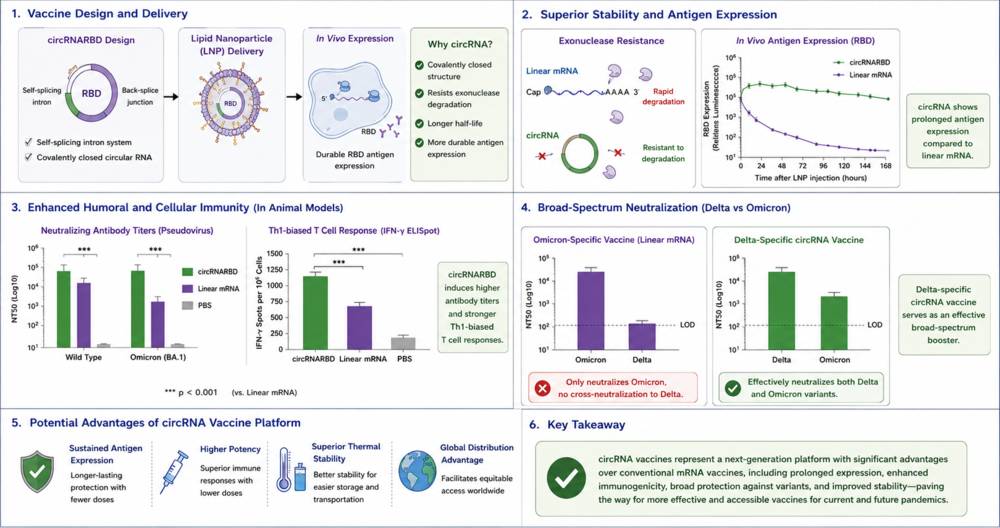 Figure 2. circRNA: a next-Generation vaccine platform against SARS-CoV-2.
Frequently Asked Questions
Q: Are all circRNAs more stable than linear RNAs?
A: No. Circular topology often protects against exonucleases, but actual half-life depends on sequence, structure, associated proteins, endonuclease susceptibility, and cell context. Stability should be measured directly against a relevant linear comparator.
Q: Does RNase R resistance prove that an RNA is circular?
A: No. RNase R enrichment is supportive but not definitive because some structured linear RNAs resist digestion and some circles can be degraded. Junction sequencing, northern blotting, and topology-sensitive methods improve confidence.
Q: Do most circRNAs function as microRNA sponges?
A: Probably not. Effective sponging requires sufficient abundance, accessible high-affinity binding sites, and favorable stoichiometry. CDR1as is a well-supported but unusually site-rich example.
Q: Can endogenous circRNAs encode proteins?
A: A subset can be translated through cap-independent mechanisms, including IRES-like or m6A-associated initiation. Translation claims require controls that exclude linear by-products and verify a junction-dependent protein product.
Q: Why are circRNAs being explored as therapeutic molecules?
A: Engineered circRNAs can provide durable RNA persistence and prolonged protein production without genomic integration. Their value still depends on purity, delivery, immune compatibility, dose control, and the biological need for sustained activity.
Q: What is the most important early circRNA experiment?
A: The first priority is orthogonal confirmation of circular identity. Once identity is established, abundance, localization, stability, and mechanism-specific function should be assessed in the intended model.
Overview of What Creative Biolabs Can Provide
Creative Biolabs can support circRNA-oriented research from molecule selection and structural confirmation to cellular localization, functional validation, synthesis, and delivery formulation. The support package should be matched to whether the project concerns an endogenous biomarker, a mechanistic non-coding RNA, or an engineered expression molecule.
| Research Need | Related Creative Biolabs Support | How It Connects to the Current Resource Topic |
|---|---|---|
| Integrated circRNA project planning | Circular RNAs (circRNAs) Services | Connects biological questions with design, analysis, functional testing, and delivery considerations. |
| Custom molecule generation | Custom Circular RNAs Synthesis Service | Provides designed circRNA material for mechanistic, expression, or application-focused studies. |
| Identity and molecular characterization | Circular RNA Analysis Services | Supports confirmation of circularity, abundance, structural features, and related analytical questions. |
| Cell- and tissue-level localization | In Situ Hybridization Detection Service for Circular RNAs | Adds spatial context to junction-specific circRNA expression in cells or tissue sections. |
| Synthetic circRNA function | Custom In Vitro Study Service for Synthetic Circular RNAs | Links molecular quality with cell-based activity, viability, and mechanism-relevant readouts. |
| Expression confirmation | In Vitro Expression Validation Service for Synthetic Circular RNAs | Evaluates intracellular presence and expression behavior before broader functional studies. |
Projects can be configured around the intended circRNA function, molecule format, model system, and validation depth. Researchers may contact us today to discuss a fit-for-purpose study plan.
References
- Gu A, Jaijyan D K, Yang S, et al. Functions of circular RNA in human diseases and illnesses. Non-coding RNA, 2023, 9(4): 38. https://doi.org/10.3390/ncrna9040038 Distributed under Open Access license CC BY 4.0, with modification.
- Qu L, Yi Z, Shen Y, et al. Circular RNA vaccines against SARS-CoV-2 and emerging variants. Cell, 2022, 185(10): 1728-1744. e16. 10.1016/j.cell.2022.03.044
