
ASO Chemical Modifications
ASO chemical modifications determine how effectively an antisense oligonucleotide survives in biological fluids, reaches target tissues, binds its RNA target, and produces a durable pharmacological response. Backbone, sugar, and nucleobase modifications can support RNase H–mediated gene silencing, splice switching, exon skipping, and translation control while improving stability, tissue exposure, potency, and tolerability and limiting immune stimulation or off-target effects.
Introduction
ASO chemical modifications are strategic structural alterations—spanning the phosphate backbone, ribose sugar, nucleobases, and terminal conjugates—that prevent nuclease degradation, boost RNA target binding affinity, improve tissue distribution, and enable precise mechanism compatibility.
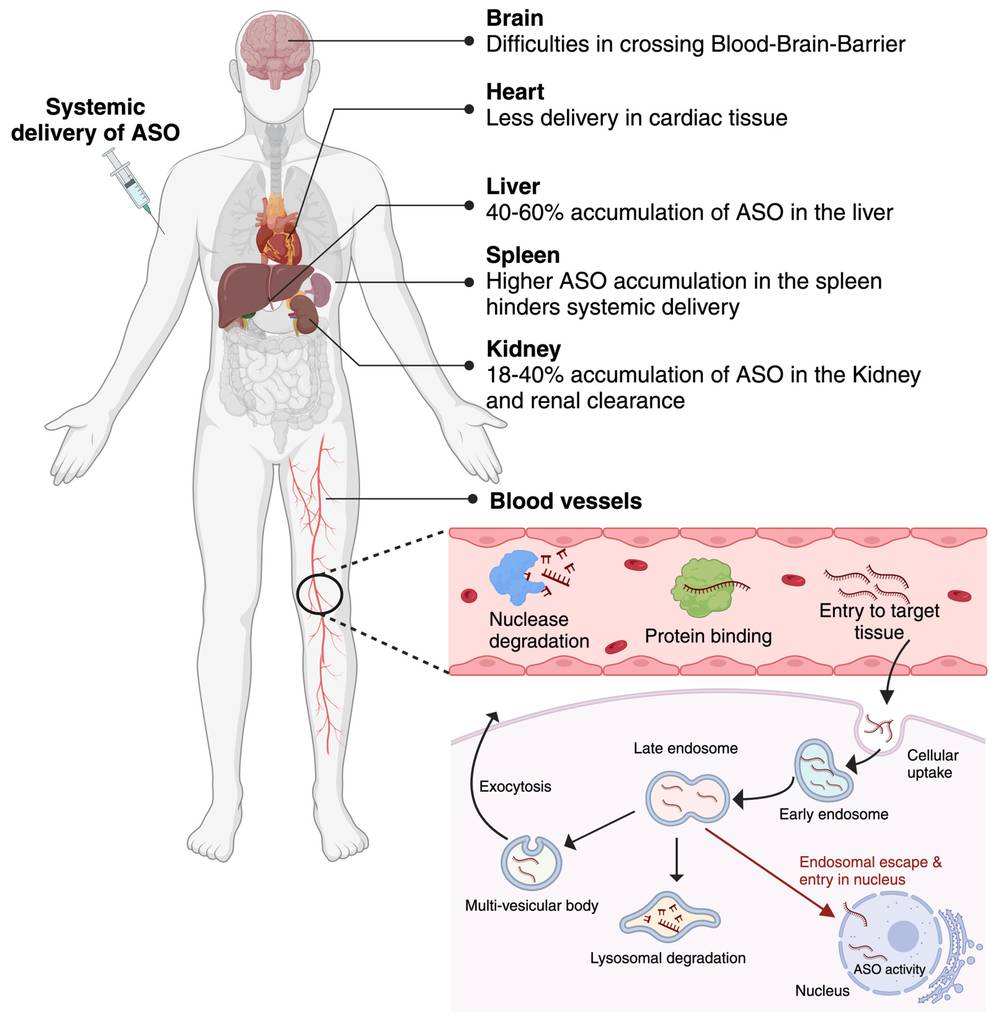 Figure 1. Challenges in the systemic delivery of ASO drugs.1
Why Native Oligonucleotides Need Chemical Engineering?
Unmodified phosphodiester DNA and RNA are readily attacked by endonucleases and exonucleases. They are also highly polar, can be cleared quickly, and may enter cells inefficiently. Native DNA can support RNase H1, but its duplex affinity and metabolic stability may be insufficient for useful in vivo exposure. Native RNA forms a strong duplex yet does not provide the DNA-like geometry required in the catalytic gap of a conventional RNase H1-active ASO. Chemical modification addresses these limitations by slowing degradation, controlling charge and protein binding, increasing target affinity, and tailoring the duplex structure to the intended mechanism. The resulting compound is better viewed as a synthetic polymer with sequence information than as a miniature natural gene.
The optimization problem is multidimensional
- Affinity should be raised only into a useful window: excessive binding can reduce mismatch discrimination, alter protein interactions, or slow productive turnover.
- Hydrophobicity and charge can change membrane association, plasma distribution, renal clearance, and the uptake pathways available to the oligonucleotide.
- Greater nuclease resistance can extend pharmacology, but it can also prolong the residence of impurities, metabolites, or an ASO that accumulates in a nonproductive compartment.
- A chemistry that performs well in a buffer melting experiment must still be tested in the intended matrix, cell type, tissue, route, and dosing schedule.
A Functional Map of ASO Chemical Modifications
| Modification class | Representative examples | Typical contribution | Design caution |
|---|---|---|---|
| Backbone | Phosphorothioate (PS); phosphodiester (PO); stereodefined PS | Nuclease resistance, charge, protein binding, distribution, and RNase H1-compatible linkages | PS creates chiral phosphorus centers and can increase nonspecific protein interactions |
| Sugar | 2'-O-methyl; 2'-O-methoxyethyl; 2'-fluoro | Raises affinity and nuclease resistance; tunes immune and protein interactions | Most 2'-modified residues do not support RNase H1 within the catalytic gap |
| Constrained sugar | Locked nucleic acid (LNA); constrained ethyl (cEt) | Provides strong affinity per residue and can enable shorter designs | High local affinity may narrow the tolerability window or reduce mismatch discrimination |
| Base | 5-methylcytosine and other substituted bases | Adjusts affinity, motif behavior, and sometimes immune recognition | Base changes can alter synthesis, impurity profiles, and hybridization beyond the intended effect |
| Alternative scaffold | Phosphorodiamidate morpholino oligomer (PMO); peptide nucleic acid (PNA) | Charge-neutral steric blocking with high nuclease resistance | Cellular delivery can be limiting, and RNase H1 is not recruited |
| Terminal or linker | End caps; spacers; conjugation handles | Protects termini or presents a ligand without disrupting hybridization | Linker length, attachment site, and metabolite release can change activity |
Mechanism Constrains Chemical Architecture
Gapmers for RNase H1 activity
A gapmer uses a central stretch of DNA-like nucleotides to form an RNA-DNA duplex that RNase H1 can recognize. Modified wings at the 5' and 3' ends protect against exonucleases and increase affinity. The gap must be long enough to support productive cleavage, but the ideal length depends on the surrounding chemistry and sequence. Extending high-affinity wings can increase potency until excessive binding, protein interactions, or off-target cleavage becomes limiting. The PS backbone is commonly distributed through much or all of the molecule to support stability and tissue uptake. phosphorothioate modification should be viewed as an architectural variable, not merely a yes-or-no feature.
Fully modified steric blockers
| Intended action | Architecture logic | Mechanism-specific assay |
|---|---|---|
| RNase H1 knockdown | DNA-like central gap with stabilizing, affinity-enhancing wings; usually PS-rich | Target RNA cleavage or reduction, followed by protein and phenotype |
| Splice correction or exon skipping | Fully modified 2'-chemistry or charge-neutral steric blocker | Isoform-resolved PCR or sequencing, then functional protein |
| Translation or interaction blockade | High-affinity occupancy without a cleavage-competent gap | Direct interaction, ribosome, or protein-output assay |
| Allele-selective modulation | Short or strategically modified design that maximizes mismatch discrimination | Parallel concentration-response against mutant and wild-type alleles |
| Delivery-linked ASO | Mechanism-compatible ASO plus a terminal linker and targeting ligand | Unconjugated comparator, uptake, productive exposure, and pharmacodynamic readout |
2'-Sugar and Ring-Constrained Modifications
2'-O-substitutions tune an RNA-like duplex
The 2'-position strongly influences sugar conformation, hydration, nuclease recognition, and duplex affinity. 2'-O-methyl (2'-OMe) is a naturally occurring RNA modification that increases stability and affinity compared with DNA. 2'-O-methoxyethyl (2'-MOE) adds a larger side chain and is widely used in gapmer wings and fully modified steric blockers. A DNA/2'-O-methyl RNA chimera can combine a DNA region with modified flanks to balance RNase H1 compatibility and stability. 2'-fluoro provides high affinity in RNA-like duplexes but must be assessed for sequence, metabolism, and application-specific safety rather than treated as interchangeable with 2'-OMe or 2'-MOE.
Constrained sugars deliver high affinity per residue
Locked nucleic acid links the 2'-oxygen to the 4'-carbon, constraining the sugar in an RNA-like conformation and substantially raising duplex melting temperature. Constrained ethyl chemistries use a related principle with different steric and protein-interaction properties. Because each constrained residue contributes strong affinity, they are often placed at selected positions rather than throughout an RNase H1 gap. Shorter designs may gain tissue penetration or allele discrimination, but too many high-affinity residues can stabilize partial matches, change intracellular protein binding, or amplify sequence-dependent toxicity. Optimization should vary both the number and position of constrained residues while holding the target site constant.
Base, Terminal, and Stereochemical Features
Base and terminal changes are positional design variables
Replacing cytosine with 5-methylcytosine can increase duplex stability and may reduce the activity of unmethylated CpG motifs associated with Toll-like receptor 9 recognition. It does not eliminate all innate immune risk, which depends on sequence, backbone, species, dose, and compartment. Other base analogues can tune affinity or permit special recognition, but each adds synthesis and impurity considerations. Terminal caps, inverted bases, non-nucleotide spacers, and linker handles can protect exonuclease-sensitive ends or enable conjugation. Their position matters: a bulky 5'- or 3'-group may alter protein binding, uptake, RNase H1 processing, or metabolite release even when the hybridizing sequence is unchanged.
Material quality must be separated from biological performance
Synthesis produces a distribution of closely related species, especially as length and modification diversity increase. Each coupling, sulfurization, oxidation, deprotection, cleavage, and purification step can create characteristic impurities. A chemically correct nominal sequence can still vary in water content, counterion, residual solvents, endotoxin, identity, purity, and aggregation state. The appropriate analytical panel may include mass spectrometry, chromatographic purity, capillary electrophoresis, UV quantification, melting analysis, and tests matched to the intended biological use. Custom antisense oligonucleotide synthesis should define acceptance criteria before screening so that apparent biological differences are not actually differences in material quality.
How to Select a Modification Pattern?
- Start with mechanism. Preserve a DNA-like gap for RNase H1; use a non-cleaving fully modified or alternative scaffold for steric blocking.
- Set an affinity window rather than maximizing melting temperature. Evaluate full-match potency together with one- and two-mismatch discrimination.
- Match stability to exposure. A short cell assay, repeated systemic dosing, and intrathecal administration may require different backbone and wing patterns.
- Screen protein- and immune-interaction liabilities at relevant concentrations and in species-appropriate systems; chemistry labels alone do not predict tolerability.
- Confirm that the selected pattern can be synthesized, purified, characterized, scaled, and connected to any required ligand without changing the intended mechanism.
Analytical and Biological Readouts
Physical characterization should be connected to biological performance. Identity and purity establish what was tested; nuclease challenge estimates relative stability; thermal melting and kinetic measurements describe target binding; and protein-binding assays probe distribution or liability mechanisms. In cells, total uptake should be separated from productive uptake. Fluorescence can show cell association yet cannot by itself establish that intact ASO reached the nucleus or cytosol. The primary pharmacodynamic readout must match the design, followed by protein and phenotype. Dose-response, time course, washout, and recovery reveal whether greater stability produces useful persistence or simply prolonged intracellular sequestration.
Mechanism-matched readout checklist
- For gapmers, quantify intact ASO or relevant metabolites alongside target RNA reduction, then test downstream protein change.
- For splice switchers, resolve individual isoforms and verify that the altered transcript produces the expected protein, localization, or function.
- For high-affinity chemistries, compare full-match and mismatch concentration-response curves rather than relying only on melting temperature.
- For PS-rich compounds, monitor protein-binding, complement, platelet, cytokine, liver, and kidney signals according to route and development stage.
- For conjugated designs, measure linker stability, ligand integrity, receptor-dependent uptake, and the activity of released or still-conjugated ASO.
Emerging Directions in ASO Chemistry
Current development is moving toward finer control of each molecular layer. Stereodefined linkages, biodegradable or cleavable motifs, new constrained sugars, and site-specific ligand attachments seek to separate productive uptake from unwanted protein binding. High-throughput synthesis and screening can map chemistry-position effects at a scale that was previously impractical, while improved mass spectrometry and sequencing-based assays help connect metabolites with pharmacology. The most promising direction is not a single new monomer but integrated design: mechanism-compatible chemistry, quantitative delivery, manufacturable purity, and safety assays chosen for the tissue and route. Better integration should make modification selection more predictive and less dependent on trial-and-error transfer from unrelated targets.
Published Data
Case 1: Head-to-Head Comparison of MOE/PS and PMO/PDA Modifications in Severe SMA Mice
This study provides a rigorous head-to-head in vivo comparison between two dominant antisense oligonucleotide (ASO) chemistries: 2'-O-methoxyethyl/phosphorothioate (MOE/PS) and phosphorodiamidate morpholino (PMO/PDA). Researchers synthesized identical 20-nucleotide splice-switching sequences (ASO10-29 targeting SMN2 ISS-N1) differing solely in their backbone modifications. In a severe SMA mouse model (Smn-/-; SMN2), equimolar subcutaneous administration on postnatal days 1 and 3 revealed distinct pharmacodynamic profiles. While PMO10-29 achieved faster early blood-brain barrier penetration and central nervous system splice correction, MOE10-29 demonstrated vastly superior efficacy over time. At equivalent doses, MOE10-29 produced longer median survival, superior weight gain, better motor neuron retention, and more robust neuromuscular junction restoration. This enhanced performance was driven by the negatively charged PS backbone of MOE/PS, which promotes plasma protein binding and extends tissue retention half-life compared to the uncharged PMO structure. This case highlights how chemical modifications govern in vivo pharmacokinetics, proving that MOE/PS chemistries offer crucial long-acting therapeutic advantages for chronic, systemic genetic disorders like SMA.
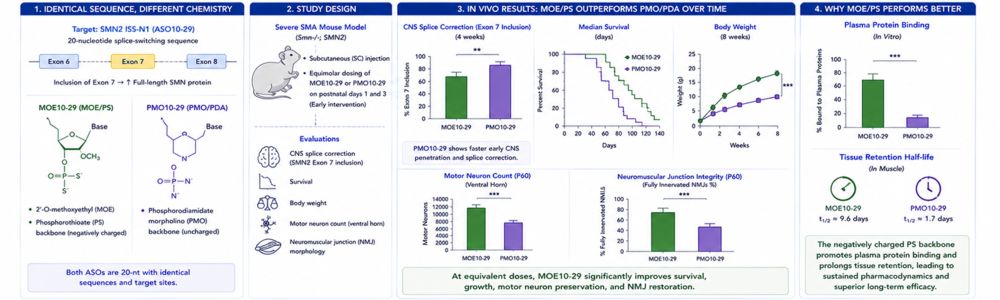 Figure 2. MOE/PS versus PMO/PDA ASO modifications in severe SMA mice. Comparative efficacy study of two ASO chemistries in the SMA mouse model.
Frequently Asked Questions
Q: Why are phosphorothioate linkages common in ASOs?
A: They improve nuclease resistance and increase protein interactions that can support plasma retention, tissue distribution, cellular uptake, and intracellular trafficking. Those same interactions can also contribute to unwanted effects, so the number and placement of PS linkages matter.
Q: Do 2'-modified nucleotides activate RNase H1?
A: Most common 2'-modified residues do not support RNase H1 when placed in the catalytic region. RNase H1-active gapmers therefore retain a central DNA-like gap and use modified residues mainly in the flanking wings.
Q: Are LNA and 2'-MOE interchangeable?
A: No. Both increase affinity and stability, but the magnitude of affinity gain, protein interactions, optimal placement, sequence dependence, and tolerability profiles differ. They should be compared within the intended sequence and mechanism.
Q: What is a gapmer ASO?
A: A gapmer contains a central DNA-like region that recruits RNase H1 and modified flanking wings that improve stability and target affinity. Gap length, wing chemistry, backbone pattern, and total length are co-optimized.
Q: Why does a phosphorothioate ASO contain many stereoisomers?
A: Each PS linkage introduces a chiral phosphorus center. Unless stereochemistry is controlled during synthesis, an ASO with many PS linkages is produced as a complex mixture of configurations.
Q: Does higher melting temperature always mean a better ASO?
A: No. Sufficient affinity is required, but excessive affinity can reduce mismatch discrimination, alter protein interactions, or slow productive turnover. Potency, specificity, delivery, and tolerability must be evaluated together.
Overview of What Creative Biolabs Can Provide
Creative Biolabs can support chemistry-centered ASO programs by linking sequence design, modified monomer and backbone selection, custom synthesis, purification, analytical characterization, and mechanism-matched screening. The chemistry matrix can be tailored to gapmer, splice-switching, steric-blocking, or conjugation-ready formats rather than applying one modification pattern to every target.
| Research Need | Related Creative Biolabs Support | How It Connects to the Current Resource Topic |
|---|---|---|
| Integrated oligonucleotide chemistry planning | Custom Oligonucleotide Synthesis & Modification Services | Supports coordinated synthesis and modification choices across sequence, scale, purification, and analytical requirements. |
| Mechanism-aligned ASO architecture | Antisense Oligonucleotide (ASO) Design and Synthesis Service | Connects target site, gap or fully modified format, affinity, and synthesis feasibility. |
| Custom ASO material | Custom Antisense Oligonucleotide Synthesis | Provides research material with defined sequence, modification pattern, scale, and purification needs. |
| Specialized modification placement | Custom Oligonucleotide Modification Service | Enables backbone, sugar, base, terminal, or linker modifications selected for the research objective. |
| Backbone stabilization | Phosphorothioate Modification | Supports controlled placement of PS linkages for stability and chemistry-performance comparisons. |
| Chimeric architecture | DNA/2'-O-Methyl RNA Chimera | Combines DNA and 2'-O-methyl RNA regions for mechanism- and stability-oriented evaluation. |
| Base-level optimization | Replacement of dC with 5-Methyl-Dc | Adds defined 5-methyl-dC substitutions where affinity or motif behavior warrants direct testing. |
Projects can be scoped around target biology, mechanism, model, and decision-enabling readouts. Researchers may contact us today to define a modification and characterization plan.
References
- Haque U S, Yokota T. Enhancing antisense oligonucleotide-based therapeutic delivery with DG9, a versatile cell-penetrating peptide. Cells, 2023, 12(19): 2395. https://doi.org/10.3390/cells12192395 Distributed under Open Access license CC BY 4.0, with modification.
- Sheng L, Rigo F, Bennett C F, et al. Comparison of the efficacy of MOE and PMO modifications of systemic antisense oligonucleotides in a severe SMA mouse model. Nucleic acids research, 2020, 48(6): 2853-2865. https://doi.org/10.1093/nar/gkaa126
