
circRNA vs mRNA
CircRNA generally provides greater molecular stability and longer-lasting protein expression, whereas mRNA offers faster expression, mature manufacturing workflows, and more established clinical use. CircRNA may be preferred when sustained activity or reduced dosing frequency is important, while mRNA is often better suited to applications requiring rapid and controllable expression. The optimal format depends on expression kinetics, immune response, delivery system, manufacturing complexity, and therapeutic objective.
Introduction
circRNA and mRNA are RNA-based platforms that direct protein expression without integrating into the genome. mRNA enables rapid and transient expression, while the covalently closed structure of circRNA can improve RNA stability and support more sustained protein production. Creative Biolabs offers in vitro expression validation for synthetic circular RNAs, supporting direct comparison with mRNA under relevant experimental conditions.
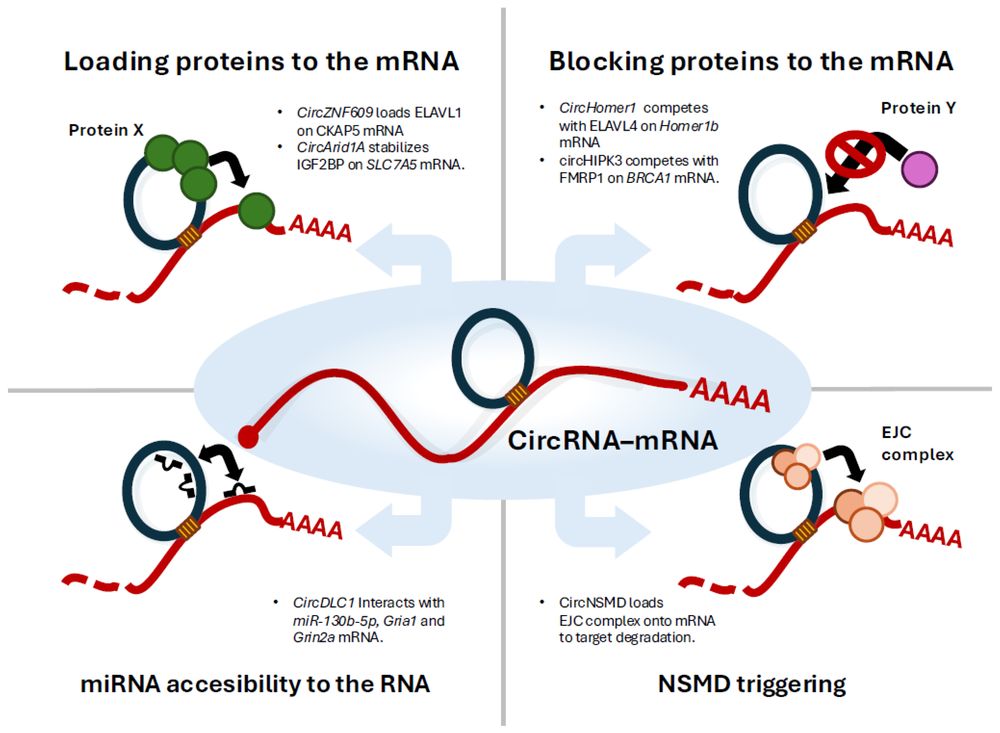 Figure 1. Cartoon showing the several mechanisms involving circRNA-mRNA interaction to regulate mRNA fate.1
How circRNA and mRNA Are Built Differently?
Linear mRNA Architecture
Conventional in vitro-transcribed mRNA is a linear molecule with a 5-prime cap, a 5-prime untranslated region (UTR), an open reading frame, a 3-prime UTR, and a poly(A) tail. Each element contributes to ribosome recruitment, transcript stability, localization, and protein output. The cap and poly(A) tail also help the transcript resemble mature cellular mRNA, although incomplete capping, double-stranded RNA contaminants, and aberrant transcript lengths can still alter activity and immune sensing.
Circular RNA Architecture
Engineered circRNA forms a covalently closed loop. It has no free 5-prime or 3-prime end and therefore does not use a conventional cap or poly(A) tail. Circularization may be achieved through ribozyme-assisted, enzymatic, or ligation-based approaches, and the resulting back-splice or ligation junction becomes a critical identity attribute. The overview of circular RNA biology is relevant because endogenous circRNAs and synthetic protein-coding circRNAs share the closed topology but may differ substantially in sequence context, purity, translation mechanism, and intended function.
Why Topology Changes Development?
Topology changes the engineering problem. Linear mRNA development emphasizes cap chemistry, poly(A) length, UTR selection, coding-sequence optimization, and control of transcriptional byproducts. CircRNA development adds precursor design, circularization efficiency, junction sequence, removal of linear precursors and concatemers, and validation that translation originates from the intended circular product. A nominally identical protein-coding sequence can therefore produce different expression profiles when placed in linear versus circular architecture.
Table 1. Core Differences Between circRNA and mRNA
| Decision Dimension | mRNA | circRNA | Interpretive Caution |
|---|---|---|---|
| Molecular topology | Linear, capped, usually polyadenylated | Covalently closed loop without conventional cap or poly(A) tail | Topology does not by itself predict protein output |
| Translation initiation | Usually cap-dependent | Usually cap-independent through IRES or engineered elements | Initiation efficiency is sequence- and cell-dependent |
| Expression profile | Often rapid onset with transient decline | Potentially longer persistence and extended translation | Compare functional exposure, not RNA half-life alone |
| Manufacturing maturity | Established IVT, capping, purification, and LNP workflows | Additional circularization and topology-control steps | Process impurities can dominate biological response |
| Analytical identity | Cap, poly(A), integrity, sequence, dsRNA, potency | Circularity, junction, topology, precursor impurities, potency | Orthogonal methods are needed for both formats |
| Clinical experience | Extensive vaccine experience; broader indications under development | Earlier clinical development stage | Platform maturity is application-specific |
Translation and Expression Kinetics
Cap-Dependent mRNA Translation
Most therapeutic mRNAs use cap-dependent translation. After cytosolic release, initiation factors recognize the cap and recruit ribosomes, while the poly(A)-binding protein and UTR elements help support translation. Properly designed mRNA can generate rapid protein expression, which is valuable when the biological effect should begin quickly. Expression usually decreases as the transcript is degraded, diluted by cell division, or silenced by stress and innate immune responses.
Cap-Independent circRNA Translation
Protein-coding circRNA generally requires cap-independent translation, commonly through an internal ribosome entry site (IRES) or engineered sequence elements that recruit translation machinery. Translation efficiency depends on the IRES, adjacent sequence context, RNA secondary structure, cell type, and purity of the preparation. A circular molecule may persist longer than a linear transcript, but a weak initiation element can still yield less protein. Conversely, a strong linear mRNA may produce a higher early peak even if its expression window is shorter.
Compare Functional Exposure, Not Half-Life Alone
The practical comparison is therefore not simply "short mRNA expression versus long circRNA expression." Researchers should compare the area under the protein-expression curve, onset time, peak concentration, cell-to-cell variability, and the duration above a biologically meaningful threshold. For secreted proteins, cumulative exposure may matter more than intracellular peak abundance. For transcription factors or signaling proteins, excessive early expression can distort cell state even when total exposure is modest. The desired control of therapeutic gene expression should define the comparison.
Innate Immune Recognition and Product Purity
RNA and Process-Related Immune Signals
Both platforms can activate innate immune pathways if the RNA contains immunostimulatory motifs, double-stranded RNA, uncapped or incompletely processed species, residual DNA, proteins, or process reagents. Nucleoside modification and chromatographic purification have greatly improved linear mRNA tolerability, but the final response remains dependent on sequence, dose, route, formulation, and target tissue. Innate activation is not always undesirable; vaccine applications may benefit from controlled inflammatory signaling, whereas protein-replacement or regenerative applications may require minimal cytokine induction.
Why Topology Is Not a Safety Claim
Early studies suggested that highly purified circRNA could support extended translation with reduced innate immune activation relative to some unmodified linear mRNAs. That conclusion should not be generalized to every construct. CircRNA preparations can contain linear precursor RNA, nicked circles, intron-derived sequences, concatemers, and double-stranded structures. Different circularization methods leave different sequence scars and impurity profiles. Immunogenicity must therefore be measured for the actual product and formulation rather than inferred from circular topology.
Separate RNA, Carrier, and Protein Effects
A useful study separates three questions: whether the RNA molecule itself activates pattern-recognition receptors, whether the delivery carrier contributes inflammatory signals, and whether the encoded protein creates the observed response. Cytokine release, interferon-stimulated gene expression, cell viability, stress markers, and adaptive immune responses to the encoded protein should be interpreted together. Empty-carrier, mock-transcribed, noncoding RNA, and protein-only controls can prevent incorrect attribution.
Delivery, Manufacturing, and Analytical Control
Delivery Barriers and Carrier Fit
Neither mRNA nor circRNA readily crosses cellular membranes because both are large, negatively charged, and susceptible to extracellular nucleases. Lipid nanoparticles (LNPs), polymeric particles, extracellular vesicles, peptides, and local physical methods can protect RNA and promote cellular uptake. Delivery remains strongly tissue-dependent: a formulation effective in hepatocytes may perform poorly in lung epithelium, immune cells, muscle, or the central nervous system. For both RNA formats, endosomal escape is often the limiting intracellular step.
Manufacturing Maturity and Product Definition
Linear mRNA has a more mature manufacturing and regulatory history. In vitro transcription, capping, polyadenylation, purification, and LNP encapsulation have been implemented at large scale for vaccines. CircRNA manufacturing is less standardized because circularization and purification strategies vary. Yield must be considered together with the fraction of correctly closed product, junction integrity, residual linear RNA, RNA topology, and functional translation. A high total-RNA yield can be misleading when only a fraction is the intended active species.
Analytical Comparability
Analytical comparability is also different. mRNA identity panels typically examine sequence, cap status, poly(A) distribution, integrity, concentration, residual template DNA, double-stranded RNA, and potency. CircRNA panels require many of the same tests plus orthogonal evidence of circularity, junction identity, resistance patterns, topology, and residual precursor species. When either payload is formulated, particle size, polydispersity, encapsulation, lipid or polymer content, morphology, release, stability, and cell-based potency become part of the product definition. The underlying liposome and cationic lipid principles apply to both, but formulation transfer between payloads should be demonstrated rather than assumed.
Table 3. Minimum Comparative Readout Package
| Layer | Suggested Readouts | Decision Enabled |
|---|---|---|
| RNA identity | Full-length integrity, sequence, cap/poly(A) for mRNA, circular junction and topology for circRNA | Confirms the intended active molecule |
| Impurity profile | Residual DNA, proteins, solvents, dsRNA, linear precursor, concatemers | Separates platform effects from process artifacts |
| Delivery | Encapsulation, uptake, endosomal escape, tissue distribution | Shows whether the carrier or RNA limits exposure |
| Expression | Onset, peak, duration, area under the protein-time curve | Connects RNA architecture to useful protein exposure |
| Biology and safety | Potency, viability, cytokines, stress genes, off-target tissue effects | Defines the benefit-risk window |
How to Choose Between circRNA and mRNA?
Table 2. Research Question Versus Preferred Starting Platform
| Research Question | Potential Starting Point | Why | What Must Still Be Tested |
|---|---|---|---|
| Is a rapid transient protein pulse required? | mRNA | Fast cytosolic translation and controllable decay | Peak-related toxicity and duration |
| Would longer nonintegrating expression improve efficacy? | circRNA | Closed topology may extend RNA persistence | IRES efficiency, purity, and reversibility |
| Is manufacturing speed critical for personalized sequences? | mRNA | More established modular production workflows | Batch-specific potency and formulation compatibility |
| Is repeated dosing anticipated? | Either, often mRNA first | Duration and redosing can be adjusted experimentally | Carrier immunity, accumulation, and tissue tolerance |
| Is a direct platform comparison needed? | Matched mRNA and circRNA pair | Separates topology from coding-sequence effects | Molecule-normalized dose, uptake, and protein kinetics |
Application-Specific Platform Choices
01 In Vivo and Therapeutic Applications
Vaccination, protein replacement, cancer immunotherapy, cell engineering, and regenerative medicine impose different requirements. Preventive vaccines may prioritize rapid antigen expression, scalable manufacturing, and a formulation that provides appropriate innate stimulation. Personalized cancer vaccines require fast sequence-to-product turnaround and multiplexed antigen encoding. Protein replacement may benefit from sustained expression but also demands low inflammation and dose-dependent pharmacology.
02 Ex Vivo Cell Engineering
For ex vivo cell engineering, the shorter expression of mRNA can be an advantage when a nuclease, transcription factor, or receptor should act temporarily. CircRNA may be considered when longer expression is needed without DNA integration, but persistence must be evaluated through cell expansion and differentiation. For secreted cytokines or growth factors, duration, local concentration, and off-target tissue exposure are central. The broader category of protein-coding genes helps frame whether the payload should replace a protein, modulate a pathway, present an antigen, or transiently reprogram a cell.
Published Data
Case 1: Parallel Evaluation Demonstrates Superiority of Circular RNA Over Linear mRNA Vaccines
This landmark 2022 Cell study provides a direct parallel comparison between circular RNA (circRNA) and linear mRNA vaccines using identical SARS-CoV-2 RBD trimer antigens, LNP delivery, and animal models. Synthesized via the PIE self-splicing system, the circRNA vaccine showed a 2.5-fold longer half-life than linear mRNA due to its exonuclease-resistant structure. In mice and rhesus macaques, circRNA-RBD induced comparable IgG titers to linear mRNA but generated a significantly higher proportion of neutralizing antibodies and a distinct Th1-biased T-cell response. Furthermore, a Delta-specific circRNA vaccine conferred broader neutralizing protection against both Delta and Omicron strains than its linear mRNA counterpart, effectively suppressing viral loads in macaque lungs and nasal passages upon challenge. This head-to-head evaluation proves that circRNA is not merely a more stable alternative to mRNA; its structural circularity alters translation kinetics and immune recognition, delivering qualitative advantages in antibody precision, broad-spectrum cross-protection, and therapeutic durability.
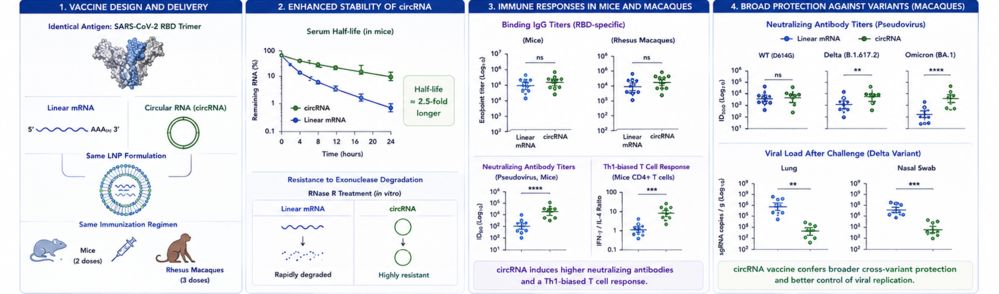 Figure 2. CircRNA vs. linear mRNA vaccine comparison.
Frequently Asked Questions
Q: Is circRNA always more stable than mRNA?
A: CircRNA is often more resistant to exonuclease-mediated degradation because it lacks free ends, but measured stability depends on sequence, structure, cell type, formulation, and analytical method. A stable circRNA can still translate poorly, so stability should be linked to protein output and function.
Q: Does circRNA always produce protein for longer than mRNA?
A: Not necessarily. Extended expression requires an effective translation-initiation element, a suitable sequence context, successful cytosolic delivery, and a pure circular product. An optimized nucleoside-modified mRNA may outperform a weak circRNA construct in both peak and total protein output.
Q: Is circRNA less immunogenic than mRNA?
A: It can be under some conditions, but topology alone is not sufficient to predict immunogenicity. Double-stranded RNA, residual linear species, sequence motifs, carrier composition, route, and dose can alter innate responses for either platform.
Q: Can the same LNP formulation be used for circRNA and mRNA?
A: A formulation may be transferable, but performance should be verified. Differences in RNA length, structure, flexibility, and manufacturing impurities can change encapsulation, particle properties, release, and biological potency.
Q: Which platform is better for vaccines?
A: Linear mRNA currently has the strongest manufacturing and clinical precedent for vaccines. CircRNA may offer prolonged antigen expression, but the optimal duration and inflammatory profile depend on the pathogen, antigen, dose, and formulation.
Q: How should circRNA and mRNA be compared experimentally?
A: Use matched coding sequences, comparable molecule-normalized and mass-normalized doses, the same delivery system, relevant primary cells or animals, and longitudinal measurements of RNA, protein, function, and innate immune responses.
Overview of What Creative Biolabs Can Provide
Creative Biolabs can support comparative RNA-platform studies from matched construct design and synthesis through circularity analysis, expression testing, and formulation assessment. Projects can be structured to determine whether a biological objective is better served by rapid linear mRNA expression or a longer-lasting synthetic circRNA profile.
| Research Need | Related Creative Biolabs Support | How It Connects to the Current Resource Topic |
|---|---|---|
| Matched linear and circular payload generation | Custom mRNA Synthesis | Provides a defined linear mRNA comparator with project-specific coding sequence, UTR, cap, and poly(A) requirements. |
| Synthetic circular payload generation | Custom Circular RNAs Synthesis Service | Supports production of engineered circRNA candidates for direct comparison with linear mRNA. |
| Circular product identity and purity | Circular RNA Analysis Services | Addresses circular junction, abundance, localization, and other analytical questions that distinguish circRNA from residual linear species. |
| Comparative expression kinetics | In Vitro Expression Validation Service for Synthetic Circular RNAs | Helps compare onset, magnitude, and duration of protein expression under defined cell conditions. |
| Functional comparison in relevant cells | Custom In Vitro Study Service for Synthetic Circular RNAs | Connects RNA and protein measurements with cell-based functional and tolerability endpoints. |
| Delivery comparison | Lipid Nanoparticle (LNP) | Supports formulation of RNA payloads when protection, cellular uptake, and cytosolic delivery are central to the comparison. |
| circRNA-specific formulation | Custom LNP Formulation Service for Circular RNAs | Addresses payload-specific encapsulation and formulation optimization for circular RNA candidates. |
Projects can be configured around the intended payload, expression window, target cell, route, and validation depth. Researchers may contact us today to discuss a fit-for-purpose study plan.
References
- Garraffo R, Beltran Nebot M. Direct circRNA-mRNA binding controls mRNA fate: a new mechanism for circRNAs. Non-coding RNA, 2025, 11(4): 53. https://doi.org/10.3390/ncrna11040053 Distributed under Open Access license CC BY 4.0, with modification.
- Qu L, Yi Z, Shen Y, et al. Circular RNA vaccines against SARS-CoV-2 and emerging variants. Cell, 2022, 185(10): 1728-1744. e16. 10.1016/j.cell.2022.03.044
