


Glycan Shields of Filoviruses: Ebola and Marburg
Filoviruses, specifically the Ebolavirus and Marburgvirus genera, represent some of the most lethal pathogens known to humanity, causing severe hemorrhagic fevers with high mortality rates. A critical determinant of their pathogenicity and ability to evade the host immune system is the dense array of carbohydrate structures coating their surface proteins, known as the "glycan shield." At Creative Biolabs, we specialize in deciphering these complex sugar codes. Our advanced platform for Anti-Ebola/Marburg Virus Glycan Shield Antibody Development assists researchers in mapping these shields, identifying vulnerable epitopes, and developing novel therapeutic antibodies that can breach these defenses.
The Filovirus Glycoprotein: A Heavily Shielded Target
The viral surface glycoprotein (GP) is the sole protein expressed on the envelope of filoviruses and mediates all critical steps of viral entry, including receptor binding and membrane fusion. It is also the primary target for neutralizing antibodies. The GP exists as a trimer of heterodimers, each consisting of a receptor-binding subunit (GP1) and a fusion subunit (GP2).
What makes the ebola virus glycoprotein and marburg virus gp particularly formidable is their extensive glycosylation. These viral proteins hijack the host cell's glycosylation machinery to coat themselves in host-derived glycans. This coating serves two primary functions: it stabilizes the protein structure and, crucially, creates a steric barrier—a glycan shield—that masks underlying conserved protein epitopes from neutralizing antibodies. Understanding the architecture of this shield is fundamental to rational vaccine and therapeutic design.
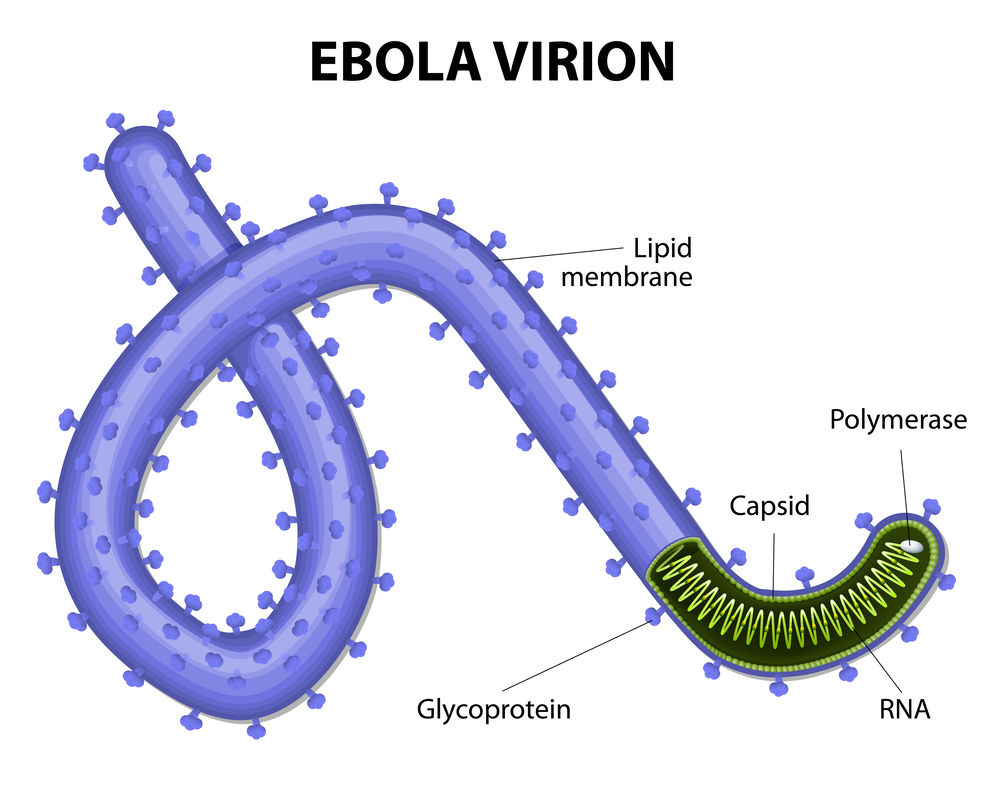
Ebola Virus Glycoprotein (EBOV GP)
Overview: Ebola virus (genus Ebolavirus) is a filamentous, enveloped virus responsible for Ebola Virus Disease (EVD), characterized by severe immune dysregulation and hemorrhagic fever. Its surface GP forms trimeric spikes essential for viral attachment and entry, and it is the sole target for neutralizing antibodies.
MLD Structure: The EBOV GP is characterized by a massive, distinct Mucin-like Domain (MLD) that sits atop the trimer like a chalice. This disordered region is heavily O-glycosylated and effectively masks the receptor-binding domain and the fusion loop from apical antibodies. The sheer bulk of the MLD acts as a primary "umbrella" shield, which must be proteolytically cleaved in the endosome to expose the functional core for viral entry.
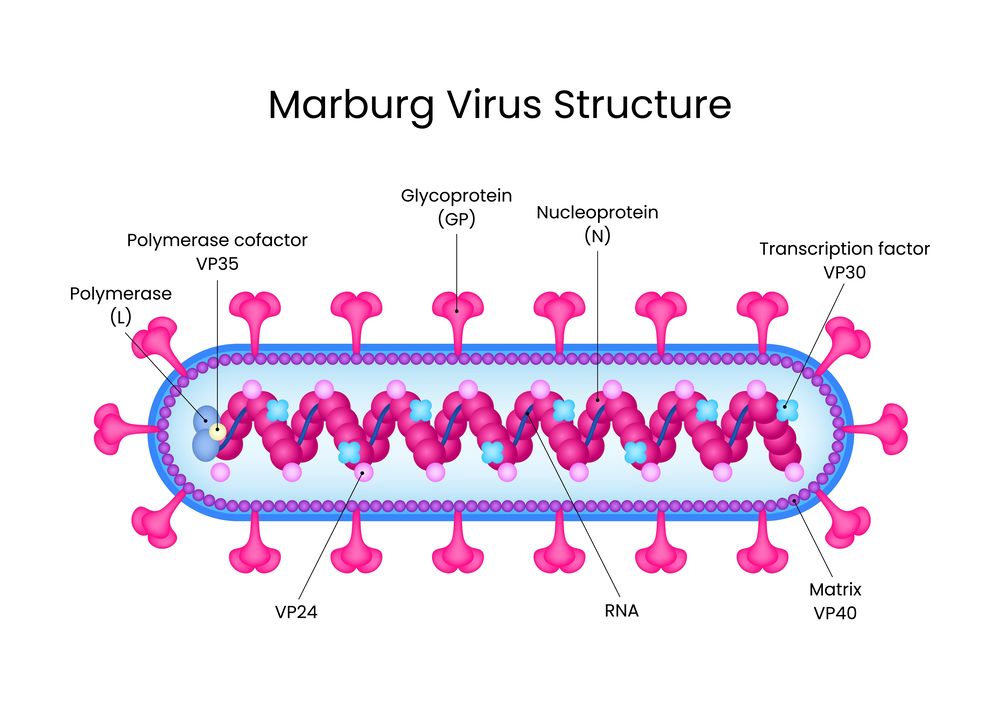
Marburg Virus Glycoprotein (MARV GP)
Overview: Marburg virus (genus Marburgvirus), the causative agent of Marburg Virus Disease (MVD), shares a similar filamentous morphology but is antigenically distinct from Ebola. Despite high fatality rates similar to Ebola, MARV exhibits different outbreak dynamics and pathogenic nuances.
MLD Structure: While the MARV GP also utilizes a glycan shield, its Mucin-like Domain (MLD) is structurally distinct from that of Ebola. Often described as having a different orientation or being more "wing-like," the MARV MLD provides lateral shielding. Despite these structural differences, it performs a similar function of immune evasion. The distinct antigenic profile necessitates specific antibody strategies separate from those used for Ebola.
Detailed Architecture of Filovirus Glycosylation
The filovirus glycan shield is not a monolithic structure but a sophisticated, multi-layered defense system composed of distinct glycan types, each playing a specific role in immune evasion and protein stability.
N-Linked Glycans: The Structural Core
N-linked glycans form the "base" of the shield. They are attached to specific asparagine residues (Asn-X-Ser/Thr) on the core of the GP1 and GP2 subunits. These glycans are highly conserved and play a dual role: they are essential for the proper folding and stability of the protein, and they form a discontinuous barrier that protects the fusion machinery and the base of the receptor-binding domain.
O-Linked Mucin-Like Domain (MLD): The Decoy
The mucin-like domain is unique to filoviruses and constitutes the most variable part of the shield. This disordered region is heavily O-glycosylated (saturated with O-linked glycans), mimicking host mucins.
- Steric Shielding: Its massive volume effectively covers the conserved regions of the GP, physically blocking neutralizing antibodies from reaching critical epitopes.
- Immune Distraction: The MLD acts as an "immunological decoy," tricking the host into producing non-neutralizing antibodies against this variable, disposable region rather than the functional core.
The Glycan Cap: Specific Protection
In addition to the MLD, a specific structure known as the "glycan cap" sits directly above the receptor-binding domain (RBD) in GP1. This cap is heavily N-glycosylated and serves to specifically occlude the receptor-binding site until the virus reaches the endosome. During entry, host proteases remove both the MLD and the glycan cap, unmasking the RBD for binding to the intracellular receptor NPC1.
The Role of Glycans in the Viral Entry Mechanism
Far from being inert shields, these glycans are active participants in the viral entry mechanism. Filoviruses utilize a macropinocytosis-like mechanism to enter cells, a process heavily influenced by glycan-lectin interactions.
Attachment Factors
C-type lectins like DC-SIGN and L-SIGN on host cells bind specifically to the high-mannose N-glycans on the viral surface, concentrating the virus for entry.
NPC1 Interaction
The intracellular receptor Niemann-Pick C1 (NPC1) is essential for fusion. Glycan removal is a prerequisite for NPC1 binding.
Cathepsin Cleavage
Host proteases must strip away the heavily glycosylated MLD and glycan cap in the endosome to unlock the fusion machinery.
Antibody Targeting
Rare antibodies that can penetrate the glycan shield or bind to the "unmasked" GP in the endosome are key therapeutic candidates.
Our Solutions for Filovirus Glycan Research
Targeting the filovirus glycan shield requires a specialized approach that goes beyond standard protein biology. Creative Biolabs provides a comprehensive suite of services designed to dissect the structural and functional roles of these glycans.
Anti-Glycan Shield Antibody Development
We utilize phage display and hybridoma technologies optimized for carbohydrate antigens to generate antibodies that specifically recognize the MLD or penetrate the glycan shield to reach conserved epitopes. We can also develop antibodies against the "cleaved" form of the GP to mimic endosomal targeting.
Glycoarray Platforms
Our high-throughput glycoarray chips feature specific filovirus-associated glycan structures. This allows for the rapid screening of sera or antibody candidates to determine their glycan-binding specificity and cross-reactivity profiles.
Glycosylation Analysis
Using mass spectrometry and HPLC, we provide detailed mapping of the N-linked and O-linked glycans on your recombinant viral proteins. This ensures that your immunogens and vaccine candidates possess the correct "shield" architecture compared to the native virus.
Custom Glycosylation of Biomolecules
We offer enzymatic and chemical remodeling of viral glycoproteins to produce homogenous glycoforms. This service is essential for structural biology studies (crystallography, Cryo-EM) and for generating defined antigens for immunization.
Inquire About Filovirus Glycan Services
Published Data
Recent structural elucidations have provided critical insights into how broadly neutralizing antibodies can breach the formidable glycan shield of filoviruses. A landmark study utilizing X-ray crystallography determined the high-resolution structure of a cross-protective antibody complexed with the Ebola virus glycoprotein (GP). The research reveals that while the GP is heavily glycosylated, specifically within the mucin-like domain and glycan cap which function as steric barriers, there exist conserved sites of vulnerability at the GP1-GP2 interface. The structural data demonstrates that this potent antibody targets the fusion loop stem, a region critical for viral entry. Notably, the antibody circumvents the dense glycan array by approaching the GP laterally, anchoring itself across both subunits. It effectively inserts its heavy chain complementarity-determining region into a specific hydrophobic cavity—previously identified as a binding pocket for small-molecule inhibitors—thereby locking the glycoprotein in a pre-fusion conformation. Furthermore, the study highlights how somatic maturation enables the antibody to accommodate the steric bulk of the glycan cap, effectively bridging the cathepsin cleavage loop. These findings define the fusion loop stem and its associated inhibitor-binding cavity as a prime target for rational vaccine design, demonstrating that the glycan shield, while extensive, possesses exploitable structural breaches.
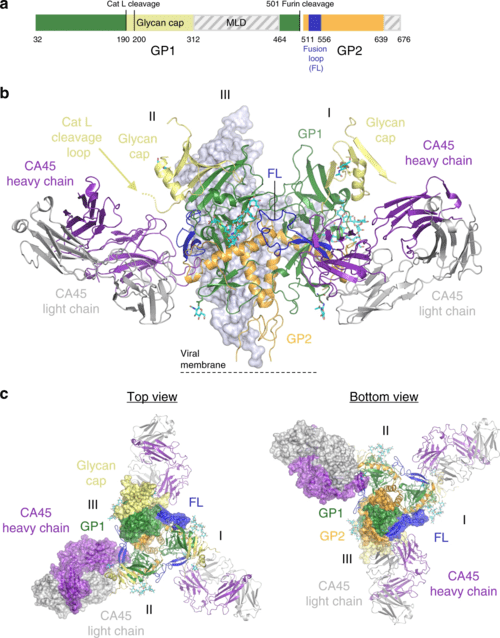 Fig.1 Crystal structure of the Ebola virus glycoprotein in complex with a cross-protective antibody.1
FAQs
What is the primary function of the mucin-like domain (MLD) on the Ebola virus GP?
The MLD serves primarily as a steric shield and an immunological decoy. Its heavy O-linked glycosylation protects the underlying conserved protein core from neutralizing antibodies. It is also highly immunogenic, distracting the immune system into producing non-neutralizing antibodies against the variable MLD region itself.
How does the glycan shield differ between Ebola and Marburg viruses?
While both viruses are heavily glycosylated, the specific arrangement differs. Ebola GP has a distinct, massive MLD capping the trimer. Marburg GP lacks a homologous, clearly defined MLD in the same structural position, although it still possesses a region rich in O-linked glycans (sometimes called the "wing" domain) that performs a similar shielding function but results in a different antigenic profile.
Can antibodies penetrate the filovirus glycan shield?
Yes, but they are rare. Some broadly neutralizing antibodies have evolved to insert long CDR loops (Complementarity-Determining Regions) through the gaps in the glycan shield to reach conserved protein epitopes. Others bind to the base of the GP, which is less heavily glycosylated.
What role do host lectins play in filovirus entry?
Host C-type lectins, such as DC-SIGN and L-SIGN expressed on dendritic cells and liver cells, bind specifically to the high-mannose N-glycans on the viral surface. This interaction does not trigger fusion directly but acts as an attachment factor, concentrating the virus on the cell surface and facilitating its uptake into the endosome.
Why is the "cleaved" form of the glycoprotein important for antibody development?
During entry, host proteases in the endosome cleave off the MLD and glycan cap, producing a "cleaved GP." This form exposes the receptor-binding domain necessary for interacting with the intracellular receptor NPC1. Antibodies that target this cleaved form can potentially neutralize the virus by blocking the NPC1 interaction inside the cell.
Do filovirus glycans trigger Antibody-Dependent Enhancement (ADE)?
There is evidence suggesting ADE in filovirus infections. Non-neutralizing antibodies that bind to the glycan shield or the MLD can cross-link the virus to Fc-receptor-bearing immune cells, potentially facilitating viral uptake and increasing infection rates in certain contexts.
How can Creative Biolabs help analyze the glycan shield?
We offer comprehensive glycosylation analysis using mass spectrometry to map specific glycan sites and compositions, glycoarray screening to test antibody specificity, and custom synthesis of glycopeptides for epitope mapping.
Are these services applicable to vaccine design?
Absolutely. Understanding the glycan shield is crucial for rational immunogen design. By modifying or removing specific glycosylation sites ("glycan engineering"), researchers can expose conserved epitopes to the immune system, potentially eliciting a broader neutralizing antibody response.
Reference:
- Janus, B.M., et al. "Structural basis for broad neutralization of ebolaviruses by an antibody targeting the glycoprotein fusion loop." Nature Communications 9 (2018): 3934. Distributed under Open Access license CC BY 4.0. https://doi.org/10.1038/s41467-018-06113-4