


Glycosaminoglycan (GAG) Microarray
At Creative Biolabs, our glycoarray platforms provide cutting-edge tools for glycoscience research, offering a wide range of glycan-based microarray services, including our glycosaminoglycan (GAG) microarray service. This high-throughput technology is designed to accelerate the discovery and analysis of protein-GAG interactions, enabling rapid identification of key glycan-binding proteins. Our platform is equipped with the latest advancements to support your research in diverse applications, from viral infections to cancer research, biomarker discovery, and therapeutic development. Whether you are studying the fundamental biology of GAGs or seeking innovative drug targets, Creative Biolabs offers tailor-made solutions to meet the specific needs of your project.
What is a GAG Microarray?
A GAG microarray is a high-throughput tool for screening the binding interactions between proteins and various glycosaminoglycans. GAGs are immobilized on a microarray surface, and protein binding is detected by fluorescent labels, providing a comprehensive analysis of glycan-specific interactions. This technology is indispensable in glycobiology, facilitating the identification of GAG-binding proteins with high sensitivity and specificity. Creative Biolabs offers ready-to-use GAG microarrays for researchers looking to study glycan-protein interactions. These platforms provide easy access to a range of GAGs and customizable solutions to fit specific research objectives. Our platforms enable you to conduct your studies with ease, ensuring high-quality data and reliable results.
Common GAGs Used in Microarrays
| Type | Description | GAG Examples |
|---|---|---|
| Heparin/Heparan-Type GAGs | Highly sulfated, iduronic acid-rich |
|
| Chondroitin/Dermatan-Type GAGs | GalNAc-containing, variably sulfated |
|
| Keratan-Type GAGs | Gal and GlcNAc repeating units |
|
| Non-sulfated Linear GAGs | Non-sulfated |
|
GAG Microarray Workflow at Creative Biolabs
At Creative Biolabs, we offer a comprehensive and customizable GAG microarray workflow designed to meet the unique needs of your research. Our platform allows you to conduct high-throughput glycan-binding screenings with flexibility, ensuring that your study yields the most accurate and relevant results.
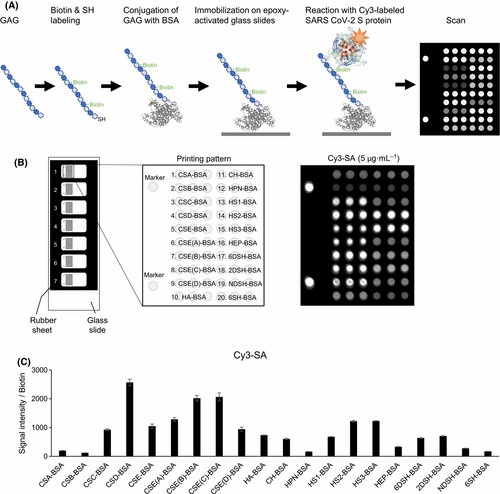 Fig.1 GAG microarrays development and validation workflow.1
1. Biotin and SH Labeling of GAGs
Glycosaminoglycans are first modified with biotin and thiol (-SH) groups at their reducing ends. This is an essential step, cause biotin is essential for subsequent quantification and thiol groups enable site-specific conjugation.
2. Custom GAG-BSA Conjugate Preparation
Then we start to prepare GAG-BSA conjugates, where glycosaminoglycans (such as heparin, heparan sulfate, chondroitin sulfate, and others) are covalently linked to bovine serum albumin (BSA). This conjugation ensures that GAGs remain stable and functional throughout the experiment, allowing for accurate binding assays.
3. Microarray Production
The GAG-BSA conjugates are then printed onto epoxy-coated glass slides using a non-contact microarray printer, ensuring precise immobilization in a defined pattern. We offer a wide range of GAGs, from well-characterized sulfated GAGs like heparin and heparan sulfate to chondroitin sulfate E (CSE), which can be tailored to your specific needs.
4. Protein Incubation and Binding Detection
Our next step involves incubating the printed microarrays with fluorescently labeled proteins. After the incubation, the binding of proteins to the GAGs is detected using a fluorescence scanner, which captures the binding intensity. This allows for the detailed analysis of protein-GAG interactions in real time.
5. Data Analysis
The binding data is then analyzed to quantify the interaction between proteins and each GAG. Our platform provides detailed, high-throughput analysis, enabling you to identify the most relevant protein-GAG interactions for your research.
Customization Options for You
At Creative Biolabs, we understand that each research project has unique requirements. Our GAG microarray services can be fully customized to include specific GAGs or proteins, ensuring that your study focuses on the interactions that matter most to your research goals.
Tailor Your GAG Microarrays
Advantages of GAG Microarrays
- High Throughput: Our platform allows for the simultaneous screening of multiple GAG-binding proteins, providing a comprehensive analysis of glycan interactions in one experiment.
- Customizability: We offer tailored solutions to fit your specific research needs, whether it's a specific GAG or protein type you are interested in.
- Sensitivity: The use of fluorescent labeling ensures high sensitivity, enabling the detection of low-affinity interactions.
- Broad Application: GAG microarrays are suitable for a wide range of research applications, including viral research, cancer studies, and drug development.
Applications of GAG Microarrays
GAG microarrays are invaluable for a range of scientific and therapeutic applications, including studies on viral infections, cancer progression, and the discovery of biomarkers. These arrays enable researchers to explore the intricate interactions between GAGs and proteins, offering insights into the mechanisms underlying disease processes and therapeutic strategies.
Viral Infection Studies
GAGs act as attachment factors for a variety of viral pathogens, facilitating their entry into host cells. For example, the SARS-CoV-2 spike protein binds to heparan sulfate (HS) and chondroitin sulfate E (CSE), enhancing the virus's ability to infect cells. Using GAG microarrays, researchers can screen viral proteins to identify specific GAGs involved in virus attachment and infection, aiding in the development of targeted antiviral therapies.
Cancer Research
In cancer, GAGs regulate key processes such as cell migration, angiogenesis, and metastasis. GAG microarrays allow researchers to examine how specific GAGs interact with growth factors and other proteins involved in tumor progression. Understanding these interactions is critical for identifying novel cancer biomarkers and therapeutic targets.
Biomarker Discovery
GAG microarrays are essential for discovering new biomarkers, particularly in diseases like cancer and autoimmune disorders, where changes in GAG-protein interactions can indicate disease progression or therapeutic responses. By screening GAG-binding proteins, researchers can identify potential biomarkers for early diagnosis, prognosis, and treatment monitoring.
Drug Development
GAG microarrays enable high-throughput screening of small molecules and biologics that target GAG-protein interactions. By identifying compounds that block these interactions, researchers can develop new drugs to treat diseases such as viral infections, cancer, and inflammatory disorders. This approach accelerates the drug discovery process, bringing novel therapies closer to clinical use.
Related services You May Be Interested in
Creative Biolabs offers a comprehensive portfolio of glycan microarray platforms to support diverse glycomics studies. In addition to our glycosaminoglycan microarray, you may also be interested in:
-
100 Glycan Microarray
Broad-spectrum platform featuring 100 defined glycan structures for high-throughput screening. -
100 N-Glycan Microarray
Focused microarray covering major N-linked glycan subtypes for detailed interaction analysis. -
Oligosaccharide Microarray
Designed for probing short-chain glycan-protein interactions with structural specificity. -
Polysaccharide Microarray
Tailored for analyzing microbial or plant-derived polysaccharide binding profiles. -
ABH-Glycan Microarray
For blood group-related glycan recognition and lectin profiling. -
HMO Microarray
Ideal for deciphering infant microbiome–glycan and host–pathogen interactions.
You can learn more about these platforms or request a custom configuration based on your target glycans or analytes. Our technical specialists are ready to support your glycan research from design to data analysis.
Glycosaminoglycan microarrays are an indispensable tool for studying glycan-protein interactions in various biological processes. At Creative Biolabs, we provide an advanced GAG microarray service that offers flexibility, high-throughput screening, and comprehensive data analysis to meet your specific research needs. Our platform is here to support your research with accuracy and efficiency. If you want more information on our GAG microarray services and to get started with a customized study, contact us today!
Reference:
- Watanabe, Tomoko, et al. "A glycosaminoglycan microarray identifies the binding of SARS‐CoV‐2 spike protein to chondroitin sulfate E." FEBS letters 595.18 (2021): 2341-2349. Distributed under Open Access license CC BY 4.0, without modification. https://doi.org/10.1002/1873-3468.14173