


Glycoprotein Microarray
Introduction
Glycosylation is one of the most common and complex forms of post-translational modifications (PTMs). It is a process in which sugars are added to a protein or lipid via enzymatic pathways to form glycoproteins. Glycoproteins are involved in almost all aspects of life including cell signaling, cellular recognition, immune response, and disease progression. Changes in glycosylation patterns can indicate disease states such as cancer or autoimmune diseases. At Creative Biolabs, we understand how important this connection is and have designed our glycoarray platform to allow for high throughput N-linked and O-linked glycosylation screening to profile glycosylation across multiple samples. The glycoprotein microarray service from our lab provides thorough examination of glycoprotein interactions along with precise identification of glycosylation modifications. Our custom arrays provide in-depth and actionable information to support your research in identifying disease pathways and biomarkers, helping you get the answers you need.
Glycoprotein Microarray Principle
Glycoproteins are precisely immobilized onto a solid surface. We then incubate these arrays with specialized detection reagents – such as lectins or antibodies – often conjugated with fluorescent tags. These reagents bind specifically to glycosylation sites on the target glycoproteins. Binding events are quantified using advanced laser scanning systems. This provides clear, quantitative profiling of glycosylation patterns and reveals variations across different samples in your study. The core strength of this technology is its ability to deliver large-scale analysis of protein glycosylation efficiently. It eliminates the need for labor-intensive, complex carbohydrate synthesis or costly high-volume antibody production. Crucially, our glycoprotein microarray service enables parallel screening of numerous glycosylated proteins simultaneously, providing comprehensive data in a single experiment.
Types of Glycoprotein Microarrays
- Lectin Microarrays: Our lectin microarrays use diverse carbohydrate-binding proteins to identify general glycosylation patterns across glycoprotein samples.
- Antibody Microarrays: We offer antibody microarrays customized to profile specific glycan modifications like sialylation or fucosylation for targeted analysis.
- Natural Glycoprotein Microarrays: Our natural glycoprotein microarrays feature biologically derived proteins, providing authentic glycosylation data despite isolation challenges.
Glycoprotein Microarray Workflow
Our glycoprotein microarray service follows a streamlined, high-throughput workflow that ensures accuracy and efficiency in glycosylation analysis. Below is a simplified overview of the key steps involved:
- Sample Preparation: Glycoproteins are extracted from biological samples (serum, tissue, or cell lysates).
- Array Printing: Glycoproteins are spotted onto a chemically derivatized solid surface to create the microarray.
- Probing: The microarray is probed with specific detection reagents (lectins, antibodies, or other binding molecules).
- Signal Detection: Fluorescent or colorimetric signals are generated and quantified using a laser scanning system.
- Data Analysis: The interaction data is analyzed to identify glycosylation patterns and modifications associated with specific diseases.
This efficient process allows for high-throughput analysis with minimal sample input, making it ideal for large-scale studies.
Advantages of Glycoprotein Microarrays
Our glycoprotein microarrays stand out for three reasons:
- High Throughput & Efficiency: Analyze multiple glycoproteins simultaneously, saving significant time and cost.
- Versatility: Tailored arrays study diverse glycosylation from serum, tissues, or cells.
- Cost-Effectiveness: Screen hundreds to thousands of glycoproteins cost-efficiently in one run.
Related Services
At Creative Biolabs, we offer a comprehensive suite of glycosylation analysis services to complement our glycoprotein microarray technology. Explore these related services for an integrated approach to your research:
- Glycan Microarray: Profile a wide range of glycan-binding proteins and antibodies to study glycan structures and their role in diseases.
- Sialoside Microarray: Focus on the profiling of sialic acid-containing glycans to explore their involvement in cell signaling and immune responses.
- Glycopeptide Microarray: Analyze glycosylation patterns on peptides for a more detailed understanding of protein modifications.
- Glycolipid Microarray: Study the glycosylation of lipids to uncover their functional roles in cellular processes and disease progression.
Glycoprotein microarrays deliver large-scale, cost-efficient glycosylation analysis and reveals critical insights with minimal sample requirements. Creative Biolabs, as an industry-leading provider, offers tailored glycoprotein microarray services to accelerate biomarker discovery and research development. For custom solutions or detailed quotes, contact us today.
Published Data
Using a custom glycoprotein microarray featuring 35 glycoproteins presented without artificial chemical linkers, researchers successfully identified proteins expressing the glycan modification 3-O-SGal. Binding studies with probe O6 revealed enhanced interaction for several glycoproteins after neuraminidase treatment—indicating sialic acid molecules were previously masking access to the 3-O-SGal structure. PNGase F treatment further confirmed this glycan is predominantly located on N-linked glycans. This innovative microarray approach allows authentic, high-throughput analysis of glycoproteins in their native state, proving crucial for discovering novel modifications like 3-O-SGal and deciphering their biological roles. Together, these capabilities offer significant potential for developing future diagnostic and therapeutic tools based on glycan structures.
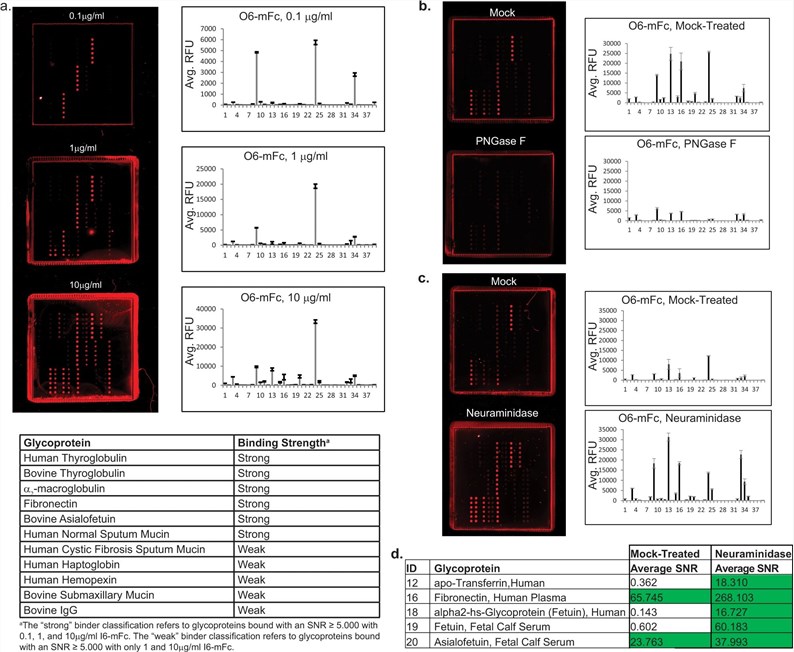 Fig.1 Glycoprotein microarray reveals widespread 3-O-SGal epitope expression and unmasking by neuraminidase treatment.1
Reference:
- McKitrick, Tanya R., et al. "Novel lamprey antibody recognizes terminal sulfated galactose epitopes on mammalian glycoproteins." Communications biology 4.1 (2021): 674. Distributed under Open Access license CC BY 4.0, without modification. https://doi.org/10.1038/s42003-021-02199-7