


Dermatology related Glycan Introduction
Accelerate Your Glycan-Based Discoveries!
Are you currently facing challenges in understanding complex skin disease mechanisms, identifying novel biomarkers, or developing targeted dermatological therapies? Creative Biolabs' advanced Glycan Analysis and Solutions help you unlock the critical role of glycans in skin health and disease, enabling accelerated research and development through cutting-edge glycoprofiling and functional analysis techniques.
Contact our team to get an inquiry now!
Introduction
Dermatology characterizes the clinical specialty concerning integumentary structures, appendages (nails, hair), and associated disorders. This specialty combines clinical and surgical approaches, with practitioners managing varied pathologies ranging from aesthetic concerns in these integumentary components. The field encompasses cosmetic dermatology, dermatopathology, immunodermatology, mohs surgery, pediatric dermatology, teledermatology, and dermatoepidemiology.
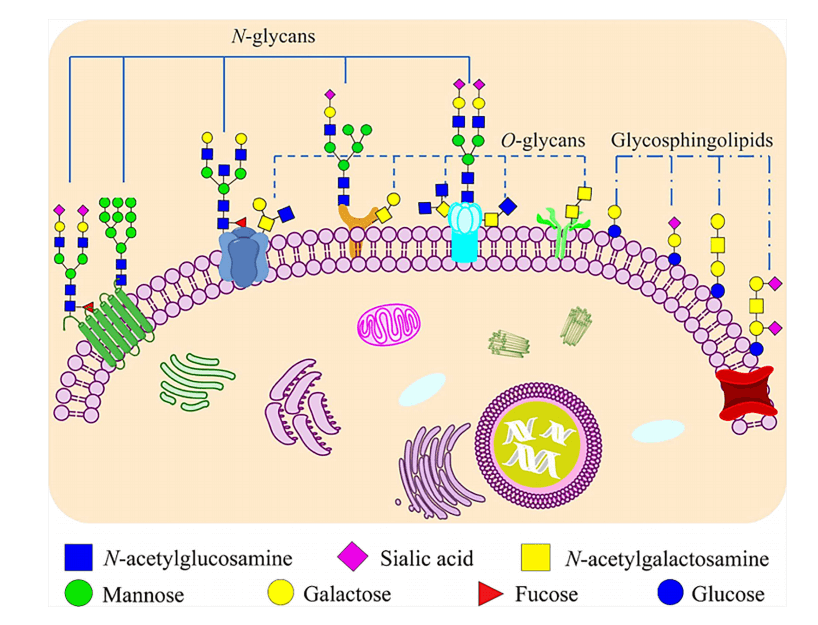 Fig.1 Glycoconjugates that formed by carbohydrates are covalently bonded to proteins and lipids on mammalian cell membranes.1,3
The Role of Glycans in Dermatology
Sugar chains serve diverse physiological roles. Dermatology recognizes two principal glycan functions: involvement in structural and regulatory activities, and specific molecular recognition of glycan motifs by entities like lectin receptors or other proteins. When sugars bind proteins, glycation arises, prematurely aging the organism by reducing protein elasticity, causing cataract formation, impaired neural and renal function, and reduced myocardial contractility. Though this glycation pathway is adverse, surface glycans operate beneficially as cellular antennae, facilitating efficient communication. Sugars are vital for human physiology, and their age-related decline presents a promising focus for anti-aging strategies. Fluorescently labeled surface glycans can be monitored for locational alterations following topical cosmeceutical application, allowing analysis of dermal glycan modulation and aged skin aesthetic improvement.
A shared characteristic of atopic and contact dermatitis involves leukocyte infiltration into the dermal layer, attracting cellular mediators that cause tissue injury. Chronic endothelial E-selectin expression may result from this process. This adhesion molecule recruits bloodborne lymphocytes expressing cutaneous lymphocyte antigen (CLA), typically a distinct E-selectin ligand epitope present on certain P-selectin glycoprotein ligand-1 (PSGL-1) variants. Certain Th1 lymphocytes access skin tissue through PSGL-1-mediated P-selectin binding. These experimental model-derived findings indicate prospective selectin-focused treatment targets for therapeutic advancement.
Published Data
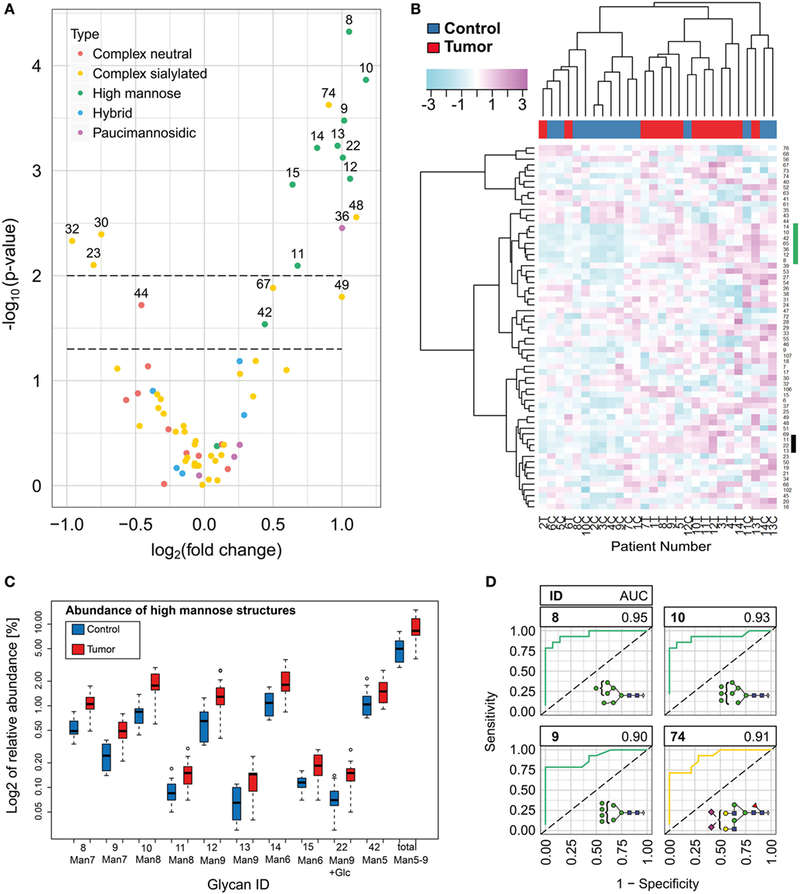 Fig.2 N-glycan level changes in basal cell carcinoma.2,3
In a study investigating glycomic alterations in skin cancers, researchers utilized a multi-platform glycomics approach to analyze matched patient samples of healthy skin, Basal Cell Carcinoma (BCC), and Squamous Cell Carcinoma (SCC). The experimental setup involved analyzing both N- and O-glycans from frozen biopsy and formalin-fixed paraffin-embedded tissue samples. Key techniques employed included porous graphitized carbon nano-liquid chromatography electrospray ionization tandem mass spectrometry (PGC-nanoLC-ESI-MS/MS) for detailed glycan structural elucidation and capillary gel electrophoresis with laser-induced fluorescence detection (CGE-LIF) for quantitative profiling.
The results revealed significant alterations in the glycome of cancerous skin. Specifically, an increase in oligomannose type N-glycans and core 2 type O-glycans was observed in both BCC and SCC tissues compared to healthy controls. Additionally, research identified diminished α2,3-sialylated residues in squamous cell carcinoma, an alteration absent in basal cell carcinoma cases. Glycopeptide analyses provided further insights, identifying specific glycoprotein candidates (e.g., those involved in cell adhesion and receptor binding) that likely carry these altered glycan structures, suggesting their involvement in the observed pathological changes. These observations highlight cancer-specific glycan profiles across cutaneous malignancies.
What We Can Offer?
Leveraging our extensive experience and cutting-edge glycan research capabilities, Creative Biolabs is proud to offer our clients a comprehensive suite of services designed to unlock the power of glycans in dermatology. Having extensive experience in the field of antibody research, Creative Biolabs is proud to offer our clients a series of anti-carbohydrate antibody development services with the best quality and most competitive price. Leveraging cutting-edge platforms and expert scientific teams, we support global clients in generating anti-glycan antibodies, encompassing both monoclonal and polyclonal formats.
- Comprehensive Glycan Profiling
- Glycosyltransferase Expression Analysis
- Anti-Glycan Antibody Development
- Glycan-Based Biomarker Discover
- Functional Glycobiology Assays
Discover the Creative Biolabs Edge – Obtain Your Pricing Now
Why Choose Us?
Creative Biolabs leads glycan research innovation, delivering unmatched proficiency and advanced technologies to accelerate dermatology research breakthroughs. Our dedication to scientific rigor and client achievements distinguishes our services.
- Unrivaled Expertise
- State-of-the-Art Technology
- Comprehensive Analytical Capabilities
- Biological Relevance Focus
- Customizable Solutions & Collaborative Approach
FAQs
Q: How can glycan analysis contribute to advancing dermatological drug discovery projects?
A: Glycan analysis offers a unique lens into disease mechanisms, allowing for the identification of novel drug targets and the development of glycan-based therapeutics. By revealing specific glycosylation signatures associated with disease states, it also aids in discovering biomarkers for patient stratification and treatment monitoring. For example, understanding specific sialylation or fucosylation patterns on tumor cells can lead to highly targeted therapies or diagnostics, accelerating the drug discovery process.
Q: What range of skin conditions can be investigated using glycan analysis services?
A: Glycan analysis is broadly applicable across numerous dermatological conditions, including various skin cancers (melanoma, basal cell carcinoma, squamous cell carcinoma), inflammatory diseases (e.g., psoriasis, atopic dermatitis), autoimmune disorders (such as systemic lupus erythematosus, dermatomyositis), and the processes of skin aging. If your research involves the complex biology of the skin, glycans are likely playing a critical and often overlooked role. Comprehensive glycomic approaches can reveal insights into conditions ranging from hyperproliferative disorders to complex autoimmune conditions impacting immunoglobulin glycosylation.
Q: How are complex glycomic datasets interpreted to derive biological significance?
A: Interpreting complex glycomic datasets to derive biological significance involves a multi-faceted approach. It requires sophisticated bioinformatics tools for data processing, glycan annotation, and quantitative analysis. Subsequently, expert glycobiologists correlate observed glycan changes with known disease pathways, cellular functions, and clinical outcomes. This interpretation often leads to the identification of potential therapeutic targets (such as specific glycosyltransferases or glycan-binding proteins) and informs the design of further functional validation studies, thereby translating intricate glycomic profiles into profound biological insights.
Related Products and Services
To further advance your glycobiology R&D, we provide a portfolio of solutions:
- Monoclonal Antibodies
- Polyclonal Antibodies
- Secondary & Tag Antibodies
- Isotype & Loading Control Antibodies
- Carbohydrate Antigens
Creative Biolabs also provides related services, click the buttons to find more details.
To explore these capabilities, please contact us for more information.
References:
- Li, Yuqing et al. "The Importance of Glycans of Viral and Host Proteins in Enveloped Virus Infection." Frontiers in immunology vol. 12 638573. 29 Apr. 2021, DOI:10.3389/fimmu.2021.638573
- Möginger, Uwe et al. "Alterations of the Human Skin N- and O-Glycome in Basal Cell Carcinoma and Squamous Cell Carcinoma." Frontiers in oncology vol. 8 70. 21 Mar. 2018, DOI:10.3389/fonc.2018.00070
- Distributed under Open Access license CC BY 4.0, without modification.