


Glucan Microarray
Introduction
Struggling with complex glucan interactions? Creative Biolabs has the solution. We precisely map how glucan structures bind to immune receptors, antibodies, or carbohydrate-binding modules (CBMs) using our advanced microarray platform. Our glucan microarray platform is tailored to help you decode structure–function relationships with precision, sensitivity, and confidence. Whether you're focused on beta-glucan cancer research, microbial recognition, or immunomodulatory screening, our platform delivers actionable data that drive discovery forward.
What Is Glucan and Why Does It Matter?
Glucans are glucose-based polysaccharides that vary in linkage type (e.g., β-1,3; β-1,4; β-1,6), degree of branching, and chain length. These variations directly influence biological functions, ranging from immune activation to pathogen recognition.
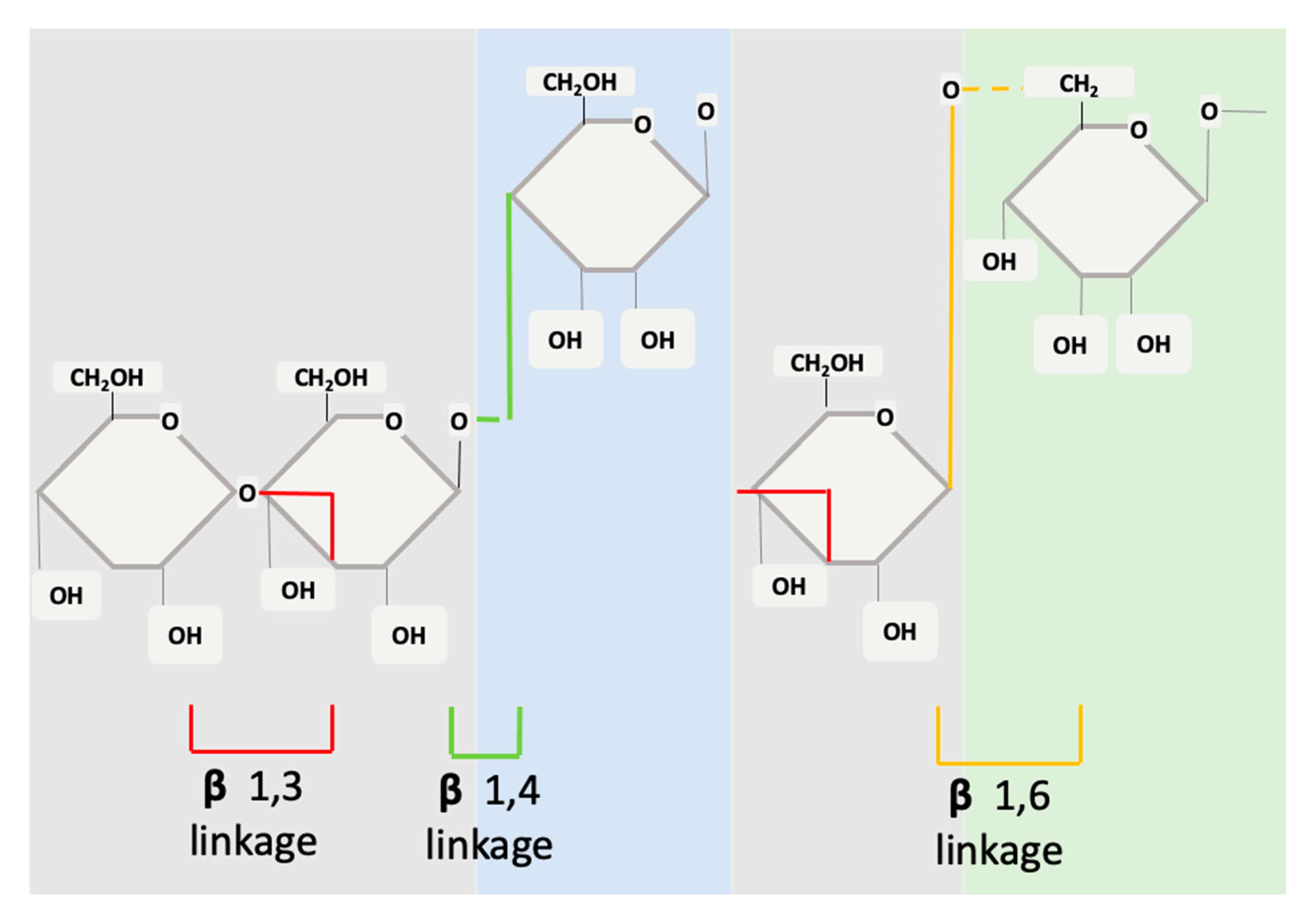 Fig.1 Comparison of cereal and non-cereal β-glucan linkage structures.1,3
What Is a Glucan Microarray?
Glucan microarray, also known as dextran microarray, is a slide-based analytical platform in which chemically or naturally derived dextran probes are immobilized in an arrayed format. Each spot corresponds to a specific glucan structure, and the binding status is analyzed by fluorescent labeling and other detection methods. These microarrays are then examined with proteins such as antibodies, lectins, or CBMs, and binding interactions are detected via fluorescence or chemiluminescence. Creative Biolabs offers custom-designed glucan microarray services that allow researchers to systematically screen hundreds of structurally defined glucan probes whose structure matters to your specific biological, enabling precise screening of glucan–protein interactions and supporting research across immunology, microbiology, cancer biology, and glycoengineering.
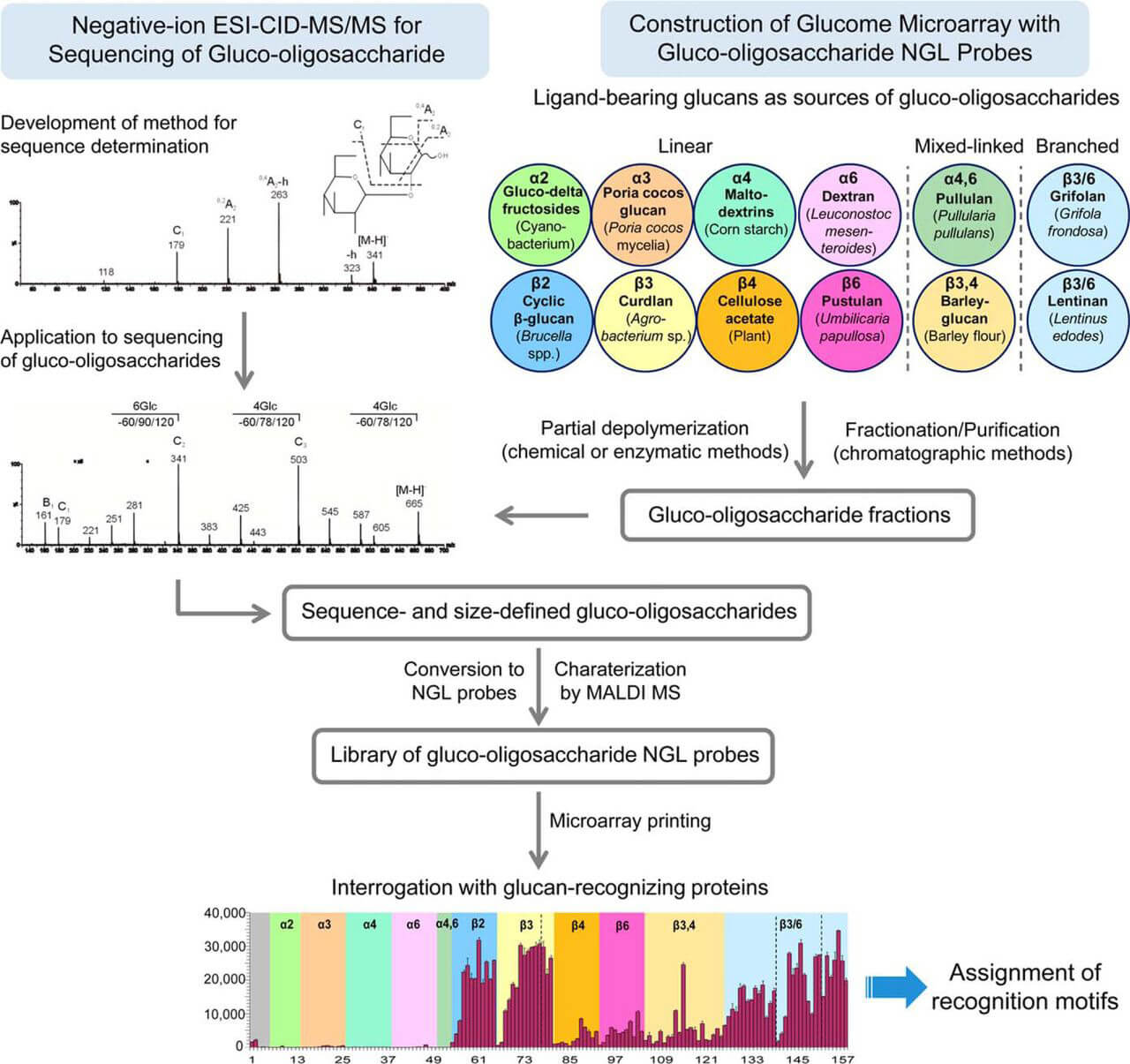 Fig.2 Glucan microarray: from preparation to binding analysis.2,3
Designer Glucan Microarrays: From Source to Signal
We offer a simplified, end-to-end workflow that ensures structural accuracy and reproducible results:
-
Glucan Preparation
We select and process glucans from fungal, bacterial, plant, and algal sources. Using enzymatic or chemical depolymerization, we generate well-defined oligosaccharide sequences with β-1,2, β-1,3, β-1,4, and β-1,6 linkages. -
Array Printing
These purified glucan fragments are converted into probes and immobilized onto nitrocellulose-coated glass slides in high-density formats. -
Binding Assay
Your proteins of interest are incubated with the array under optimized conditions. -
Detection & Analysis
Using fluorescence or chemiluminescence, we quantify interactions and deliver high-resolution binding profiles with structural interpretation.
How to Choose the Best Source of Beta Glucan?
One of the most frequent questions we receive is: what is the best source of beta glucan for a given study? The answer depends entirely on your research goals. We offer guidance based on your target system:
- Fungal β-glucans (e.g., lentinan, grifolan): Ideal for immunomodulation and beta glucan cancer research
- Cereal β-glucans (e.g., from oats or barley): Suitable for gut immunity and metabolic studies
- Bacterial β-glucans (e.g., Brucella β-1,2-glucan): Recommended for host-pathogen interaction studies
- Algal or synthetic glucans: Best for structural or SAR profiling in binding assays
Our array includes glucan examples from each of these categories, allowing direct comparisons in a single experiment. Still uncertain? Share your target, and we'll help match you to the optimal glucan panel.
Discuss Your Project
Why Choose Us?
- Expertise in Glycobiology: With years of experience, Creative Biolabs has helped hundreds of researchers decode glycan-mediated interactions using custom array platforms.
- Mass-Spectrometry-Backed Quality: Every glucan probe on the array is validated by tandem MS and/or NMR. No ambiguity. No guesswork.
- Precision Matters: Our glucan microarrays differentiate between similar structures—like β-1,3 vs. β-1,6 linkages—even in branched sequences.
- Flexible Design: Whether you need standard panels or custom glucan structures, we tailor the array to your project.
- Client-Oriented Service: We collaborate closely with your team from array planning through to data analysis, ensuring high-impact results.
Applications: Who Benefits from Glucan Microarrays?
- Immunologists profiling innate receptor–ligand interactions
- Microbiologists studying fungal or bacterial β-glucan virulence factors
- Oncologists exploring β-glucan adjuvants in immunotherapies
- Nutraceutical developers testing bioactive glucan components
- Glycoengineers designing high-affinity CBMs for biomass conversion
If you're tackling beta glucan research, there's no better tool to accelerate your discovery pipeline.
Related Services You May Be Interested In
- 100 Glycan Microarray: Broad-spectrum glycan profiling across major structural classes
- 100 N-Glycan Microarray: Specialized N-glycan profiling for therapeutic and immunological studies
- Oligosaccharide Microarray: Precision screening of short-chain glycans
- Polysaccharide Microarray: Investigate full-length natural polysaccharides
- Heparan Sulfate Microarray: Analyze sulfation pattern-specific binding
- Glycosaminoglycan (GAG) Microarray: Characterize protein-GAG interactions in inflammation and development
- ABH-Glycan Microarray: Blood group antigen recognition analysis
- Human Milk Oligosaccharide (HMO) Microarray: Study microbial and immune binding to HMOs
If you're exploring what is glucan, trying to pinpoint the best source of beta-glucan, or mapping immune recognition in your beta glucan cancer research, Creative Biolabs is here to support you at every step. Our glucan microarray platform is the most efficient route to discover and validate carbohydrate ligands, binding motifs, or structure–activity relationships in complex biological systems. Get in touch today and let's design your custom glycoarray solution.
FAQs
What is the best source of beta glucan for my research?
It depends on your research focus. Use fungal β-1,3/1,6-glucans for immunology and beta glucan cancer research, cereal β-glucans for metabolic studies, and bacterial β-glucans for host-pathogen interaction. Our glucan microarray includes diverse, well-characterized sources to match your experimental needs.
Can I use my own beta glucan samples for custom arrays?
Yes. We can process your beta-glucan extracts, via controlled hydrolysis and purification, for array printing. Alternatively, we offer panels from fungal, cereal, bacterial, and synthetic sources to fit diverse glucan research goals.
What detection methods are used in glucan microarray assays?
We use fluorescence-based detection for precise signal quantification. Proteins can be labeled or detected via secondary antibodies. This enables sensitive screening in beta glucan cancer research, immunology, and microbial recognition.
What makes your glucan microarray different from competitors?
Our platform uses sequence-defined, MS-validated glucan probes, not crude extracts. We offer unmatched resolution in β-linkage specificity, ideal for beta glucan research in immunology, oncology, and microbial systems.
References:
- Murphy, Emma J., et al. "β-glucan metabolic and immunomodulatory properties and potential for clinical application." Journal of Fungi 6.4 (2020): 356. https://doi.org/10.3390/jof6040356
- Palma, Angelina S., et al. "Unravelling Glucan Recognition Systems by Glycome Microarrays Using the Designer Approach and Mass Spectrometry*[S]." Molecular & Cellular Proteomics 14.4 (2015): 974-988. https://doi.org/10.1074/mcp.M115.048272
- Distributed under Open Access license CC BY 4.0, without modification.