


Targeting Neuropathy & Cancer: Custom Anti-Ganglioside Antibody Service
At Creative Biolabs, we help you transform the delicate glycan code of cell membranes into precise, high-value research tools. Whether your project is exploring the mechanisms of neuropathology, stratifying autoimmune phenotypes, or advancing oncology programs, our custom anti-glycolipid antibody services are designed to deliver specificity, sensitivity, and reproducibility.
Introduction: Why Gangliosides, Why Now
Gangliosides, which are sialic acid-containing glycosphingolipids, decorate the outer layer of the plasma membrane, particularly in the nervous system and many tumor cells. The diversity of their head groups (GM1, GM2, GM3, GD1a, GD1b, GD2, GD3, GT1a, GT1b, GQ1b, etc.) encodes powerful biological signals:
- Neuroimmunology: Different gangliosides have been associated with neuropathic syndromes (e.g., GBS variants such as AMAN, sensory ataxic neuropathy, Miller-Fisher syndrome), facilitating mechanistic insights and biomarker development.
- Oncology: Tumor-associated gangliosides influence cell adhesion, migration, and immune evasion, supporting studies in neuroblastoma, melanoma, and metastatic programs.
Gangliosides are structurally similar. The type of linkage (e.g., α2-3 sialylation vs. α2-8 sialylation), branching pattern, and lipid presentation significantly influence antibody binding. Without rigorous design and screening, off-target cross-reactivity is common. To address these issues, we combine in-depth glycoscience with extensive assay validation to deliver monoclonal, recombinant, and engineered antibodies that can truly discriminate between closely related ganglioside epitopes under biologically relevant presentation conditions.
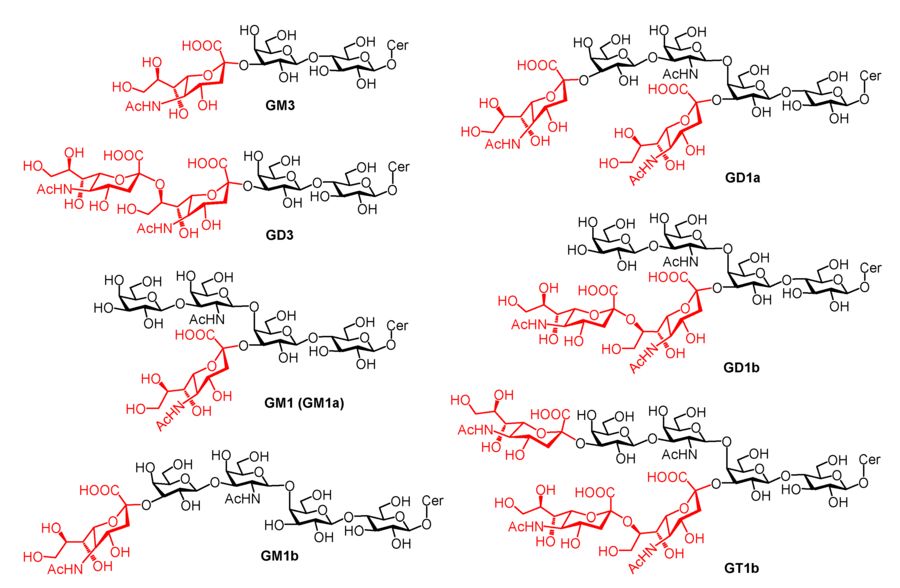 Fig.1 Common ganglioside structures in the vertebrate brain.1
Optimizing Lipid Presentation for Ganglioside Antibody Development
Unlike peptide epitopes, ganglioside recognition relies on presentation. We address this issue by:
- Using liposomes and supported bilayers to simulate membrane environments.
- Visualizing binding to isolated glycolipids using TLC-immunostaining techniques.
- Choosing cell models with native or engineered expression.
- Controlling for sialic acid variants (Neu5Ac vs. Neu5Gc)
More Ganglioside Targets? Contact our experts
Explore Our Custom Anti-Ganglioside Antibody Service Portfolio
We have developed specialized workflows for many key ganglioside targets involved in neurology and oncology. Find your target of interest below to learn more about how we can tailor an antibody solution for you.
Custom Anti-GM1 Antibody Service
GM1 is a cornerstone of neuronal membrane integrity. Autoantibodies against GM1 are strongly associated with the acute motor axonal neuropathy (AMAN) variant of GBS, making highly specific anti-GM1 antibodies essential for diagnostics and for developing models to study the disease's pathogenesis.
Custom Anti-GM2 Antibody Service
The accumulation of GM2 ganglioside due to enzyme deficiencies leads to devastating neurodegenerative disorders like Tay-Sachs and Sandhoff disease. Precise anti-GM2 antibodies are critical tools for understanding disease progression, monitoring substrate reduction therapies, and developing novel diagnostics.
Custom Anti-GM3 Antibody Service
While present on most cells, GM3 is often a precursor to more complex tumor-associated gangliosides. Its levels and modifications can influence cancer cell signaling, adhesion, and drug resistance, making it a subtle but important target in melanoma and other cancers.
Custom Anti-GD1a Antibody Service
Alongside GM1, anti-GD1a autoantibodies are another key hallmark of the AMAN variant of GBS. Creating specific antibodies that can distinguish GD1a from its close structural relatives is vital for accurate diagnosis and for dissecting the precise molecular mechanisms of nerve damage.
Custom Anti-GD1b Antibody Service
Autoimmune responses targeting GD1b are frequently linked to sensory ataxic neuropathies, where patients lose their sense of position and coordination. High-fidelity anti-GD1b antibodies are indispensable for research into the pathogenesis of these debilitating conditions.
Custom Anti-GD2 Antibody Service
GD2 is one of the most prominent and well-validated cancer targets. It is highly expressed on tumors of neuroectodermal origin, including neuroblastoma and melanoma, but is rare on healthy tissues, making it an exceptional target for antibody-based immunotherapies like CAR-T and ADCs.
Custom Anti-GD3 Antibody Service
A key player in melanoma, GD3 is involved in cell migration, invasion, and resistance to apoptosis. Targeting GD3 with monoclonal antibodies can disrupt these malignant processes, making it a high-value target for developing novel cancer therapeutics.
Custom Anti-GT1a Antibody Service
Anti-GT1a antibodies are associated with the pharyngeal-cervical-brachial variant of GBS and Bickerstaff brainstem encephalitis. These antibodies target gangliosides concentrated on cranial nerves, leading to specific clinical syndromes that can be studied with precise research tools.
Custom Anti-GT1b Antibody Service
GT1b is another important antigen in various forms of autoimmune neuropathy. Autoantibodies against GT1b can be found in patients with GBS and other neurological disorders, and custom antibodies are essential for developing specific assays and functional studies.
Custom Anti-GQ1b Antibody Service
The link between anti-GQ1b autoantibodies and Miller Fisher syndrome (MFS), a variant of GBS, is one of the strongest in neuro-immunology. GQ1b is abundant on oculomotor nerves, and targeting it is the key to understanding the classic MFS triad of ophthalmoplegia, ataxia, and areflexia.
What You Get from Creative Biolabs
- Custom anti-ganglioside antibody generation across 10+ clinically relevant targets (GM1/GM2/GM3, GD1a/GD1b, GD2/GD3, GT1a/GT1b, GQ1b).
- End-to-end workflow from antigen design to screening and validation.
- Screening on multiple presentation formats: soluble conjugates, liposomes, supported membranes, glycolipid extracts, ELISA, dot-blot/TLC-immunostaining, flow cytometry, immunofluorescence, and optional glycan microarray panels.
- Format flexibility: hybridoma IgG/IgM, recombinant mAbs/sdAbs, humanized/chimeric research antibodies, Fc-engineered variants, labeling and conjugation (HRP, biotin, fluorophores).
- Manufacturing-grade documentation for research programs, including CoA, sequence, binding/affinity report, and application-wise validation data.
Why Choose Creative Biolabs
The journey from a complex biological question to a clear, definitive answer requires more than just reagents; it requires robust, reliable tools and an expert partner you can trust. At Creative Biolabs, we are more than a service provider. We are an extension of your team, a group of dedicated scientists committed to your success. When you partner with us, you gain access to:
- Decades of focused experience in glycobiology and antibody engineering.
- A comprehensive suite of platforms to ensure the best possible outcome.
- A collaborative process with clear communication and regular updates.
- We stand behind our work, delivering antibodies that are rigorously validated and ready for your most demanding applications.
Popular Services You May Be Interested in
Beyond gangliosides, many programs benefit from antibodies against other membrane glycolipids that shape neural function and immune recognition. Our anti-other glycolipid antibody development delivers presentation-aware, cross-reactivity–controlled antibodies against non-ganglioside targets central to neurobiology, oncology, and host–pathogen research. Sub-services are designed for demyelination, myelin biology, and globoside-driven disease models, including:
- Anti-sulfatide antibody development
- Anti-galactocerebroside antibody development
- Anti-globoside antibody development
- Anti-blood group antigens antibody development
Tell us your target gangliosides, intended applications, and any must-avoid cross-reactivities. We'll design a clear, milestone-based plan, from antigen strategy to validated clones ready for your assays. Ready to build a ganglioside antibody with tailored applications? Contact Creative Biolabs to request a tailored quote and project plan today.
FAQs
What makes anti-ganglioside antibodies difficult to generate?
Ganglioside headgroups share close structural features, and binding often depends on how the epitope is presented in membranes. We address this with context-aware antigens (liposomes, supported bilayers), and cell-based confirmation to extract clones with true, application-grade specificity.
What ganglioside targets can you generate antibodies for?
We offer custom antibody development for a wide range of gangliosides, including GM1, GM2, GM3, GD1a, GD1b, and GQ1b, among others. Our team works closely with you to ensure the antibodies are optimized for your specific research targets and experimental conditions.
Can you provide antibodies that are compatible with different assay types?
Yes, our custom anti-ganglioside antibodies are compatible with various assays, including ELISA, Western Blot, Immunohistochemistry (IHC), and more. We tailor each antibody to ensure optimal performance across your required experimental methods.
Which formats are available?
Hybridoma-derived IgG/IgM, recombinant mAbs (mouse, human, chimeric for research), and sdAbs/VHH. We also provide labeling (HRP, biotin, dyes) and Fc modifications for research applications.
Can you help with pre-existing antibodies for gangliosides that don't meet my needs?
Absolutely! If you have existing antibodies but need modifications for improved specificity or performance, we can work with you to refine these antibodies. Our engineering services, such as affinity maturation or species reformatting, can enhance the antibodies to meet your research demands.
Reference:
- Guo, Zhongwu. "Ganglioside GM1 and the central nervous system." International Journal of Molecular Sciences 24.11 (2023): Distributed under Open Access license CC BY 4.0, without modification. https://doi.org/10.3390/ijms24119558
Supports
- Glycolipid
- GM3 Antibody in Cancer Immunotherapy
- GM3 Ganglioside in Disease & Anti-GM3 Antibody Tools
- Engineering High-Affinity scFv for Next-Generation GD2-CAR-T Therapy
- Anti-GM1 Antibody Development
- Anti-GM2 Antibody Development
- Anti-GM3 Antibody Development
- Anti-GD1a Antibody Development
- Anti-GD1b Antibody Development
- Anti-GQ1b Antibody Development
- Anti-GD2 Antibody Development
- Anti-GD3 Antibody Development
- Anti-GT1a Antibody Development
- Anti-GT1b Antibody Development