


Glycosphingolipid Microarray
Glycosphingolipid Introduction
Glycosphingolipids (GSLs) are a diverse group of complex lipids that are found in the outer leaflet of the plasma membrane. They are composed of a hydrophobic ceramide moiety and a hydrophilic carbohydrate group. The carbohydrate moiety can vary greatly in structure, making GSLs a very diverse class of molecules. The glycan portion of GSLs is typically composed of monosaccharides such as glucose, galactose, and sialic acid, which can be linked to form oligosaccharides of varying complexity. As the need for detailed glycosphingolipid analysis grows, the glycosphingolipid microarray offers a cutting-edge solution for researchers looking to probe the interactions of GSLs in various biological systems. Creative Biolabs provides comprehensive glycosphingolipid analysis and customized glycolipid microarray service to support your research needs.
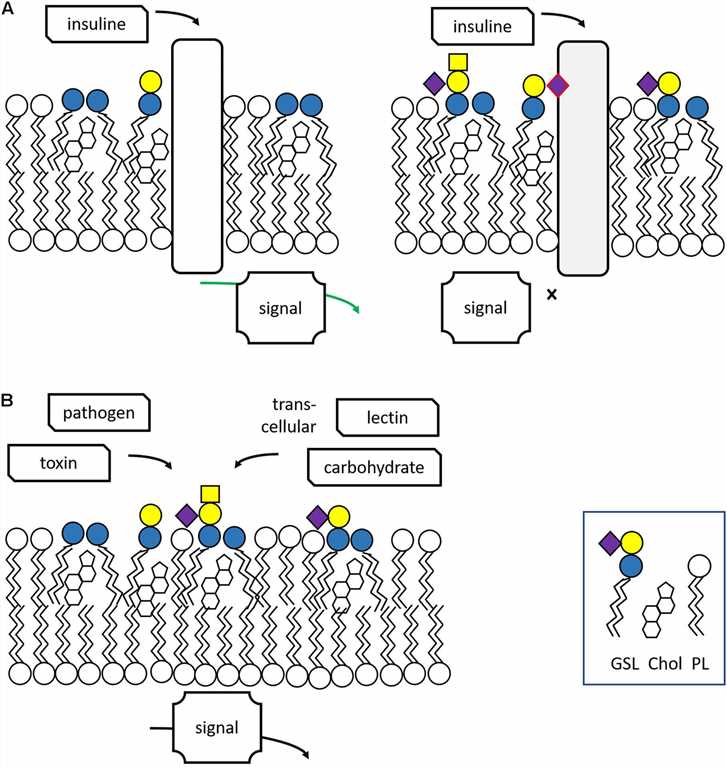 Fig.1 Glycosphingolipid structure and synthesis.1
What is a Glycosphingolipid Microarray?
A glycosphingolipid microarray is a high-throughput platform that enables the simultaneous analysis of multiple glycosphingolipid interactions. The microarray surface, which can be made of glass slides, glass chips or other solid supports, is spotted or printed with various glycosphingolipids in a high-density array format. The array is then probed with labeled binding partners such as glycan-binding proteins, antibodies, or cells and the interactions are detected using various readout methods.
Glycosphingolipid Microarray Service at Creative Biolabs
To identify unknown GSL-glycan structures, Creative Biolabs has developed advanced GSL microarray analysis strategies, with a particular focus on lectins. These methods provide highly sensitive and high-throughput glycan-binding data for cells, antibodies, or other proteins of interest. Our services include, but are not limited to:
- We offer comprehensive GSL glycan analysis through a combination of lectin microarrays and MALDI-TOF mass spectrometry.
-
We have pioneered a novel approach for lectin microarray-based analysis of GSL-glycans in cultured cells, enabling direct detection and visualization of the glycan patterns of GSL extracts without the need to release the glycans. This procedure involves:
- GSL extraction from cell pellets
- GSL-glycan quantification via orcinol–sulfuric acid reaction
- Lyso-GSL preparation
- Fluorescence labeling of Lyso-GSLs
- Lectin microarray detection
- Data collection and analysis
Key Considerations When Using Glycosphingolipid Microarrays
While glycosphingolipid microarrays are powerful tools, there are several factors to consider to ensure the best results:
- Array quality: The quality of the array is critical for obtaining accurate data. We ensure that our arrays are carefully fabricated to prevent non-specific binding.
- Ligand concentration: The concentration of ligands can affect the sensitivity of the assay. It's important to optimize the concentration to avoid saturation and ensure reliable results.
- Binding conditions: Temperature, pH, and ionic strength can influence the binding affinity. We recommend controlling these factors to ensure reproducibility.
Applications of Glycosphingolipid Microarray
- For screening glycan-binding proteins that interact with specific glycosphingolipids, such as lectins and antibodies
- For investigating cancer-related glycosphingolipids, aiding in the discovery of potential cancer biomarkers
- For studying neurodegenerative diseases like Alzheimer's and Parkinson's disease
- For analyzing the interactions between specific GSLs and immune cells
- For examining how viruses and bacteria bind to GSLs on host cell surfaces, essential for therapeutic target discovery
Advantages of Glycosphingolipid Microarray Service at Creative Biolabs
Creative Biolabs offers a state-of-the-art glycosphingolipid microarray service designed to meet the unique needs of your research. Here are some key advantages of choosing our service:
- Customized microarray design: Our team can tailor the microarray to include the specific GSLs relevant to your research. Whether you need to study a specific glycan structure or want a broader array of GSLs, we can design a microarray that fits your project's requirements.
- High sensitivity and accuracy: Our glycosphingolipid microarrays are highly sensitive, allowing for the detection of even low-affinity interactions. The accuracy of our assays ensures that the data you receive is reliable and reproducible.
- Advanced detection methods: We utilize cutting-edge detection technologies, including fluorescence, colorimetric, and SPR-based assays, to quantify the binding interactions between GSLs and ligands.
- Comprehensive data analysis: We provide detailed reports that include comprehensive data analysis, offering insights into the interactions of your GSLs. This data is invaluable for identifying potential biomarkers, drug targets, or understanding the molecular mechanisms behind disease progression.
- Rapid turnaround time: With our high-throughput platform and streamlined processes, we ensure that you receive results quickly, allowing you to move forward with your research without unnecessary delays.
- Expert support: Our experienced team is available to assist with experimental design, troubleshooting, and interpreting results, ensuring that you get the most out of our service.
Choosing the right glycosphingolipid microarray depends on your specific research goals and the type of interactions you want to explore. At Creative Biolabs, we offer a diverse range of microarrays tailored to various research needs. Our team is here to guide you in choosing the most suitable platform for your experiment, whether you need a single glycosphingolipid array for focused interaction analysis or a multi-glycosphingolipid array for broad screening across various GSL types. Additionally, we provide personalized advice on immobilization techniques and detection methods, ensuring optimal sensitivity and data accuracy. Our team of experts is available to help you select the most suitable array, ensuring optimal results for your research. Simply reach out to us, and we'll assist you in choosing the best option for your needs.
FAQs
Q: What is a glycosphingolipid (GSL) microarray and when should I use it?
A: A GSL microarray is a high-throughput platform that profiles interactions between defined GSL structures and binders such as antibodies, lectins, receptors, or whole cells. Use it to map binding specificity, screen candidate biomarkers, characterize antibody selectivity, and compare disease versus control patterns across cancer, neurology, infection, and immunology projects—strictly for research use.
Q: What quality systems and data security measures do you use?
A: Projects follow documented SOPs for scanning, and analysis, with equipment calibration and traceable reagent lots. We apply technical and biological replicates, predefined acceptance criteria, and blinded controls.
Q: How do you construct the GSL array and ensure native-like presentation?
A: We print well-annotated GSLs onto optimized surfaces using chemistries that preserve glycan accessibility and limit nonspecific adsorption. Orientation is controlled via spacer linkers and validated with lectin and anti-glycan controls.
Q: Can you integrate microarray results with mass spectrometry or glycomics data?
A: Absolutely. We routinely pair binding profiles with MALDI-TOF or LC-MS snapshots of your GSL extracts to connect functional recognition with composition.
Reference:
- Aerts, Johannes MFG, et al. "Glycosphingolipids and infection. Potential new therapeutic avenues." Frontiers in cell and developmental biology 7 (2019): 324. Distributed under Open Access license CC BY 4.0, without modification. https://doi.org/10.3389/fcell.2019.00324