


Custom Glycosylation Services for Biomolecules
Creative Biolabs has been at the forefront of applied glycobiology, creating a comprehensive platform for controlling and customizing this intricate process. We understand that precision glycoengineering is critical to the creation of next-generation medicines, innovative diagnostics, and improved research tools. The inherent variety of glycosylation in natural systems poses a substantial problem, but it also provides a valuable opportunity for focused molecular design. Our expert services are tailored to the specific functional requirements of your project and can advance research on glycosylation of cell membrane or bacterial membrane and development for glycosylated proteins, glycosylated antibodies, glycosylated peptides, glycoRNA, and glycosylated lipids (glycolipids).
Glycosylation Introduction
In modern biotechnology, a deep understanding of molecular functional nuances often marks the difference between incremental progress and transformative advances. Glycosylation stands out as one of the most pivotal regulatory mechanisms—an enzymatic process that attaches glycans to proteins, lipids, and other biomolecules. Far from a superficial modification, it is a fundamental biological mechanism that directly governs molecular stability, functional activity, and interactive behavior. As one of the most prevalent and complex forms of post-translational modification, glycosylation affects the majority of human proteins. The attached glycan structures are deeply embedded in a molecule's biological identity and performance, making their detailed understanding essential for biomolecular engineering success. This modification plays several critical roles: it facilitates proper protein folding, supports quality control, and enhances structural stability; it mediates cell-cell recognition, adhesion, and immune surveillance; it directly modulates the biological activity of proteins; and it significantly influences key pharmacokinetic properties such as solubility and systemic clearance.
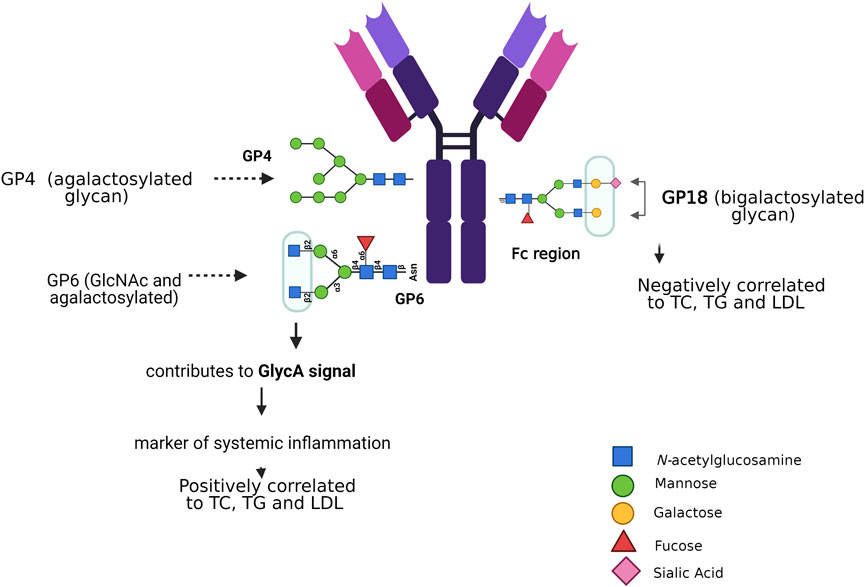 Fig.1 The link between antibody Fc-glycosylation, inflammation, and lipids.1
Creative Biolabs provides a comprehensive suite of custom glycosylation services designed to deliver biomolecules with precisely defined glycan profiles. We transform the challenges of glycosylation into strategic advantages for our clients.
Our Approach: Precision, Customization, and Expertise
Our service philosophy is built on a foundation of scientific rigor and a client-centric approach. We partner with you to deliver solutions that are not only technologically advanced but also strategically aligned with your research and development objectives.
- Precision engineering includes chemoenzymatic synthesis, metabolic glycoengineering, and cell-free glycosylation systems to construct desired glycan structures with exceptional accuracy and purity.
- Customized strategies that address your specific biomolecule, target glycoform, and end-application.
- Our team consists of dedicated glycoscientists with extensive experience
Request a Consultation
A Comprehensive Portfolio of Custom Glycosylation Services
We offer a broad spectrum of services designed to meet the glycosylation needs of diverse biomolecule classes. Below is an overview of our core service areas.
Custom Protein Glycosylation for Optimal Performance
For recombinant proteins used as research reagents, the glycan profile is a determinant of quality and function. Our services allow you to move beyond the limitations of standard expression systems and specify the exact glycoform required. We can generate proteins with defined high-mannose, complex, or hybrid N-glycans, as well as specific O-glycan structures, to optimize activity, enhance stability, and ensure lot-to-lot consistency.
To engineer a protein with superior functional attributes, explore our Custom Glycosylation of Proteins services.
Custom Peptide Glycosylation for Enhanced Therapeutic Properties
Glycopeptides represent a promising class of molecules for therapeutics and vaccine development. The conjugation of a glycan moiety can significantly improve a peptide's pharmacological properties, including its solubility, resistance to proteolysis, and serum half-life. Our chemists specialize in both solid-phase and solution-phase glycopeptide synthesis, enabling the precise incorporation of diverse carbohydrate structures at specific sites.
To elevate your peptide candidate, learn more through our Custom Glycosylation of Peptides services.
Custom Antibody Glycosylation for Next-Generation Biologics
The glycoengineering mAb is a proven strategy for creating more potent and effective therapeutics. The glycosylation of the antibody's Fc region is a critical factor governing its interaction with Fcγ receptors and thus its immune effector functions. By controlling features such as fucosylation and sialylation, we can fine-tune antibody-dependent cell-mediated cytotoxicity (ADCC) and other activities. We offer a full spectrum of antibody glycoengineering solutions, from analytics to stable cell line development.
To maximize the therapeutic potential of your antibody, review our Custom Glycosylation of Antibodies services.
Custom Cell Membrane Glycosylation for Advanced Cellular Studies
The glycocalyx is the interface between a cell and its environment. We offer innovative glycan metabolic engineering services to directly modify the glycan structures on the surface of living cells. This powerful technique facilitates advanced research into the role of glycans in cell signaling, immune recognition, and pathogenesis. It also provides a novel approach for enhancing the properties of cell-based therapies.
To engineer the cell surface for research or therapeutic applications, discover our Custom Glycosylation of Cell Membranes services.
Custom Bacterial Membrane Glycosylation for Infectious Disease Research
Unique glycoconjugates on bacterial surfaces, such as lipopolysaccharides (LPS) and capsular polysaccharides, are key virulence factors and important targets for vaccines and therapeutics. Our services include the synthesis and modification of these complex bacterial glycans, providing essential tools for developing conjugate vaccines, diagnostic reagents, and novel anti-infective strategies.
To support your research in microbiology and vaccinology, inquire about our Custom Glycosylation of Bacterial Membranes services.
Custom Glycosylation of Small Molecules & Nucleic Acids
Extending beyond traditional biomolecules, glycosylation can significantly enhance the properties of small-molecule drugs and nucleic acid-based therapies. Glycoconjugation can improve drug solubility, targeting, and pharmacokinetics. Our synthetic chemistry team has the capability to conjugate a wide variety of carbohydrates to small molecules and oligonucleotides, creating novel chemical entities with improved properties
To explore innovative conjugation strategies, see the details of our Custom Glycosylation of Small Molecules & Nucleic Acids services.
Custom Lipid Glycosylation for Research and Delivery Systems
Glycolipids are integral membrane components that function in cell signaling, recognition, and membrane organization. We provide custom synthesis of structurally defined glycolipids, such as gangliosides and GPI anchors, as well as the creation of liposomes and other nanocarriers decorated with specific glycans. These tools are invaluable for neurobiology research, cancer studies, and targeted drug delivery applications.
To obtain well-defined glycolipids and glyco-nanomaterials, view our Custom Glycosylation of Lipids services.
Strategic Advantages of Partnering with Creative Biolabs
Choosing Creative Biolabs provides your organization with a distinct competitive advantage. Our commitment to excellence is reflected in several key areas:
- Specialized Expertise in the field of glycobiology.
- Collaborative Project Management
- Tailored and Flexible Solutions that are fully customized to your specific scientific and commercial objectives.
- Our state-of-the-art laboratories are equipped with a comprehensive suite of synthetic, biochemical, and analytical instrumentation required for high-quality glycoengineering.
Creative Biolabs delivers the specialist cooperation required to effectively deal with the challenges of glycobiology. We invite you to use our experience and technology to speed up your development pipeline and fulfill your research goals. Please contact us today to discuss your idea with one of our scientific specialists, and we will promptly provide options and conduct tests. Let us help you turn the intricacies of glycosylation into your next success story.
FAQs
How do you choose between enzymatic and chemical strategies?
We start from your biological goal, acceptable modifications to the backbone, and the level of site precision required. Enzymatic and transglycosylation routes offer exquisite specificity and clean profiles; chemical routes offer broader substrate scope and unique handles. Many projects benefit from a hybrid chemoenzymatic plan to balance control and versatility.
Can you guarantee a single glycoform?
For many protein and antibody projects, yes—we can deliver predominantly single, well-defined glycoforms using enzymatic remodeling and controlled donors. Absolute homogeneity depends on the substrate and route. We'll define acceptance criteria together and verify by orthogonal analytics, so expectations and deliverables are aligned.
What problems can custom glycosylation actually solve for my project?
Custom glycosylation lets us tune what matters most: binding avidity, serum half-life, solubility, effector function, immunogenicity, and targeted uptake. By controlling glycan identity, site, density, and orientation, we turn a vague objective into a measurable specification
I need higher ADCC from my antibody without losing affinity. What's your approach?
We design Fc glycoforms, typically afucosylated, with tuned galactosylation, to elevate FcγRIIIa engagement while monitoring antigen binding by SPR/BLI. We verify glycoform distribution by LC-MS and CE-LIF, then stress-test aggregation and stability. If affinity drifts, we iterate spacer length or microheterogeneity to restore the original binding curve while preserving the ADCC gain.
For glycosylated peptides, how do you decide linkers and valency?
We map the epitope or active motif, then choose spacer length and rigidity to avoid steric block while presenting sugars at the correct angle. Valency is adjusted to balance avidity and solubility, preventing self-association. We confirm orientation with MS mapping and function with binding or cell assays, refining geometry before moving to larger batches.
Reference:
- Loaeza-Reyes, Karen Julissa, et al. "An overview of glycosylation and its impact on cardiovascular health and disease." Frontiers in molecular biosciences 8 (2021): 751637. Distributed under Open Access license CC BY 4.0, without modification. https://doi.org/10.3389/fmolb.2021.751637