


Glycopeptide Microarray
Glycopeptides, peptides conjugated with carbohydrate structures, play an essential role in immune recognition, signaling pathways, and pathogen interactions. At Creative Biolabs, we offer an advanced glycopeptide microarray service designed to facilitate the high-throughput screening of glycopeptides and their interactions with various biological molecules. This platform enables researchers to conduct detailed analyses of glycopeptide specificity, leading to the identification of novel biomarkers, therapeutic targets, and insights into glycan-mediated biological processes.
What is a Glycopeptide Microarray?
A glycopeptide microarray is a high-throughput array where glycopeptides are spotted on NHS-coated microarray slides for the purpose of screening for glycan-binding proteins (GBP) and antibodies and other glycan-specific ligands. It is a discovery tool to find new binding epitopes and to identify differences in antibody selectivity towards different glycopeptide antigens. The technique has also been applied to study enzyme activities and mechanisms, and to probe for glycopeptide binding proteins. This provides a rapid analysis of glycan-protein interactions and reduces time and material consumption in glycomics.
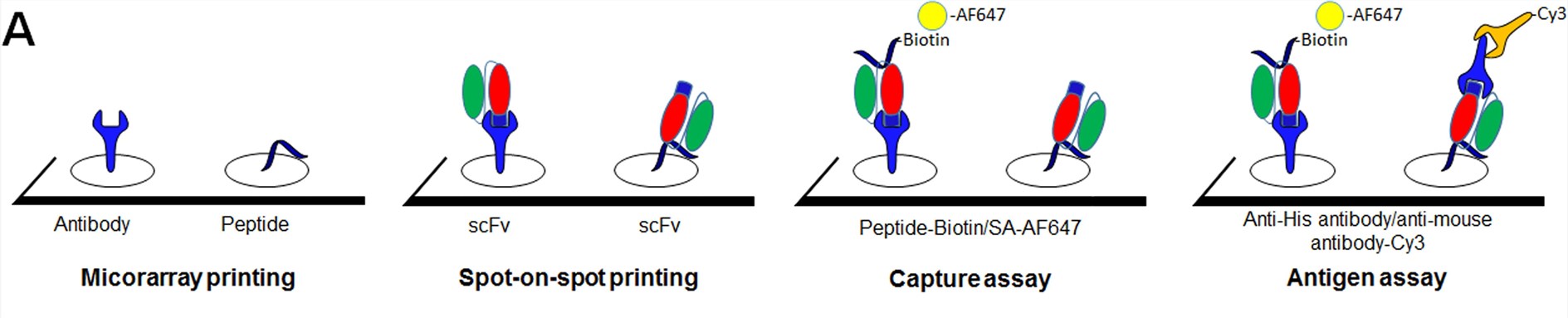 Fig.1 Microarray-based detection of scFv binding to peptides.1
At Creative Biolabs, we leverage glycopeptide microarrays to decode critical glycan-protein interactions. Here's how it works: We synthesize target glycopeptides and print them precisely onto NHS-activated slides using piezoelectric non-contact printers. Each glycopeptide is deposited in replicates for consistent results. After immobilization under controlled humidity, we chemically block unreacted sites to prevent background noise. When ready, we incubate your biological samples—like antibodies or glycan-binding proteins—across the array. Specific binding events are detected with fluorescent tags, scanned, and analyzed through our dedicated software. We've optimized every step—from covalent immobilization to binding assays—to deliver reliable, publication-ready data for your glycobiology programs.
You Use Glycopeptide Microarray to:
- Reveals precise antibody specificity against closely related glycopeptide targets
- Maps disease-specific glycosylation patterns (e.g., cancer or lupus biomarkers)
- Quantifies how glycosylation alters binding interactions
- Accelerates therapeutic antibody validation and epitope mapping
The Glycopeptide Microarray Workflow at Creative Biolabs
- Synthesize Custom Glycopeptides: We start by synthesizing your custom glycopeptides using solid-phase peptide synthesis (SPPS). Combining this with precise chemical or chemoenzymatic methods, we attach specific glycan structures to the peptide backbone. Our expertise covers diverse glycosylation patterns like Core 1/Core 2 glycans, sialylated forms, MUC1, MUC5B, and T-antigen glycopeptides.
- Immobilize Precisely: We then immobilize the synthesized glycopeptides onto specialized amine-reactive microarray slides using triethylene glycol linkers. This careful presentation ensures accurate binding studies.
- Screen with High Throughput: Next, we screen the microarray by incubating it with your target analytes – whether antibodies, lectins, or other binding proteins. We measure interactions sensitively using advanced techniques like fluorescence, SPR, or mass spectrometry.
- Deliver Actionable Analysis: Finally, we analyze the interaction data to provide you with binding affinities, specificity profiles, and potential biomarker insights. Our clear, comprehensive report helps you understand the results and guides your next research or development steps.
Our Glycopeptide Microarray Service
At Creative Biolabs, we specialize in offering a customizable glycopeptide microarray service, which includes the synthesis, immobilization, and analysis of glycopeptides for diverse applications. Our service is tailored to meet the specific needs of your research, we provide:
- Custom glycopeptide synthesis that allows you to select glycosylation sites, glycan types, and peptide sequences
- High-throughput screening of hundreds of unique glycopeptides in a single experiment
- Multiplexed detection methods such as fluorescence, SPR, and mass spectrometry
- Robust data analysis
Why Choose Creative Biolabs?
- Expertise in glycobiology and glycopeptide synthesis
- SPPS-synthesized glycopeptides with rigorous functional validation
- Research-tailored microarrays for any glycosylation study
- End-to-end experimental support with expert interpretation
Applications of Glycopeptide Microarrays
Glycopeptide microarrays have a wide range of applications:
Glycopeptide Microarrays Detect Cancer Autoantibodies
Cancer cells often display altered surface glycosylation. These abnormal glycopeptides can trigger autoantibody production. Glycopeptide microarrays effectively profile patient serum antibodies, identifying those that bind tumor-associated glycopeptides. This provides a direct path to detecting cancer-related autoantibodies.
Colorectal Cancer Case: Seromic Profiling with Glycopeptide Arrays
Recent studies apply glycopeptide microarrays to colorectal cancer (CRC) detection. This approach identifies specific autoantibodies linked to CRC progression, enabling both early diagnosis and disease monitoring. Researchers have discovered novel CRC biomarkers through this process, improving diagnostic accuracy and shedding light on metastasis mechanisms. Glycopeptide microarray excels at seromic profiling – analyzing serum antibodies in cancer patients. Studies with CRC patients showcase this capability:
| Study | Glycopeptide Target | Antibody Profile | Potential Application |
|---|---|---|---|
| CRC Study 1 | MUC1 glycopeptides | Elevated IgG antibodies | Early detection of CRC |
| CRC Study 2 | Globo H glycopeptides | Higher levels of IgM | Prognostic biomarker for CRC |
Related Services
| Our Glycoarray Platforms | Applicable Areas |
|---|---|
| Glycan Microarray |
|
| Sialoside Microarray |
|
| Glycoprotein Microarray |
|
| Glycolipid Microarray |
|
| Lectin Microarray |
|
| Antibody Microarray |
|
Creative Biolabs' glycopeptide microarray service offers high-quality, customizable solutions that enable researchers to explore glycan-mediated interactions in unprecedented detail. Contact us today to learn more about how our glycopeptide microarray service can help accelerate your research.
Reference:
- Persson, Nina, et al. "A Combinatory Antibody–Antigen Microarray Assay for High-Content Screening of Single-Chain Fragment Variable Clones from Recombinant Libraries." PLoS One 11.12 (2016): e0168761. The graph was distributed under Open Access license CC BY 4.0, and was cropped to show only part A. https://doi.org/10.1371/journal.pone.0168761