


Antibody Microarray
Introduction
Antibody microarrays have emerged as powerful tools for large-scale protein profiling, offering exceptional sensitivity, multiplexing capability, and clinical utility. By immobilizing capture antibodies on solid surfaces, these platforms allow the simultaneous detection of hundreds to thousands of proteins, phospho-proteins, cytokines, and other biomarkers across biological samples such as serum, plasma, tissue lysates, and cell culture supernatants. As an experienced player in the proteomics field, Creative Biolabs has developed advanced glycoarray platform, delivers cutting-edge antibody microarray and other microarray solutions tailored to basic research and pharmaceutical discovery needs.
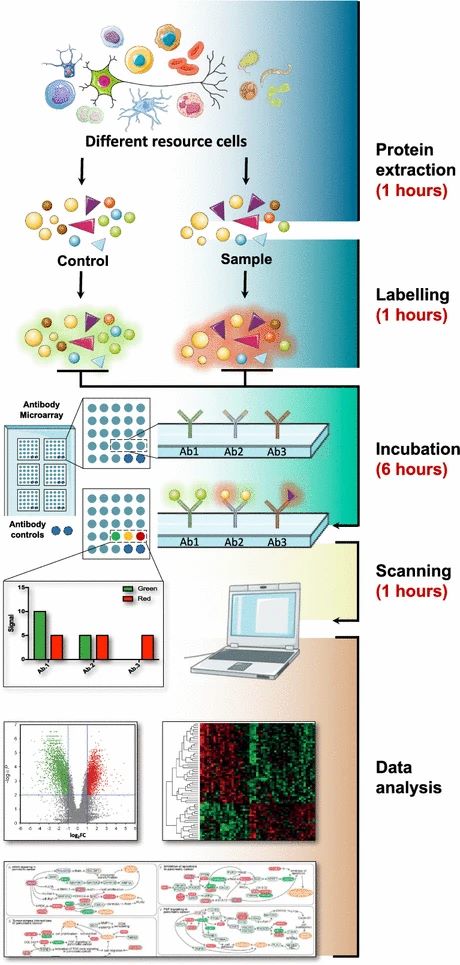 Fig.1 Review of antibody microarray technologies and workflow.1
What Is Antibody Microarray?
Antibody microarrays consist of surface-immobilized antibodies printed in defined patterns (spots) on glass slides, membranes, or other substrates. Upon exposure to complex protein mixtures, antigens bind to their cognate antibodies, enabling detection through fluorescent, chemiluminescent, or label-free readouts. An antibody microarray platform consists of:
| Component | Function |
|---|---|
| Immobilized antibodies | Capture specific antigens from sample lysates |
| Slide substrate | Glass or nitrocellulose for high-throughput compatibility |
| Sample type | Serum, plasma, cell lysates, tissue homogenates |
| Detection system | Fluorescent dyes, biotin-streptavidin, chemiluminescence |
| Data output | Signal intensity corresponding to protein abundance |
Design Considerations: Spotting and Biotin Labeling
Optimizing the spotting antibody microarray process is critical to achieving reproducible and sensitive results. Precision micro-dispensing technologies are employed to deposit antibodies in sub-nanoliter volumes with controlled morphology and density. Biotin labeling strategies enhance detection sensitivity. Target proteins or antibodies may be biotinylated to facilitate high-affinity interactions with fluorescently labeled streptavidin. Our expertise in antibody microarray biotin chemistries ensures minimal background and strong signal-to-noise ratios.
Our Antibody Microarray Services
At Creative Biolabs, we provide a wide range of antibody microarray services designed for academic, diagnostic, and pharmaceutical research. Our solutions are tailored to deliver high-quality, reproducible, and cost-effective results for protein profiling, biomarker discovery, and drug development. Workflow for our antibody microarray is as followed.
 Fig.2 Operating Steps of antibody microarray.
-
Custom Antibody Microarray Design
We offer custom array design services targeting specific proteins, phospho-proteins, or cytokines. Arrays can be species-specific, including options for human, mouse, rat, and other species.- target discovery
- species-specific arrays
- disease-specific arrays
-
Antibody Microarray Assay Development
Our assays enable the multiplexed detection of hundreds to thousands of proteins from a single sample. We also provide specialized arrays for phospho-proteins and peptide microarrays for profiling antibody interactions.- multiplex protein detection
- phospho-explorer antibody microarray
- peptide microarray profiling
-
Anti-Glycan Antibody Services
Creative Biolabs offers comprehensive anti-glycan antibody related services, tailored for integration with antibody microarrays. We help you generate and optimize antibodies specific to glycan structures, which can be applied directly in microarray assays for glycan-related studies. -
Biomarker Validation
We validate cancer biomarkers, autoimmunity profiles, and other disease-specific biomarkers using antibody microarrays. This helps identify potential diagnostic and therapeutic targets. -
High-Density Array Production
We create high-density arrays with up to thousands of spots for large-scale proteomic profiling. Our custom antigen libraries support diverse research areas, including drug discovery.
Suitable Sample Types
We handle a variety of sample types, including:
- serum, plasma
- cell lysates
- tissue homogenates
- BAL fluid
- CSF
- cell culture supernatants
Deliverables
When you choose Creative Biolabs for your antibody microarray studies, we provide:
- Pre-study consultation on project goals, sample requirements, and array design options.
- Raw data & normalized data
- Data analysis report with visualizations, statistical analysis, and identified biomarkers.
- Advanced tools for pathway analysis and clustering, if needed.
- High-quality charts and graphs for presentations or publications.
- Post-study consultation to help interpret results and plan next steps.
Any questions about our sample requirement or shipping details like:
- What are the sample volume requirements for serum and plasma?
- Is there a limit to the number of different sample types that can be included in one microarray study?
- How long does it typically take to receive the final deliverables after sample submission?
Consult Our Antibody Microarray Specialists for Help
Antibody Microarray Applications
Cancer Research
Antibody microarray applications in cancer include profiling oncogenic signaling, tumor microenvironment biomarkers, and treatment resistance pathways. Compared to traditional immunoassays, microarrays provide unparalleled coverage and throughput. A recent study applied a cancer-specific antibody array to profile 247 cytokines in breast cancer tissues, revealing a unique immune-modulatory signature associated with triple-negative subtypes.
Autoimmunity and Inflammation
High-density autoantigen arrays support profiling of autoantibody responses in systemic lupus erythematosus, rheumatoid arthritis, and multiple sclerosis. They enable:
- Patient stratification
- Biomarker validation
- Disease progression monitoring
Drug Discovery and Toxicology
Antibody microarray drug development workflows accelerate hit validation, mechanism-of-action studies, and off-target toxicity screening. Screening hepatocyte supernatants after exposure to a drug library using antibody microarrays revealed IL-8 and TIMP-1 elevation—predictive of hepatotoxicity.
Advantages of Creative Biolabs' Antibody Microarrays
- Detection of low-abundance proteins
- Multiplexing capacity that enables100–2000 targets per slide
- Validated panels for cancer, cytokines, phospho-proteins, apoptosis, etc.
- Flexible layouts, detection methods, and species specificity
Related Services
In addition to our antibody microarray services, Creative Biolabs provides a range of complementary microarray platforms designed for comprehensive glycan analysis. Check out the following services to enhance your research:
- Glycan Profiling Microarray
- Sialoside Profiling Microarray
- Glycoprotein Profiling Microarray
- Glycopeptide Interaction Microarray
- Glycolipid Interaction Microarray
- Lectin Binding Microarray
Antibody microarrays provide a scalable, sensitive, and customizable platform for unraveling complex biological systems. At Creative Biolabs, we bridge scientific precision with flexible service design, delivering comprehensive antibody microarray solutions for academic and pharmaceutical clients. Our deep expertise in assay development, data interpretation, and regulatory compliance ensures your discoveries move forward faster with confidence. Partner with our microarray team for customized antibody microarray design.
Reference:
- Chen, Ziqing, et al. "Current applications of antibody microarrays." Clinical proteomics 15 (2018): 1-15. Distributed under Open Access license CC BY 4.0, without modification. https://doi.org/10.1186/s12014-018-9184-2