


Custom Glycosylation of Proteins
Why Precision Glycosylation Matters?
Protein glycosylation plays a fundamental role in shaping the biological behavior of proteins. However, in natural systems, glycosylation is often nonuniform and difficult to predict, leading to heterogeneity that compromises reproducibility and therapeutic performance. This inherent variability poses a significant barrier in basic research and biopharmaceutical development. Whether studying the function of membrane proteins, characterizing therapeutic antibodies, or developing glycan-targeted diagnostics, researchers need tightly controlled glycosylation patterns to generate meaningful results. At Creative Biolabs, we address this challenge through custom-engineered glycosylation solutions that offer precise, site-specific modifications tailored to your research needs.
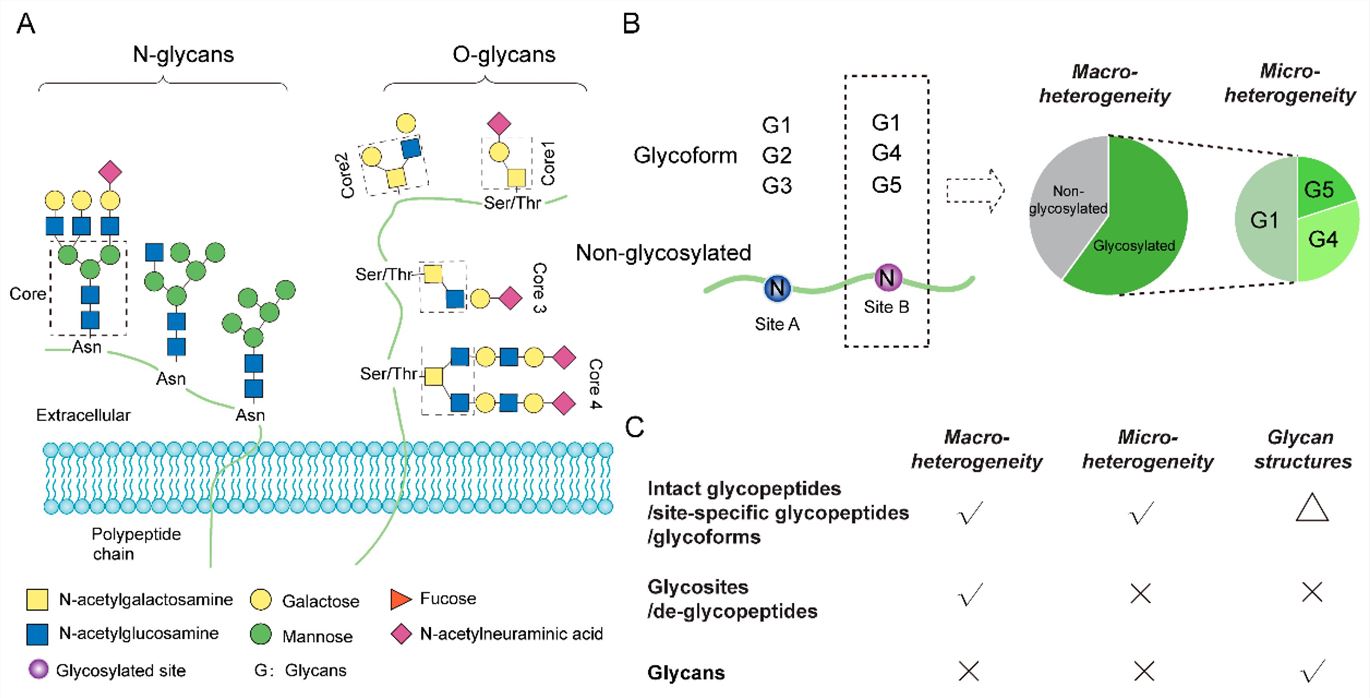 Fig.1 Protein glycosylation.1
Our Step-by-Step Protein Glycosylation Workflow
Our platform combines rational design, controlled synthesis, and high-resolution analysis into a streamlined pipeline, delivering functionally relevant glycosylated proteins with high purity and consistency.
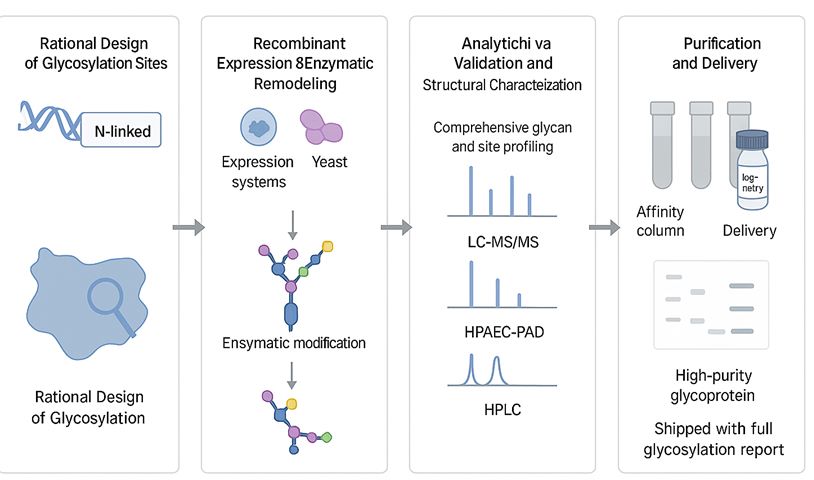 Fig.2 The workflow of protein glycosylation available at Creative Biolabs.
Step 1: Rational Design of Glycosylation Sites
We begin with your protein sequence and design suitable glycosylation patterns by identifying or introducing consensus motifs. For N-linked glycosylation, we look for or engineer Asn-X-Ser/Thr motifs; for O-linked glycosylation, we target serine/threonine-rich regions. We use structure-based analysis to ensure site additions do not disrupt protein folding or functional domains. This enables precise site-specific glycosylation control, which is critical for mechanistic studies and therapeutic optimization.
Step 2: Recombinant Expression & Enzymatic Remodeling
Once designed, the protein is expressed using systems optimized for glycosylation control. Our options include mammalian cells glycoengineered yeast, or bacteria modified for glycoprotein production. We further refine glycan structures through in vitro enzymatic glycosylation, using specific glycosyltransferases or glycosidases to achieve desired branching, sialylation, or fucosylation patterns. This hybrid strategy ensures accuracy and flexibility far beyond conventional expression methods.
Step 3: Analytical Validation and Structural Characterization
Each custom glycoprotein undergoes comprehensive structural analysis to confirm glycosylation site occupancy, glycan composition, and batch consistency. We use a combination of high-resolution analytical techniques to confirm glycan structure, site occupancy, and glycosylation consistency:
- LC-MS/MS – Enables site-specific glycan profiling at the peptide level with high sensitivity.
- HPAEC-PAD – Quantifies individual monosaccharide components in complex glycoprotein samples.
- HPLC – Provides detailed mapping and distribution analysis of released glycans.
- Lectin blotting – Detects specific glycan motifs such as sialic acid or fucose using lectin probes.
- SDS-PAGE/Western Blot – Reveals glycosylation-induced shifts in protein molecular weight for confirmation.
Step 4: Purification and Delivery
We purify glycoproteins through customized protocols involving affinity chromatography, ion exchange, or SEC. The final product is lyophilized and shipped with a comprehensive certificate of analysis detailing the protein yield, purity, and glycosylation profile.
Discuss Your Project
Why Choose Our Glycosylation Platform?
Our platform was built to resolve the limitations of native glycoprotein production by enabling complete control over site selection and glycan composition. Furthermore, our proprietary enzymatic glycosylation toolkit ensures minimal batch-to-batch variation, making our platform ideal for regulated applications and downstream assay development. Our key advantages include, but are not limited to:
- High Precision: We provide exact control over N- and O-linked modifications, reducing the variability typical of standard expression systems.
- Wide Compatibility: Our approach is suitable for a broad spectrum of targets, including membrane-bound receptors, therapeutic antibodies, and enzyme replacement proteins.
- Scalability: We support projects from microgram-scale research batches to milligram-scale pilot production. Recombinant expression allows for cost-effective, repeatable manufacturing.
Custom Glycosylation That Moves Your Research Forward
Custom glycosylation enables researchers to explore structure–function relationships with greater clarity, and to create more clinically relevant models and reagents. Here's how researchers across different fields are using our custom glycoproteins to push their work further:
| Research Area | How Our Services Make a Difference |
|---|---|
| Cancer Biology | Many immune checkpoints like PD-L1 are heavily glycosylated. We help researchers model specific protein glycosylation patterns in cancer to study how tumors escape immune surveillance, and to test glycoform-targeted therapies. |
| Therapeutic Development | If you're developing monoclonal antibodies, glycan structures on the Fc region can make or break therapeutic efficacy. We offer custom therapeutic protein glycosylation to help optimize ADCC, CDC, and serum half-life consistently and scalably. |
| Membrane Protein Research | Membrane proteins are notoriously hard to express, let alone with native-like glycosylation. We specialize in engineering glycosylated membrane proteins, like GPCRs, to help you study receptor trafficking, ligand binding, and downstream signaling in a more physiologically relevant context. |
| Diagnostics & Biomarker Discovery | Need to develop a more sensitive ELISA or lateral flow assay? We can synthesize precisely glycosylated proteins that mimic native epitopes, improving specificity in autoimmune disease, cancer, or infectious disease detection. |
| Anti-Glycan Antibody Projects | If you're working on antibodies that recognize glycopeptides or tumor-associated glyco-epitopes, we can generate the custom glycosylated immunogens you need—designed with the right structure, in the right conformation, at the right site. |
Complementary Services You Might Need
If your research requires more than just glycosylated proteins, we've got you covered. Our platform supports a broad range of biomolecules and biological surfaces, each tailored with site-specific glycan modifications to meet your exact scientific goals.
| Related Service | How It Supports Your Research |
|---|---|
| Custom Glycosylation of Antibodies | From Fc-effector tuning to glycan-masked targeting—we engineer antibody glycosylation for research use. |
| Custom Glycosylation of Peptides | Short sequences, big impact. Useful for generating glycopeptide antigens or probing glycan–epitope interactions. |
| Custom Glycosylation of Cell Membranes | Reconstitute native glycan landscapes on mammalian membranes to study immune interactions or drug binding. |
| Custom Glycosylation of Bacterial Membranes | Model pathogen-specific glycan signatures for vaccine design, phage therapy, or antimicrobial screening. |
| Custom Glycosylation of Small Molecules & Nucleic Acids | Attach functional glycans to drugs, RNA/DNA, or aptamers for improved delivery, targeting, or stability. |
| Custom Glycosylation of Lipids | Tailor many types of glycolipids to study membrane dynamics or build glyco-functionalized delivery vehicles. |
Whether you're advancing a biotherapeutic candidate, profiling glycosylated membrane proteins, or developing diagnostic reagents, Creative Biolabs is ready to support your research with high-quality, reproducible glycoproteins tailored to your exact requirements. Contact us today to schedule a free consultation with one of our glycoengineering specialists. We'll provide a customized proposal within 48 hours—no obligation.
Reference:
- Fang, Pan, et al. "Strategies for proteome-wide quantification of glycosylation macro-and micro-heterogeneity." International journal of molecular sciences 23.3 (2022): 1609. Distributed under Open Access license CC BY 4.0, without modification. https://doi.org/10.3390/ijms23031609