


Glycolipid Introduction
Accelerate Your Glycan-Based Discoveries!
Are you currently facing challenges in understanding complex cellular recognition mechanisms, developing targeted immunotherapies, or characterizing novel biomarkers? Creative Biolabs' Carbohydrate Antigens Glycolipid services help you accelerate your research and development by providing unparalleled expertise in the synthesis, characterization, and application of glycolipids. We achieve this through advanced glycomics technologies and bespoke analytical platforms.
Contact our team to get an inquiry now!
Glycolipid
Glycolipids, classified as lipid glycoconjugates, include all compounds featuring ≥1 monosaccharide unit connected via glycosidic bonds to a hydrophobic component. This definition includes structurally diverse biological molecules from animals, plants, and microorganisms. The concept now extends to incorporate glycoside and non-glycoside categories; glycosyl and lipid moieties connect through glycosidic (e.g., N-/O-glycosidic bonds) or non-glycosidic linkages (e.g., ester/amide bonds), respectively.
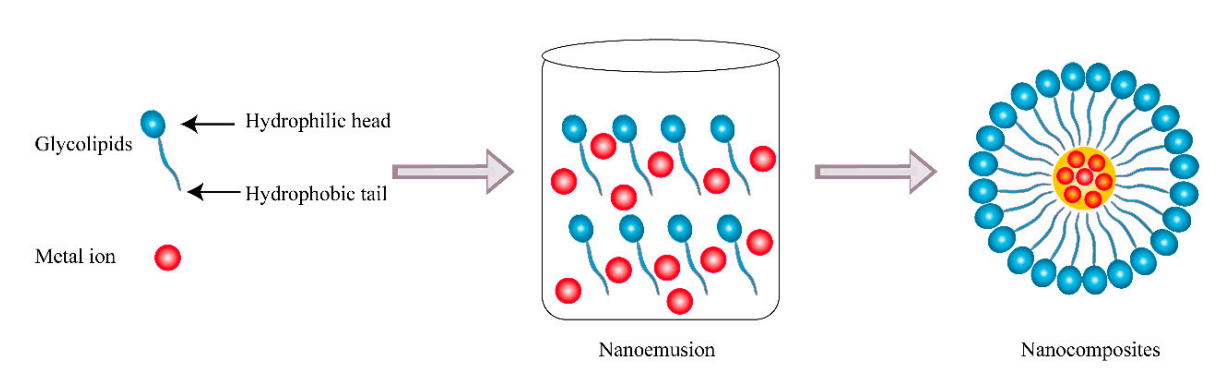 Fig.1 Schematic diagram of the synthetic pathway of nanocomposites based on glycolipids.1,3
Glycosyl groups comprise mono-, di-, oligo-, or polysaccharides (e.g., glucose, cellobiose, glycans), polyhydric alcohols (e.g., mannitol, erythritol, arabinol), amino sugars (e.g., desosamine), or acidic saccharides (e.g., glucuronic acid). Glycolipid lipid moieties encompass fatty acids, fatty alcohols, fatty amino alcohols, sterols, polyketides, hopanoids, and carotenoids exhibiting varied substitutions, carbon chain lengths, unsaturation degrees, branching configurations, and di-/oligo-/polymerizations.
Types of Glycolipid
Glycolipids account for ~3% of the plasma membrane's outer layer, consisting of a sugar head and lipid tail. According to lipid variations, they are categorized into three primary types: glycosphingolipids (GSLs), glycoglycerolipids, and glycosylphosphatidylinositols (GPIs). Gangliosides and cerebrosides represent two categories forming GSLs (carbohydrate and sphingolipid). GSLs exhibit the most prevalent overexpression in tumors.
Functions
- Cell Proliferation: Glycolipids control cell division through growth factor receptor activation. Intracellular ceramide promotes DNA synthesis in vascular smooth muscle cells and triggers mitogenesis through platelet-derived growth factors.
- Intercellular Communication: Surface-exposed glycolipid sugar moieties exhibit multivalent binding capacity, optimizing signaling. Embedded within lipid bilayers, carbohydrate-mediated interactions prevail in glycolipid dynamics.
- Signal Mediation: Glycolipids and sphingomyelin organize into microdomains, associating with proteins like cSrc, G-proteins, and focal adhesion kinase to orchestrate cellular processes. Gangliosides interact with calcium ions, implicated in neuronal activity. Ganglioside micelles exhibit strong calcium binding affinity, potentially influencing synaptic vesicle fusion.
- Immunological Activity: Leukocyte/endothelial selectins (lectins) bind glycolipid-attached carbohydrates, initiating immune cascades. This adhesion directs leukocyte extravasation toward inflammatory sites. Glycolipids additionally facilitate viral host cell recognition.
Published Data
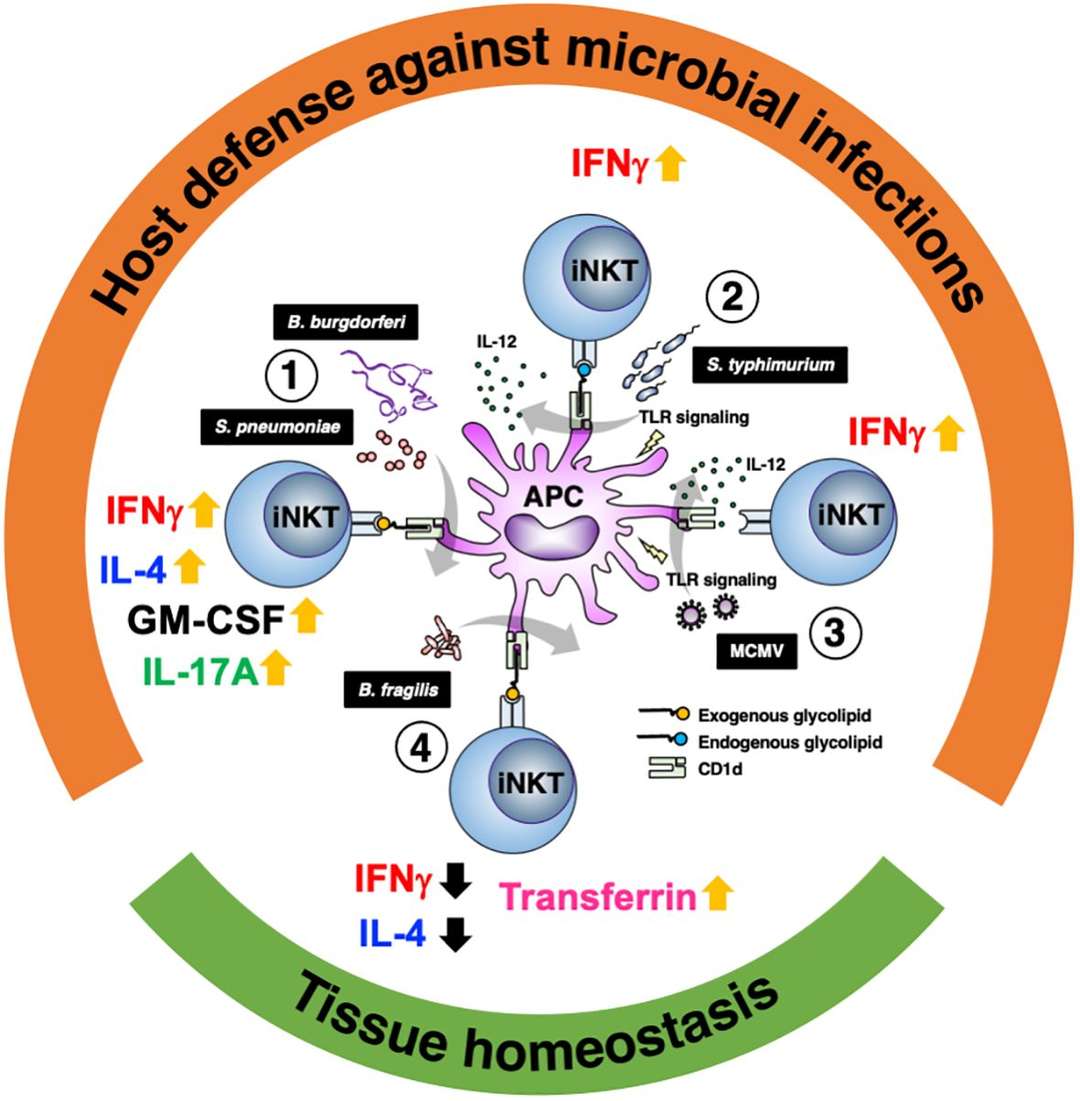 Fig.2 Glycolipid-dependent or -independent reaction of iNKT cells directs multiple outcomes.2,3
Recent research highlights the crucial role of invariant natural killer T (iNKT) cells in immune homeostasis and antimicrobial responses through their recognition of glycolipid antigens. Experimental studies have shown that iNKT cells bridge innate and adaptive immunity by rapidly secreting cytokines upon glycolipid recognition. For instance, α-galactosylceramide (αGalCer) has been extensively used as a model glycolipid antigen in vaccine studies, demonstrating its potency in stimulating iNKT cell responses. Furthermore, investigations into host-pathogen interactions have revealed that iNKT cells recognize glycolipid antigens derived from pathogens such as Borrelia burgdorferi and Streptococcus pneumoniae, contributing significantly to antibacterial immunity. These findings underscore the diverse functions of iNKT cells and emphasize their potential as targets for novel immunotherapeutic strategies, though further research is needed to fully elucidate their complex roles across various tissues and infection scenarios.
What We Can Offer?
Creative Biolabs is dedicated to providing cutting-edge products and services to empower your research in carbohydrate antigens and glycolipids.
- Custom Glycolipid Synthesis
- Glycolipid Structural Elucidation
- Glycolipid Profiling and Quantitation
- Anti-Glycolipid Antibody Development
- Functional Assay Development
- Bioinformatic Analysis of Glycomics Data
Discover the Creative Biolabs Advantage—Contact Us to Get a Quote Today
Why Choose Us?
Creative Biolabs stands at the forefront of glycolipid research and application, offering distinct advantages that ensure the success of your projects.
- Unparalleled Expertise: Our team comprises seasoned scientists with over 20 years of experience in glycomics and immunology.
- Cutting-Edge Technology: We leverage advanced synthesis platforms and analytical instrumentation for precise glycolipid characterization.
- Customization and Flexibility: Services are highly customizable to meet unique project demands, from novel glycolipid synthesis to complex functional assays.
- Quality Assurance: Rigorous quality control measures are implemented at every stage, ensuring high purity and biological activity of all glycolipid products.
- Comprehensive Support: We provide end-to-end scientific consultation, from project design to data interpretation.
FAQs
Here are some common questions prospective clients ask regarding advanced glycolipid research:
Q: What is the range of glycolipid structures that can be custom synthesized or analyzed?
A: Our capabilities span a wide spectrum of glycolipid classes, including glycosphingolipids (such as gangliosides and cerebrosides), glycoglycerolipids, and glycosylphosphatidylinositols (GPIs), in addition to various specific microbial glycolipids. We are equipped to handle the custom synthesis of novel or structurally unique glycolipids, and our analytical platforms can precisely characterize diverse structures from a variety of biological sources.
Q: How is the purity and structural integrity of synthesized glycolipids confirmed?
A: Ensuring the highest quality is paramount. Comprehensive analytical characterization is performed at every stage of synthesis and purification. This includes advanced spectroscopic techniques such as Nuclear Magnetic Resonance (NMR) spectroscopy for structural confirmation, mass spectrometry (MS) for molecular weight and composition, and high-performance liquid chromatography (HPLC) for purity assessment. This multi-modal approach guarantees the identity, purity, and homogeneity of all glycolipid products.
Q: How can advanced glycolipid services contribute to understanding immune responses?
A: Glycolipids are increasingly recognized as critical antigens that play a significant role in modulating immune responses, particularly through their interactions with CD1d molecules and Natural Killer T (NKT) cells. Specialized services can include developing functional assays to assess the immunogenicity of specific glycolipids, evaluating their binding affinity to immune receptors, and analyzing their capacity to activate distinct immune cell subsets. Such insights are invaluable for advancing immunotherapeutic strategies and vaccine development.
Related Products and Services
To advance your glycobiology R&D, we provide a comprehensive product portfolio:
- Monoclonal Antibodies
- Polyclonal Antibodies
- Secondary & Tag Antibodies
- Isotype & Loading Control Antibodies
- Carbohydrate Antigens
Creative Biolabs also provides related services, click the buttons to find more details.
Creative Biolabs delivers varied anti-glycan antibody solutions for international clientele. To explore these capabilities, please contact us for more information.
References:
- Shu, Qin et al. "Contributions of Glycolipid Biosurfactants and Glycolipid-Modified Materials to Antimicrobial Strategy: A Review." Pharmaceutics vol. 13,2 227. 6 Feb. 2021, DOI:10.3390/pharmaceutics13020227
- Hayashizaki, Koji et al. "Glycolipid antigen recognition by invariant natural killer T cells and its role in homeostasis and antimicrobial responses." Frontiers in immunology vol. 15 1402412. 28 May. 2024, DOI:10.3389/fimmu.2024.1402412
- Distributed under Open Access license CC BY 4.0, without modification.