


Infectious Disease related Glycan Introduction
Accelerate Your Glycan-Based Discoveries!
Infectious illnesses cause millions of global fatalities annually and impose substantial economic burdens, particularly in developing nations. Glycan interactions with biomolecules participate in every key stage of pathogenesis. Comprehensive glycan research may enhance therapeutic and diagnostic approaches for these conditions. Creative Biolabs stands as a premier entity in antibody generation and development. With our dedicated scientific team focused on investigation, we now provide comprehensive anti-glycan antibody development solutions for infectious disease diagnostics. Our expert researchers will be engaged throughout your initiative to expedite project advancement.
Contact our team to get an inquiry now!
Introduction
Infectious diseases (IDs) represent a primary mortality factor in numerous nations. Their prevention and effective management constitute a United Nations millennium objective. Comprehensive comprehension of the intricate, interconnected elements enabling pathogen evolution and persistence is fundamental for achieving genuine advances in vaccination and therapeutic strategies. Surface carbohydrates and glycan-binding proteins (GBPs) facilitate numerous mechanisms during pathogenesis and immune reactions. For instance, bacterial capsular polysaccharide (CPS) participates in evading immune defenses. As an exposed surface antigen, CPS underpins highly effective vaccines targeting Streptococcus pneumoniae, Neisseria meningitidis, and Haemophilus influenzae, conferring both direct and indirect protection via herd immunity while demonstrating significant economic viability. Pathogen GBPs mediate host cell invasion, whereas host GBPs enhance microbe recognition, immune stimulation, and elimination. Furthermore, certain secreted bacterial proteins, such as Clostridium difficile toxins A and B, exploit surface glycans as receptors. Plasmodium falciparum synthesizes a glycosylphosphatidylinositol (GPI) toxin glycan.
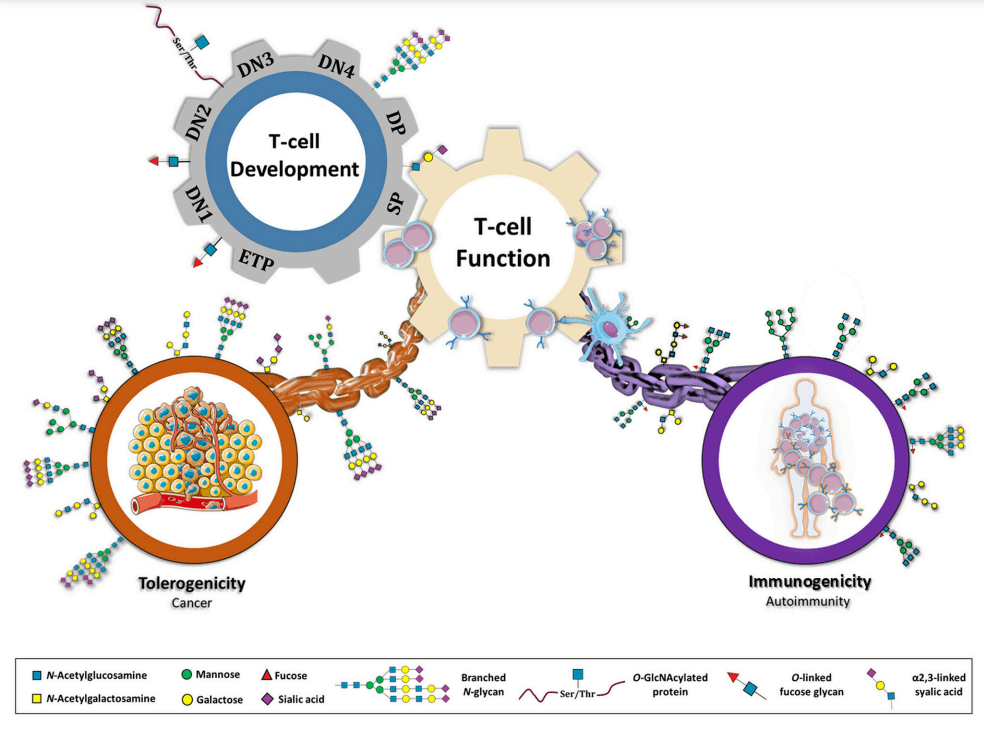 Fig.1 Glycans as key regulatory linkages governing T cell responses in tolerogenic or immunostimulatory contexts.1,3
The Role of Glycans in Infectious Disease
Escherichia coli frequently causes urinary tract infections (UTIs), attaching to bladder epithelium through FimH, a mannose-binding lectin on its F-pilus. A non-antibiotic therapeutic approach for this widespread condition involves D-mannose, competing with bacterial carbohydrate adhesion in the urinary tract. Optimized synthetic α-mannosides present another alternative, regarded as promising agents for UTI management and prevention.
Numerous microorganisms establish infection via cell-surface glycan interactions. For instance, certain pathogenic E. coli strains colonize the urinary system through lectin binding to P blood group antigens. The bacterium's P fimbriae lectins further facilitate dissemination from kidneys to the bloodstream. Certain microbes maintain persistence at infection loci through sialidase (neuraminidase) secretion. Yet in severe instances (e.g., Clostridium perfringens-induced gas gangrene), these enzymes enter plasma, desialylating erythrocytes and accelerating their clearance, causing anemia. Plasma neuraminidase measurement can aid diagnosis and prognosis assessment. Furthermore, Streptococcus pneumoniae expressing this enzyme may provoke hemolytic-uremic syndrome; selective inhibition presents therapeutic potential.
Published Data
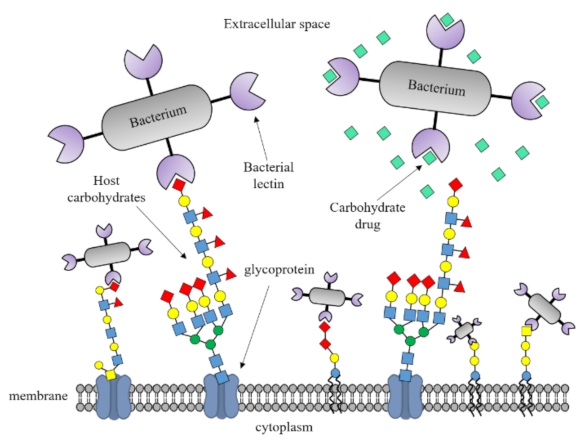 Fig.2 Schematic depiction of lectin-carbohydrate binding events in bacterial pathogenesis.2,3
Recent studies have underscored the involvement of sugar chains in various bacterial, fungal, and viral diseases, demonstrating their impact on health and their links to infection and immunosuppression. Research has examined microbial pathogenesis mechanisms, highlighting lectin and glycan-mediated biophysiological processes. For instance, research has explored how inhibiting microbial adhesion, a process mediated by lectins and sugar chains, can prevent infections. This includes investigations into identifying the protein sequence and structure of initial adhesion factors (lectins) from enteric pathogens. The development of specific inhibitors designed to attach to these pathogen lectins has shown promise in preclinical models, suggesting a potential strategy to prevent intestinal infections. Such inhibitors could serve as an effective antibiotic replacement, particularly for interventions in the early stages of infection. These findings highlight the therapeutic potential of targeting glycan-lectin interactions.
What We Can Offer?
At Creative Biolabs, we leverage our extensive expertise and cutting-edge platforms to offer a comprehensive suite of products and services designed to advance your understanding and application of glycans in infectious disease. We are dedicated to providing high-quality solutions that meet the rigorous demands of scientific research and drug development.
- Comprehensive Glycan Profiling & Structural Analysis
- Glycan Array Services
- Anti-Glycan Antibody Development
- Glycan-Based Therapeutic Target Identification
- Bioinformatics and Data Interpretation
Discover the Creative Biolabs Edge – Obtain Your Pricing Now
Why Choose Us?
Selecting Creative Biolabs entails collaborating with a frontrunner in carbohydrate science, dedicated to providing exceptional research precision and novel solutions. Our unique advantages are designed to accelerate your success:
- Unrivaled Expertise
- Cutting-Edge Technology
- Integrated Solutions
- Customized Project Design
- Proven Track Record
FAQs
Here are some common questions researchers and developers ask about the role of glycans in infectious disease:
Q: How can glycan analysis enhance the development of infectious disease diagnostics?
A: By identifying unique glycan signatures present on pathogens or characteristic alterations in host glycans during infection, researchers can develop highly specific and sensitive diagnostic assays. For instance, distinct bacterial capsular polysaccharides can serve as precise biomarkers for strain identification. Understanding these critical glycan-based markers can lead to more accurate and earlier disease detection. To explore how this can be applied to specific diagnostic targets, further consultation is recommended.
Q: What are the primary advantages of pursuing glycan-based targets for therapeutic development in infectious diseases?
A: Glycans often represent evolutionarily conserved interaction sites crucial for pathogen survival and infectivity. Their structural complexity can offer unique opportunities for designing highly specific therapeutic interventions. Targeting glycan-mediated pathogen adhesion, for example, can effectively prevent initial infection, potentially mitigating the development of resistance commonly observed with conventional antimicrobials. Exploring these novel therapeutic avenues can unlock new strategies for combating infectious agents.
Q: How can complex glycosylation patterns of pathogens be efficiently characterized for research purposes?
A: Characterizing complex microbial and viral glycosylation requires advanced analytical techniques. Specialized platforms employing high-resolution mass spectrometry and high-throughput glycan array technologies are designed to handle such intricate structures. These methods enable the efficient elucidation of complex glycan structures and the identification of their functional roles, even from challenging biological samples. For detailed discussions on specific pathogen glycosylation challenges, expert consultation is advised.
Related Products and Services
To further advance your glycobiology R&D, we provide a portfolio of solutions:
- Monoclonal Antibodies
- Polyclonal Antibodies
- Secondary & Tag Antibodies
- Isotype & Loading Control Antibodies
- Carbohydrate Antigens
Creative Biolabs also provides related services, click the buttons to find more details.
To explore these capabilities, please contact us for more information.
References:
- Pereira, Márcia S et al. "Glycans as Key Checkpoints of T Cell Activity and Function." Frontiers in immunology vol. 9 2754. 27 Nov. 2018, DOI:10.3389/fimmu.2018.02754
- Cho, Seung-Hak et al. "Systemic Lectin-Glycan Interaction of Pathogenic Enteric Bacteria in the Gastrointestinal Tract." International journal of molecular sciences vol. 23,3 1451. 27 Jan. 2022, DOI:10.3390/ijms23031451
- Distributed under Open Access license CC BY 4.0, without modification.