


Custom Anti-Sulfatide Antibody Service for Demyelinating Disease Research
Introduction: What is Sulfatide? And Why Studying Sulfatide is Difficult?
Welcome to the forefront of neuroscience research. Demyelinating disease represents one of the most significant challenges in modern medicine. Conditions like Multiple Sclerosis (MS), Guillain-Barré Syndrome (GBS), and Chronic Inflammatory Demyelinating Polyneuropathy (CIDP) affect millions, yet their precise mechanisms remain partly unsolved. At the center of this complex puzzle is the myelin sheath, the protective insulation around our nerve fibers. When the body's own immune system mistakenly attacks this sheath, the results are devastating. A key player in this autoimmune attack is sulfatide, a major lipid component of the myelin sheath. However, sulfatide is just one member of the critical family of glycolipids that maintain nervous system health. Other molecules, like gangliosides, can also become targets in different forms of autoimmune neuropathy. In many of these diseases, the immune system creates a specific weapon to attack these lipids: the autoantibody. Understanding these antibodies—whether against sulfatide or another glycolipid—is critical.
- Is it a cause of the disease or just a marker?
- How does it trigger myelin destruction?
- Which types of sulfatide antibody or other anti-glycolipid antibodies are the most dangerous?
To answer these questions, you need precision tools. Standard, off-the-shelf antibodies often lack the specificity or customization required for such complex research. This is where our custom services provide a comprehensive solution. Creative Biolabs specializes in the custom development of high-affinity, high-specificity antibodies tailored to your exact research specifications. Whether your focus is on the well-established anti-sulfatide antibody or you need to investigate other critical targets with our Anti-Other Glycolipid Antibody Development Service, our team is ready to build the exact tool you need.
What is Sulfatide?
To understand the disease, we must first understand the target. Sulfatide is a type of glycosphingolipid. In simpler terms, it is a special fat molecule (a ceramide) attached to a sugar (galactose) that has a sulfate group added to it. Its full name is 3'-sulfo-galactosylceramide.
What Makes Sulfatide Research So Challenging?
Researching sulfatide presents significant technical challenges. As a lipid antigen, sulfatide is notoriously difficult for standard antibody development, which is optimized for proteins. Lipids are small, complex to isolate, and often generate weak or non-specific immune responses. Furthermore, the nervous system is composed of similar lipids, causing many available antibodies to cross-react and produce unreliable data. A final hurdle is the antibody isotype. Pathogenic IgM and IgG antibodies function differently, but the highly specific reagents needed to isolate and study these distinct types are not available, creating a significant gap in research.
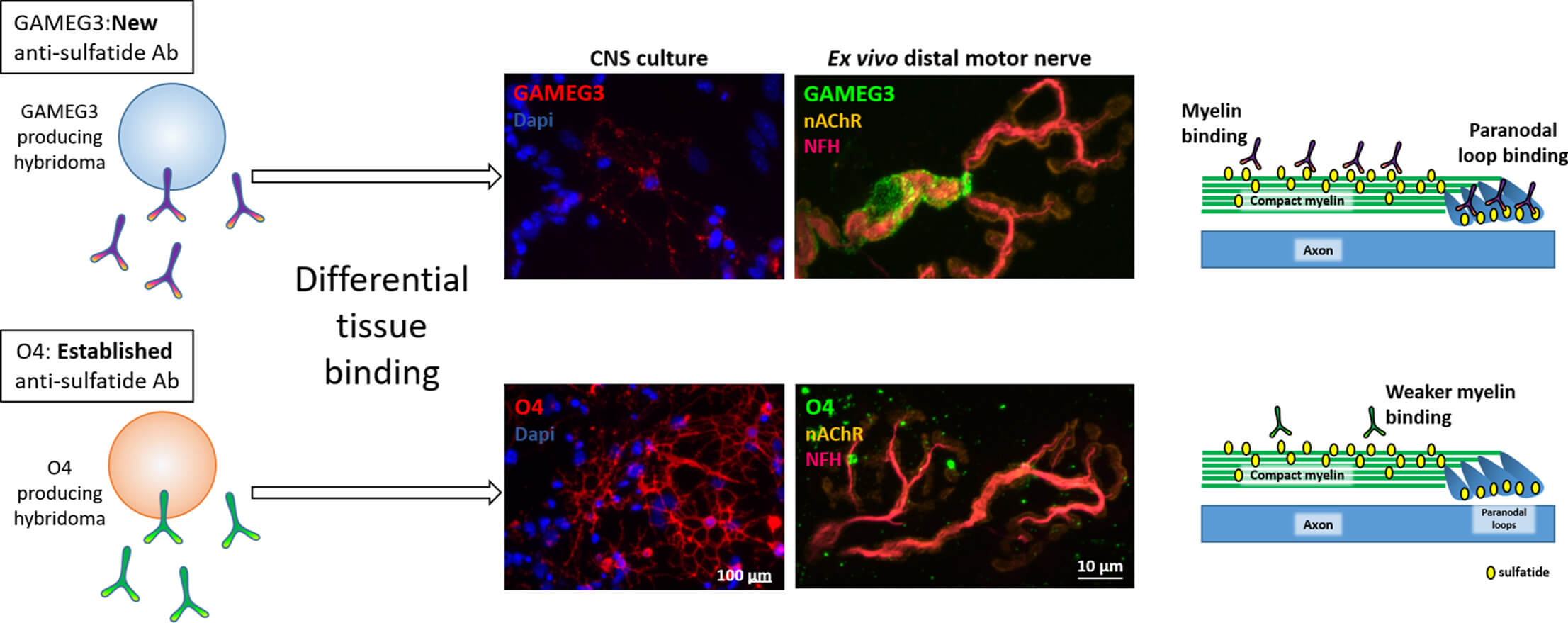 Fig.1 Differential binding of anti-sulfatide antibodies: New vs. Established.1
An Overview of Our Service Capabilities
| Feature | Your Customization Options | Why It Matters for Your Research |
|---|---|---|
| Antibody Type | Monoclonal, Polyclonal |
Monoclonal: Unmatched specificity for a single target epitope. Polyclonal: High-affinity detection from multiple epitopes. |
| Host Species | Mouse, Rabbit, Rat, Llama (VHH), Chicken |
Rabbit: Often produces higher-affinity antibodies. Llama (VHH): Creates single-domain antibodies for unique applications. |
| Isotype Selection | IgG (Subclasses 1, 2a, 2b, 3), IgM, IgA | Crucial for functional studies. Order a specific pathogenic isotype (e.g., IgM) to model disease mechanisms directly. |
| Antigen Format | Purified Sulfatide, Sulfatide-Liposomes, Carrier Conjugates | We optimize the antigen to generate the best possible immune response for this difficult lipid target. |
| Final Format | Full-Length Antibody, Fab Fragment, scFv | Need a smaller fragment for better tissue penetration? We can provide it. |
| Labeling | Biotin, FITC, HRP, and more | Get your antibody "ready-to-use" for your specific assay (ELISA, IF, Flow Cytometry, and more) without needing secondary antibodies. |
| Validation | ELISA, WB, IHC, IF, Flow Cytometry | We validate the antibody in your intended application, saving you months of optimization time. |
Our Solution: The Custom Anti-Sulfatide Antibody Service
We bridge the gap. Our service is not a catalog of pre-made products. It is a collaborative partnership. We build the exact antibody you need, from the ground up, based on your unique research question. We have overcome the challenges of working with lipid antigens. Our expert team uses optimized strategies to generate high-affinity antibodies against sulfatide and other glycolipids. Here is our comprehensive workflow for the development of a custom anti-sulfatide antibody:
Step 1: Consultation and Project Design
You speak directly with our PhD-level scientific team. You tell us your goal.
- Do you need to detect human IgG anti-sulfatide antibodies in serum? We can design a project for that.
- Do you need a mouse IgM antibody that binds sulfatide to use in a cell culture model? We can design a project for that.
- Do you need a rabbit antibody that works perfectly in IHC on spinal cord sections? We can design a project for that.
Step 2: Advanced Antigen Strategy
This is our specialty. To get a good antibody against sulfatide, the antigen must be presented correctly. We use proven strategies, such as conjugating sulfatide to carrier proteins or incorporating it into liposomes, to ensure a strong and specific immune response.
Step 3: Immunization and Library Generation
We immunize host animals using our optimized protocol. We then generate the antibody library. This can be a traditional hybridoma library (for monoclonal antibodies) or a phage display library (for antibody fragments or unique species).
Step 4: Rigorous and Specific Screening
This is the most critical step. We do not just screen for any binding. We screen for your specific needs.
- Positive Screening: We select for antibodies that bind strongly to pure sulfatide.
- Negative Screening: We discard any antibodies that also bind to other related lipids.
- Application-Specific Screening: If you need an antibody for ELISA, we screen using ELISA. If you need one for IHC, we screen using IHC.
Step 5: Production, Purification, and QC
Once you approve a "hit" antibody, we scale up production. We purify the antibody to the highest standard and perform rigorous quality control to confirm its specificity and affinity.
Step 6: Delivery and Support
We deliver your final, custom-validated antibody, along with all the data. Our scientific support team remains available to help you integrate this new tool into your experiments.
Why Partner with Us?
We are more than just an antibody vendor. We are your research partner. We understand the deep, complex challenges of autoimmune neuropathy and glycolipid research.
- Our team lives and breathes antibody development. We have specific experience with difficult-to-target antigens like lipids and glycans.
- We offer total customization: You are in control, and you define the project before we execute. You are not limited by a catalog.
- We guarantee that our custom antibody will work in the application for which we validated it. We stand by our data.
- You will have a dedicated project manager and access to our scientific team from start to finish. You will receive regular updates on your project's progress.
- Your project is yours alone. All intellectual property and all materials we create for you are yours to keep.
Applications of Anti-Sulfatide Antibodies
The custom anti-sulfatide antibody can be used in a wide range of applications in demyelinating disease research. Some of the key applications include:
Disease Mechanism Research
Anti-sulfatide antibodies help researchers understand how the immune system targets myelin in autoimmune neuropathy. By investigating the role of these antibodies in the breakdown of sulfatide, researchers can better understand the inflammatory processes that contribute to the progression of diseases such as multiple sclerosis and Guillain-Barré syndrome.
Diagnostic Development
The detection of anti-sulfatide antibodies can serve as a biomarker for autoimmune neuropathy. The anti-sulfatide antibodies can be used to develop diagnostic tests that help identify patients at early stages of demyelinating diseases. This is crucial for timely intervention and better disease management.
Therapeutic Targeting
Research into anti-sulfatide antibodies can also contribute to the development of targeted therapies for demyelinating diseases. By understanding how these antibodies interact with sulfatide, researchers can design therapeutic interventions that block or neutralize their effects, potentially halting or reversing the damage caused by autoimmune responses in myelin.
Preclinical and Clinical Studies
The anti-sulfatide antibodies can be used in preclinical studies to test potential drugs or treatments for demyelinating diseases. The ability to track and quantify anti-sulfatide antibodies in animal models is critical for evaluating the efficacy of new therapeutic agents before they move into human clinical trials.
Related Anti-Other Glycolipid Antibody Services
Our expertise extends across the full spectrum of complex glycolipid targets. If your research goes beyond sulfatide, we provide the same high-level custom development for these related areas.
Anti-Galactocerebroside Antibody Development
Galactocerebroside (GalC) is another essential lipid component of the myelin sheath. Alongside sulfatide, it is a primary target in demyelinating neuropathies. Our anti-galactocerebroside antibody development service delivers high-specificity custom antibodies to help you investigate this critical autoimmune target.
Anti-Globoside Antibody Development
Globoside is a key glycosphingolipid involved in cell recognition. It is famously known as the P antigen and is a critical target in autoimmune conditions like paroxysmal cold hemoglobinuria. We provide expert anti-globoside antibody development services to support this vital area of research.
Anti-Blood Group Antigens Antibody Development
The classic A, B, and H blood group antigens are foundational glycan structures. Their importance extends far beyond transfusion medicine into cancer immunology and transplant research. Our anti-blood group antigens antibody development service creates highly specific reagents for these fundamental targets.
The study of demyelinating disease is at a critical juncture. Progress is no longer limited by ideas, but by the availability of precise tools. An anti-sulfatide antibody is a central player in these devastating diseases, and studying it requires a new class of custom reagents. Stop trying to make off-the-shelf tools work for your unique question. Let us build the exact antibody you need to get clear, publishable, and transformative results. Contact our team of experts today for a free, no-obligation consultation. Tell us about your research, and let's design the tool that facilitates your next discovery.
FAQs
What is the role of sulfatide in demyelinating diseases?
Sulfatide is a key component of the myelin sheath, and its destruction or alteration can lead to autoimmune responses, contributing to demyelination in diseases such as multiple sclerosis and Guillain-Barré syndrome.
How do anti-sulfatide antibodies contribute to disease research?
Anti-sulfatide antibodies help identify and understand the immune system's role in targeting myelin, thus providing insight into the mechanisms of autoimmune neuropathy and demyelinating diseases.
Can I use the custom anti-sulfatide antibodies in my preclinical studies?
Yes, our custom anti-sulfatide antibodies are ideal for use in preclinical studies to evaluate potential treatments for demyelinating diseases and autoimmune neuropathy.
How long does it take to receive the custom antibodies?
The timeline for custom antibody production varies based on your specifications, but we provide efficient and timely delivery to ensure that your research progresses smoothly.
Are the custom antibodies validated for use in human samples?
Our custom antibodies are thoroughly validated for use in various research applications, including animal models, and can be adapted for use in human samples based on your specific requirements.
Reference:
- Meehan, Gavin R., et al. "Differential binding patterns of anti-sulfatide antibodies to glial membranes." Journal of Neuroimmunology 323 (2018): 28-35. Distributed under Open Access license CC BY 4.0, without modification. https://doi.org/10.1016/j.jneuroim.2018.07.004
Supports
- Glycolipid
- Anti-Glycolipid Antibody Overview
- GM3 Ganglioside Overview
- Sulfatide and Anti-Sulfatide Antibodies Overview