


Custom Glycosylation of Lipids
Introduction
Studying multifunctional lipids poses significant challenges. Their structural diversity, biosynthetic complexity, and analytical inaccessibility hinder functional elucidation and therapeutic exploration. At Creative Biolabs, we address these barriers head-on. Whether you're decoding lipid–lectin interactions, replicating tumor-associated glycolipid antigens, or engineering drug carriers, our custom glycosylation of lipids platform facilitates your research with precision glycoengineering, leading analytical capabilities, and fully customizable workflows. Our goal is to simplify complexity, so you can focus on breakthroughs.
What is Lipid Glycosylation?
Glycosylation is the process of adding sugar molecules to proteins or lipids. This creates a complex structure that helps with signaling and molecular stability. From how leukocytes move to how antigens are presented to natural killer T cells (NKT cells), glycosylated lipids such as gangliosides, glycosylphosphatidylinositol (GPI) anchors, and lipopolysaccharides (LPS) have always defined how cells communicate with each other, how they adapt, and how they survive. Abnormalities in the way certain molecules are attached to other molecules have been linked to a variety of diseases. These include neurodegenerative disorders, such as Parkinson's disease (an unusual accumulation of GM3 gangliosides), cancer immune escape (Globo-H masking tumor epitopes), and congenital disorders of glycosylation. Creative Biolabs offers an integrated platform that can do all of this for your research needs. Our platform provides customized solutions for exploring the biological functions and disease associations of lipid glycosylation by integrating multi-dimensional technologies.
Why Lipid Glycosylation Matters?
Lipid glycosylation displays remarkable structural flexibility and variation in its compartments, making it both biologically fascinating and experimentally challenging. A 2016 study showed that the structure of a certain enzyme called aminoarabinose transferase ArnT suggests a molecular basis for lipid A glycosylation. In mammals, estrogen controls the way lipids are attached to proteins. This affects the composition of the glycocalyx in the uterus and can influence fertility and implantation. In addition, the competition between protein and lipid substrates for UDP-glucose ceramide glucosyltransferase (UGCG) affects global glycosylation homeostasis. This process is dysregulated in Gaucher's disease and metabolic syndromes. These findings show that precise control over lipid glycosylation is important for both research and the design of new treatments.
Service Portfolio: Tailored Lipid Glycosylation Solutions
Sugar Moiety Customization
We design specific glycan structures for your lipid substrates. For instance, we synthesize GT1b Ganglioside with terminal sialylation to mimic tumor-associated carbohydrate antigens to facilitate our clients' CAR-T research.
| Parameter | Options |
|---|---|
| Monosaccharides | Glucose (Glc), Galactose (Gal), Sialic acid (Sia), GlcA |
| Linkage Type | O-linked glycosylation lipid attachment, N-linked analogs |
| Functionalized Derivatives | Sulfated glycans, fluorinated sugars, alkyne-modified glycans |
Function-Oriented Design
- Targeted Drug Delivery: We construct glyco-liposomes by attaching galactose lipids to phosphatidylcholine carriers, separated via hexaethylene spacers to optimize lectin accessibility.
- Biomimetic Membranes: We replicate Golgi-like glycosylation environments to model lipid raft formation and glycosphingolipid clustering in cell membranes.
High-tech Analytical Techniques
Creative Biolabs is equipped with advanced analytical techniques:
| Technique | Application | Sensitivity/Resolution |
|---|---|---|
| LC-MS/MS | Quantification of glycolipids | fmol level |
| NMR Spectroscopy | Linkage position and anomeric configuration | Differentiates α-/β-anomers |
| HPTLC/GC-FID | Preliminary profiling and quantitation | Useful for plant and bacterial lipids |
| MALDI-TOF MS | Glycan mass fingerprinting | Rapid, high-throughput screening |
Analytical Characterization Platform
Accurate characterization is at the heart of lipid glycosylation research. Due to the subtle variations in glycan linkages, branching patterns, and lipid tail modifications, high-resolution analytical techniques are essential. Backed by advanced instrumentation and deep domain expertise, Creative Biolabs provides end-to-end glycolipid analysis services, including but not limited to:
- Glycosphingolipids Analysis Service: Structural elucidation of gangliosides, ceramides, and their glycan extensions.
- Glycoglycerolipids Analysis Service: Identification of plant- and bacteria-derived glycolipids, such as MGDG and GlcADG.
- Lipopolysaccharide Analysis Service: Endotoxin structure and heterogeneity profiling.
- Glycosylphosphatidylinositol Anchor Analysis Service: Characterization of GPI-anchor remodeling and protein association.
- Antigen-associated Glycolipid Analysis Service: High-throughput screening of immunogenic glycolipids relevant to cancer and infection.
Workflow & Sample Submission Guidelines
- Natural extracts: Purity (≥90%), contaminant exclusion (surfactant-free), recommended prep method (SPE)
- Synthetic precursors: Data requirements (structure/solubility), solvent system (chloroform: methanol 1:2)
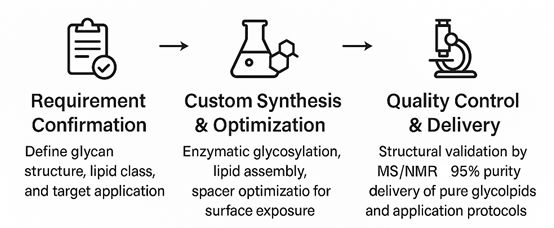 Fig.1 The workflow for custom glycosylation of lipids.
Application Fields
Our custom glycosylation services are applied across a wide spectrum of life sciences and pharmaceutical research:
Targeted Drug Delivery
Glycolipid-functionalized liposomes can selectively bind to hepatic or tumor lectins, enhancing payload accumulation and reducing systemic toxicity.
Immuno-Oncology
Tumor-associated carbohydrate antigens such as Globo-H, STn, and GD2 are frequently presented as glycolipids. We support neoantigen mimicry for CAR-T development and antibody discovery.
Neurodegenerative Disorders
Glycosphingolipids like GM3 and GM1 regulate synaptic function and lipid raft stability. Abnormal expression is linked to Parkinson's and Alzheimer's disease—research domains where our services provide critical insight.
Plant and Microbial Stress Physiology
We enable the study of GlcADG and MGDG under abiotic stress (e.g., phosphate starvation), and investigate bacterial glycolipids involved in host-pathogen interactions.
Vaccine Adjuvant Design
Lipid-based glycosylated antigens provide a powerful platform for stimulating innate and adaptive immunity, particularly via NKT cell pathways.
Advantages of Creative Biolabs' Custom Glycosylation Services
- Full Monosaccharide Library: Glc, Gal, Sia, GlcA, and beyond
- Ongoing R&D Support: From research design to publication
- Advanced Lipid Platforms: Integrated synthesis, analysis, and functional design capabilities.
- Expert Advisory Team: Consultations from lipid chemists and glycoengineers
Related Services at Creative Biolabs
| Custom Glycosylation of Proteins | Site-specific N-/O-linked glycosylation of peptides and proteins |
| Custom Glycosylation of Peptides | Tailored glycan conjugation for functional peptide applications |
| Custom Glycosylation of Antibodies | Precise Fc and Fab glycoengineering to modulate antibody function and effector activity |
| Custom Glycosylation of Cell Membranes | Engineering membrane glycoconjugates for signaling studies |
| Custom Glycosylation of Bacterial Membranes | LPS and O-antigen modification for vaccine development |
| Custom Glycosylation of Small Molecules & Nucleic Acids | Enhancing pharmacokinetics and targeting of small molecule drugs and custom glycoRNA design |
Glycosylated lipids offer a highly customizable and functional biomaterial interface for cutting-edge biomedical applications. Whether you're designing a targeted nanocarrier or modeling neurodegenerative disease mechanisms, Creative Biolabs is your strategic partner in lipid glycosylation. Our platform integrates molecular design, enzymatic synthesis, and state-of-the-art analytics to translate your vision into precision-engineered glycolipids. If you are interested in our custom services in glycosylation of lipids for further glycolipid-related research, please do not hesitate to contact us.
FAQs
Where does lipid glycosylation occur within the cell?
Lipid glycosylation usually begins in the endoplasmic reticulum and continues via the Golgi apparatus, where particular glycosyltransferases add predetermined sugar residues. The modified lipids are then trafficked to the plasma membrane or secretory vesicles.
How is protein–lipid glycosylation competition relevant to disease?
Enzymes such as UGCG may preferentially glycosylate lipid over protein substrates depending on the cellular context, influencing sphingolipid production and contributing to lysosomal storage diseases or neoplastic transformation.
What are examples of diseases linked to defective lipid glycosylation?
Gaucher disease, Fabry disease, and SLC35A2-CDG are all associated with defective lipid glycosylation. It also contributes to Parkinson's disease, breast and ovarian malignancies (by tumor-associated glycolipids), and autoimmune neuropathies such as Guillain-Barré syndrome, in which abnormal glycolipid expression causes pathogenic immunological reactions.
Can estrogen or hormones regulate lipid glycosylation?
Yes. Estrogens regulate glycolipid production by controlling glycosyltransferase expression, particularly in reproductive organs and hormone-sensitive malignancies. This modulation has an impact on the glycocalyx, immunological tolerance, and cancer cell signaling, emphasizing the importance of hormone regulation in regulating lipid glycosylation patterns.
Reference:
- Kirschbaum, Carla, et al. "Unravelling the structural complexity of glycolipids with cryogenic infrared spectroscopy." Nature communications 12.1 (2021): 1201. https://doi.org/10.1038/s41467-021-21480-1