


Custom Anti-GQ1b Antibody Service for Miller Fisher Syndrome Research
Background: GQ1b and Anti-GQ1b
Miller Fisher syndrome (MFS) sits within the Guillain–Barré spectrum and classically presents with ophthalmoplegia, ataxia, and areflexia; a landmark finding tied serum IgG anti-GQ1b antibody to this phenotype and opened the door to decades of work on ganglioside-directed autoimmunity. Mechanistically, GQ1b ganglioside function centers on organizing neuronal membranes—shaping lipid rafts, stabilizing axo-glial interfaces, and influencing ocular-motor circuits—so the GQ1b antibody target location naturally tracks to cranial nerves controlling eye movement and balance. Later studies showed that ganglioside complexes containing GQ1b can also be targeted, which is why assays must respect lipid presentation and complex epitopes; this biology underpins the broader concept of anti-GQ1b antibody syndrome spanning MFS and related Guillain–Barré syndrome subtypes.
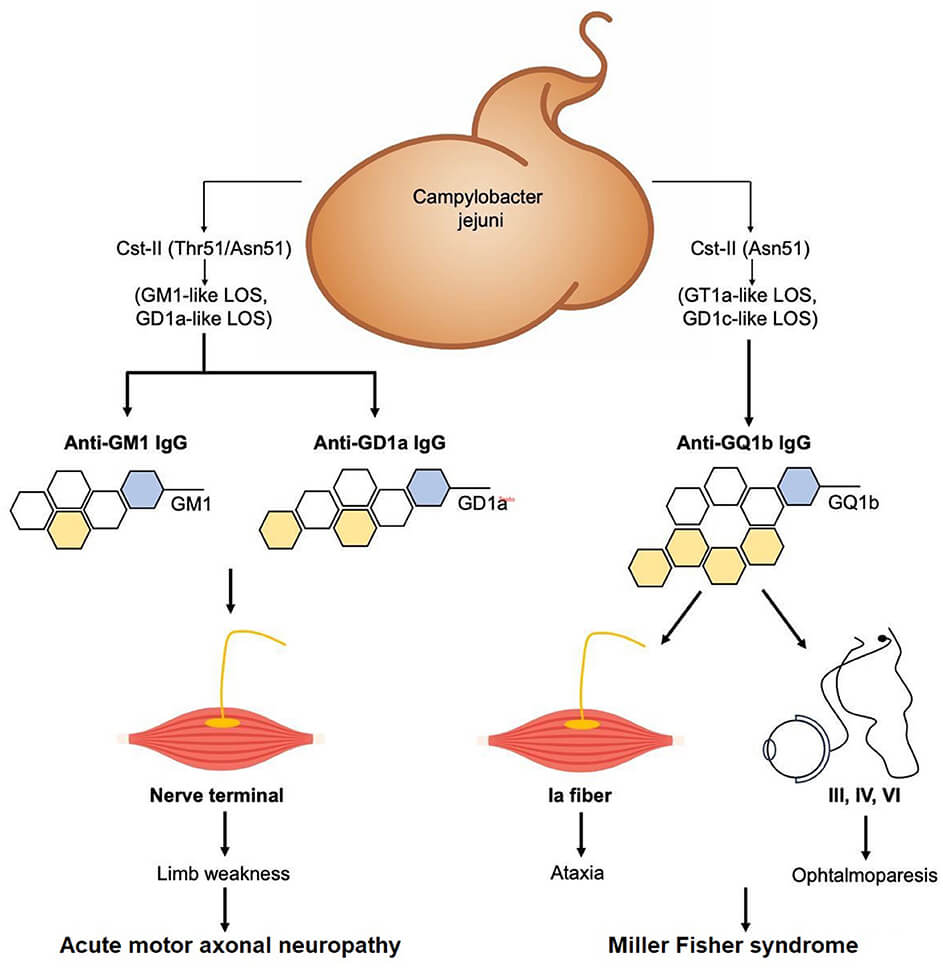 Fig.1 Miller Fisher Syndrome and anti-GQ1b IgG.1
In practice, the significance of anti-GQ1b antibody in diagnosis lies in pairing seropositivity with the clinical triad and confirming specificity with orthogonal tests to separate true GQ1b binding from look-alikes. Compared with anti-GM1 antibody, which often signals motor-predominant neuropathies, anti-GQ1b marks an ocular-brainstem-leaning profile; running both in a panel sharpens interpretation across the GBS landscape. For publication-ready work, Creative Biolabs provides exactly what teams need: a suite of anti-ganglioside antibody development solutions that include custom anti-GQ1b antibody programs built around membrane-aware antigen design and orthogonal validation, and ready-to-use anti-GQ1b antibody reagents shipped with clear data packs to jump-start your study.
Custom Anti-GQ1b Services
Studying GQ1b is technically demanding:
- Weak immunogenicity & lipid context. Glycolipids are poor immunogens unless conjugated to carrier proteins (like KLH/BSA) or reconstituted into liposomes/nanoparticles to mimic membrane topology.
- Cross-reactivity risk. B-series gangliosides (GD1b, GT1b, GQ1b) share cores; rigorous glycan array and panelized ELISAs are essential to document selectivity.
- Complex epitopes. Ganglioside complexes can create neo-determinants; validation must test monomers and defined binary complexes.
Creative Biolabs built its anti-glycolipid antibody platform to solve exactly these problems—end-to-end, from immunogen design through forensic specificity mapping. We tailor programs for fundamental discovery, MFS diagnostics research, and mechanism-of-action studies.
- Formats: Polyclonal, hybridoma-derived mAbs, recombinant IgG/IgA/IgM, scFv/Fab; humanization or isotype switching on request.
- Discovery Routes: Hybridoma, phage display, and single-B-cell cloning with membrane-mimetic panning to enrich GQ1b binders.
- Antigen Engineering: GQ1b–KLH/BSA conjugates; liposomal GQ1b; neoglycolipids for array selection; binary complex antigens (e.g., GQ1b/GT1a).
- Assays & Readouts: Direct/competitive ELISA, TLC-immunostaining, dot-blot, flow on glycolipid-decorated vesicles or cells, glycan microarrays, and epitope binning across ganglioside panels.
- Functional Screens: Neurite outgrowth readouts, NMJ models, complement-dependent cytotoxicity on glycolipid-rich membranes (as applicable to research).
Anti-GQ1b Antibody Workflow
Our Why → What → How process minimizes risk and accelerates delivery.
- Design & Feasibility. Define indication focus, matrix of comparison antigens, and acceptance criteria.
- Immunogen Construction. Conjugation and/or membrane reconstitution; quality control by MS/TLC.
- Immunization. Host selection (mouse, rabbit, camelid) and adjuvanting optimized for anti-GQ1b responses.
- Discovery & Cloning. Hybridoma / phage display / single-B isolation and recombinant expression.
- Validation. ELISA + glycan array cross-reactivity, ganglioside-complex testing, and orthogonal TLC-immunostaining.
- Scale-Up & QC. Affinity purification and release testing (purity, endotoxin, identity).
Ready-To-Use Anti-GD1b Antibodies
Prefer an off-the-shelf start while your custom antibody advances? Creative Biolabs offer ready-to-use anti-GD1b antibodies that are suitable for different applications to meet the requirements of our clients worldwide.
-
Mouse Anti-GD1b Monoclonal Antibody (AGM-038YJ)(CAT#: AGM-038YJ)Online InquiryHost: MouseAntibody Isotype: IgG2bSpecies Reactivity: OtherApplication: TLC, FC, ELISA, ICC, IHC
-
Mouse Anti-GD1b Monoclonal Antibody (CGYJ016)(CAT#: AGM-142YJ)Online InquiryHost: MouseAntibody Isotype: IgG2bSpecies Reactivity: S. MinnesotaApplication: TLC, FC, ELISA, ICC, IHC
Why Creative Biolabs
- High specificity. We design antigen panels that separate true GQ1b signal from look-alikes
- Formats that fit your pipeline. From early screening to RUO lots, we deliver the antibody in the isotype and amount you need.
- A clean, publication-ready data pack.
- Time-saving and cost-efficient.
Applications
- Use IgG anti-GQ1b antibody to interrogate cranial nerve involvement and to model antibody–membrane interactions that align with classical MFS presentations.
- The expanding clinical spectrum of anti-GQ1b antibody syndrome, including overlapping or atypical phenotypes, motivates broader ganglioside and ganglioside-complex panels in RUO studies.
- BBE Models. Bickerstaff brainstem encephalitis with or without anti-GQ1b antibody appears within this spectrum; our arrays and complex antigens help dissect shared vs unique targets across phenotypes.
- Build and benchmark MFS diagnostics research assays (RUO) with defined controls and orthogonal confirmation to support sensitivity/specificity estimation in your cohorts.
Services You May Be Interested in
- Anti-Ganglioside Antibody Development (GM1, GD1a, GD1b, GT1a, GT1b, GQ1b)
- Glycoglycerolipid Analysis
- Anti-glycan antibody engineering (isotype switching, humanization)
If you're advancing MFS diagnostics research or mapping the expanding clinical spectrum of anti-GQ1b antibody syndrome, we'll build the exact antibody and the data package you need—fast, documented, and defensible. Contact us and tell us your target, matrix, and required readouts, our scientists will propose an experiment-ready plan within one business day.
FAQs
What is anti-GQ1b antibody?
Anti-GQ1b antibody is usually an IgG autoantibody that recognizes the GQ1b ganglioside within neuronal membranes, where antigen orientation and lipid context strongly influence binding. In research programs focused on MFS diagnostics and related phenotypes, it serves as a high-value serologic readout when interpreted alongside clinical features and orthogonal assays.
What species can you immunize?
Mouse and rabbit are standard; camelid is available for VHH discovery when epitope access is challenging on membrane-like antigens.
What diseases are associated with anti-GQ1b antibody?
The strongest link is with Miller Fisher syndrome, but seropositivity also appears across the anti-GQ1b antibody syndrome spectrum, spanning selected Guillain-Barré syndrome subtypes and Bickerstaff brainstem encephalitis. Patterns vary by cohort and timing, so results are best weighed with symptoms, neurophysiology, and companion ganglioside markers to resolve phenotypic nuance.
How is anti-GQ1b antibody tested?
Most labs start with ELISA using purified or conjugated GQ1b, then confirm specificity through thin-layer chromatography immunostaining or glycan microarrays that include related b-series gangliosides. Carefully designed controls and reference ranges help reduce cross-reactivity and yield data suitable for sensitivity/specificity estimation in RUO pipelines.
What does a positive anti-GQ1b antibody test mean?
A positive result, particularly in a patient with ophthalmoplegia, ataxia, and areflexia, supports an MFS-spectrum interpretation, yet it is not diagnostic in isolation. True value emerges when serology is integrated with exam findings, electrophysiology, and comparative markers (e.g., anti-GM1), clarifying placement within the broader GBS landscape.
Reference:
- Noioso, Ciro Maria, et al. "Miller Fisher syndrome: an updated narrative review." Frontiers in Neurology 14 (2023): 1250774. Distributed under Open Access license CC BY 4.0, without modification. https://doi.org/10.3389/fneur.2023.1250774