


Glycolipid Analysis Service
Glycolipid Introduction
The field of glycosylation analysis is notoriously complex, especially for crucial molecules like glycolipids. As a global leader in applied glycoscience, Creative Biolabs provides the world-class expertise and advanced platforms needed to translate molecular complexity into clear, actionable data for your research.
Glycolipid Definition
Glycolipids are hybrid molecules composed of a carbohydrate (or glycan) chain attached to a lipid component. This unique structure allows them to anchor within the outer layer of the cell membrane, with the sugar portions facing outward. While small in mass, their impact is massive. In this position, they scaffold membranes, encode critical recognition signals for cell-to-cell communication, modulate immunity, and tune receptor functions, acting as essential target across microbiology, oncology, neurology, and immunology. At Creative Biolabs, we turn this molecular complexity into clear, defensible evidence you can use. Our glycolipid analysis service includes a suite of targeted, expert-led sub-services that resolve composition, structure, and function with publication-grade rigor and industry-level reproducibility. Whether you are mapping gangliosides in neuronal membranes, quantifying plant glycoglycerolipids in lipid vesicles, characterizing endotoxin (LPS) heterogeneity in bacterial preparations, verifying GPI anchors on recombinant proteins, or profiling antigen-associated glycolipids from tumors and pathogens, we provide a tightly integrated analytical workflow from sample to storyline—no guesswork, no noise, and no dead-ends.
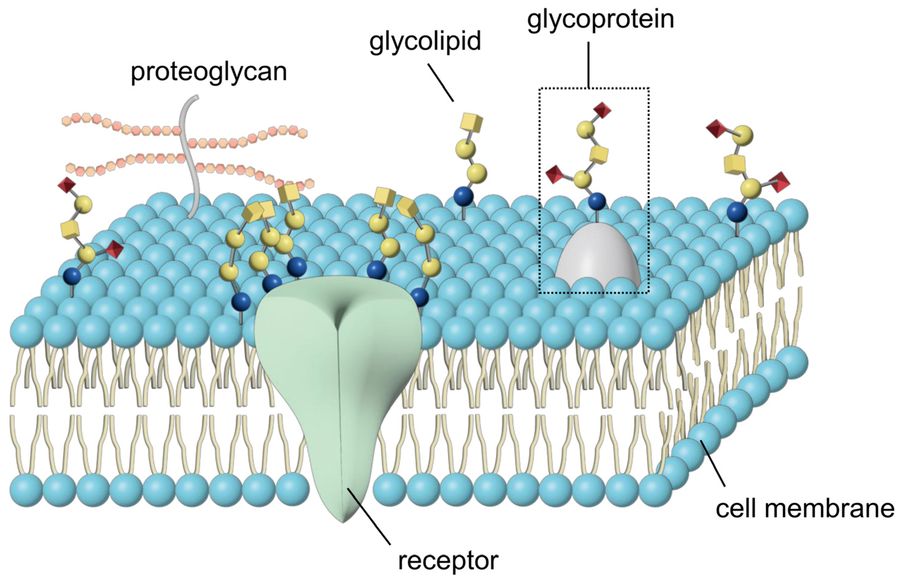 Fig.1 Cell membrane glycolipid.1
Why Glycolipid Analysis Is Hard and How We Make It Easy
| Challenge | Our Solution |
|---|---|
| Isomer Overload—Multiple structures share the same mass. | We use advanced, multi-step separation methods to reliably distinguish between structurally similar molecules. |
| Labile Chemistry—Certain molecular groups degrade easily. | Specialized chemical treatments protect fragile parts of the molecule, preventing their degradation during analysis. |
| Complex Matrices—Sample contaminants suppress the signal. | Customized purification protocols effectively remove contaminants and enhance the signal of interest. |
| Quantification Bias—Some molecule classes are detected more easily than others. | Rigorous use of internal standards and calibration ensures that all measurements are precise and reliable. |
Glycolipid Analysis Services Overview
| Sub-Service | What It Solves | When to Choose | Go to Page |
|---|---|---|---|
| Glycosphingolipids | Comprehensive sphingolipid-linked glycans: neutral GSLs (e.g., LacCer), gangliosides (GM1/GM2/GM3, GD1a/GD1b, GT1, etc.), sulfatides | Choose this if your study involves neural membranes, immune synapse organization, cancer-associated gangliosides, or sulfatide dynamics. Perfect for mechanistic projects and receptor clustering studies. | Glycosphingolipids Analysis Service |
| Glycoglycerolipids | Plant and microbial glycoglycerolipids (e.g., MGDG, DGDG, SQDG) and engineered lipid carriers | Best for plant biology, chloroplast membranes, liposome engineering, and microbial glycolipids used in delivery systems. | Glycoglycerolipids Analysis Service |
| Lipopolysaccharide (LPS) | Lipid A variants, core OS, O-antigen repeats; heterogeneity and endotoxin potency proxies | Essential for microbiology, vaccine input characterization, and safety/quality assessment of bacterial materials | Lipopolysaccharide Analysis Service |
| GPI Anchors | Verification and structural analysis of protein GPI anchoring; remodeling and glycan side branches | Indispensable for confirming anchor presence on recombinant proteins, QC across production lots, and tracking remodeling that impacts localization. | Glycosylphosphatidylinositol Anchor Analysis Service |
| Antigen-Associated Glycolipids | Tumor-, pathogen-, or tissue-specific glycolipids linked to antigens and immune recognition | Suitable for co-purifying glycolipid contaminants or co-factors that influence antigenicity, screening readouts, or biomarker panels. | Antigen-associated Glycolipid Analysis Service |
End-to-End Workflow You Can Trust
- Strategy & Design: We define experimental goals, controls, and key readouts, then select the optimal analytical methods and internal standards for your study.
- Sample Prep & Acquisition: We execute matrix-tuned extraction and cleanup for maximum sensitivity, then acquire high-quality data using optimized chromatographic runs.
- Data Analysis & Interpretation: Raw data is processed using library searches and rule-based structural annotation, followed by robust quantitation and statistical analysis.
- Reporting & Consultation: You receive a clean, publication-ready data package, after which we review all key findings and discuss potential next steps with you.
Sample Types & Practical Guidance
We routinely process:
- Adherent and suspension cell pellets (mammalian, insect, yeast, bacteria)
- Tissues (brain regions, spleen, liver, plant tissues/leaf membranes)
- Membrane fractions and detergent-treated complexes
- Purified proteins for GPI anchor checks
- Engineered vesicles, liposomes, and nanoparticles
- Bacterial lysates, outer membrane vesicles, and endotoxin preparations (RUO)
Helpful Tips for Submission
- Provide paired controls and treatments whenever possible; differences matter.
- Keep samples cold and dry; minimize freeze–thaw; ship on dry ice.
- Avoid high-salt buffers and residual detergents unless specified; if unavoidable, tell us—there are workarounds.
- For precious samples, we can run pilot micro-extractions to validate feasibility before scaling.
Require Micro-Workflow Tailored for Limited or Unusual Materials
Why Choose Creative Biolabs
- From gangliosides to GPI to LPS, we know the chemistry, the separation tricks, and the fragmentation logic.
- Decision-ready reporting that drives your next experiment or gate decision.
- Reliable timelines, clear scopes, responsive communication, and repeatable performance.
- Transparent QC.
- Cost-efficient.
Glycolipids are the quiet architects of biology; when they change, entire systems change, and your research needs to capture that truth with clarity. Partner with Creative Biolabs to translate complex spectra into confident conclusions and compelling figures. Our scientists are happy to jump on a quick call to refine the approach and ensure your first data set answers the right questions. Getting started is simple. Tell us about your samples and goals, and we'll propose a right-sized plan—whether you need a rapid class profile or a comprehensive structural map. Ready to scope your study? Contact us today to turn your glycolipid challenges into clear biological insights.
FAQs
How do you handle timelines and scheduling?
Timelines depend on matrix complexity, depth of structural work, and replicate design. During scoping, we propose right-sized options, from rapid profiles to deep structural campaigns, so you can balance speed, resolution, and budget. We lock methods, milestones, and communication checkpoints before kickoff, ensuring predictable progress and transparent status updates throughout the project lifecycle.
Do you report absolute quantities or only relative changes?
Both are available. When class-matched internal standards and calibration materials exist, we deliver absolute amounts with documented response factors and recovery checks. Where suitable standards are unavailable, we provide rigorous relative quantitation, normalized appropriately (for example, to protein or total lipid) and accompanied by QC metrics so cross-group comparisons remain defensible and reproducible.
How do you protect labile sialylated or sulfated glycolipids during analysis?
We optimize extraction chemistry and temperature, use mild derivatization only when beneficial (for example, selective esterification or permethylation), and tune source conditions to minimize in-source losses. When needed, we bracket runs with stability checks and verify sensitive linkages by complementary fragmentation strategies, preserving structural information without over-processing the analytes of interest.
My samples include detergents or high salt. Can you still analyze them?
Yes, please share the exact buffer composition. We adapt extraction, incorporate desalting or micro-SPE, and, if needed, enzymatic cleanup to mitigate suppression and carryover. For challenging detergents, we pilot a small subset to confirm recovery and signal stability before proceeding, safeguarding precious material and maintaining quantitative integrity.
Can you link glycolipid profiles to functional readouts or downstream assays?
Absolutely. We design studies with the next experiment in mind, whether that's glycan microarray binding, cell-based assays, or antigen characterization. We align sampling, controls, and reporting to feed those downstream decisions seamlessly. All work is for research use only, but the data and figures are formatted to drop into manuscripts or internal reviews.
Reference:
- Hamamura, Kazunori, Mayu Nagao, and Koichi Furukawa. "Regulation of glycosylation in bone metabolism." International Journal of Molecular Sciences 25.7 (2024): 3568. Distributed under Open Access license CC BY 4.0, without modification. https://doi.org/10.3390/ijms25073568
Supports
- Glycolipid
- Understanding Glycosylation
- Glycosylation Influences Blood Type
- GM3 Antibody in Cancer Immunotherapy
- GM3 Ganglioside in Disease & Anti-GM3 Antibody Tools
- Engineering High-Affinity scFv for Next-Generation GD2-CAR-T Therapy
- Glycosphingolipids Analysis
- Glycoglycerolipids Analysis
- Lipopolysaccharide Analysis
- Glycosylphosphatidylinositol Anchor Analysis
- Antigen-associated Glycolipid Analysis
- Ganglio Series of Glycosphingolipids Analysis
- Globo- and Isoglobo-Series of Glycosphingolipids Analysis
- Glycosphingolipid Structural Analysis by GC-MS
- Glycosphingolipid Profiling Analysis by LC-MS/MS
- Targeted Glycosphingolipid Quantification Analysis
- Glycosphingolipid Isomer Resolution Analysis