


Beyond Gangliosides: Custom Anti-Other Glycolipid Antibody Development Service
Introduction
Glycolipids shape how cells communicate, organize membranes, and present identity cues. While gangliosides are defined by the presence of sialic acid, the broader family of glycolipids is incredibly diverse. Many non-ganglioside glycolipid antigens—including sulfatide, galactocerebroside, globosides, and blood group antigens—are equally pivotal to membrane biology, immune recognition, and pathobiology research. Creative Biolabs specializes in developing custom glycolipid antibodies against these other crucial families:
- Galactocerebroside: As the most abundant cerebroside in the brain, galactocerebroside is a simple but vital type of glycolipid. It is composed of a single galactose sugar attached to a ceramide lipid molecule.
- Sulfatides: These are cerebrosides with a sulfate group attached to the sugar, giving them an acidic charge.
- Globosides: More complex neutral glycosphingolipids with oligosaccharide chains containing sugars like N-acetylgalactosamine.
- Blood group antigens: Located on the surface of red blood cells, they can determine blood types, making them essential in transfusion medicine.
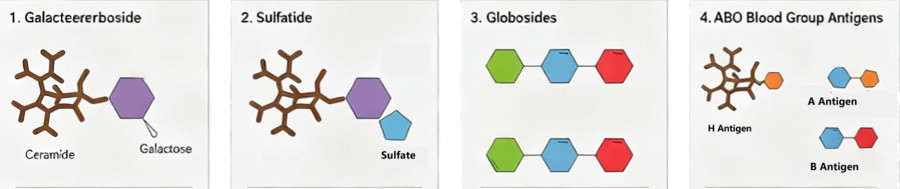 Fig.1 Non-ganglioside glycolipid antigens.
Precision Antibodies for Complex Glycolipid
We provide an end-to-end, research-grade service to generate glycolipid antibodies with precise specificity, robust affinity, and clear characterization packages. From rational antigen design to antibody glycosylation profiling and cross-reactivity screening, we help you build tools that deconvolute lipid–immune interactions with confidence.
| Target Class | Representative Glycolipid Antigens | Research Themes | Services We Offer |
|---|---|---|---|
| Sulfated glycolipids | Sulfatide (3-O-sulfogalactosylceramide) | Myelin biochemistry, membrane curvature, endolysosomal sorting | Anti-Sulfatide Antibody Development |
| Neutral mono/di-hexosylceramides | Galactocerebroside (GalC); Galc antibody campaigns | Oligodendrocyte maturation, myelin stability | Anti-Galactocerebroside Antibody Development |
| Globosides | Globoside family (e.g., Gb3, Gb4) | Cell identity, trafficking, pathogen interactions | Anti-Globoside Antibody Development |
| Blood group determinants on glycosphingolipids | Blood group antigen motifs (A/B/H) on lipid carriers | Blood group antigens mapping, RBC membrane models | Anti-Blood Group Antigens Antibody Development |
Why Focus Beyond Gangliosides?
- Non-ganglioside glycolipid antigens span sulfated mono-hexosylceramides, neutral glycosphingolipids, and globosides that carry blood group antigen determinants.
- Many epitopes emerge only when saccharides are presented within lipid bilayers, liposomes, or nanodiscs—conditions we recreate to elicit and screen anti glycolipid antibodies that "see" antigens as cells do.
- From myelin biology and demyelinating disease models to membrane trafficking, complement activation, and cell identity studies, non-ganglioside targets open avenues beyond canonical ganglioside panels.
Our Custom Anti-Other Glycolipid Antibody Services
We partner with you to create custom antibodies for your research on complex glycolipids. Our team uses modern technology and deep knowledge to build antibody tools tailored to your exact specifications, ensuring they are both specific and reliable.
Anti-Sulfatide Antibody Development
Sulfatides are important lipids that protect nerve cells. In certain autoimmune diseases, the body mistakenly attacks them, causing nerve damage. To study this, you need antibodies that bind only to sulfatides. Our custom service focuses on this specificity. We work with you to design the best antigen strategy and validate the final antibody in your specific application, like IHC or functional assays, guaranteeing you get a tool that works for you.
GalC Antibody (Anti-Galactocerebroside) Development
Galactocerebroside (GalC) is a key lipid for building the protective myelin layer around nerves. Finding good antibodies for GalC can be a challenge. With our custom development service, we tailor every step of the process. From immunization to final antibody screening, we focus on what you need for your experiments, like cell imaging or analysis. This ensures you receive a high-quality GalC antibody optimized for your specific research.
Anti-Globoside Antibody Development
Globosides are cell surface lipids that are important targets in cancer and infectious disease research. Our custom service is designed to tackle specific challenges, such as creating an antibody that can tell the difference between highly similar globosides like Gb3 and Gb4. We design the entire project around your unique goals and confirm the antibody works in your experimental setup, delivering a truly personalized solution.
Blood Group Antigen–Focused Antibody Development
Many blood group antigens are complex glycolipids, which makes creating antibodies for them difficult. A standard approach often fails. Our custom service begins with a detailed consultation to fully understand your research needs. We then use specialized techniques to produce and screen for antibodies with the exact specificity you require. The result is a unique tool, built from the ground up just for your project.
Discuss Your Antibody Needs
Ready-to-use Anti Blood Group Antigen Antibody for Featured Targets
Our platform is ready to develop high-quality monoclonal and polyclonal antibodies against a wide array of non-ganglioside targets for your research.
-
Anti blood group antigen antibodies for immunohematology and xenotransplantation research.
- And Many More upon Request! If your glycolipid of interest isn't listed, our team is ready to tackle novel and challenging targets.
Application for Anti-Other Glycolipid Antibodies
Myelin Biochemistry
You may be mapping how sulfatide and galactocerebroside orchestrate oligodendrocyte membrane compaction, vesicular traffic, or axonal insulation. In practice, that often means you'll need high-specificity anti-sulfatide and galactocerebroside antibody reagents that recognize headgroups in a native-like bilayer—not just on a coated plate. We typically pair custom antigen design with orthogonal screening (glycoarray, BLI/SPR) so your antibodies hold up when you move from benchtop assays to membrane-mimetic systems. Many teams also request labeled formats (biotin, enzymatic, or fluorescent) for imaging myelin sheets, plus Fc glycosylation readouts to interpret any downstream, Fc-influenced signals. Everything is delivered research-ready with full specificity matrices against related glycolipids.
Membrane Identity & Sorting
If your goal is to track how glycolipid microdomains form and how cargo enters endosomal routes, you'll likely want a compact panel of anti-glycolipid antibodies covering distinct headgroups and densities. Typical requests include density-graded liposomes or nanodiscs for calibration, bead-based flow cytometry reagents for high-throughput binding checks, and a few carefully chosen formats (IgG for pull-downs, Fab/scFv/sdAb for sterically sensitive imaging). We usually include cross-reactivity maps against phospholipids and gangliosides so you can attribute a trafficking phenotype to a specific glycolipid motif rather than to nonspecific membrane charge.
Cell Identity Models
For teams modeling how cell identity cues are read at the membrane, you may be probing blood group antigens (A/B/H) displayed on glycosphingolipid carriers rather than solely on proteins. What usually helps is a set of antibodies that discriminate among A, B, and H motifs on lipid backbones, validated on RBC-mimetic membranes or supported bilayers. We can supply matched controls, competition data with free glycans, and labeled versions for microscopy or flow analyses. A frequent ask is a small "antigen presentation kit" to standardize methods across batches and sites. All materials are for fundamental research—not for donor matching or clinical decisions.
Host–Pathogen Interaction Models
If you're exploring attachment mechanisms in which globosides serve as host recognition cues, you'll want antibodies that can block or report on binding events in cell-free or cell-mimetic systems. We typically co-develop globoside-rich liposomes or bilayers at set mole percentages to emulate local membrane domains and provide anti-globoside antibodies in formats suitable for competition assays and imaging. These help you quantify attachment strength, test variant structures, and design cleaner interference experiments, without conflating effects from unrelated glycolipid antigens.
Why Partner with Creative Biolabs?
Choosing a partner for your antibody development project is a critical decision. Here's why researchers worldwide trust Creative Biolabs:
- We are glycobiology experts, confident in dealing with challenging targets.
- We work with you to design a strategy tailored to your specific scientific goals and downstream applications.
- We believe in open communication. You will have a dedicated PhD-level project manager providing regular updates from start to finish.
- With thousands of successful custom antibody projects completed, our track record speaks for itself. We deliver reliable, high-quality results.
Share your target and intended application, preferred formats, and screening priorities. Our team will propose a focused, milestone-based plan that brings the right glycolipid antibody tools to your bench efficiently and transparently. Contact us today to start your project!
Supports
- Glycolipid
- Lewis Antigen
- Blood Group Antigen
- Glycosylation Influences Blood Type
- GM3 Antibody in Cancer Immunotherapy
- GM3 Ganglioside in Disease & Anti-GM3 Antibody Tools
- Engineering High-Affinity scFv for Next-Generation GD2-CAR-T Therapy