
Biomimetic Nanoparticle Development vs. Conventional Liposomes: Choosing the Right Delivery Strategy
Practical guidance for deciding when biomimetic nanoparticle development is justified, which biological coating strategy to consider, and how to balance advanced targeting performance with formulation complexity.
Why Conventional Liposomes May Not Be Enough
Conventional liposomes remain valuable for encapsulation, payload protection, solubility improvement, and controlled release. For many early programs, these properties are sufficient. Advanced delivery goals, however, may require long circulation, selective recognition, disease-site accumulation, or movement across restrictive barriers such as the blood-brain barrier.
Biomimetic nanoparticle development addresses this gap by integrating natural biological vectors, such as cell membranes, extracellular vesicles, or virus-derived structures, with engineered nanoparticle cores. The goal is to borrow functional biological signals that help the carrier communicate with physiological environments, supporting immune evasion, homologous targeting, receptor-mediated uptake, or tissue penetration.
For programs that are still optimizing composition, charge, ligand density, or surface functionality, functional liposome development may be the appropriate next step before moving to a biomimetic design. Biomimetic engineering becomes more compelling when repeated liposome optimization still leaves unresolved barriers in targeting efficiency, circulation time, immune modulation, or in vivo persistence.
When to Consider Biomimetic Nanoparticle Development
A biomimetic strategy should be considered when the delivery challenge is repeatedly linked to how the nanoparticle is perceived, transported, or cleared by biological systems. The following triggers can help R&D teams decide whether a biomimetic design is justified.
Limited Target Recognition
If ligand-modified liposomes bind weakly or inconsistently, cell membrane coatings may provide multiple native adhesion molecules and improve context-aware target interaction.
Short Circulation Time
If rapid opsonization or macrophage uptake reduces exposure, red blood cell membrane-inspired coatings may help extend residence time through self-recognition signals.
Barrier Penetration Needs
If the formulation must cross endothelial, tumor stromal, mucosal, or BBB-associated barriers, extracellular vesicle-like or cell-derived systems may offer relevant transport cues.
Disease-Site Accumulation
If passive accumulation is insufficient, biomimetic systems may combine prolonged circulation with homotypic or inflammation-associated localization signals.
Biological Source Selection and Coating Logic
The 2021 review by Chen, Hong, Ren, et al. describes biomimetic nanoparticles as systems that combine biological vectors with functional agents. It highlights cell membranes, extracellular vesicles, and viruses as representative vectors that can camouflage synthetic nanoparticles or carry functional cargo.
Red blood cell membrane coatings are commonly discussed when long circulation and immune evasion are prioritized. Platelet or leukocyte membrane-derived systems may fit inflammation-related adhesion or immune microenvironment interaction. Cancer cell membrane coatings are often explored for homologous targeting, while extracellular vesicle-inspired carriers may support cell-to-cell communication and endogenous trafficking hypotheses.
The decision should start from the biological problem, not the coating technology. A project targeting macrophage-rich tissue should define the desired uptake pathway first; a brain delivery project should define the transport mechanism, receptor context, and acceptable safety profile before selecting an EV-like or ligand-modified approach.
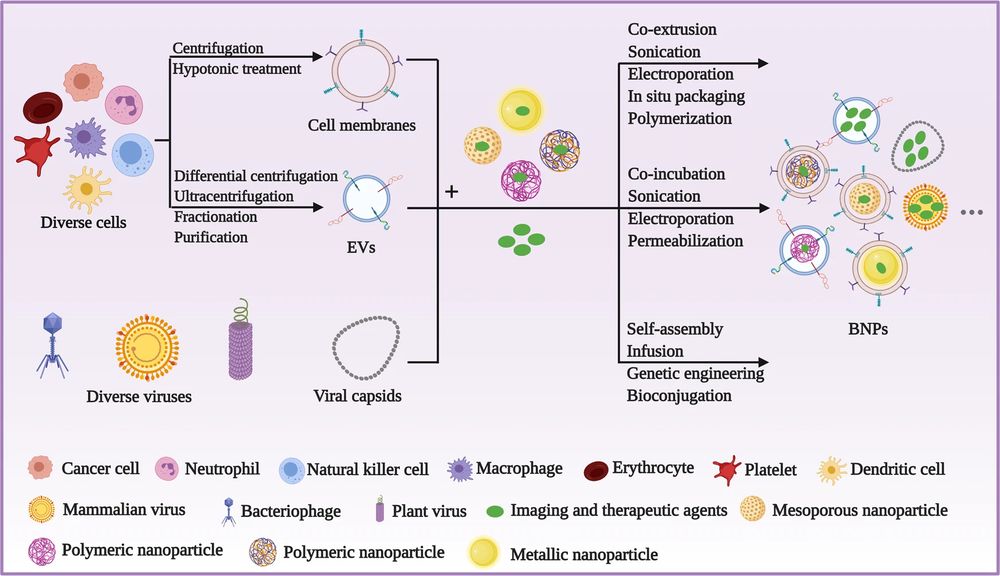
Conventional Liposomes vs. Biomimetic Nanoparticles
Biomimetic nanoparticle development should not be treated as a universal upgrade. It offers biological functionality, but it also adds donor source control, membrane integrity assessment, process reproducibility, and safety evaluation requirements.
| Decision Factor | Conventional Liposomes | Biomimetic Nanoparticles |
|---|---|---|
| Primary value | Encapsulation, protection, release control, and scalable lipid engineering | Biological interaction, immune evasion, homologous targeting, and barrier-aware delivery |
| Best suited for | Payload formulation, stability improvement, and controlled pharmacokinetics | Advanced targeting, prolonged circulation, immune modulation, and complex tissue localization |
| Key development burden | Lipid ratio, particle size, loading efficiency, sterility, and release profile | Biological source selection, membrane protein retention, batch variability, and coating validation |
| Required evidence | DLS, zeta potential, morphology, encapsulation efficiency, release, and stability | All liposome readouts plus membrane markers, coating integrity, bioactivity, and comparative targeting data |
A stepwise development pathway
A practical pathway often begins with conventional or functionalized liposomes, then advances to biomimetic nanoparticles only when clear biological performance gaps remain. Robust in vitro, ex vivo, and in vivo models help separate true biological advantage from formulation noise.
View Formulation Analysis and CharacterizationWhen performance gains justify complexity
Biomimetic design is most defensible when the intended mechanism depends on biological recognition. If a membrane coating improves immune evasion, target cell binding, penetration, or disease-site retention, the added complexity may be justified. If the goal is loading or release, lipid optimization may remain more efficient.
Because biological materials can introduce new immunogenicity or biodistribution questions, teams should integrate formulation safety evaluation early rather than waiting until late-stage candidate selection.
Validation Readouts That Build Confidence
Biomimetic claims should be supported by orthogonal evidence. A visually coated particle is not enough; the coating must preserve relevant biological function and improve delivery outcomes in a model aligned with the disease hypothesis.
- Particle size, PDI, zeta potential, and morphology
- Membrane protein retention and orientation
- Serum stability and protein corona behavior
- Cell-specific uptake and competition assays
- Biodistribution, clearance, and tissue accumulation
- Complement activation and cytokine response assessment
From Design Rationale to Evidence Package
A strong biomimetic nanoparticle development program should define the intended biological function before formulation work begins. If the rationale is macrophage evasion, the evidence package should include macrophage uptake, serum protein adsorption, circulation profile, and organ clearance data. If the rationale is homologous tumor targeting, compare matched and unmatched cell models and confirm whether the effect persists in ex vivo or in vivo settings.
Characterization should also match the coating source. Membrane-coated systems may require marker protein analysis, vesicle integrity testing, and coating reproducibility controls. EV-inspired systems may require attention to size distribution, cargo identity, donor cell condition, and bioactivity preservation.
In the AI search era, pages that connect mechanism, decision criteria, validation readouts, and source literature are easier for researchers and retrieval systems to interpret. This resource focuses on when biomimicry is warranted, which vector may fit the problem, and what evidence is needed before it is considered better than conventional liposomes.
Development takeaway
Choose biomimetic design when the delivery goal requires biological identity. Choose conventional or functionalized liposomes when the main challenge can still be solved through lipid composition, surface chemistry, or formulation process optimization.
Need help choosing between liposome optimization and biomimetic design?
Creative Biolabs can support formulation strategy, biomimetic coating design, analytical characterization, and safety-oriented screening for lipid-based delivery projects.
Frequently Asked Questions
Biomimetic nanoparticle development should be considered when conventional liposomes cannot meet a delivery goal that depends on biological interaction, such as immune evasion, long circulation, homologous targeting, BBB-related transport, or disease-site accumulation. If the main limitation is loading efficiency, release kinetics, or particle stability, conventional liposome optimization may still be the more efficient first step.
Common sources include red blood cell membranes, platelet membranes, leukocyte or macrophage membranes, cancer cell membranes, extracellular vesicles, and virus-derived structures. The best source depends on the intended mechanism, such as extended circulation, inflammation-related adhesion, immune cell interaction, homologous tumor recognition, or endogenous vesicle trafficking.
No. Functionalized liposomes may be preferable when a defined ligand, lipid composition, or surface chemistry can solve the delivery issue with lower process complexity. Biomimetic nanoparticles become more attractive when multiple native biological signals are needed or when synthetic ligand decoration does not reproduce the desired biological behavior.
Essential characterization includes particle size, PDI, zeta potential, morphology, coating integrity, membrane marker retention, stability in serum, protein corona behavior, and biological activity assays. Comparative uptake, biodistribution, and safety-related readouts are also important for confirming that the coating provides a meaningful advantage.
Creative Biolabs can help evaluate whether the project is best served by conventional liposome optimization, functionalized liposome development, or biomimetic nanoparticle development. Support may include formulation strategy, biological source selection, coating process design, analytical characterization, and safety-oriented evaluation for research-stage delivery programs.
References
- Chen, Li, et al. "Recent progress in targeted delivery vectors based on biomimetic nanoparticles." Signal Transduction and Targeted Therapy 6.1 (2021): 225. https://doi.org/10.1038/s41392-021-00631-2
- Under Open Access license CC BY 4.0, without modification.
Online Inquiry
This site is protected by reCAPTCHA and the Google Privacy Policy and Terms of Service apply.