
Resource for Advanced Liposome Formulation
Polysaccharide-Coated Liposome Development for Enhanced Stability, Adhesion, and Controlled Release
A formulation-centered guide to polysaccharide-coated liposome development, where coating chemistry, membrane preservation, mucoadhesion, and release kinetics are designed together rather than optimized in isolation.
Formulation Goals
- •Improve interfacial stability without disrupting lipid bilayer integrity.
- •Tune adhesion to mucus, tissue surfaces, or biological barriers.
- •Preserve encapsulation while controlling permeability and release.
Why Polysaccharide-Coated Liposome Development Requires Interface-Level Design
Polysaccharide-coated liposome development is increasingly used when conventional liposomes need stronger protection, better biological adhesion, especially mucoadhesion, or more predictable release in complex fluids. The coating can function as a hydration layer, electrostatic shield, mucoadhesive interface, diffusion barrier, and ligand-bearing surface. However, these benefits appear only when the polysaccharide layer is compatible with the lipid membrane, the encapsulated payload, and the intended biological route.
For formulation scientists and preclinical development teams, the central challenge is not simply to add a polysaccharide onto a vesicle. A coating that is too dense may limit drug release or destabilize membrane curvature during processing. A coating that is too weak may desorb under salt, serum protein, enzyme, or mucus exposure. A positively charged coating may enhance mucin interaction but increase nonspecific binding, while an anionic coating may support colloidal stability but reduce contact with epithelial surfaces. Successful design therefore requires a coordinated evaluation of surface charge, particle size, membrane phase behavior, polymer molecular weight, coating sequence, and release mechanism.
An effective development strategy connects coating construction with analytical readouts, including particle attributes, membrane integrity, encapsulation efficiency, permeability, and release kinetics. For formulation programs requiring tailored coating design, Creative Biolabs can support feasibility screening, coating optimization, and preclinical-ready characterization for polysaccharide-coated liposome development.
Selecting Polysaccharide Coatings for Liposome Surface Engineering
A rational coating design begins with polymer function. Chitosan derivatives, alginate, pectin, hyaluronic acid, dextran, pullulan, and cellulose derivatives differ in charge density, chain flexibility, hydration behavior, degradability, and receptor or mucus interaction potential.
| Design Variable | Development Question | Typical Readout | Risk if Not Optimized |
|---|---|---|---|
| Polymer charge | Should the coating promote adhesion, shielding, or layer-by-layer assembly? | Zeta potential, salt tolerance, mucin binding | Aggregation, excessive binding, poor reproducibility |
| Molecular weight | How thick and permeable should the hydrated layer be? | DLS, viscosity, diffusion-limited release | Overcoating, leakage, process instability |
| Coating sequence | Is a single layer sufficient or is a bilayer required? | Size shift, charge reversal, microscopy | Incomplete coverage or membrane disruption |
| Encapsulation compatibility | Does the coating process preserve payload loading and vesicle retention? | Encapsulation efficiency, leakage assay, payload recovery | Drug loss, burst release, reduced formulation potency |
| Biological trigger | Should release respond to pH, enzymes, ionic strength, or mucus residence? | in vitro release, enzyme exposure, medium transition | Uncontrolled burst release or delayed payload availability |
Early-stage screening should compare at least several coating densities, polymer grades, and lipid compositions. When the goal is to understand how surface construction changes particle composition, vesicle morphology, and coating efficiency, structure and composition analysis provides an evidence-based foundation for subsequent functional testing.
Interfacial Stability Without Compromising Membrane Integrity
Interfacial stability describes how well the coated vesicle maintains its size, charge, morphology, and payload retention after exposure to storage conditions, dilution, buffer changes, serum components, gastrointestinal fluids, or shear. Polysaccharide coatings can reduce fusion and aggregation by creating steric and electrostatic barriers, yet the same coating may alter membrane hydration and lipid packing.
A robust formulation program therefore evaluates stability as a time-dependent, environment-dependent attribute. Key tests may include DLS size distribution, polydispersity index, zeta potential, encapsulated payload retention, turbidity, microscopy, and lipid degradation monitoring. For oral and mucosal programs, pH transition studies are especially important because the coating may swell, shrink, ionize, or become enzymatically modified before the liposome reaches its target site.
Stability should also be evaluated against the intended manufacturing process. Polymer addition rate, mixing energy, ionic strength, filtration, lyophilization, and reconstitution can all determine whether the same formulation remains scalable. For long-term tracking across accelerated and real-time conditions, Creative Biolabs offers formulation stability monitoring service to help connect formulation design with actionable shelf-life and handling data.
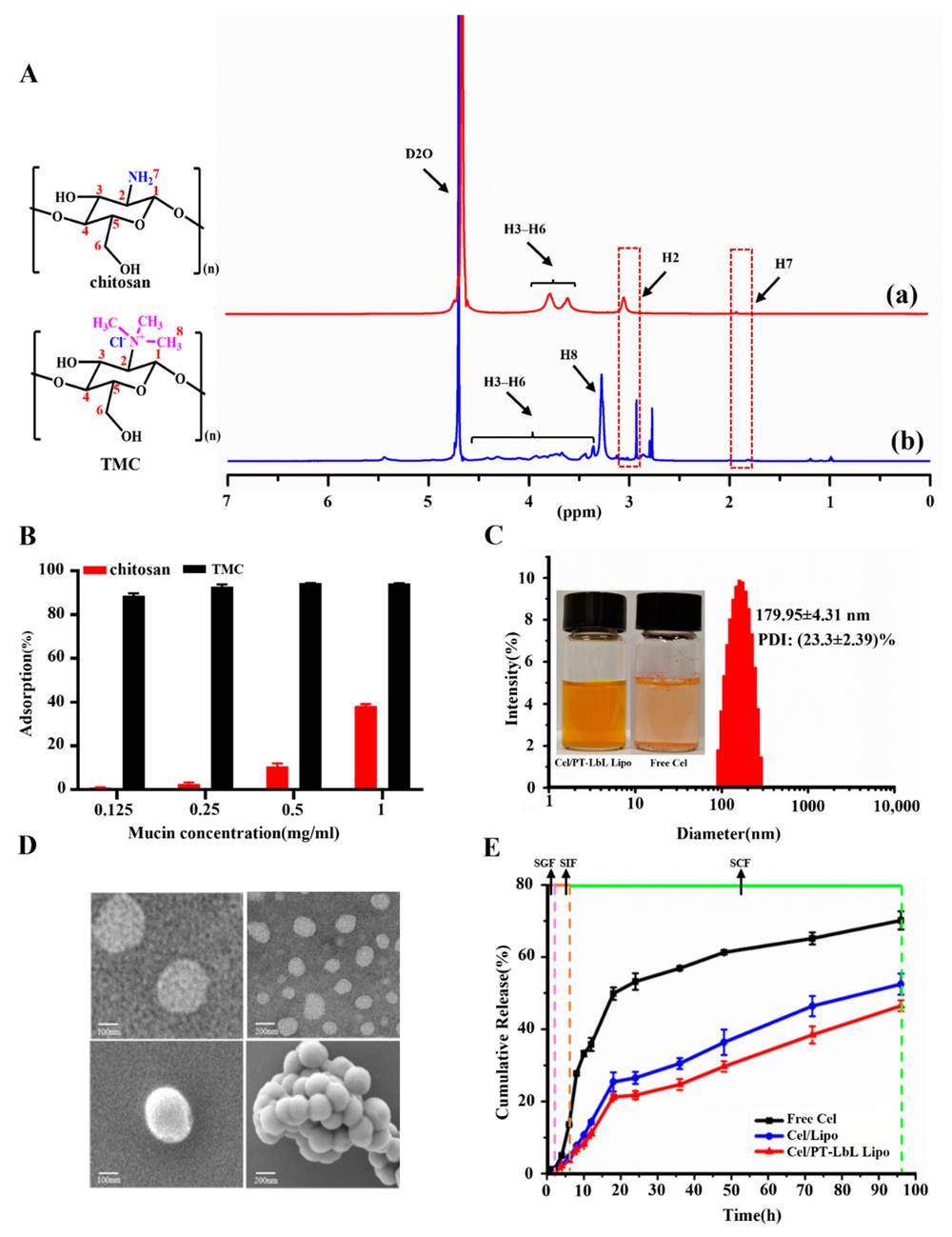
Fig. 1. Representative characterization of pectin/trimethylated chitosan layer-by-layer coated liposomes. Reproduced from Xian et al., 2021, under CC BY 4.0.
Representative Case Study
Xian et al. developed a celastrol-loaded liposome system coated with pectin and trimethylated chitosan through a layer-by-layer strategy. The coating altered key interfacial attributes, including particle size, surface charge, and vesicle morphology, while supporting mucin interaction and sustained release in simulated gastrointestinal environments. This example highlights why polysaccharide coating should be treated as an integrated formulation strategy that connects surface construction, membrane preservation, biological adhesion, and release control.
Co-Optimizing Mucoadhesion, Permeability, and Controlled Release
Adhesion and release are coupled. A formulation that binds strongly to mucus may improve residence time, but the coating must still allow payload diffusion, liposome degradation, or membrane-mediated release at the right rate.
In polysaccharide-coated liposome development, adhesion and release should be evaluated as coupled formulation attributes rather than independent endpoints. A coating that improves mucus residence may also change local diffusion, membrane hydration, and payload liberation, making paired characterization essential for predictable performance.
Adhesive Function
Cationic or hydrogen-bonding polysaccharides can increase interaction with mucin and epithelial surfaces. The optimal adhesive strength depends on route, residence time, clearance rate, and local fluid composition.
Barrier Function
Hydrated polymer layers can slow water penetration, reduce surfactant attack, and limit premature leakage. Excessive barrier strength may delay pharmacological availability.
Release Function
Release can be governed by membrane permeability, coating diffusion, pH-induced swelling, enzymatic degradation, or layer erosion. Method design should match the intended biological route.
Development Insight for Predictable Release Kinetics
Release assays should not be treated as simple sink-condition measurements. For polysaccharide-coated liposomes, the test medium may need to simulate pH gradients, ionic strength, mucin exposure, enzymes, bile salts, serum proteins, or tissue-contact conditions. Orthogonal evaluation under in vitro, ex vivo, and in vivo-relevant conditions can help distinguish coating-controlled release from membrane leakage or liposome disassembly.
For programs where coating density and polymer selection must be linked to drug liberation profiles, Creative Biolabs provides dedicated release method support through in vitro Release Kinetics Analysis
The most useful development plan connects release curves with particle characterization at each time point. This makes it possible to determine whether sustained release reflects polymer diffusion, lipid membrane retention, enzymatic erosion, or gradual colloidal destabilization.
A Practical Workflow for Polysaccharide-Coated Liposome Development
A strong development workflow reduces uncertainty by mapping each formulation decision to a measurable quality attribute. Rather than optimizing one endpoint at a time, Creative Biolabs recommends a matrix-based strategy that evaluates lipid composition, coating polymer, assembly conditions, and biological performance together.
Define the target product profile
Clarify route, payload, target tissue, release window, desired adhesion, storage needs, and acceptable particle size range.
Screen liposome and coating compatibility
Compare polymer type, charge ratio, pH, ionic strength, addition sequence, and mixing parameters while tracking size, PDI, charge, and encapsulation.
Build stability and release evidence
Evaluate storage, medium transition, mucus interaction, enzyme exposure, and release profiles with orthogonal characterization.
Select scalable parameters
Translate the best formulation into reproducible preparation, sterile handling, filtration, concentration, or lyophilization conditions when applicable.
Need a coating strategy tailored to your payload and route?
Creative Biolabs can help evaluate polymer-lipid compatibility, layer-by-layer construction, colloidal stability, adhesion behavior, and release kinetics for research-use liposomal formulations.
Frequently Asked Questions
Its main purpose is to engineer a liposome surface that improves colloidal protection, biological adhesion, and release control while preserving lipid membrane integrity and encapsulation efficiency. The coating should be selected according to the route of administration, payload properties, target environment, and required release window.
Polysaccharide-coated liposome development should be considered when conventional liposomes show insufficient colloidal stability, limited mucosal residence, premature payload leakage, or poorly controlled release in biological fluids. It is especially useful for oral, mucosal, gastrointestinal, and localized delivery programs where surface interaction strongly affects formulation performance.
Common candidates include chitosan derivatives, pectin, alginate, hyaluronic acid, dextran, pullulan, and cellulose derivatives. Selection depends on charge density, molecular weight, solubility, biocompatibility, adhesion behavior, and whether the coating is expected to respond to pH, enzymes, or mucus-rich environments.
The coating must be tuned as a semi-permeable interface. Polymer density, charge ratio, molecular weight, and layer sequence can be adjusted to prevent aggregation and leakage while still allowing diffusion, swelling, erosion, or membrane-mediated release under relevant test conditions.
Useful methods include DLS, zeta potential, encapsulation efficiency, microscopy, polymer quantification, morphology analysis, payload retention, and release testing. A strong package uses multiple orthogonal readouts because size shift or charge reversal alone may not confirm uniform coating or preserved membrane structure.
Yes. Creative Biolabs can support research-use formulation design, coating optimization, particle characterization, stability monitoring, and release kinetics analysis for customized polysaccharide-coated liposome development programs.
Reference
- Xian, Jing, et al. "Colonic delivery of celastrol-loaded layer-by-layer liposomes with pectin/trimethylated chitosan coating to enhance its anti-ulcerative colitis effects." Pharmaceutics 13.12 (2021): 2005. https://doi.org/10.3390/pharmaceutics13122005
Online Inquiry
This site is protected by reCAPTCHA and the Google Privacy Policy and Terms of Service apply.