Liposome Chemical Stability Evaluation Service
Background Our Services Workflow Why Choose Us Related Services
At Creative Biolabs, we understand that a lipid-based carrier is only as reliable as its chemical backbone. Our Liposome Chemical Stability Evaluation Services are designed to pinpoint, quantify, and mitigate the chemical degradation pathways—primarily hydrolysis and oxidation—that threaten your research candidates. By partnering with our team of veteran biophysicists and lipid chemists, you gain deep, actionable insights into your formulations, allowing you to optimize your delivery vehicles long before preclinical bottlenecks arise.
Scientific Background & Key Evaluation Dimensions of Liposome Chemical Stability
In the development of advanced lipid-based drug delivery systems (LBDDS)—including liposomes, lipid nanoparticles (LNPs), and nanoemulsions—chemical stability is the cornerstone of physical structural integrity and biological performance.
Why is Chemical Stability Critical for Liposomes?
Liposomes are not solid nanoparticles; they are highly dynamic, non-covalent self-assemblies of lipid bilayers. Their unique physical properties (such as membrane fluidity, permeability, and elasticity) are strictly governed by the chemical structure of each constituent lipid molecule. Minor chemical degradation in the lipid components can trigger a catastrophic cascade, destroying the formulation's viability:
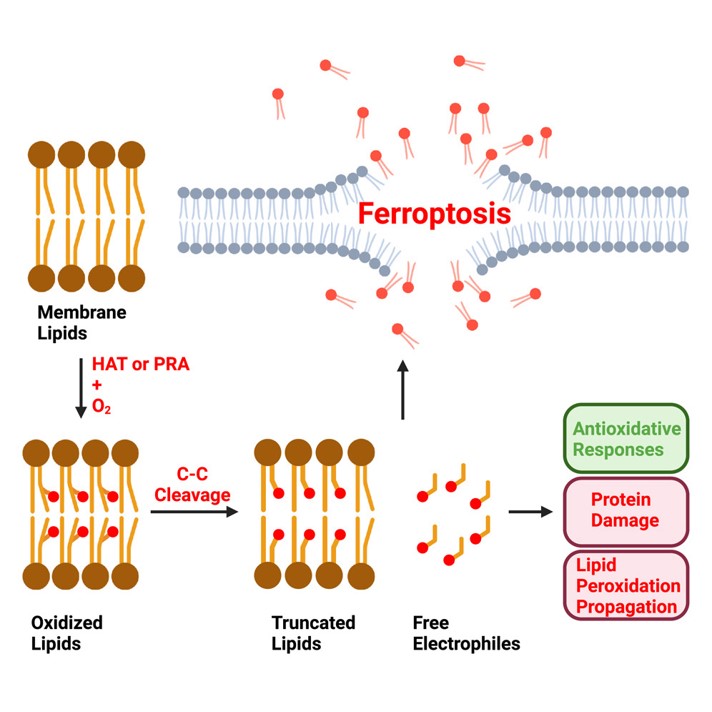 Fig. 1 How do different lipid peroxidation mechanisms contribute to ferroptosis?1
-
Ester Bond Hydrolysis: The chemical cleavage of ester linkages connecting fatty acyl chains to the glycerol backbone, commonly occurring in phosphatidylcholine (PC) and other diacyl phospholipids.
-
Unsaturated Lipid Peroxidation: A free-radical-mediated chain reaction attacking the double bonds of unsaturated fatty acids (such as oleoyl or linoleoyl chains) in the presence of oxygen, light, or trace metals.
-
Acyl Migration & Transesterification: The intramolecular or intermolecular movement of acyl groups on the glycerol backbone, altering the thermodynamic and packing properties of the lipids.
The Two Main Degradation Pathways
Our scientific team focuses on identifying and mitigating the two main degradation pathways that compromise lipid-based drug delivery carriers:
Pathway A: Phospholipid Hydrolysis Kinetics
Hydrolysis occurs at the ester bonds linking the fatty acyl chains to the glycerol backbone of the phospholipid.
-
The Degradation Mechanism: Accelerated by non-neutral pH environments and elevated temperatures, hydrolysis breaks down parent phospholipids into monoacyl lysophospholipids (e.g., LPC) and free fatty acids (FFAs).
-
The Structural Hazard: LPC molecules disrupt the parallel alignment of adjacent lipids, generating transient bilayer defects. This "self-lysis" effect degrades the physical barrier, allowing rapid cargo release.
Pathway B: Lipid Oxidation Cascade
Unsaturated fatty acid chains containing double bonds are highly prone to free-radical-mediated autoxidation.
-
The Degradation Mechanism: A multi-step radical chain reaction (initiation, propagation, termination) triggered by oxygen, UV light, or trace metal catalysts. This process forms conjugated dienes and lipid hydroperoxides, which subsequently break down into small-molecule aldehydes (e.g., MDA), ketones, and short-chain acids.
-
The Structural Hazard: Polar oxidation products migrate toward the hydrophobic bilayer core, altering hydrophobic packing, reducing bilayer thickness, and inducing lateral phase separation.
Partner with Our Specialists Today
Do not allow undetected lipid hydrolysis or unexpected oxidation to compromise months of valuable research—reach out to Creative Biolabs' world-class biophysicists today to secure high-resolution, customized stability analytics that safeguard the future of your nanocarriers.
Request a Quote
Our Chemical Stability Evaluation Portfolio
Creative Biolabs delivers customized analytical protocols tailored to the molecular composition of your nanocarriers. We present our core services as structured modules:
High-Resolution Phospholipid Hydrolysis Profiling
This service quantifies the absolute purity and recovery rates of structural lipids (such as PC, PE, PG, SM, and Cholesterol) while tracking ultra-trace hydrolysis degradants like lysophospholipids and free fatty acids (FFAs).
Excipient & Cargo Chemical Compatibility Assessment
We assess whether encapsulated payloads (such as small molecules, peptides, or nucleic acids) or functional surface excipients (such as PEG-lipids or targeting ligands) chemically compromise your lipid matrix. Using DSC, multi-nuclear NMR, and SEC-HPLC, this service detects cargo-induced degradation and localized phase separation to ensure chemical harmony between your vehicle and its cargo.
Workflow
Why Choose Creative Biolabs?
-
Over Two Decades of Expertise: Our scientific advisory board and laboratory team bring more than 20 years of experience in lipid biophysics, self-assembly dynamics, and chromatography, ensuring accurate data interpretation.
-
Custom Method Validation: Recognizing that every delivery system is unique, we avoid standardized "off-the-shelf" methods. Instead, we develop and validate customized chromatographic separation conditions optimized for your specific lipid mixtures.
-
Interpretive, Actionable Reports: We do not simply send raw chromatograms. Our experts deliver a comprehensive technical report interpreting what the data means for your formulation, offering direct solutions (such as recommended pH adjustments, antioxidant additives, or lipid ratio tweaks).
-
Rigorous NDA Protection: Your formulations represent valuable intellectual property. We implement strict non-disclosure protections starting from our first consultation, ensuring all analytical data remains confidential and secure.
Related Services
Reference
-
Do, Quynh, and Libin Xu. "How do different lipid peroxidation mechanisms contribute to ferroptosis?." Cell Reports Physical Science 4.12 (2023). Distributed under Open Access license CC BY 4.0, without modification. https://doi.org/10.1016/j.xcrp.2023.101683.

For Research Use Only. Not For Clinical Use