
Peptide Conjugated ASO
Peptide-conjugated ASOs can improve tissue targeting, cellular uptake, and intracellular delivery while preserving sequence-specific regulation of disease-associated RNA. Their performance depends on selecting an appropriate peptide, linker chemistry, and conjugation site that balance serum stability, endosomal escape, target engagement, biological activity, and safety. Because conjugation may alter distribution, potency, or toxicity, each candidate requires comparative characterization and functional validation.
Introduction
Peptide-conjugated ASOs are targeted oligonucleotide therapeutics in which antisense oligonucleotides are linked to peptides to improve their delivery and biological activity. Creative Biolabs supports this work through its peptide-conjugated ASO development service, covering conjugate design, purification, mechanistic testing, and in vivo evaluation.
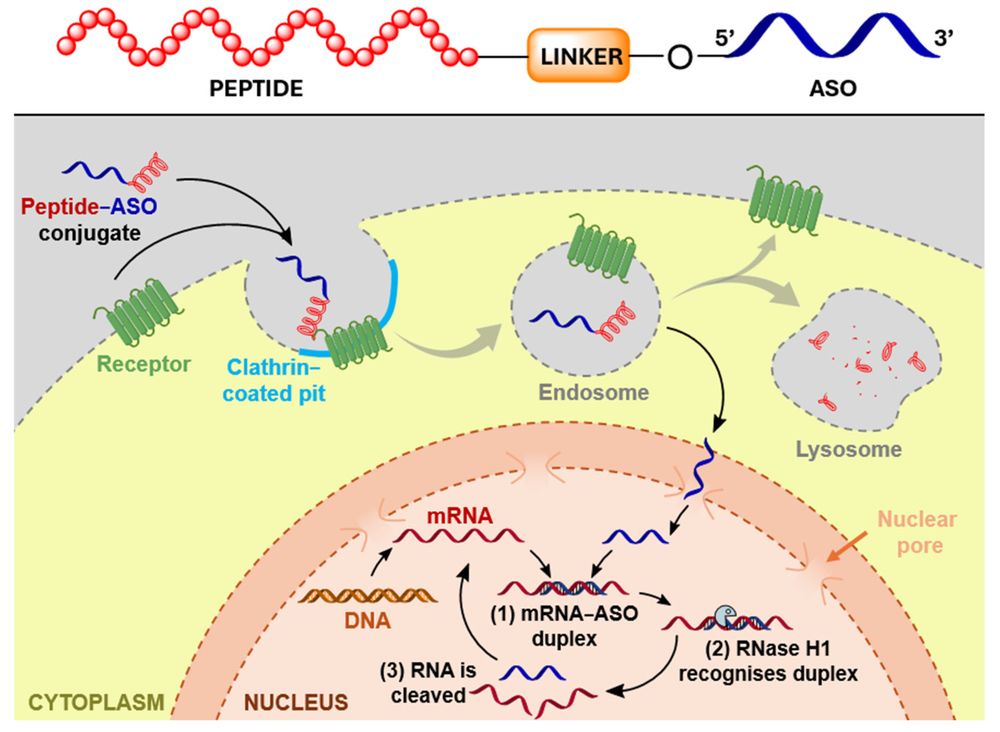 Figure 1. Mechanism of receptor-mediated targeted delivery of peptide-ASO conjugates.1
What the Peptide Is Expected to Do?
Peptides used in ASO conjugates occupy several functional classes. Cell-penetrating peptides often use cationic and hydrophobic residues to associate with membranes and stimulate endocytosis. Receptor-binding peptides seek tissue or cell selectivity. Endosomolytic peptides change conformation or membrane activity in acidic vesicles. Tissue-homing peptides may depend on vascular or disease-specific targets, while multifunctional sequences combine more than one role. These categories overlap, and a peptide can produce nonspecific uptake at high concentration even when selected for a receptor. The intended function should be stated as a testable transport hypothesis.
Cell-penetrating
Required function: Cationic and hydrophobic residues increase membrane association. Key variables: Free-uptake internalization and RNA activity. Failure signal: Surface binding, endosomal trapping, or membrane toxicity.
Receptor-targeting
Required function: Defined ligand binds an accessible internalizing receptor. Key variables: Competition, receptor-null control, cell-resolved activity. Failure signal: Binding without uptake or clearance by off-target tissue.
Endosomolytic
Required function: Environment-responsive sequence perturbs vesicle membranes. Key variables: Cytosolic release with galectin or leakage controls. Failure signal: Nonspecific lysis and stress-related apparent activity.
Multifunctional
Required function: One construct combines targeting, entry, and release. Key variables: Component-deletion and sequence-scramble studies. Failure signal: Poor attribution and a narrow tolerability margin.
Transport Gates from Membrane Contact to RNA
A peptide–ASO conjugate traverses a sequence of conditional gates. Measuring only fluorescence or whole-tissue concentration collapses these gates and can assign success to the wrong step.
- The administered conjugate remains soluble, monomeric or predictably assembled, and chemically intact after dilution into the dosing matrix.
- Plasma proteins, extracellular matrix, and clearance organs shape exposure according to peptide charge, hydrophobicity, proteolysis, and ASO backbone.
- The construct encounters the intended cell and binds membrane lipids or a receptor without being trapped irreversibly at the surface.
- Internalization proceeds through macropinocytosis, clathrin-, caveolin-, or other pathways whose contribution varies by cell type and concentration.
- Endosomal sorting, peptide processing, linker cleavage, and membrane interaction make an active ASO-containing species available beyond sequestering vesicles.
- The ASO reaches cytosolic or nuclear RNA and produces RNase H cleavage, splice modulation, translation blockade, or another sequence-dependent effect.
ASO Chemistry, Linker, and Conjugate Geometry
The ASO mechanism determines the intracellular destination
Phosphorodiamidate morpholino oligomers (PMOs) are neutral steric blockers often paired with cell-penetrating peptides for splice switching. Phosphorothioate gapmers recruit RNase H1 and already interact extensively with proteins; adding a peptide creates a different physicochemical system. Fully modified steric blockers and other chemistries have distinct nuclease stability, charge, and protein requirements. The parent ASO should be optimized before conjugation and retained as a control. ASO design and synthesis should align sequence, chemical pattern, and mechanism with the tissue and intracellular compartment being pursued.
Linker stability defines the active species
A stable amide, thioether, or triazole preserves the peptide–ASO throughout transport and is appropriate only if the intact construct can engage RNA or be processed productively. Disulfide, enzyme-cleavable, acid-sensitive, or hydrolysable linkers seek release after uptake. Premature cleavage removes the peptide's transport function; incomplete cleavage may leave an inactive sterically hindered payload. Spacer length can reduce crowding while increasing flexibility and metabolite diversity. Matched stable and cleavable constructs are more informative than assuming that intracellular release is always required.
Stoichiometry and attachment position require control
A single terminal attachment usually produces a defined 1:1 conjugate. Internal attachment can preserve a required terminus but may disturb hybridization. Branched peptides, multivalent ligands, or multiple ASOs increase payload or avidity while creating steric and analytical complexity. The 5-prime and 3-prime termini can differ in nuclease processing and protein interactions. Candidate comparisons should retain identical peptide sequence, ASO sequence, loading, and dose while changing one attachment feature. Oligonucleotide-peptide conjugation must therefore be treated as molecular engineering rather than simple mixing.
Routes to a Chemically Defined Peptide–ASO
Solid-phase strategies can build short peptide–oligonucleotide constructs sequentially or assemble components through a compatible handle. Modular post-synthetic coupling allows each component to be synthesized and purified before conjugation. Amide formation, thiol-selective chemistry, copper-catalyzed or strain-promoted azide–alkyne cycloaddition, and other bioorthogonal reactions offer different stability and process constraints. Chemoselectivity is essential because peptides contain multiple amines, carboxylates, thiols, and other reactive side chains. Protecting-group strategy, solubility, oxidation state, and metal removal influence product quality.
| Conjugation Route | Main Advantage | Product Risk | Analytical Focus |
|---|---|---|---|
| Sequential solid-phase assembly | Defined connectivity and limited handling of intermediates | Cumulative coupling loss and difficult purification at length | Full-length identity and deletion sequences |
| Terminal amide coupling | Stable bond and accessible functional groups | Side reactions or poor solubility of activated components | Conjugation site, residual reagents, free components |
| Thiol-selective coupling | Mild conditions and useful chemoselectivity | Disulfide exchange, oxidation, or linker instability | Oxidation state and plasma linkage stability |
| CuAAC or SPAAC click reaction | Modular, site-specific assembly | Copper damage or bulky strained reagent effects | Metal residues, regioidentity, hydrophobic impurities |
| Enzyme-mediated ligation | Potentially selective coupling under mild conditions | Sequence constraints and enzyme/process variability | Site occupancy, enzyme removal, reaction by-products |
A Barrier-Matched Selection
Peptide screening is most interpretable when candidates are selected to solve a measured barrier. Broad libraries can identify activity, but a matched series is needed to explain why a candidate works and whether that mechanism can translate.
| Measured Barrier | Peptide Hypothesis | Early Experiment | Stop/Advance Boundary |
|---|---|---|---|
| Low cell association | Increase controlled membrane or receptor binding | Surface binding and internalization time course | Reject if signal remains extracellular or stress dependent |
| Poor tissue selectivity | Use a receptor or tissue-homing ligand | Target-high, target-low, and cross-tissue comparison | Advance only with receptor-dependent target-cell exposure |
| Endosomal sequestration | Add pH-responsive or membrane-active sequence | Escape assay plus intact/released ASO and RNA effect | Reject generalized leakage or viability loss |
| Rapid peptide degradation | Introduce stabilizing residue or topology changes | Cross-species plasma and metabolite study | Advance if useful fragment/exposure profile is preserved |
| Insufficient muscle activity | Compare CPP and receptor-targeting approaches | Cell-resolved muscle uptake and splice/RNA endpoint | Whole-muscle concentration alone is insufficient |
An Evidence Ladder for Productive Delivery
Molecular and cellular evidence establishes causality
First confirm conjugate identity, peptide integrity, purity, solubility, aggregate state, and parent ASO competence. Next measure binding, internalization, trafficking, and intact or released intracellular ASO in models with relevant receptor and membrane biology. Sequence controls, receptor competition, uptake inhibitors, and nonresponsive linkers test causality. RNA modulation and a mechanism-matched protein or splice endpoint should occur at concentrations below those producing membrane damage, broad transcriptional suppression, or loss of viability. Fluorescence can support localization but cannot replace chemical identity.
In vivo evidence must identify cell type and active species
Plasma and tissue assays should distinguish intact conjugate, peptide-cleaved ASO, and major metabolites. Bulk-organ exposure must be followed by cell sorting, imaging, microdissection, or another cell-resolved method when the target is restricted. Dose and time courses reveal saturation, delayed activity, and recovery. In vivo ASO evaluation should pair exposure with target RNA, protein or splice correction, function, and tolerability. A response in one species does not prove translation when receptor expression, proteases, and peptide binding differ in humans.
Safety, Translation, and Manufacturing Boundaries
- Confirm process consistency for peptide sequence, stereochemistry, oxidation, ASO length, conjugation site, free components, and aggregate level.
- Link release specifications to biological function; chemical purity alone does not show that the peptide still binds or the ASO still modulates RNA.
- Evaluate plasma stability and proteolysis across species before selecting a pharmacology or safety model.
- Advance only when potency is separated from membrane damage and when target-cell activity is supported at a tolerable systemic exposure.
- Treat scalable purification and analytical recovery as early design constraints because amphipathic conjugates can adsorb to equipment and containers.
- Use concentration-response designs that report peptide and ASO molarity separately, because equal conjugate mass does not create equal numbers of ASO molecules across constructs with different peptide lengths.
- Assess sequence-specific immune and protease effects using more than one peptide control; a single scramble can accidentally create a new amphipathic motif, receptor ligand, or cleavage site.
Frequently Asked Questions
Q: What is a peptide-conjugated ASO?
A: It is a covalent construct that links an antisense oligonucleotide to a peptide intended to change targeting, cellular uptake, trafficking, endosomal release, or another delivery property.
Q: Are all peptide-conjugated ASOs cell-penetrating peptide conjugates?
A: No. Peptides may be cell penetrating, receptor targeting, tissue homing, endosomolytic, or multifunctional. Each role requires different mechanistic controls.
Q: Does higher cellular uptake mean better antisense activity?
A: No. Material can remain on the surface or inside endosomes. Productive delivery requires an active ASO species to reach its RNA target and produce a sequence-dependent response.
Q: Is a cleavable linker required?
A: Not always. Some intact conjugates can remain active, whereas others need intracellular release. Stable and cleavable matched variants can determine which active species is required.
Q: Why are cationic peptides associated with safety concerns?
A: Their strong interactions with membranes, proteins, and clearance organs can cause nonspecific uptake, membrane injury, complement effects, or liver and kidney exposure.
Q: Which controls are most useful in peptide–ASO studies?
A: Use parent ASO, free peptide, an unconjugated mixture, composition-matched scrambled peptide conjugate, sequence-control ASO conjugate, and relevant linker or receptor controls.
Published Data
Case 1: Cell-Penetrating Peptide-PMO Conjugate (RC-1001) Enhances Delivery and Exon Skipping in DMD
This study evaluates a peptide-conjugated phosphorodiamidate morpholino oligomer (PPMO) platform for Duchenne muscular dystrophy (DMD). To address the poor cell permeability and low tissue bioavailability of naked PMOs, researchers at Sarepta Therapeutics conjugated a novel cell-penetrating peptide (CPP) to a PMO backbone, yielding the candidate RC-1001. Designed to target the Dmd exon-23 mutation in mdx mice, RC-1001 leverages peptide-mediated cellular internalization to dramatically enhance functional intracellular delivery to skeletal and cardiac muscle tissues. Systemic administration of RC-1001 achieved significantly higher exon-skipping efficiency and restored functional dystrophin protein expression compared to un-conjugated PMO controls. This study illustrates a successful application of PPMO technology, demonstrating that cell-penetrating peptide conjugation overcomes biological membrane barriers to enhance the therapeutic potency of morpholino-based antisense drugs in neuromuscular diseases.
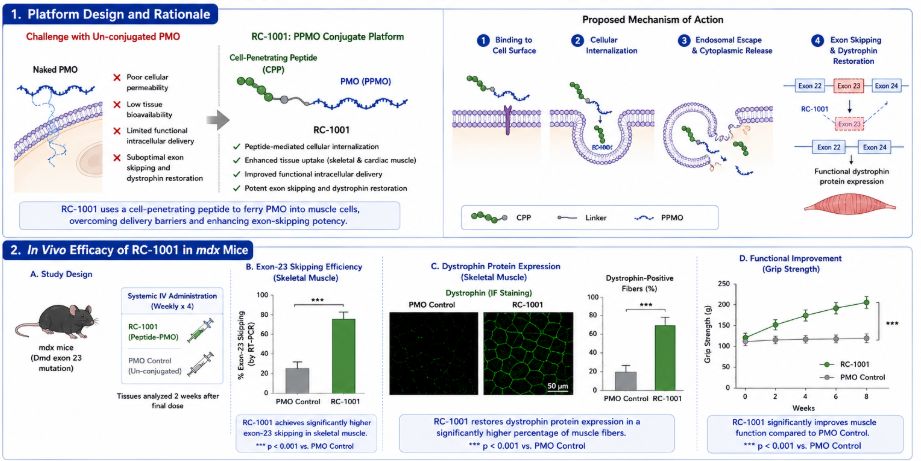 Figure 2. RC-1001 enhances PMO exon-skipping efficacy in DMD.
Overview of What Creative Biolabs Can Provide
Creative Biolabs can support peptide-ASO research from parent ASO and peptide selection through site-specific conjugation, purification, mechanistic cell testing, and in vivo evaluation. The selected service modules map to the transport barrier, chemistry, and evidence decisions described on this page.
| Research Need | Related Creative Biolabs Support | How It Connects to the Current Resource Topic |
|---|---|---|
| Develop a peptide-conjugated ASO | Peptide-Conjugated Antisense Oligonucleotide (ASO) Development Service | Integrates peptide function, ASO chemistry, linker, attachment, purification, characterization, and biological testing. |
| Compare ASO conjugation strategies | Antisense Oligonucleotide (ASO) Conjugate Development Services | Places peptide delivery alongside GalNAc, lipid, antibody, polymer, aptamer, and small-molecule formats. |
| Perform controlled peptide–oligonucleotide coupling | Oligonucleotide-peptide Conjugation | Supports functionalized components, coupling chemistry, purification, and identity analysis for defined conjugates. |
| Design and prepare the ASO payload | Antisense Oligonucleotide (ASO) Design and Synthesis Service | Establishes sequence, mechanism, and chemical architecture before the peptide delivery variable is introduced. |
| Install terminal or internal handles | Custom Oligonucleotide Modification Service | Provides site-specific functionality for linker and peptide attachment comparisons. |
| Screen uptake and activity in vitro | Antisense Oligonucleotide (ASO) In Vitro Screening Service | Measures free uptake, trafficking, RNA modulation, cytotoxicity, and mechanism-specific controls. |
| Evaluate pharmacology and tolerability in vivo | In Vivo Study Service for Antisense Therapeutics | Connects intact conjugate and metabolites with cell-resolved exposure, RNA response, function, and safety. |
To discuss peptide class, transport barrier, linker, or evidence strategy for your ASO program, contact us today to connect with our scientific team.
References
- Malinowska A L, Huynh H L, Bose S. Peptide–oligonucleotide conjugation: chemistry and therapeutic applications. Current issues in molecular biology, 2024, 46(10): 11031-11047. https://doi.org/10.3390/cimb46100655 Distributed under Open Access license CC BY 4.0, with modification.
- Gan L, Wu L C L, Wood J A, et al. A cell-penetrating peptide enhances delivery and efficacy of phosphorodiamidate morpholino oligomers in mdx mice. Molecular Therapy Nucleic Acids, 2022, 30: 17-27. 10.1016/j.omtn.2022.08.019
