
GalNAc Conjugated ASO
GalNAc-conjugated ASOs are best suited to liver-directed therapies because they enable compact, chemically defined, receptor-mediated delivery to hepatocytes without requiring a nanoparticle carrier. This approach can improve hepatic uptake, tissue exposure, dosing efficiency, and sustained regulation of RNA targets involved in metabolic disorders, secreted liver proteins, and genetic liver diseases, although productive activity still depends on receptor availability, ASO chemistry, endosomal escape, target accessibility, and sequence potency.
Introduction
GalNAc-conjugated ASO is a targeted oligonucleotide technology linking N-acetylgalactosamine ligands to antisense oligonucleotides, enabling high-affinity binding to liver ASGPR receptors for cell-specific endocytosis, enhanced potency, and reduced systemic toxicity.
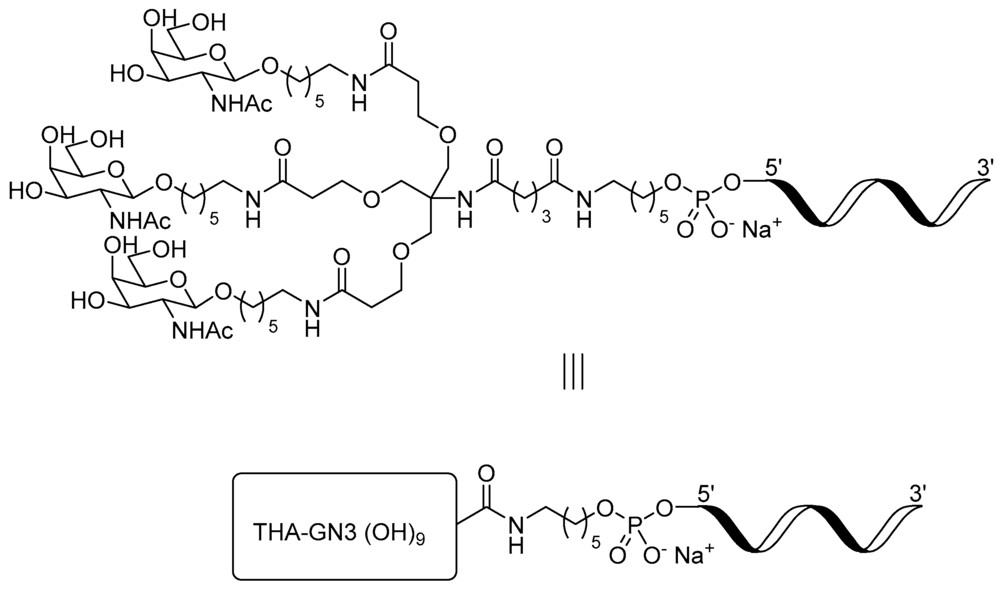 Figure 1. Structure of the GalNAc-ASO conjugate.1
Molecular Architecture of a GalNAc-ASO
The GalNAc cluster is a recognition module
A common ligand module contains three GalNAc residues arranged around a branched scaffold. The scaffold positions the sugars for ASGPR recognition and provides a handle for connection to the ASO. Synthetic route, branch symmetry, linker stereochemistry, and residual protecting-group impurities influence product definition. The ligand should retain receptor affinity after attachment to the polyanionic oligonucleotide. Direct binding or competition assays can test this assumption, while receptor-positive cellular assays reveal whether avidity translates into internalization. A GalNAc delivery platform should therefore be characterized as a complete ligand-linker-ASO construct rather than as an ASO carrying an interchangeable sugar label.
The linker determines presentation and intracellular processing
Linkers separate the GalNAc cluster from the ASO and can be designed to remain intact or undergo intracellular cleavage. A stable linker preserves the conjugate during circulation, but the ligand remnant may influence the active ASO species. Cleavable motifs can promote detachment after endocytosis, provided they resist plasma and dosing-matrix conditions. Spacer length and polarity alter ligand accessibility, solubility, and protein binding. Attachment is frequently terminal because a single defined site simplifies synthesis and reduces the chance of disrupting the hybridizing region. Even then, matched linker variants are useful because receptor binding, intracellular metabolism, and antisense activity may respond differently to the same chemical change.
ASO chemistry remains the pharmacological engine
GalNAc improves access to hepatocytes; it does not rescue a poorly selected RNA site or an inappropriate mechanism. Gapmer ASOs must balance RNase H recruitment with nuclease resistance and affinity-enhancing wing chemistry. Steric-blocking or splice-modulating ASOs rely on stable binding without RNA cleavage. Phosphorothioate content influences stability, protein interactions, and distribution, while 2' modifications alter affinity and tolerability. Sequence motifs can create hybridization-dependent off-targets or chemistry-dependent effects. Ligand and ASO design should therefore be co-optimized, with the parent ASO and GalNAc conjugate tested as a matched pair.
| Module | Primary Function | Variables to Control | Evidence of Suitability |
|---|---|---|---|
| Multivalent GalNAc cluster | ASGPR recognition and avidity | Valency, branch geometry, stereochemistry, purity | Binding and free-ligand competition |
| Spacer and linker | Ligand presentation and optional release | Length, polarity, plasma stability, cleavage rate | Matrix stability and intracellular metabolite profile |
| Attachment site | Connect ligand without blocking ASO function | 5', 3', or internal placement | Matched positional variants and activity |
| ASO sequence and chemistry | RNA recognition and mechanism | Target site, backbone, 2' chemistry, gap pattern | Dose-response, mismatch control, transcript readout |
Journey from Injection to RNA Modulation
The GalNAc-ASO pathway is often summarized as "receptor-mediated liver delivery," but each transition has its own rate and failure modes. A stage-resolved view helps explain why receptor binding and tissue concentration can increase more than pharmacological activity.
- After administration, the intact conjugate distributes in plasma, where the ASO can bind proteins even if the GalNAc recognition motif remains accessible.
- The conjugate reaches hepatic sinusoids and encounters ASGPR on the hepatocyte surface; nonhepatic exposure still occurs and depends on ASO chemistry and dose.
- Multivalent GalNAc binds ASGPR and the complex is internalized into endosomes. Excess free ligand or receptor loss can reduce this uptake component.
- Endosomal acidification promotes receptor-cargo separation and receptor recycling, while the ASO-containing material remains in the intracellular vesicle system.
- Linker and ligand structures are processed, and a small fraction of pharmacologically competent ASO escapes or traffics into the cytosolic and nuclear compartments.
- The ASO hybridizes to its RNA target and produces RNase H cleavage, splice redirection, or steric interference according to its sequence and chemistry.
- RNA and protein responses evolve over time as ASO exposure, target turnover, receptor-mediated reuptake, and tissue clearance interact.
Research Applications in Liver Biology
- Metabolic regulation: study hepatocyte transcripts controlling systemic metabolites and biomarkers.
- Secreted liver proteins: connect hepatic RNA reduction with circulating-protein kinetics.
- Genetic liver disease: suppress a toxic transcript or redirect hepatocyte splicing.
Study Design from Cells to In Vivo Models
Cell studies should preserve receptor function
Primary hepatocytes or carefully qualified receptor-positive models are preferable to relying on a hepatoma line by name. ASGPR surface expression, ligand binding, and internalization should be confirmed under the actual culture conditions because dedifferentiation and prolonged culture can reduce receptor function. Free-uptake assays are more informative than transfection for evaluating GalNAc delivery; a transfection reagent bypasses the receptor-dependent barrier. Dose-response, time-course, free-ligand competition, receptor perturbation, parent ASO, and sequence controls establish whether enhanced RNA modulation follows the proposed route.
In vivo studies connect receptor uptake with pharmacology
Species selection should consider ASGPR biology, ligand affinity, target-sequence conservation, ASO chemistry, and disease phenotype. A structured in vivo ASO study can measure plasma exposure, liver and kidney concentration, intact conjugate or metabolites, cell-type distribution, target RNA, protein, biomarkers, and tolerability. Sampling should cover early uptake and later pharmacodynamic phases because peak tissue concentration may precede maximal RNA reduction. Multiple dose levels can reveal the useful range and potential saturation. Cross-species differences should be treated as data, not normalized away by nominal milligram-per-kilogram comparisons.
Critical Readouts and Controls
GalNAc-ASO experiments are most interpretable when chemistry, receptor function, RNA mechanism, and tissue response are measured in the same evidence chain. A compact control set can distinguish a stronger ASO from a stronger delivery system and can reveal when the receptor is no longer the limiting variable.
| Claim | Required Readout | Key Control | What the Control Excludes |
|---|---|---|---|
| The conjugate is chemically defined | Mass, purity, attachment identity, stability | Parent ASO and ligand standards | Misassigned mass or contaminating unconjugated ASO |
| Uptake is ASGPR-mediated | Internalized ASO in receptor-positive cells | Excess GalNAc, blocking, or receptor perturbation | Nonspecific phosphorothioate or adsorptive uptake |
| Activity is sequence-dependent | Target RNA, splice form, or target protein | Mismatch or scrambled GalNAc-ASO | Ligand, chemistry, or stress-driven expression changes |
| Targeting enriches hepatocytes | Cell-resolved tissue exposure and pharmacodynamics | Parent ASO at matched ASO dose | Bulk liver concentration without cell attribution |
| The dose is within a useful range | Exposure, pharmacodynamics, and tolerability across doses | Vehicle and recovery time points | Transient stress or saturation-related redistribution |
GalNAc versus Other Liver-Delivery Options
GalNAc is most compelling for a hepatocyte RNA target and a route that exposes the conjugate to ASGPR. Other strategies may be preferable when cargo loading, nonhepatocyte delivery, repeated surface engineering, or a different intracellular pathway is required. The comparison should focus on the target cell and active molecular species, not on liver concentration alone.
| Approach | Primary Strength | Main Limitation | Best-Fit Question |
|---|---|---|---|
| GalNAc-ASO conjugate | Compact, defined, receptor-directed hepatocyte uptake | Narrow cell-type scope and endosomal bottleneck | Is the RNA target expressed in accessible hepatocytes? |
| Unconjugated chemically modified ASO | Simple test article with established protein-mediated distribution | Less selective tissue and cell exposure | Is natural ASO uptake sufficient for the target and route? |
| Lipid nanoparticle formulation | High cargo loading and tunable particle composition | Carrier complexity and innate or infusion-related responses | Is particle-mediated delivery or shielding required? |
| Polymer or hybrid nanoparticle | Broad control over charge, degradation, and surface ligands | Heterogeneity, scale-up, and material-specific toxicity | Is sustained release or alternative cell targeting needed? |
| Antibody or peptide conjugate | Access to different receptor repertoires | Larger or more proteolytically sensitive construct | Does another cell type express a validated internalizing receptor? |
Published Data
Case 1: Cross-Species In Vivo Metabolite Profiling of a GalNAc-Conjugated ASO
This study delivers a comprehensive cross-species biotransformation profile for AZD8233, a GalNAc-conjugated antisense oligonucleotide (ASO) targeting PCSK9. AZD8233 is a 16-mer phosphorothioate gapmer featuring cEt-BNA wings flanking a DNA gap, covalently attached to a triantennary GalNAc ligand at the 5'-end via a phosphodiester linker. Using liquid chromatography-high resolution mass spectrometry across mice, rats, rabbits, monkeys, and humans, researchers systematically mapped its metabolic fate. The primary biotransformation pathway involves step-wise cleavage of GalNAc sugar residues, followed by phosphodiester linker cleavage to liberate the fully intact, active parent ASO within liver cells. Subsequently, endo- and exonucleases gradually degrade the DNA gap into shortmer metabolites, while the cEt-BNA wings confer strong resistance against terminal nuclease degradation. Intact GalNAc-ASO predominated in plasma, whereas unconjugated parent ASO dominated in target tissues. Crucially, all human plasma and urinary metabolites were mirrored in preclinical species. This study confirms that GalNAc conjugation functions as a prodrug delivery system for liver targeting, establishing an essential metabolic evaluation framework for regulatory approval of GalNAc-ASO therapeutics.
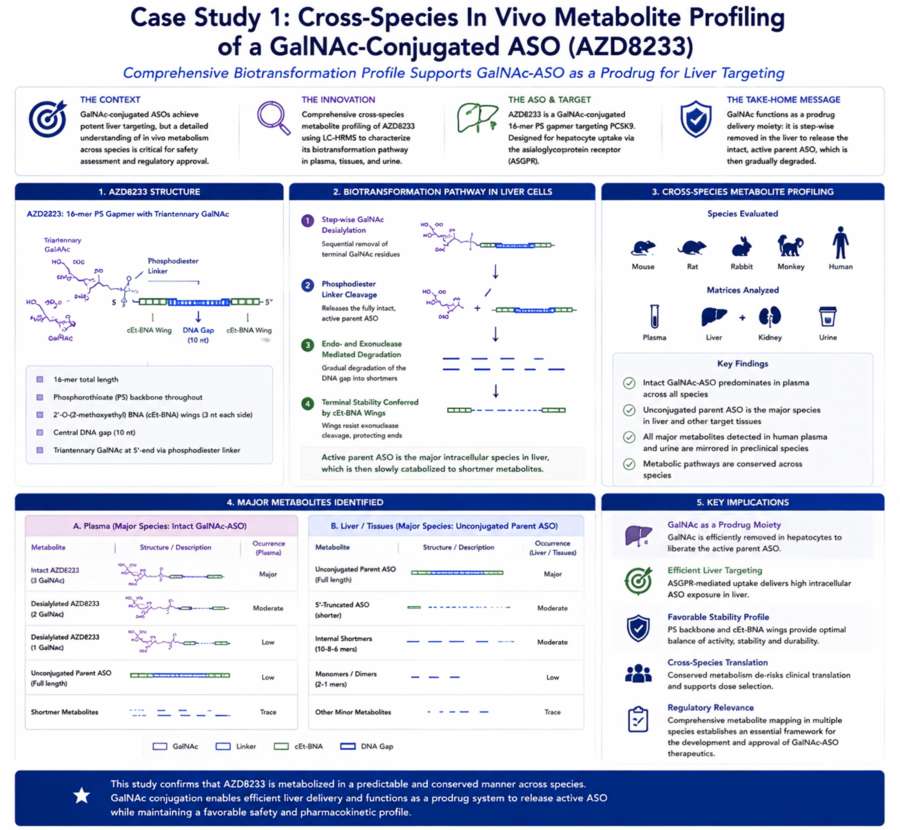 Figure 2. Cross-species ASO metabolite profiling.
Frequently Asked Questions
Q: Why is GalNAc used for ASO delivery?
A: Multivalent GalNAc binds the asialoglycoprotein receptor on hepatocytes and promotes receptor-mediated endocytosis. This can enrich ASO uptake and activity in hepatocytes when the receptor and intracellular processing pathway are functional.
Q: Does GalNAc target every cell in the liver?
A: No. GalNAc-ASGPR delivery primarily addresses hepatocytes. Kupffer cells, endothelial cells, stellate cells, cholangiocytes, and tumor subpopulations may have different or limited access through this route.
Q: Why are three GalNAc residues commonly used?
A: A triantennary arrangement provides multivalent recognition and higher functional avidity for ASGPR than a single sugar. Geometry, spacing, and linker design still influence the complete conjugate.
Q: Can GalNAc compensate for a weak ASO sequence?
A: No. GalNAc improves hepatocyte access, but RNA-site selection, ASO chemistry, mechanism, and sequence specificity still determine whether intracellular ASO produces a useful effect.
Q: How should ASGPR-dependent uptake be tested?
A: Use receptor-positive cells under free-uptake conditions with excess GalNAc, receptor blocking or perturbation, receptor-low controls, a parent ASO, and sequence controls. Confirm target RNA modulation as well as uptake.
Q: Can ASGPR become saturated?
A: Yes. Uptake is saturable, so high exposure can reduce the efficiency of hepatocyte targeting and increase receptor-independent distribution. Dose-exposure-response studies should look for nonlinearity.
Q: What is the main intracellular barrier after GalNAc uptake?
A: Endosomal escape is a major barrier. ASGPR can internalize the conjugate efficiently, but only a fraction of the ASO reaches the cytosolic or nuclear compartment where its target RNA is accessible.
Overview of What Creative Biolabs Can Provide
Creative Biolabs can support GalNAc-ASO research from parent-sequence design and ligand-linker construction through receptor-aware in vitro assays and in vivo pharmacology. The selected Gene Therapy modules below correspond to the molecular, cellular, and translational decisions outlined in this resource.
| Research Need | Related Creative Biolabs Support | How It Connects to the Current Resource Topic |
|---|---|---|
| Develop a GalNAc-ASO construct | GalNAc-Conjugated Antisense Oligonucleotide (ASO) Development Service | Integrates GalNAc cluster, linker, attachment, synthesis, purification, characterization, and functional validation. |
| Design and synthesize the parent ASO | Antisense Oligonucleotide (ASO) Design and Synthesis Service | Establishes target-site selection, mechanism, sequence, and chemistry before hepatocyte targeting is assessed. |
| Compare GalNAc with other ligand formats | Antisense Oligonucleotide (ASO) Conjugate Development Services | Supports selection among GalNAc, peptide, lipid, antibody, polymer, aptamer, and small-molecule approaches. |
| Prepare a custom conjugate-ready ASO | Custom Antisense Oligonucleotide Synthesis | Generates matched parent, control, and functionalized ASOs for attachment-site and linker comparisons. |
| Evaluate receptor-dependent activity in vitro | Antisense Oligonucleotide (ASO) In Vitro Screening Service | Tests free uptake, competition, concentration response, RNA modulation, and cell-model suitability. |
| Assess in vivo exposure and pharmacodynamics | In Vivo Study Service for Antisense Therapeutics | Connects dose, liver and kidney distribution, cell-type exposure, target response, and tolerability. |
| Investigate transcript-level specificity | Antisense Oligonucleotide (ASO) Off-Target Detection and Analysis Service | Examines sequence-dependent and broader expression changes for a defined GalNAc-ASO candidate. |
Projects can be scoped around target biology, mechanism, model, and decision-enabling readouts. Researchers may contact us today to discuss a fit-for-purpose ASO study plan.
References
- Cedillo I, Chreng D, Engle E, et al. Synthesis of 5'-GalNAc-conjugated oligonucleotides: a comparison of solid and solution-phase conjugation strategies. Molecules, 2017, 22(8): 1356. https://doi.org/10.3390/molecules22081356 Distributed under Open Access license CC BY 4.0, with modification.
- Li X Q, Elebring M, Dahlén A, et al. In vivo metabolite profiles of an N-acetylgalactosamine-conjugated antisense oligonucleotide AZD8233 using liquid chromatography high-resolution mass spectrometry: a cross-species comparison in animals and humans. Drug Metabolism and Disposition, 2023, 51(10): 1350-1361. https://doi.org/10.1124/dmd.123.001370
