
Target Definition
Confirm enzyme class, gene or isoform, species, compartment, molecular state, required ortholog reactivity, and intended application.


Creative Biolabs develops custom anti-mannosidase antibodies for research programs that need a precisely defined enzyme target rather than broad family reactivity.
Creative Biolabs develops custom anti-mannosidase antibodies for research programs that need a precisely defined enzyme target rather than broad family reactivity. Within our Anti-Glycan Related Enzyme Antibody Development Service, we align enzyme class, gene or isoform, species, cellular compartment, molecular form, and intended assay before antigen design begins. This is particularly important when the study must distinguish a secretory-pathway mannosidase from a lysosomal enzyme or resolve one paralog within a conserved catalytic family.
The main development challenge is that “mannosidase” is not a single molecular target. Related enzymes can share catalytic architecture while differing in topology, processing, glycosylation, abundance, and subcellular localization. A clone that binds a purified fragment may therefore be unsuitable for endogenous detection, localization, capture, or functional work. We use the biological question to define which molecular state must be recognized and which homologs or orthologs must be included in the specificity plan.
Projects can be scoped around the experimental decision the antibody needs to support, rather than a generic family label.
| Research Need | Development Emphasis |
|---|---|
| Secretory-pathway glycan processing | Define the exact MAN1/MAN2 family member, ER or Golgi context, topology, and the molecular region that will be accessible in the final assay. |
| Lysosomal mannosidase research | Specify the nominated enzyme, precursor or mature form, lysosomal context, and sample type; MAN2B1 projects may require explicit processing-aware validation. |
| Endogenous detection or localization | Plan around the relevant species, expected abundance, fixation or lysis conditions, and positive/negative biological materials. |
| Capture, interaction, or activity studies | Prioritize an accessible epitope that is compatible with the intended native assay and define whether preserving or perturbing an interaction is part of the objective. |
A practical target dossier records the accepted gene and protein name, accession, organism, enzyme class, compartment, topology, processing state, desired cross-species reactivity, and final readout. For secretory-pathway enzymes such as MAN1A1 or MAN1A2, lumen-facing regions and transmembrane boundaries matter. For MAN2B1, precursor-versus-mature recognition and heterogeneous processing may influence both antigen choice and interpretation.
When one antigen concept cannot satisfy both native recognition and isoform selectivity, parallel concepts can be evaluated against the same downstream acceptance criteria.
For broader enzyme-family projects, our Anti-Glycosidase (Glycoside Hydrolase) Antibody Development Service provides a related entry point for target-specific development planning.
We organize development around five connected decisions so specificity and end-use performance are built into the project from the beginning.
Confirm enzyme class, gene or isoform, species, compartment, molecular state, required ortholog reactivity, and intended application.
Select divergent, accessible regions and an antigen format that reflects topology, processing, and the native or denatured state required downstream.
Choose an immunization- or display-based route according to antigen feasibility and the desired antibody format, while retaining enough candidate diversity for specificity testing.
Rank target binding together with paralog or homolog counter-screening, relevant ortholog comparisons, and controls for tags, carriers, or matrix background.
Evaluate selected candidates in the nominated detection, localization, capture, interaction, or enzyme-function context using the available biological controls.
We treat purified-antigen binding as an entry criterion, not a final proof of reagent suitability. Candidate ranking should connect sequence-defined specificity with biological recognition and performance under the conditions the customer intends to use.
| Validation Gate | Evidence Sought | Interpretation Guardrail |
|---|---|---|
| Target recognition | Reproducible binding to the intended antigen or molecular form. | Reject signals driven mainly by tag, carrier, aggregation, or an antigen presentation that is irrelevant to the final assay. |
| Paralog / ortholog profile | Clear separation from excluded homologs and defined behavior across intended species. | Use matched formats where possible so apparent selectivity is not created by unequal protein presentation. |
| Endogenous identity | Signal tracks with target-positive versus target-reduced or otherwise appropriate control material. | Localization or a single expected band supports plausibility but should not stand alone as proof of identity. |
| Final application | Useful signal or recovery under the intended detection, capture, interaction, or activity conditions. | Do not rank solely by purified-antigen affinity when the application depends on native accessibility or biological context. |
For immunoprecipitation or interaction studies, the epitope should remain accessible under the chosen native conditions and should not unintentionally mask the interface being examined. For activity studies, substrate conversion should be measured separately from antibody binding, because reduced activity can reflect steric effects, enzyme instability, precipitation, or assay interference rather than a defined inhibitory mechanism.
Isoform-resolved anti-mannosidase antibodies can support studies of glycan maturation, ER quality control, Golgi processing, lysosomal degradation, enzyme trafficking, and protein-interaction networks. The most informative reagent is one matched to the biological layer the study needs to resolve: abundance, localization, processing, association, or catalytic consequence.
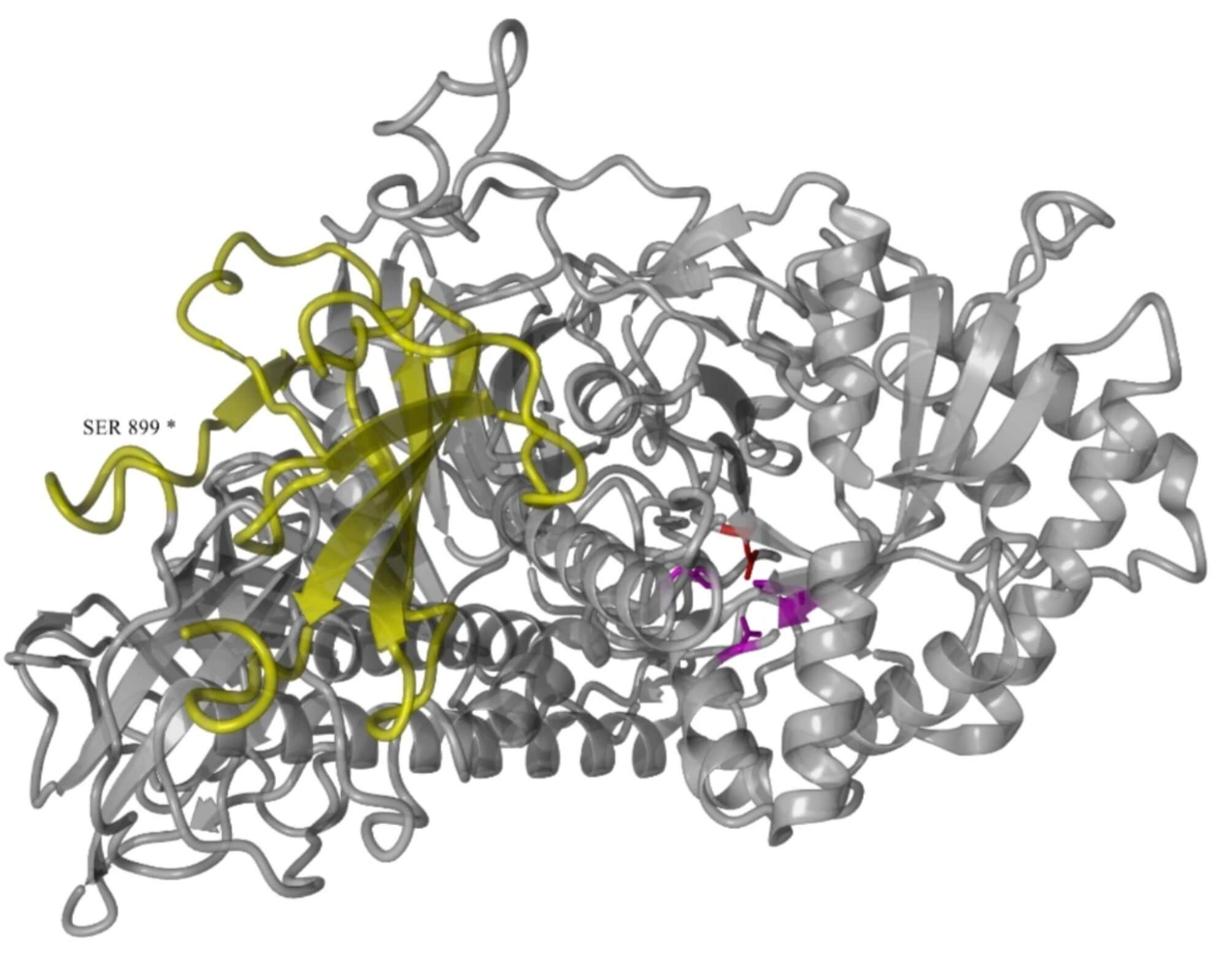
Marins and colleagues discussed MAN2B1-linked lysosomal alpha-mannosidase deficiency in the context of alpha-mannosidosis diagnosis. For antibody-development planning, the study is useful because it centers a clearly defined lysosomal enzyme rather than the generic term “mannosidase.” The structural model shown below also illustrates why domain context and mature enzyme architecture matter when selecting a region for reagent development. A project intended for endogenous detection should therefore specify the exact MAN2B1 form, sample context, and application rather than assume that reactivity to a recombinant fragment will translate directly to the biological protein.
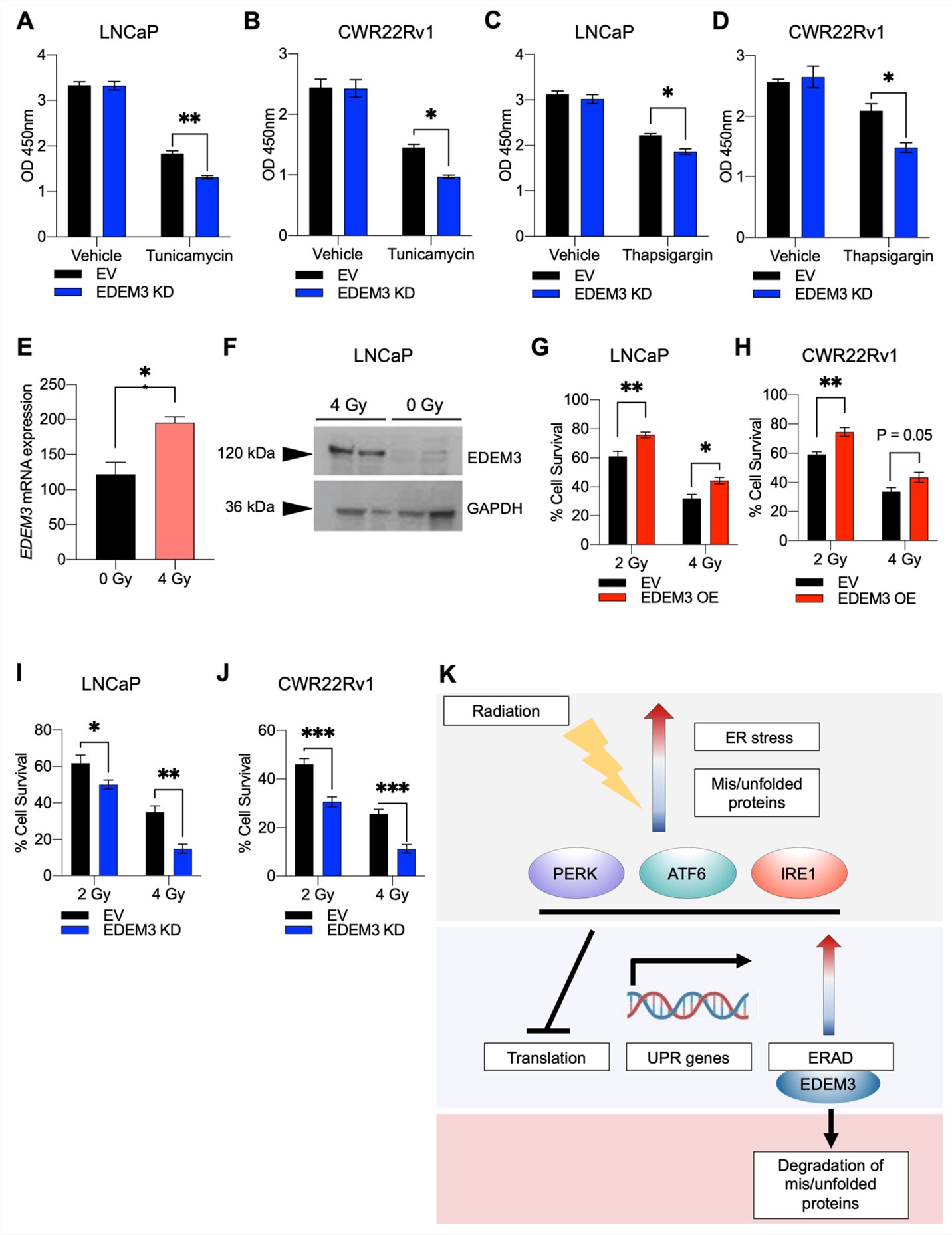
Scott and colleagues used anti-EDEM3 immunoblotting together with expression perturbation and stress-response experiments to examine a mannosidase-like ER quality-control factor. The antibody signal was interpreted alongside target manipulation and functional readouts rather than as an isolated band. From a reagent-development perspective, this is a useful example of why application-matched validation matters: a protein may belong to a mannosidase-related family yet occupy a very different compartment and biological context from lysosomal or Golgi enzymes. The study also shows the value of confirming changes in protein abundance under the exact experimental condition being investigated. For custom antibody planning, the practical lesson is to define the precise target, molecular form, compartment, and validation matrix before candidate ranking.
Depending on project scope and the agreed experimental plan, the project may include the following inputs and outputs. Not every item is required or included in every project.
Share the exact mannosidase target, species, compartment, required molecular state, desired or excluded family reactivity, intended application, and available controls. Creative Biolabs can use these details to frame an isoform-aware development and validation plan for research use only.