Creative Biolabs supports anti-Neu5Gc antibody development for researchers who need to
resolve a deceptively small structural difference: Neu5Gc carries one additional oxygen compared with
Neu5Ac, yet that difference can determine whether an antibody is genuinely useful.
We shape each program around the required glycan context, linkage, carrier or cell presentation, and the
level of Neu5Ac exclusion needed for the final research assay. Explore our non-human
glycan antibody development or review the custom anti-Neu5Gc antibody development service for the
original service portfolio and available research options.
Challenges in Neu5Gc-Specific Antibody Development
The main challenge is not simply generating Neu5Gc binding; it
is proving that the antibody does not respond to the far more common Neu5Ac counterpart or to an unrelated part
of the glycoconjugate. Linkage, underlying glycan, density, and scaffold can all alter recognition. A
well-designed project therefore uses matched Neu5Gc/Neu5Ac structures and introduces carrier, peptide,
glycolipid, or cellular controls appropriate to the nominated epitope.
Target definition
Why it matters
Neu5Gc linkage
Changes the orientation of the terminal sialic acid
Underlying glycan
Can contribute directly to the binding surface
Carrier class
Distinguishes glycoprotein from ganglioside presentation
Neu5Ac analog
Provides the closest negative control
Single-atom selectivity work treats one-oxygen Neu5Gc
difference and matched Neu5Ac analog as separate experimental variables. sialic-acid linkage cannot be inferred
from target-only recognition when underlying glycan chain is absent from the comparison panel. The sialoside
strategy should also record glycoprotein presentation, because an apparently strong clone may be recognizing
presentation context rather than the intended carbohydrate surface. This Neu5Gc boundary determines which
binders remain interpretable after the assay format changes.
Our Anti-Neu5Gc Antibody Development Services
Our dedicated Neu5Gc service combines glycan-aware immunogen
planning with positive selection on Neu5Gc and deliberate subtraction against Neu5Ac. Depending on the desired
reagent, discovery can be paired with sialoside-array profiling, biochemical assays, and cell-context
confirmation. Creative Biolabs discusses the breadth of the comparison panel with you so the project
distinguishes the requested epitope without making unsupported claims about every Neu5Gc-bearing glycan.
Neu5Gc Immunogen and Antibody Development
Immunogen design starts from a chemically defined Neu5Gc sialoside rather than an unqualified
monosaccharide label. Positive antigens and matched Neu5Ac controls are selected to distinguish
terminal-sialic-acid recognition from linker, carrier, or underlying-chain binding.
Neu5Gc/Neu5Ac Specificity Assessment
Neu5Gc/Neu5Ac assessment uses structurally matched comparators wherever possible and can extend across
alternate N-glycan, O-glycan, glycoprotein, or ganglioside contexts. Biological confirmation may use
CMAH-defined models when suitable materials are available.
During antigen planning, ganglioside presentation needs to be
varied deliberately instead of left as an uncontrolled property of the reagent. Parallel constructs help reveal
whether CMAH-defined cells changes binder ranking, while carrier and linker controls identifie signal unrelated
to the nominated epitope. These comparisons are especially useful before investing in downstream formatting,
because reformatting cannot rescue a binder whose original specificity was defined by an incidental scaffold
feature.
Selecting the Neu5Gc Glycan Context
A single Neu5Gc conjugate can overfit discovery to one
scaffold. When broad recognition is desired, primary and secondary positives can vary the underlying glycan
while retaining Neu5Gc. When context-specific binding is desired, the panel should hold the scaffold constant
and substitute Neu5Ac.
The screening cascade is most informative when pan-Neu5Gc
breadth is assessed alongside context-restricted recognition. One readout describes structural preference; the
other tests whether the preference survives the valency, accessibility, and competing surfaces present in the
intended model. Candidates that change rank between these settings are not automatically unsuitable, but the
difference must be explained before a lead is selected for an application-specific study.
Neu5Gc-versus-Neu5Ac Discrimination Across Glycan Contexts
The Neu5Ac comparator should match linkage, underlying sugar,
density, and carrier whenever possible. Unmatched reagents can create false selectivity. Additional controls may
include other sialic acids, desialylated material, carrier-only conjugates, and the same cell background with
altered CMAH status.
Data interpretation distinguishes a measured recognition
profile from a universal property of the antibody. Evidence for biologic sample comparison is limited to the
structures, concentrations, and presentation formats actually tested. Changes in density, matrix, or antibody
format can alter apparent selectivity through avidity. Reporting these boundaries makes it easier to decide
whether additional controls, a second assay geometry, or a different binder is needed.
Our Development Workflow
We begin by specifying the Neu5Gc structure and the matched
Neu5Ac negative target. Antigen preparation and discovery are followed by early subtractive screening, then
broader profiling across linkage and scaffold variants when the project requires it. Candidates selected for
biological samples are subsequently checked in a relevant cell or tissue context, with interpretation kept
within the materials and formats actually tested.
01
Neu5Gc Identity & Linkage
Confirm Neu5Gc antigen identity and linkage.
02
Matched Neu5Ac Control
Pair every positive with a matched Neu5Ac analog.
03
Underlying-Glycan Breadth
Add alternative underlying glycans to measure breadth.
04
Biological-Format Selectivity
Advance only candidates that retain selectivity in the intended biological format.
Workflow decisions are staged so that inexpensive structural
questions precede more complex biological confirmation. solution competition can narrow the binder set, whereas
sialoside-array profiling tests a different source of apparent selectivity. Through the comparison sequence,
positive and negative controls are interpreted together. A high target signal without a matched counter-target
response does not establish specificity, and a negative result may reflect inaccessible antigen rather than
absence of recognition.
Project Requirements and Deliverables
Project Input
Project Requirements
Complete Neu5Gc structure, linkage, and underlying glycan
Matched Neu5Ac analogs and any additional sialic-acid exclusions
Glycoprotein, glycolipid, biologic, cell, or tissue sample context
Desired breadth, antibody format, and intended research application
Project Output
Deliverables and Interpretation Scope
The agreed package may include antibody candidates,
Neu5Gc/Neu5Ac comparison data, context-breadth results, and application-specific validation observations.
Findings are interpreted for the tested structures and do not imply universal pan-Neu5Gc recognition.
Project inputs should describe animal-cell-derived material
in enough detail to reproduce the intended antigen context and should identify how matrix accessibility will
be evaluated. This information affects reagent choice, control construction, and the meaning of a negative
result. If a customer sample is the final destination, its preparation history and expected target abundance
are considered during planning rather than introduced only after purified-antigen screening is complete.
Research Applications
Neu5Gc-selective antibodies can support mapping of non-human
sialic acid, comparison of glycoengineered models, evaluation of animal-cell-derived research materials, and
study of Neu5Gc-bearing gangliosides. Results remain research-use observations and do not establish clinical
safety or efficacy.
For research applications, research-use interpretation is
evaluated as a separate question from antigen recognition. Binding may justify advancing a binder, but it does
not by itself demonstrate blocking, internalization, signaling, staining, or biological activity. Those
endpoints require their own controls and model-specific acceptance logic. Maintaining this separation prevents a
descriptive recognition reagent from being overinterpreted as a functional antibody.
The final binder discussion integrates structural data,
orthogonal confirmation, and sample relevance rather than relying on a single highest signal. Trade-offs among
sialic-acid linkage, context-restricted recognition, and sialoside-array profiling are reviewed against the
stated research objective. This approach allows a narrowly selective binder and a deliberately broader binder to
be evaluated on their intended merits, provided that the recognition envelope and its limitations are documented
clearly.
Published Data
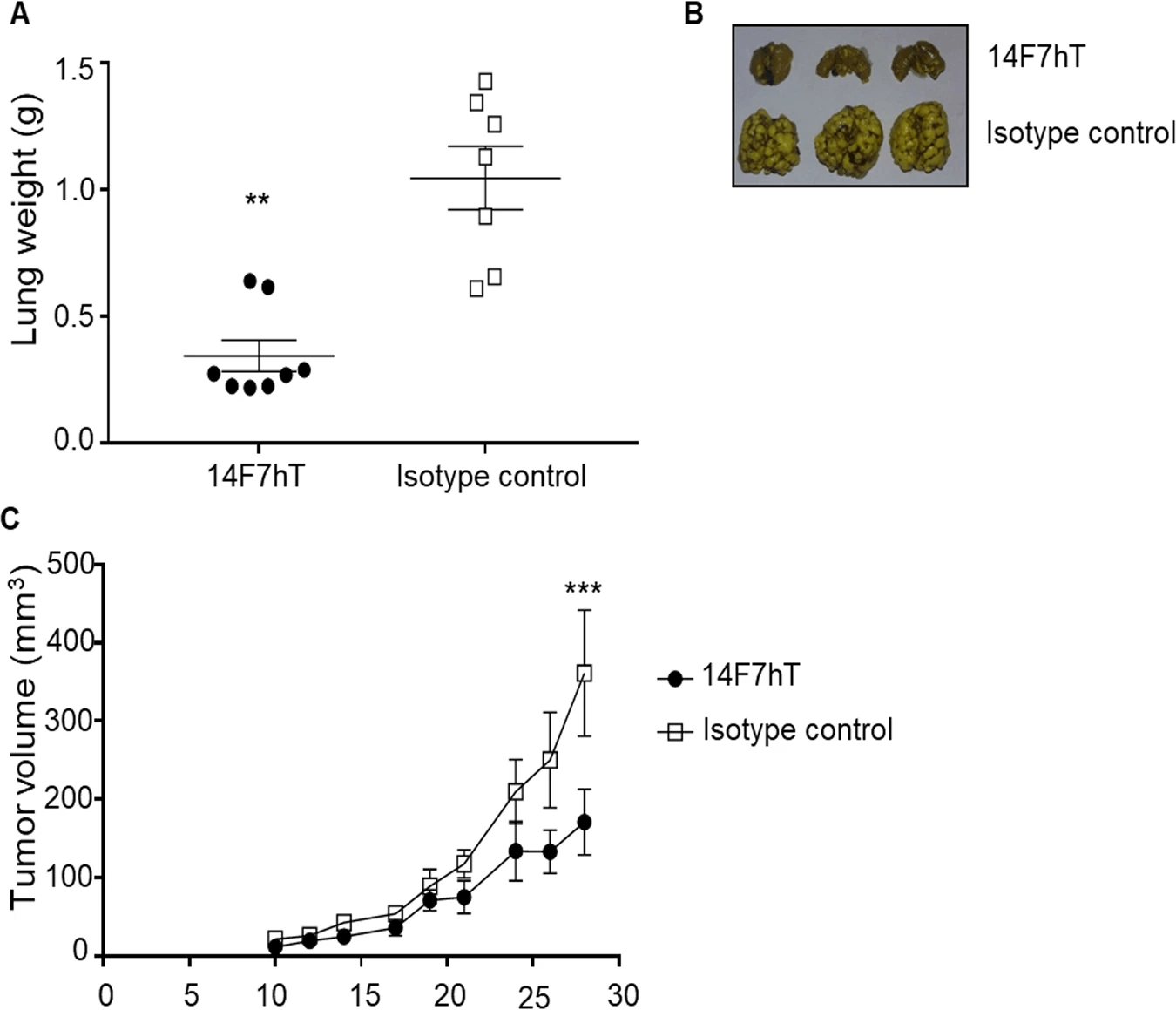
Recent advancements in glyco-immunology have validated the
therapeutic potential of targeting the tumor-specific antigen GM3(Neu5Gc) using humanized antibodies. A
pivotal study addressed the challenge of evaluating these therapies given the natural absence of the
functional cytidine monophospho-N-acetyl-neuraminic acid hydroxylase (CMAH) enzyme in human cells. By stably
transfecting the murine Cmah gene into human ovarian carcinoma cells, researchers successfully
engineered a cell line that expresses surface GM3(Neu5Gc), thereby mimicking the accumulation of this
xenoantigen seen in human tumors due to metabolic incorporation. Flow cytometric analysis confirmed the
exclusive binding of the humanized antibody, 14F7hT, to these Cmah-expressing cells, demonstrating
exquisite specificity without cross-reactivity to native acetylated gangliosides. Furthermore, the study
provided compelling evidence of biological activity: the antibody induced robust antibody-dependent
cell-mediated cytotoxicity (ADCC) with human effector cells. In a decisive in vivo assessment,
systemic administration of the antibody significantly suppressed tumor growth in mice bearing these
engineered human xenografts. This data underscores the efficacy of high-affinity anti-Neu5Gc antibodies in
arresting tumor progression and highlights the strategic value of using Cmah-engineered models to
rigorously screen and validate xenoantigen-specific immunotherapeutics for clinical development.
Fig.1 In vivo antitumor effect of the humanized anti-Neu5Gc antibody (14F7hT) against
Cmah-transfected human ovarian cancer cells.1
Start Your Anti-Neu5Gc Antibody Project
Please provide the Neu5Gc epitope, linkage and scaffold of interest, the Neu5Ac structures that must be
excluded, your preferred antigen format, biological samples, final assay, and desired antibody format.
Existing glycans, cells, or candidate antibodies can also be reviewed. Creative Biolabs will use these project
parameters to discuss an appropriate development and validation strategy.
Discuss Your
Anti-Neu5Gc Project
Frequently Asked Questions
Why is Neu5Ac the most important negative control for anti-Neu5Gc development?
Neu5Ac differs from Neu5Gc by only one oxygen atom and is
widespread in human glycoconjugates. A candidate that binds both forms may appear strong while lacking the
discrimination the project requires. Matched Neu5Gc and Neu5Ac structures therefore provide the clearest
starting point for evaluating whether recognition depends on the N-glycolyl group.
Does one anti-Neu5Gc antibody recognize every Neu5Gc-containing glycan?
Not necessarily. Recognition may depend on the linkage,
underlying glycan, neighboring sugars, density, and whether Neu5Gc is carried on a glycoprotein or glycolipid.
The desired breadth should be defined before screening. A broader reagent and a context-selective reagent can
both be useful, but they answer different research questions.
Which antigen formats can be considered for Neu5Gc antibody discovery?
Options may include defined glycans, glycopeptides,
glycoconjugates, glycolipid presentations, or Neu5Gc-bearing cellular materials, subject to project review.
The best choice depends on the final application and the need to control scaffold recognition. Whenever a
carrier is used, carrier-only and matched Neu5Ac controls should be planned from the outset.
How can cross-reactivity be assessed beyond a Neu5Gc/Neu5Ac pair?
A sialoside or customized glycan microarray can compare
recognition across multiple linkages and underlying structures. Array results are most informative when
followed by an orthogonal assay using the intended presentation. This combination helps separate true epitope
breadth from effects caused by printing density, immobilization chemistry, or multivalent binding.
Can anti-Neu5Gc candidates be validated on cells?
Yes, when appropriate Neu5Gc-positive and matched negative
cell materials are available. Cell-based confirmation asks whether the epitope remains accessible in a
biological membrane and helps evaluate background binding. It does not replace structural profiling, because a
positive cellular signal alone cannot identify which Neu5Gc-containing glycoconjugate is recognized.
What information is needed to scope an anti-Neu5Gc project?
Please share the exact Neu5Gc structure or biological context,
required Neu5Ac exclusions, antigen source, preferred presentation, sample type, intended assay, and desired
antibody format. If your study needs broad pan-Neu5Gc recognition or narrow linkage-specific recognition,
state that explicitly because it changes the screening panel and the interpretation of candidate selectivity.
References
Dorvignit, Denise, et al. "Antitumor Effects of the GM3(Neu5Gc) Ganglioside-Specific Humanized Antibody
14F7hT against Cmah-Transfected Cancer Cells." Scientific Reports 9 (2019): 9921. Distributed under Open
Access license CC BY 4.0, without modification. https://doi.org/10.1038/s41598-019-46148-1
Project Inquiry
!For Research Use
Only.Not for clinical or diagnostic use.