
Target Definition
Confirm HPSE species, sequence or construct, latent/processed/active state, HPA2 exclusion needs, and the intended detection or functional endpoint.


Creative Biolabs develops custom anti-heparanase antibodies for research programs that need HPSE detection, molecular-state discrimination, capture, or controlled enzyme-inhibition studies.
Creative Biolabs develops custom anti-heparanase antibodies for research programs that need HPSE detection, molecular-state discrimination, capture, or controlled enzyme-inhibition studies. As part of our Anti-Glycan Related Enzyme Antibody Development Service, we define whether the relevant target is latent proheparanase, processed heterodimer, catalytically active enzyme, or a project-specific construct before antigen and screening decisions are made.
Heparanase development is unusually sensitive to target state. HPSE is synthesized as a precursor and processed into subunits that form the active enzyme, so an antibody selected against one recombinant representation may not recognize the state required in the final study. Detection and inhibition are also separate objectives: a strong binder does not automatically alter heparan-sulfate cleavage, and an epitope associated with functional inhibition may not be exposed in a denaturing detection assay.
| Research Goal | Primary Design Question |
|---|---|
| Total HPSE detection | Which precursor and processed forms should contribute to the signal, and under which assay conditions? |
| Latent vs. processed-state research | Can the antigen and screening format distinguish surfaces that are retained, lost, or exposed during maturation? |
| HPA2 discrimination | Which candidate epitopes and matched controls best separate HPSE from the homolog HPSE2/HPA2? |
| Catalytic-inhibition studies | Which heparan-sulfate cleavage assay and controls can distinguish a true activity change from enzyme loss or assay interference? |
The target record should state HPSE sequence and species, construct boundaries, processing state, sample matrix, and final assay. If precursor and mature forms both matter, their required recognition profiles should be written separately. For active-state work, the enzyme preparation and substrate system should be defined early enough to influence antigen design and screening.
For inhibitory discovery, structural proximity to the substrate-binding or catalytic region may guide epitope hypotheses, but only a controlled activity assay can establish whether a candidate changes enzyme function.
The project is organized as a five-step path that keeps target state and HPA2 specificity visible from the first design decision through final validation.
Confirm HPSE species, sequence or construct, latent/processed/active state, HPA2 exclusion needs, and the intended detection or functional endpoint.
Select a state-relevant antigen presentation using processing boundaries, accessible surfaces, and sequence comparison with HPA2 and relevant orthologs.
Choose an immunization- or display-based route according to antigen feasibility and the required antibody format.
Combine HPSE binding with HPA2 counter-screening, state comparison, and controls for tags, protein quality, and matrix-associated background.
Advance candidates into the nominated detection, localization, capture, or heparan-sulfate cleavage assay with acceptance criteria matched to that use.
These two development paths share target-identity and specificity controls but diverge at the final decision point. We therefore avoid forcing a single clone to satisfy both objectives unless the project specifically requires it.
| Validation Route | Core Evidence | Key Boundary |
|---|---|---|
| Detection path | Expected precursor/subunit profile in immunoassay or western blot, or condition-matched localization with target-status controls. | Band position or extracellular deposition alone does not establish HPSE identity. |
| Functional path | Reproducible change in heparan-sulfate cleavage with dose, enzyme and substrate controls, and a nonbinding or control antibody. | Reduced cleavage can reflect enzyme loss, precipitation, or assay interference; binding alone does not prove inhibition. |
HPSE results can shift with processing, glycosylation, pH, matrix association, and the way the enzyme is presented. A candidate that detects a denatured 50 kDa subunit may not bind native active enzyme, while a conformational binder may perform well in capture or functional studies and show limited value in western blotting.
Anti-HPSE antibodies can support research on heparan-sulfate remodeling, extracellular-matrix biology, enzyme processing, cellular localization, protein capture, and function-oriented studies. Detection reagents can help distinguish abundance from processing, while function-oriented candidates can be used to test whether catalytic activity contributes to a defined experimental phenotype.
Barash and colleagues reported an HPSE-neutralizing monoclonal antibody and evaluated its activity in controlled heparan-sulfate degradation assays. The study is relevant to antibody-development strategy because target binding was connected to a functional readout rather than interpreted alone. Structural analysis placed the epitope near a heparin-binding region adjacent to the catalytic cleft, providing orthogonal context for the observed inhibition. The authors also examined effects on proheparanase uptake and maturation. For a custom research program, the key lesson is that an inhibitory claim requires a defined enzyme state, a suitable heparan-sulfate substrate system, matched control antibodies, and evidence that the activity change is not caused by enzyme loss or nonspecific assay disruption.
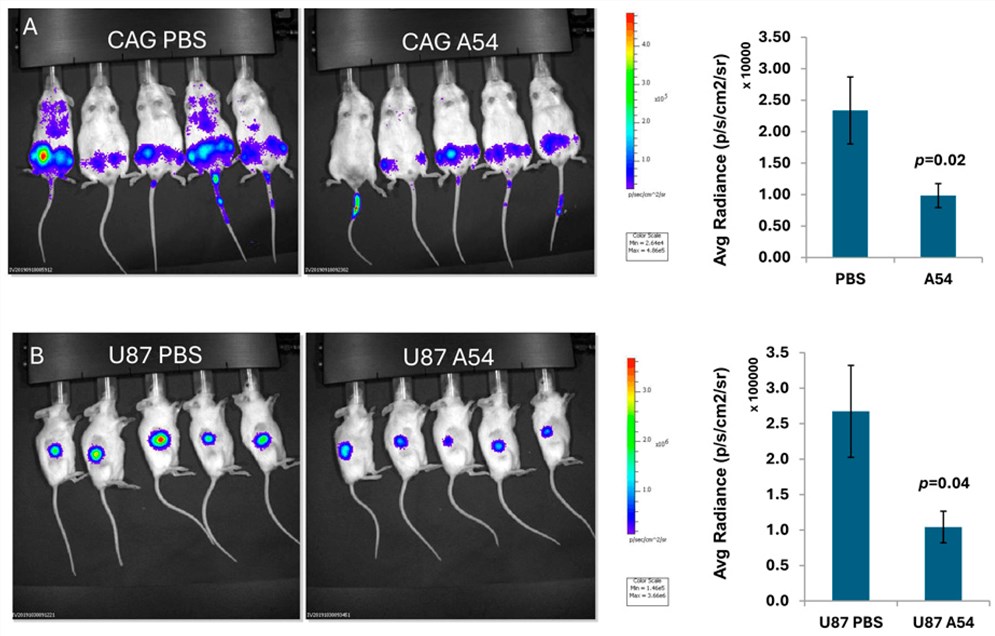
The same publication extended the antibody into preclinical model studies, as illustrated in the figure below. Those downstream observations are useful context, but they do not replace the biochemical evidence needed to establish reagent function. From a service-planning perspective, the most transferable evidence chain is epitope definition → HPSE/HPA2 specificity → controlled substrate-cleavage testing → orthogonal interpretation of mechanism.
Depending on project scope and the agreed experimental plan, the project may include the following inputs and outputs. Not every item is required or included in every project.
Share the HPSE species and sequence, required precursor or mature-state profile, HPA2 exclusion needs, intended detection or activity assay, and available biological controls. Creative Biolabs can use these details to propose a state-aware development route for research use only.