


The Alpha-Gal Syndrome: Mechanisms and Clinical Implications
Creative Biolabs supports alpha-gal research with specialized anti-alpha-gal antibody development for investigators studying glycan recognition, assay construction, antigen profiling, and the molecular basis of alpha-gal syndrome. We explain the biological foundation of alpha-gal syndrome, the meat allergy mechanism, the IgE response to alpha-gal, and the value of fit-for-purpose antibody reagents in research workflows. All services described here are for research use only and are not intended for clinical diagnosis or treatment.
Understanding Alpha-Gal Syndrome
Alpha-gal syndrome is an IgE-mediated allergic condition directed against galactose-α-1,3-galactose, commonly called alpha-gal. The syndrome is unusual because the sensitizing epitope is a carbohydrate rather than a protein. It is also distinctive because sensitization is strongly associated with tick bites, while symptoms often appear after exposure to mammalian meat or other mammalian-derived materials. For this reason, alpha-gal syndrome is often discussed in relation to mammalian meat allergy and tick-associated sensitization, but its molecular basis is more specific and more complex than either shorthand label suggests.
In most humans, anti-alpha-gal antibodies of the IgM, IgA, and IgG classes can occur naturally. These baseline antibodies do not indicate allergic disease. The key immunological change in alpha-gal syndrome is the development of alpha-gal-specific IgE. Once this class switch occurs, mast cells and basophils can become sensitized, creating the basis for allergic reactivity when alpha-gal-bearing molecules are encountered again.
Why Alpha-Gal Syndrome Is Different from Classical Food Allergy
- It is driven by a glycan epitope rather than a protein allergen.
- Sensitization is strongly linked to tick exposure rather than primary oral sensitization.
- Symptoms after mammalian meat intake are commonly delayed for several hours.
- The relevant exposure profile may include meat, gelatin, dairy-associated components, and selected biologic materials.
- The presence of alpha-gal-specific IgE does not automatically indicate identical clinical reactivity in every sensitized individual.
What Is Alpha-Gal?
Alpha-gal is a terminal glycan structure present on glycoproteins and glycolipids in most non-primate mammals. Humans, apes, and Old World monkeys do not synthesize this epitope because of the evolutionary loss of functional α1,3-galactosyltransferase activity. As a result, the human immune system can recognize alpha-gal as foreign. This feature explains both the common presence of natural anti-alpha-gal antibodies and the potential for pathogenic IgE responses under specific immunological conditions.
Where the Relevant Exposure Can Occur
| Exposure Source | Typical Research Relevance | Key Consideration |
|---|---|---|
| Mammalian meat | Primary dietary exposure discussed in alpha-gal syndrome literature | Delayed reactions are frequently reported after beef, pork, lamb, or other mammalian meat intake |
| Gelatin-containing materials | Relevant for matrix analysis and exposure mapping | Alpha-gal-bearing components may vary by source and processing context |
| Dairy-associated components | Important in broader exposure profiling | Not all patients respond in the same way, but some studies discuss dairy-related reactivity |
| Tick-derived material | Central to sensitization research | Tick saliva and associated glycoconjugates are major focus areas in mechanistic studies |
| Mammalian-derived biologics or excipients | Relevant for glycoanalytical and safety-focused research | Distribution of alpha-gal may depend on source organism, purification, and molecular presentation |
Mechanisms Behind the IgE Response to Alpha-Gal
The central question in alpha-gal syndrome research is not whether humans can recognize alpha-gal, but how a normally non-pathogenic anti-alpha-gal background response shifts toward a disease-associated IgE profile. Available evidence strongly supports tick exposure as a major sensitization route. During feeding, ticks introduce a complex mixture of salivary molecules into the skin. These molecules can alter local immunity, shape cytokine signaling, and create conditions favorable for Th2-skewed immune responses. In susceptible individuals, this environment may promote class switching to alpha-gal-specific IgE.
Proposed Steps in the Meat Allergy Mechanism
Tick Exposure
Tick feeding introduces salivary factors and alpha-gal-associated material into the skin, creating a plausible sensitization environment.
Th2 Polarization
Local inflammatory and immune-regulatory signals may support a type 2 immune profile that favors class switching toward IgE.
IgE Sensitization
Alpha-gal-specific IgE binds FcεRI on mast cells and basophils, establishing a sensitized effector cell compartment.
Re-Exposure
Subsequent contact with alpha-gal-bearing materials can trigger allergic activation, especially after mammalian meat exposure.
Why Reactions Are Often Delayed
One of the most discussed features of alpha-gal syndrome is the delayed timing of symptoms after eating mammalian meat. A leading explanation is that alpha-gal-containing lipid or glycoprotein complexes require digestion, intestinal absorption, and transport before sufficient antigen reaches the circulation to engage sensitized effector cells. This timing differs from conventional immediate food allergy and is one reason why alpha-gal syndrome may be overlooked in exposure histories.
Factors That May Influence Reaction Profiles
- Differences in alpha-gal abundance between food sources
- Variation in lipid content and absorption kinetics
- Organ-specific differences in mammalian tissues
- Recent or repeated tick exposure
- Individual variation in IgE levels and effector cell sensitivity
Why Alpha-Gal Detection Is a Research Challenge
The alpha-gal epitope can occur on multiple molecular backbones and in diverse biological matrices. This means that assay readouts may depend not only on antibody affinity, but also on glycan density, molecular context, sample origin, and control design. In practical terms, researchers studying alpha-gal syndrome often need reagents that can distinguish meaningful glycan presentation from background binding and can perform consistently across assay systems.
Research Questions Still Driving the Field
- Which tick-derived molecules contribute most directly to sensitization?
- How do glycoprotein and glycolipid presentations alter immune recognition?
- Which biomarkers best distinguish sensitization from clinically relevant reactivity?
- How does repeated tick exposure influence persistence or amplification of alpha-gal-specific IgE?
- What reagent formats best support robust alpha-gal epitope detection?
Creative Biolabs Solutions for Alpha-Gal Research
Creative Biolabs provides dedicated support for investigators working on alpha-gal syndrome, glycoimmunology, and alpha-gal epitope detection. Our anti-alpha-gal antibody development service is designed for research teams that require tailored antibody generation strategies, fit-for-purpose validation, and flexible project planning aligned with downstream applications.
What Our Service Can Support
Custom Anti-Alpha-Gal Antibody Development
We develop antibodies targeting alpha-gal-bearing structures for research applications that require reliable glycan recognition, optimized specificity, and reproducible performance across experimental platforms.
Glycoarray-Based Specificity Assessment
Our glycoarray capabilities support glycan-binding characterization, comparative specificity profiling, and screening against related carbohydrate structures.
Glycosylation Analysis Support
We provide analytical support for projects involving glycoproteins, glycolipids, and other alpha-gal-related materials where structural context affects interpretation.
Affinity and Kinetics Evaluation
SPR-based characterization can be incorporated into research workflows when quantitative binding data are needed for antibody benchmarking and assay development.
Why Researchers Choose This Platform
- Experience in glycan-focused antibody development
- Attention to epitope presentation and assay context
- Flexible support for discovery, validation, and optimization projects
- Compatibility with broader glycoanalysis and binding-characterization workflows
- Research-use focus with clear project communication and documentation
Discuss Your Alpha-Gal Project
If your team is investigating alpha-gal syndrome, mammalian meat allergy, tick-associated sensitization, or the broader immunobiology of alpha-gal-bearing molecules, we welcome the opportunity to review your target format, assay goals, sample type, and validation priorities. Our scientific team can help shape a practical strategy for antibody development and glycan-focused detection.
Request a Quote for Anti-Alpha-Gal Research Support
Published Data
An open-access review by Perusko and colleagues provides a broad overview of alpha-gal syndrome as a glycan-driven allergic disease. The authors summarize the distribution of alpha-gal, the strong association between tick bites and sensitization, the diversity of exposure routes, and proposed explanations for the delayed timing of reactions after mammalian meat intake. The review also shows that alpha-gal can occur on different molecular carriers and in different biological contexts, which is important when interpreting alpha-gal-related research.
The figure below is especially informative because it summarizes alpha-gal-carrying molecules reported in foods, pharmaceuticals, sweets, and ticks. This broad distribution helps explain why alpha-gal syndrome cannot be reduced to a single food exposure model. It also underscores the value of well-characterized reagents for studying how alpha-gal is presented in different research materials.
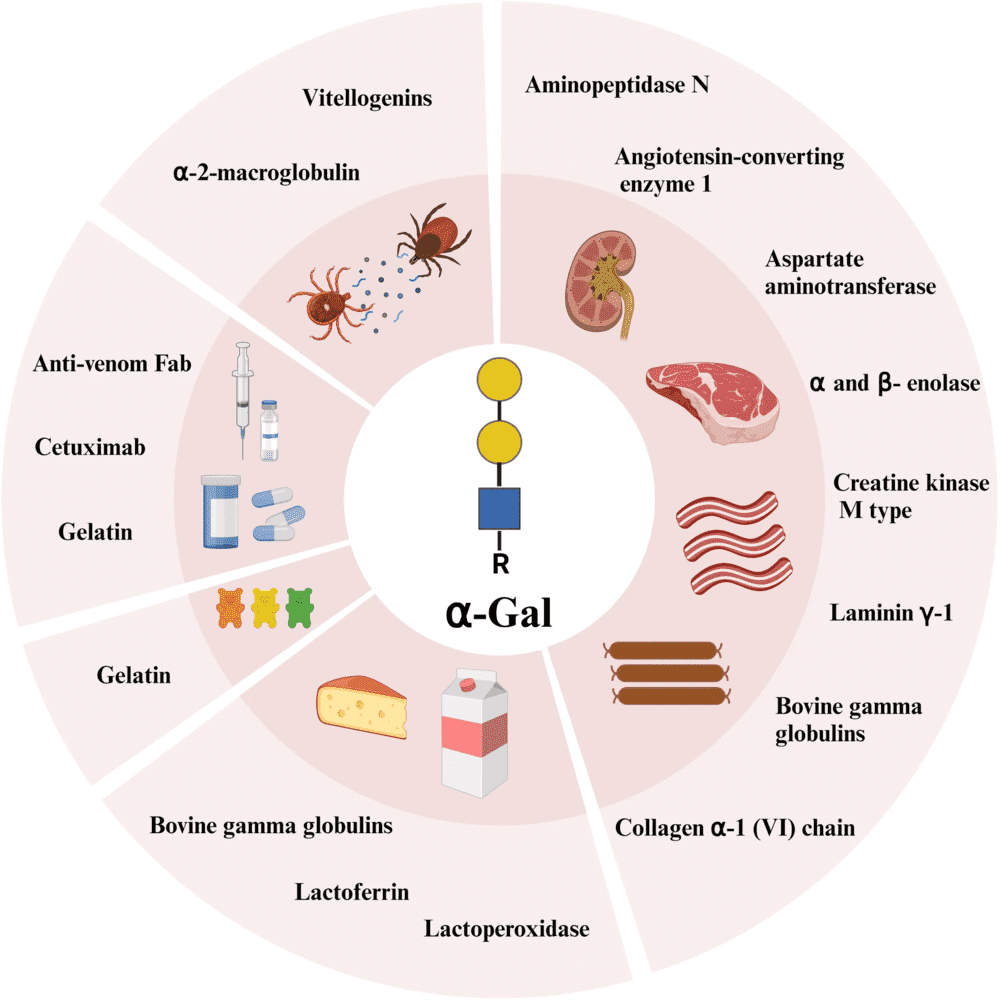 Fig.1 alpha-gal carrying molecules in foods pharmaceuticals and ticks.1
Another open-access study by Jappe and colleagues2 analyzed sera from individuals with suspected alpha-gal syndrome using ImmunoCAP together with the authors' IgE cross-reactivity immune profiling system. In this cohort, the additional profiling approach helped clarify some cases that were negative or ambiguous by conventional alpha-gal-specific IgE testing alone. The study does not establish a new standard clinical workflow, but it does support a careful research principle: alpha-gal-related immune responses can be heterogeneous, and orthogonal assay formats may improve interpretation in complex sample sets.
Together, these reports support the current view that alpha-gal syndrome is a distinct glycoimmunological disorder involving tick-associated sensitization, delayed oral exposure kinetics, and a clinically relevant IgE response to alpha-gal. They also show why reagent quality and analytical context matter in alpha-gal research.
FAQs
What is alpha-gal syndrome?
Alpha-gal syndrome is an IgE-mediated allergic condition directed against the carbohydrate galactose-α-1,3-galactose. It is strongly associated with tick exposure and is commonly discussed in relation to mammalian meat allergy.
Why is alpha-gal syndrome considered unusual among food-related allergies?
The syndrome is unusual because the target epitope is a glycan rather than a protein, and because symptoms after mammalian meat intake are often delayed by several hours instead of appearing immediately.
How does tick exposure relate to the development of alpha-gal syndrome?
Tick bites are believed to promote sensitization by exposing the immune system to salivary factors and alpha-gal-associated material in a local environment that favors Th2 responses and IgE class switching.
What does the IgE response to alpha-gal mean in research terms?
It refers to the production of alpha-gal-specific IgE that can bind mast cells and basophils, creating the immunological basis for allergic reactivity after later exposure to alpha-gal-bearing materials.
Why can alpha-gal detection be difficult in laboratory assays?
Alpha-gal can occur on different glycoproteins and glycolipids and in different matrices. Assay performance may therefore depend on glycan density, molecular context, reagent specificity, and control selection.
How can Creative Biolabs support alpha-gal syndrome research?
Creative Biolabs supports alpha-gal studies through anti-alpha-gal antibody development, glycan-binding characterization, and related analytical services for research-use assay development and epitope investigation.
Are the services on this page intended for clinical use?
No. The services described on this page are offered for scientific research use only and are not intended for clinical diagnosis, treatment, or patient management.
References
- Perusko, Marija, Jeanette Grundström, Maria Eldh, Carl Hamsten, Danijela Apostolovic, and Marianne van Hage. The α-Gal epitope - the cause of a global allergic disease. Frontiers in Immunology 15 (2024): 1335911. Distributed under Open Access license CC BY 4.0, without modification. https://doi.org/10.3389/fimmu.2024.1335911
- Jappe, Uta, Tahmina Kolaly, Mareike S. de Vries, Askin Gülsen, and Arne Homann. Connecting Diagnostics and Clinical Relevance of the α-Gal Syndrome—Individual Sensitization Patterns of Patients with Suspected α-Gal-Associated Allergy. Nutrients 17.9 (2025): 1541. Distributed under Open Access license CC BY 4.0, without modification. https://doi.org/10.3390/nu17091541