HA-Decorated Liposome for Imatinib Delivery
Introduction Research Insights Products & Services Resources
The landscape of therapeutic intervention is rapidly shifting from systemic administration to precision-engineered local delivery, particularly for complex respiratory conditions. As the pharmaceutical industry seeks to maximize drug potency while mitigating adverse effects, lipid-based nanocarriers have emerged as the gold standard for innovation. At Creative Biolabs, we leverage decades of expertise in lipid-based drug delivery systems to guide researchers through this evolution, transforming theoretical targeting strategies, such as hyaluronic acid surface modification, into robust, scalable therapeutic realities for our clients.
The Clinical Challenge of Pulmonary Fibrosis
Interstitial lung fibrosis (ILF) presents a formidable barrier to conventional drug delivery; while potent agents like kinase inhibitors exist, their hydrophobic nature and rapid clearance often necessitate high systemic doses that cause intolerable toxicity. Nanotechnology offers a pivotal solution to this dilemma, enabling the encapsulation of these difficult molecules within localized delivery vectors. By utilizing advanced lipid-based systems, researchers can now design inhalable therapies that target fibrotic tissue directly. Creative Biolabs provides the comprehensive formulation support necessary to bridge the gap between these conceptual solutions and practical, effective treatments for ILF.
The CD44 Receptor as a Therapeutic Gateway
The Cluster of Differentiation 44 (CD44) is a cell-surface glycoprotein involved in cell-cell interactions, cell adhesion, and migration. Crucially, CD44 is significantly overexpressed on activated alveolar macrophages and fibroblasts, the primary effector cells responsible for driving the fibrotic cascade in lung disorders. This overexpression creates a unique "molecular zip code," allowing therapeutics to distinguish between diseased effector cells and healthy pulmonary tissue.
Hyaluronic Acid: More Than a Biopolymer
Hyaluronic Acid (HA) serves as the primary natural ligand for CD44. Beyond its biocompatibility, HA can be chemically conjugated to the surface of lipid nanoparticles to function as a homing device.
-
Active Targeting: HA-decorated liposomes bind specifically to CD44 receptors.
-
Endocytosis: This binding triggers receptor-mediated endocytosis, facilitating the rapid internalization of the liposome and its payload.
-
Stealth Properties: HA can also provide a hydrophilic shield, potentially extending the circulation time of the nanoparticle locally within the lung fluid.
Key Research Insights: HA-Decorated Liposomes in Action
This section analyzes the performance of HA-decorated liposomal systems (specifically imatinib-loaded formulations) as demonstrated in recent cutting-edge experimentation. These insights provide a roadmap for developing next-generation inhalable therapies.
Visualization and Quantification of Targeted Cellular Uptake
To validate targeting specificity, researchers utilized confocal microscopy and flow cytometry to compare the internalization of HA-decorated liposomes (LIP-HA44700-Im) against non-decorated controls. The data demonstrated that LIP-HA44700-Im achieved significantly higher uptake in CD44-positive respiratory cells. Crucially, imaging confirmed distinct colocalization with cellular endosomes, proving that the HA-surface modification successfully triggers receptor-mediated endocytosis rather than passive diffusion.
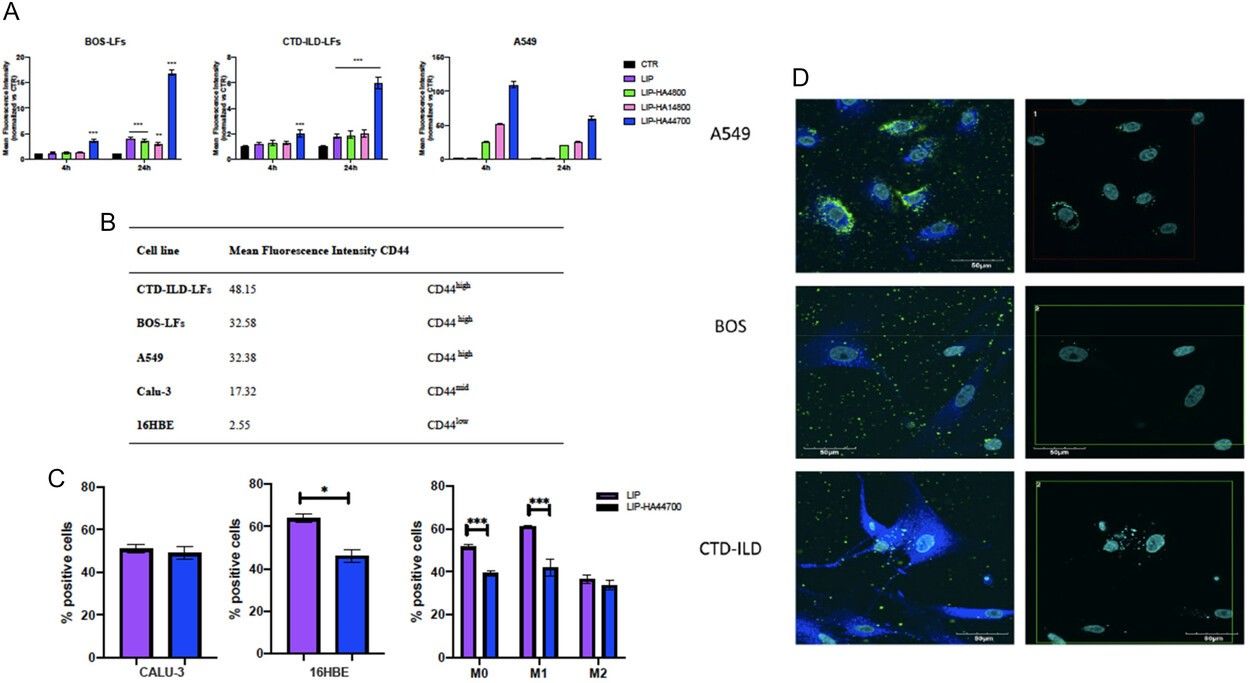 Fig. 1 Liposome uptake analysis by flow cytometry and confocal microscopy. 1
Molecular Impact on Fibrogenic Signaling Pathways
In vitro assays assessed the functional impact of the delivered imatinib on fibrogenic pathways. The results showed that LIP-HA44700-Im treatment effectively impaired c-Abl phosphorylation, a critical upstream signaling event in fibrosis. This inhibition led to a measurable reduction in lung fibroblast viability and a significant decrease in Collagen 1a1 release after 24 hours, confirming that the encapsulated drug retains its potency and effectively interrupts the fibrotic cascade at the cellular level.
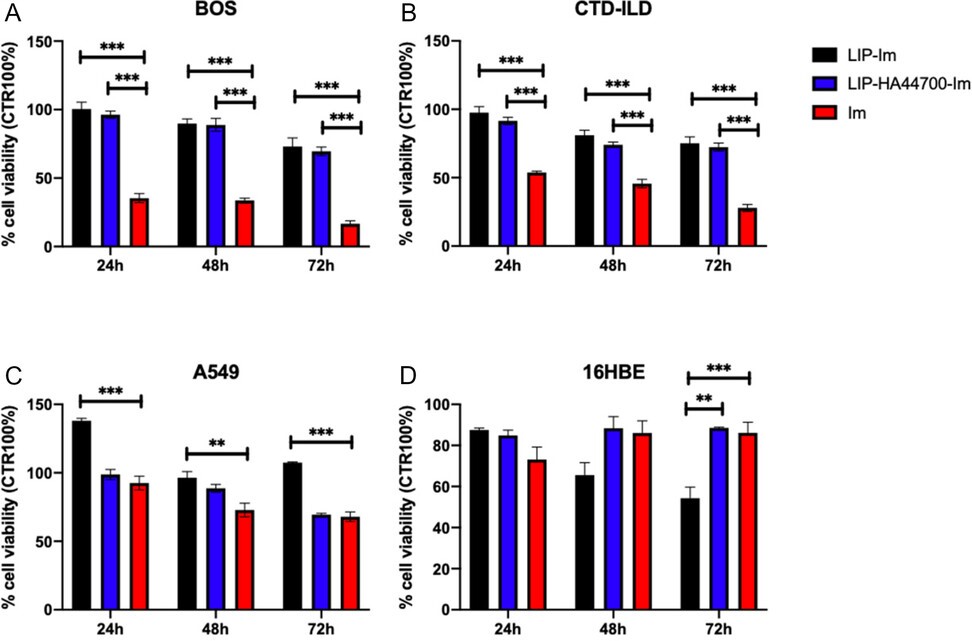 Fig. 2 Cell-viability assay. 1
Efficacy in Preclinical Fibrosis Models
The therapeutic potential was validated in a bleomycin-induced mouse model of lung fibrosis. Intratracheal administration of the targeted liposomes resulted in a profound therapeutic effect, evidenced by reduced alveolar inflammation scores and minimized collagen deposition in histological analysis. Biochemical quantification further revealed a downregulation of TGF⁻β expression, validating that local, targeted delivery can effectively halt disease progression and reverse inflammatory-driven fibrogenesis.
 Fig. 3 Macrophage cytotoxicity was also assessed using an LDH-release assay. 1
Ready to elevate your drug delivery research? Whether you need expert consultation on HA-conjugation strategies or full-service formulation development for fibrotic disease treatments, our team is here to help. Contact Creative Biolabs Today to discuss your project requirements and discover how our expertise can drive your success.
Related Services & Products
At Creative Biolabs, we understand that developing a targeted liposomal formulation requires precise engineering. We offer specialized services to assist you in designing HA-decorated carriers, ensuring optimal ligand density, drug encapsulation, and stability suitable for inhalation. Our team integrates seamlessly with your R&D process to accelerate your timeline.
Resources
Reference
-
Bozzini, Sara, et al. "Hyaluronic Acid‐Decorated Liposomes for the Intrapulmonary Delivery of Imatinib: A Targeted Treatment for Postinflammatory Pulmonary Fibrosis." Small Science (2025): 2500144. https://doi.org/10.1002/smsc.202500144. Distributed under Open Access license CC BY 4.0, without modification.

For Research Use Only. Not For Clinical Use