LUV Membrane Permeabilization Study
Introduction Research Insights Products & Services Resources
The ability to accurately detect membrane permeabilization is a cornerstone of modern pharmacology, influencing everything from antibiotic efficacy to neurotoxicity profiles. However, traditional bulk assays often miss critical single-event data, delaying the optimization of promising therapeutics. This page explores cutting-edge methodologies in high-throughput screening using Large Unilamellar Vesicles (LUVs). Creative Biolabs leverages decades of experience in lipid-based drug delivery to provide the specialized analytical services required to implement these advanced screening techniques for your drug development pipeline.
The Challenge & Solution
Cell membrane disruption is a complex biological phenomenon associated with numerous severe diseases and underlies the activity of various antimicrobial agents. Investigating these interactions is often hindered by the limitations of current screening technologies, which lack the sensitivity to detect rare permeabilization events critical for understanding toxicity and efficacy. Lipid-based drug delivery systems offer a versatile platform to model these interactions, yet characterizing them requires precision beyond standard capabilities. Creative Biolabs provides the bridge between these challenges and successful research, offering robust solutions to validate your research ideas in membrane permeabilization and lipid-based applications.
Large Unilamellar Vesicles as Model Systems
LUVs are widely regarded as the gold standard for mimicking biological membranes in vitro. Their size (typically 100-1000 nm) and single lipid bilayer structure allow them to replicate the curvature and physical properties of actual cell membranes more accurately than smaller vesicles. This makes them indispensable for:
-
Antimicrobial Peptide Screening: mimicking bacterial membranes to test efficacy.
-
Neurodegenerative Research: modeling how aggregated proteins disrupt neuronal membranes.
-
Drug Carrier Stability: assessing how lipid nanoparticles retain payload under stress.
The Limitations of Bulk Spectroscopy
Standard fluorescence assays rely on "bulk" measurements, where the signal is averaged across millions of vesicles. These averaging masks heterogeneity. If 10% of vesicles leak 100% of their content, a bulk assay might read this identically to 100% of vesicles leaking 10% of content. Critical toxicity signals or sub-optimal drug formulations are missed early in development.
The Shift to Microfluidics
Integrating microfluidics with confocal microscopy allows for "flow-through" analysis. Instead of immobilizing vesicles (which is slow and can induce artifacts), vesicles flow past a detector rapidly. This increases throughput and allows for the statistical analysis of individual vesicle behaviors, providing a granular view of membrane integrity.
Breakthrough Insights: Redefining Sensitivity & Throughput
Recent advancements in single-molecule confocal microscopy have established new benchmarks for sensitivity and speed in membrane studies. By moving away from bulk averages, researchers can now access high-fidelity data that reveals the true interaction between drugs and lipid bilayers. Below are key experimental insights relevant to modern drug discovery.
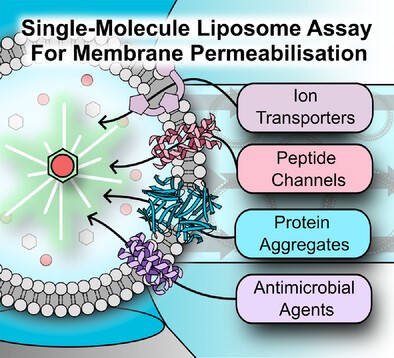 Fig. 1 A Single-Molecule Liposome Assay for Membrane Permeabilization. 1
Ultra-High Sensitivity Detection Limits
Using Calcein-encapsulated LUVs, this study achieved a detection limit of 135 pM, sensing as few as eight ionomycin molecules per vesicle. This single-molecule sensitivity allows for the quantification of rare, "silent" permeabilization events, enabling the identification of high-potency toxicity at physiologically relevant nanomolar concentrations.
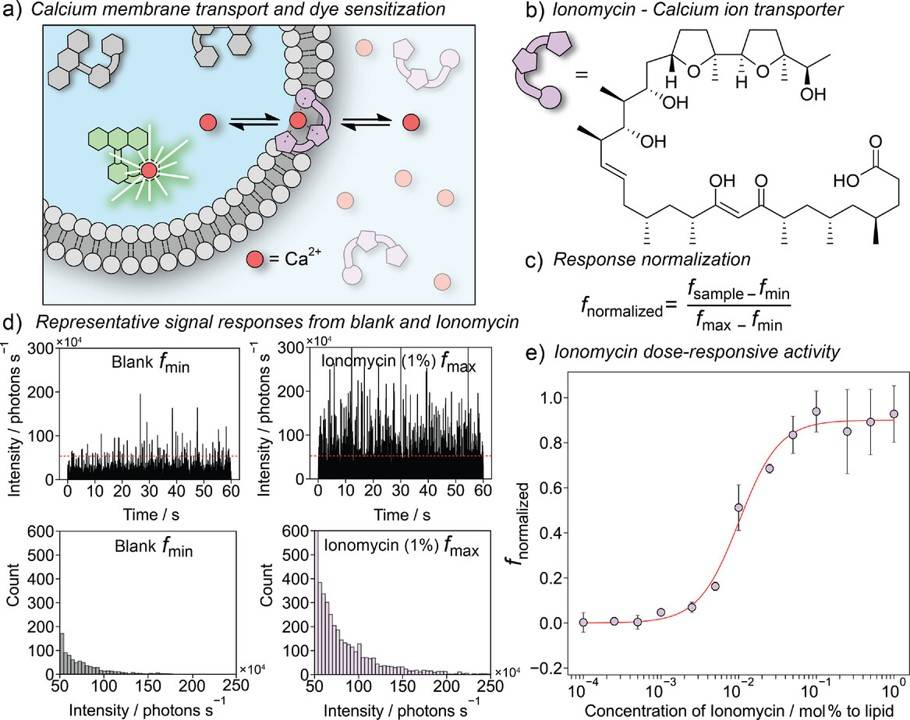 Fig. 2 Transmembrane permeabilization of Ca2+ facilitated by ionomycin. 1
High-Throughput Fast-Flow Microfluidics
By integrating fast-flow microfluidics, the system achieved detection rates of 1,000 vesicles per minute, vastly outperforming immobilized methods. Hydrodynamic focusing preserved native vesicle sphericity without surface attachment, transforming single-molecule microscopy into a high-throughput screening tool for large peptide or lipid nanoparticle libraries.
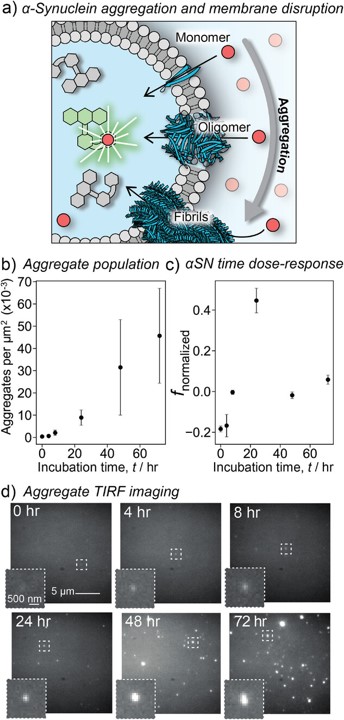 Fig. 3 The effects of Parkinson's disease-related oligomers. 1
Ready to elevate your research capabilities? Contact our expert team today to discuss how we can support your specific project needs in High-Throughput LUV Membrane Permeabilization and lipid-based drug delivery. Whether you need custom assay design or scalable formulation strategies, Creative Biolabs is your partner in innovation.
Related Services & Products
Creative Biolabs offers specialized services designed to support your research in High-Throughput LUV Membrane Permeabilization, Lipid-based drug delivery systems, and Cell membrane disruption applications. We bridge the gap between academic theory and industrial application, ensuring your lipid-based carriers are characterized with the highest precision.
Resources
Reference
-
Bąk, Krzysztof M., et al. "A Single‐Molecule Liposome Assay for Membrane Permeabilization." Angewandte Chemie 137.26 (2025): e202503678. https://doi.org/10.1002/anie.202503678. Distributed under Open Access license CC BY 4.0, without modification.

For Research Use Only. Not For Clinical Use