Targeting APC with Liposome-Neoantigen Vaccine
Introduction Research Insights Products & Services Resources
The landscape of cancer immunotherapy is rapidly evolving, moving beyond simple antigen delivery to sophisticated, targeted immune activation. While neoantigen peptide vaccines hold immense potential, their clinical success is often limited by the inability to effectively reach and activate Antigen-Presenting Cells (APCs) in distinct physiological sites. Bridging the gap between potent biological concepts and functional therapeutics requires precision engineering. Creative Biolabs leverages decades of experience in lipid-based drug delivery systems to transform these complex biological challenges into streamlined, robust therapeutic solutions, ensuring your innovations achieve their full clinical potential.
The Immunotherapy Landscape
Achieving effective anti-tumor immunity is a multi-front battle, requiring robust immune responses in both the spleen, to prime T cells, and the tumor microenvironment (TME), to sustain the attack. However, delivering neoantigen peptide vaccines to APCs at these disparate sites remains a formidable challenge due to rapid clearance and the immunosuppressive nature of the TME. Advanced lipid-based drug delivery systems offer a promising solution by protecting the payload and facilitating targeted cellular uptake.
The Crucial Role of APCs in Spleen and Tumor
APCs, particularly Dendritic Cells (DCs), are the orchestrators of the immune response.
-
In the Spleen: APCs are responsible for the initial priming of naïve T cells. Successful antigen presentation here generates a systemic pool of tumor-specific cytotoxic T lymphocytes (CTLs).
-
In the Tumor Microenvironment (TME): The TME is often "cold" or immunosuppressive. Re-activating APCs within the tumor is critical to recruiting effector T cells and maintaining their cytotoxicity against cancer cells.
Barriers to Peptide Vaccine Delivery
Despite their specificity, free peptide vaccines face significant hurdles:
-
Rapid Clearance: Small peptides are quickly filtered out by the kidneys or degraded by serum proteases.
-
Poor Membrane Permeability: Peptides struggle to cross cell membranes to enter the cytoplasm for antigen processing.
-
Off-Target Effects: Without a carrier, peptides rarely accumulate in the lymphoid organs or solid tumors where they are needed most.
Lipid-Based Systems as Delivery Vectors
Lipid nanoparticles (LNPs) and liposomes have emerged as the gold standard for vaccine delivery.
-
Protection: They shield the cargo from degradation.
-
Tunability: Surface charge (e.g., cationic lipids) and size can be optimized to enhance interaction with APCs.
-
Adjuvant Co-delivery: They allow for the simultaneous delivery of antigens and adjuvants (like TLR agonists) in the same particle, ensuring that the cell taking up the antigen also receives the activation signal.
Dual-Targeting APCs for Superior Immunotherapy Outcomes
Recent advancements in cationic liposomal formulations have demonstrated the capability to target APCs effectively at both the spleen and the tumor site without the need for complex ligand modifications. By co-delivering tumor-specific neoantigens with cholesterol-coupled Toll-like receptor 9 (TLR9) agonists, researchers are achieving unprecedented immune activation.
Exponential Uptake: Achieving a 60-Fold Increase in Dendritic Cell Engagement
Studies utilizing flow cytometry have quantified the dramatic impact of lipid carrier optimization. The data reveals an approximate 60-fold increase in dendritic cell uptake compared to simple neoantigen-adjuvant mixtures. This massive increase in internalization is crucial for ensuring sufficient antigen presentation, effectively overcoming the first major barrier in peptide vaccine efficacy.
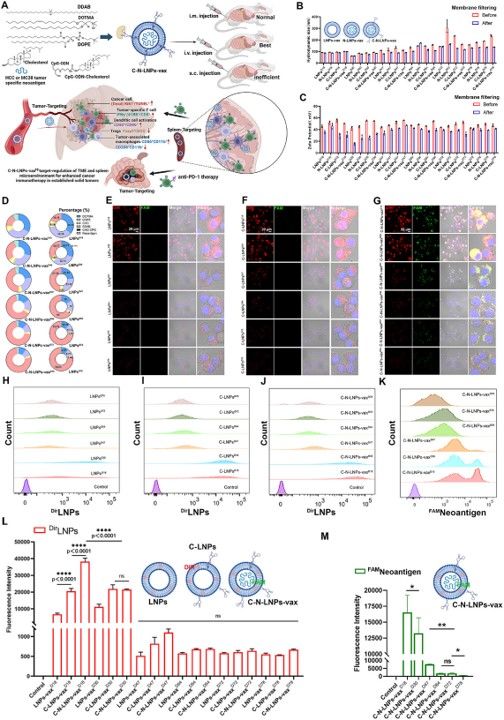 Fig. 1 Schematic illustration of the preparation of the LNPs-neoantigen vaccine. 1
Dual-Site Precision: Simultaneous Targeting of Spleen and Tumor for Systemic Immunity
Biodistribution analysis using fluorescence imaging highlights a critical advantage of this formulation: unlike traditional vectors that primarily accumulate in the liver, these optimized cationic liposomes show significant and simultaneous accumulation in both the spleen and the tumor. This dual-targeting capability allows for a coordinated immune attack, simultaneously priming new T cells in the spleen and reactivating exhausted T cells within the tumor.
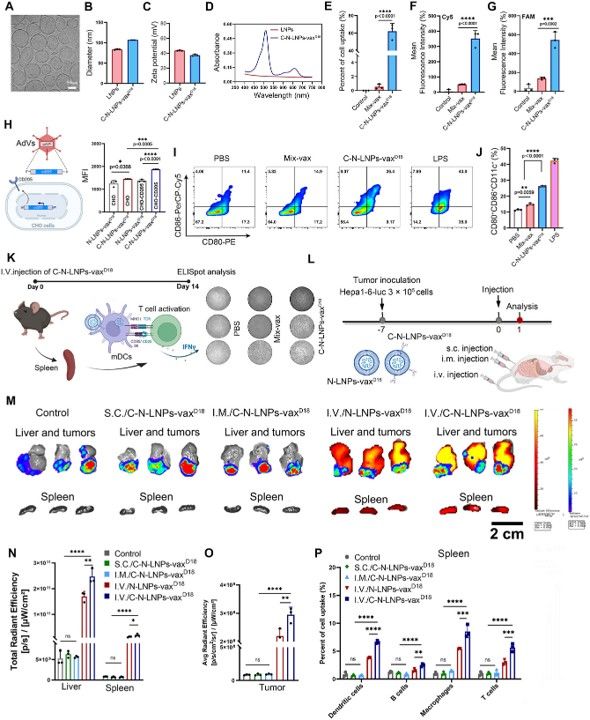 Fig. 2 Characteristics of C-N-LNPs-vaxD18 in vitro and in vivo. 1
Microenvironment Reprogramming: Converting Immunosuppressive "Cold" Tumors to "Hot"
Beyond simple delivery, the formulation actively remodels the immune landscape of the tumor. Analysis of immune cell populations shows a marked increase in M1-type tumor-associated macrophages (pro-inflammatory) alongside elevated intratumoral cytokine levels (IFN-γ, IL-12). This effective reprogramming turns a "cold," immunosuppressive tumor microenvironment into a "hot" one, favorable for immune rejection.
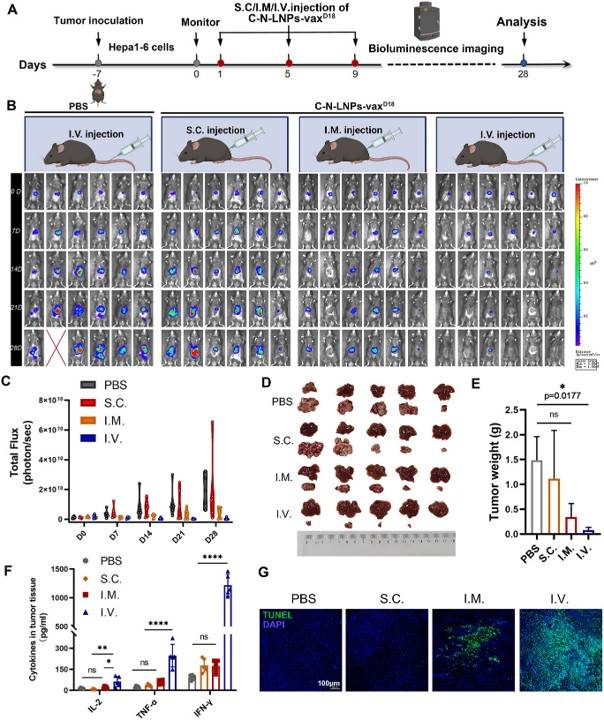 Fig. 3 I.V. Injection of C-N-LNPs-vaxD18 Induces IFN-γ-Producing CD8+ T Cells. 1
Therapeutic Breakthrough: Significant Tumor Inhibition and Extended Survival Outcomes
The physiological changes induced by the vaccine translate directly to clinical success in orthotopic cancer models. The reshaping of the microenvironment leads to enhanced infiltration of IFN-γ-producing CD8+ T cells, resulting in significant inhibition of established tumor growth. Kaplan-Meier survival plots confirm a clear survival benefit, validating the efficacy of this dual-targeting strategy in treating aggressive cancers like hepatocellular carcinoma and colorectal cancer.
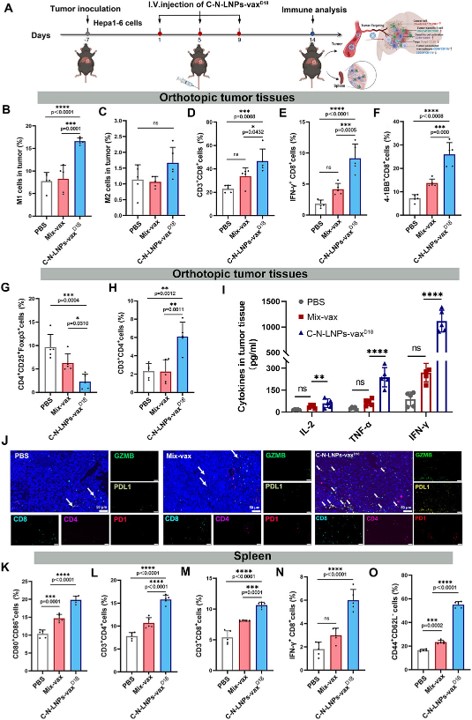 Fig. 4 I.V. Injection of C-N-LNPs-vaxD18 Modulates the Spleen and TME. 1
Creative Biolabs stands ready to be your strategic partner. Whether you need to optimize cationic lipid ratios for exponential APC uptake, require rigorous biodistribution studies to validate spleen and tumor accumulation, or need assistance in remodeling the TME for optimal efficacy, our veteran scientific team brings over 20 years of expertise to your project.
Related Services & Products
Creative Biolabs offers specialized services designed to accelerate your lipid-based drug delivery projects. Whether you are focusing on targeting APCs, optimizing liposome stability, or validating immune responses in the spleen and tumor microenvironment, our expert team is ready to support your specific needs in neoantigen vaccine development.
Resources
Reference
-
Xu, Yu, et al. "Targeting Antigen‐Presenting Cells to Enhance the Tumor‐Spleen Immunity Cycle through Liposome‐Neoantigen Vaccine." Advanced Science 12.19 (2025): 2500021. https://doi.org/10.1002/advs.202500021. Distributed under Open Access license CC BY 4.0, without modification.

For Research Use Only. Not For Clinical Use