


Glycosphingolipid Profiling Analysis Service by LC-MS/MS
Research-Grade Glycosphingolipid Profiling for Complex Biological Matrices
Glycosphingolipids (GSLs) are membrane-associated glycoconjugates composed of a ceramide backbone and a carbohydrate headgroup. Their structural diversity is linked to cell recognition, signaling, immune regulation, and disease-related lipid remodeling. Creative Biolabs provides research-use glycosphingolipid profiling analysis by LC-MS/MS through our glycolipid analysis platform, helping researchers compare GSL species across biological matrices.
Core Advantages
- Targeted or discovery-oriented detection across selected glycosphingolipid classes.
- Matrix-adapted extraction, cleanup, and enrichment strategies to reduce phospholipid-driven ion suppression.
- LC-MS/MS-based lipidomics with transparent annotation levels and quality-control metrics.
Analytical Challenges In Sphingolipid Profiling
Glycosphingolipid analysis is technically demanding because variation in the carbohydrate headgroup, sphingoid base, fatty acyl chain, and linkage or branching pattern can generate many closely related species. Co-eluting isomers and overlapping fragment ions can limit confident structural assignment unless the method is carefully designed and supported by standards or orthogonal evidence when available.
In complex matrices, low-abundance GSLs may also be affected by ion suppression from abundant phospholipids and other lipid classes. Our custom glycosphingolipidomics service addresses these challenges through project-specific extraction, fractionation or cleanup, LC separation, MS/MS acquisition, and data review strategies designed to improve detection reliability without overstating structural certainty.
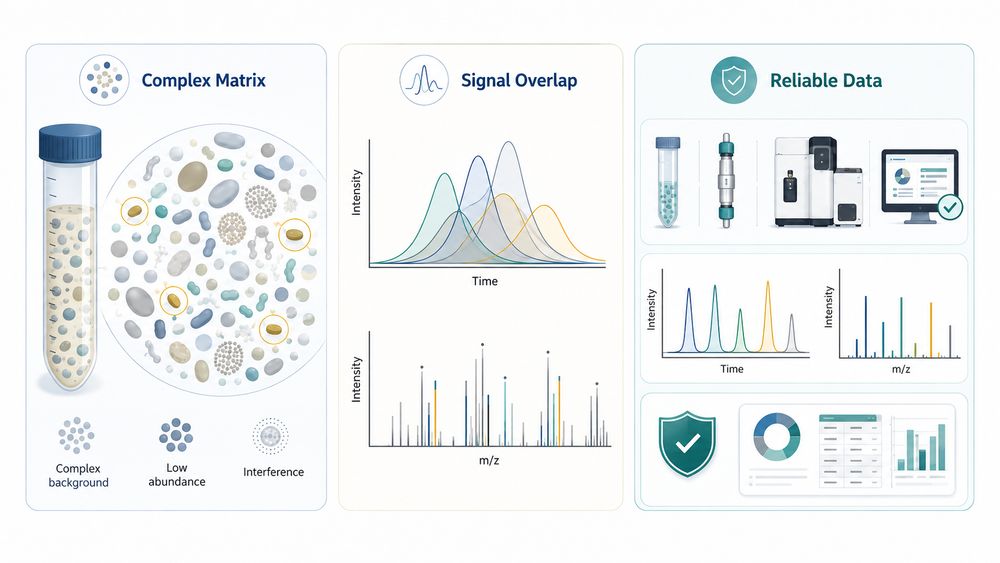
Fig.1 Analytical challenges posed by intact glycosphingolipid structural diversity and the reliable LC-MS/MS detection workflow.
Targeted And Untargeted Glycosphingolipid Profiling Services
Our LC-MS/MS glycosphingolipid profiling service can be configured around discovery, comparison, or targeted quantification objectives. The final method scope is selected according to sample type, expected GSL classes, available standards, and the level of structural detail required.
Untargeted Lipidomics
For broad discovery initiatives, untargeted or semi-targeted lipidomics can reveal detectable GSL features that differ across biological conditions. This approach is useful for identifying candidate lipidomic shifts, followed by targeted confirmation where standards and project design permit.
Custom Glycosphingolipidomics Profiling For Biomarker Discovery
We use LC-MS/MS-based strategies to profile detectable glycosphingolipid species within the agreed analytical scope. This supports research-use biomarker discovery by capturing candidate changes in glycan headgroups and ceramide backbones while clearly distinguishing confirmed identifications from putative annotations.
Targeted Lipidomics
Targeted lipidomics provides higher sensitivity and precision for predefined GSL targets when suitable reference materials, internal standards, or validated transitions are available. This approach is appropriate for measuring selected low-abundance species in complex matrices.
Class-Wide Glycosphingolipid Quantification By LC-MS/MS
We support class-focused or target-list glycosphingolipid quantification by LC-MS/MS using appropriate internal standards whenever available. Depending on standard coverage, results may be reported as relative abundance, normalized response, or absolute concentration for validated targets, supporting longitudinal and research-use biomarker studies.
Advanced Platforms And Methods For GSL Profiling
Successful GSL lipidomics relies on suitable sample preparation, chromatographic separation, MS/MS acquisition, and careful data interpretation. We tailor the workflow to separate target classes from complex biological backgrounds while documenting method assumptions and analytical limitations.
LC-MS/MS Technical Expertise
Achieving useful glycosphingolipid LC-MS/MS profiling requires careful control of sample handling, LC separation, ionization, fragmentation, and data annotation. We tune the workflow to balance sensitivity, coverage, and structural information for targeted and discovery-oriented GSL studies.
Chromatographic Resolution
We can apply HILIC, reversed-phase, or other fit-for-purpose LC strategies to improve separation of GSL classes, ceramide variants, and some isomeric species. Complete isomer resolution may require reference standards or orthogonal techniques, and this limitation is documented in the report.
Optimized Ionization
Electrospray ionization (ESI) conditions are tuned to improve precursor ion response and maintain informative fragmentation behavior for GSL analysis. Ionization settings are selected according to matrix, target class, and acquisition mode.
Strategic MS/MS Fragmentation
By applying controlled collision energies such as CID or HCD, we generate product ions that support assignment of the ceramide composition and glycan-related fragments. Full glycan sequence or linkage confirmation is reported only when the available evidence supports it.
Flexible Acquisition Modes
Our platforms support DDA or DIA-style discovery workflows and targeted monitoring modes such as MRM/PRM, depending on the instrument configuration and project goals. This flexibility allows broad screening or sensitive measurement of predefined GSL targets.
Glycosphingolipid LC-MS/MS Profiling Workflow
The recommended glycosphingolipid LC-MS/MS profiling workflow is designed to protect analytical quality at each stage, from sample receipt and lipid extraction to LC-MS/MS analysis and final interpretation. Method details can be customized for complex matrices or for projects focused on a specific GSL subclass.
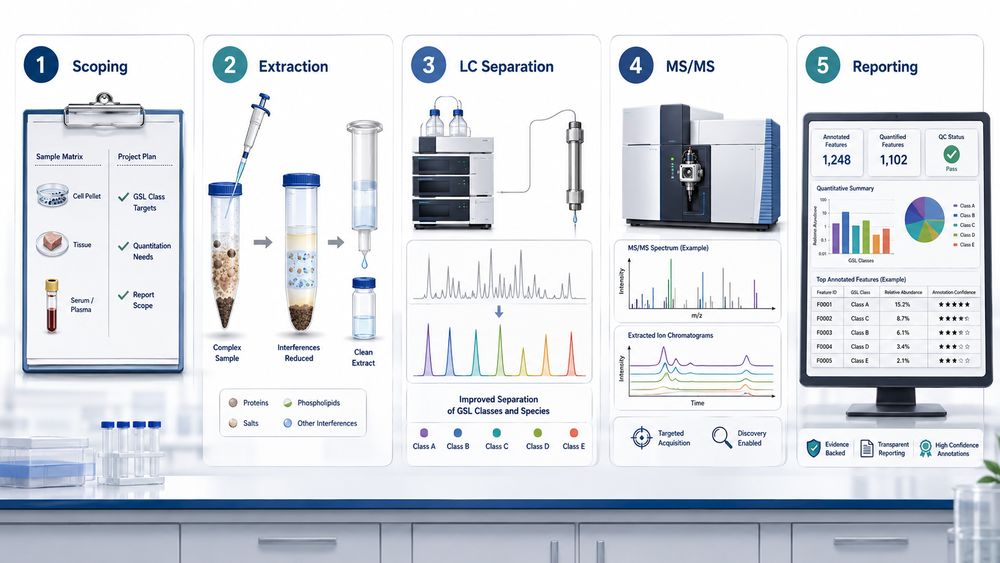
Fig.2 Glycosphingolipid LC-MS/MS profiling workflow overview.
Scoping
Define sample matrix, specific GSL class targets, quantitative needs, and reporting depth.
Extraction
Perform lipid extraction and, when needed, apply cleanup or enrichment steps to reduce interference from bulk lipid classes.
Chromatography
Use fit-for-purpose LC separation, such as HILIC or reversed-phase LC, to improve class separation and distinguish selected isomeric species where feasible.
MS/MS Analysis
Acquire LC-MS/MS data using discovery or targeted acquisition modes with optimized ESI conditions.
Reporting
Deliver annotated feature or target tables, MS/MS evidence, quantitative summaries, QC information, and annotation-confidence notes.
Sample Types We Can Support
Our lipidomics profiling platform can accommodate common research sample types after feasibility review. Extraction and normalization strategies are tailored to the physical properties, lipid content, and expected GSL abundance of the submitted materials.

Compatible Sample Matrices
- Cultured cells, including mammalian cell lines and primary cell preparations.
- Solid tissues requiring appropriate homogenization and lipid extraction.
- Research-use plasma, serum, or other biofluids for circulating lipid biomarker studies.
- Specialized biological fluids or extracts after matrix-compatibility evaluation.
- Artificial membrane models or engineered lipid systems, where the formulation is compatible with the LC-MS/MS method.
Project Deliverables And Data Outputs
Clear, traceable data is central to our glycosphingolipid analysis support. We provide documentation that helps your team review the analytical evidence, compare study groups, and plan downstream validation.
Comprehensive Data Packages
- Annotated GSL feature or species lists with reported confidence levels.
- Relative abundance, normalized response, or absolute quantification for validated targets, depending on standard availability and method design.
- MS/MS spectra and key fragment evidence supporting structural annotation confidence.
- Project reports covering sample preparation, LC-MS/MS parameters, QC summaries, mass accuracy, retention behavior, and annotation criteria.

Ready To Enhance Your Lipidomics Profiling Research?
Whether your project requires targeted measurement or broader discovery, our custom glycosphingolipidomics service provides research-use analytical support with transparent method scope and data interpretation. Submit your inquiry to discuss sample type, target classes, and reporting needs with our specialists.
Published Data Supporting Glycosphingolipid LC-MS/MS Profiling
Recent open-access research demonstrates how LC-MS-based glycosphingolipidomics can expand the detectable coverage of GSL species in complex biological samples. These published data support the use of optimized extraction, chromatographic separation, MS/MS acquisition, and confidence-based annotation for research-focused glycosphingolipid profiling.
Research Evidence
Vo et al. reported a multidimensional glycosphingolipidomics workflow that combined GSL extraction and fractionation with reversed-phase LC, trapped ion mobility separation, high-resolution MS/MS acquisition, and semi-quantitative data analysis for human serum GSL profiling. In this study, the following Figure 3 illustrates the identified human serum glycosphingolipidome, including neutral GSLs, sialylated GSLs, and sulfatides, and shows how orthogonal analytical dimensions such as retention time, mass-to-charge ratio, and collisional cross section can help organize structurally diverse GSL species.
- Supports the value of optimized extraction and fractionation for improving GSL coverage in complex serum samples.
- Highlights how LC separation, MS/MS data, and additional analytical dimensions can improve class-level organization and annotation confidence.
- Reinforces the need to report GSL profiling results with clear annotation levels and quantitative boundaries, especially when authentic standards or complete isomer-resolving evidence are limited.
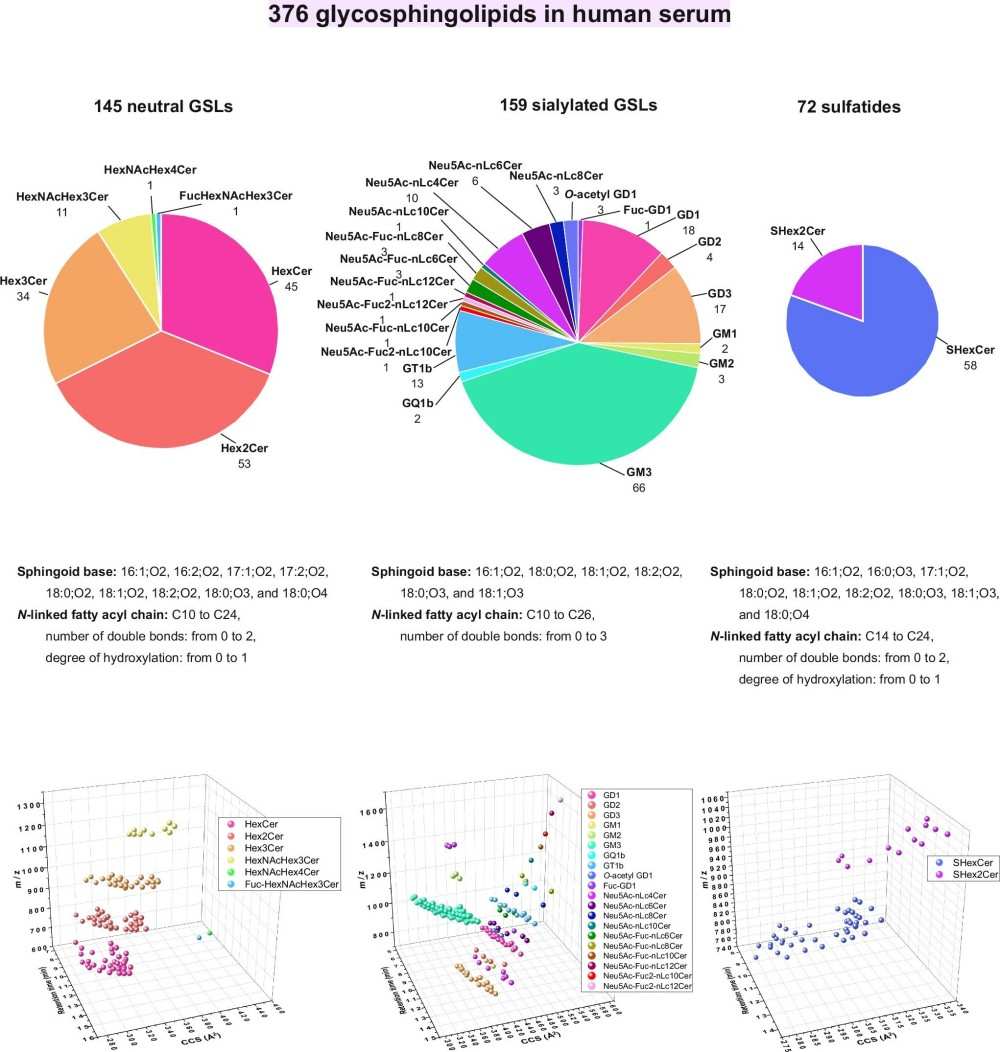
Fig.3 Human serum glycosphingolipidome profiling showing neutral GSLs, sialylated GSLs, and sulfatides in a multidimensional LC-MS-based workflow.1
Customer Review
Recommended Products
Discover related research-use products that can support complementary glycan, glycolipid, and immunodetection workflows.
Carbohydrate Antigen Products
A research-use collection of carbohydrate antigens suitable for assay development, binding studies, and analytical-control planning in glycan-focused research.
Learn MoreMonoclonal Antibody Products
Designed for glycoepitope recognition, these monoclonal antibody products support complementary screening workflows, research assay modeling, and interaction studies.
Learn MorePolyclonal Antibody Products
These polyclonal antibody products offer broad epitope recognition and flexible signal generation for specialized research-use immunodetection workflows.
Learn More