


Globo- and Isoglobo-Series of Glycosphingolipids Analysis Service
LC-MS/MS and IMS Strategies for Globo- and Isoglobo-Series Profiling
Creative Biolabs provides research-use globo- and isoglobo-series glycosphingolipids analysis for investigators who need reliable profiling, linkage-aware annotation, and quantitative support for neutral GSLs such as Gb3 and Gb4. As part of our glycolipid analysis capabilities, this service is designed for projects in cell recognition, immune response, tumor biology, and membrane glycan remodeling, where conventional LC-MS alone may not fully resolve closely related GSL isomers.
Service Focus
- Targeted and semi-targeted profiling of neutral glycosphingolipids in cells, tissues, serum, plasma, and enriched lipid fractions.
- Optimized separation and fragmentation logic for isomeric overlap, including Gb3 versus iGb3 and related linkage variants.
- Custom method design for exploratory biomarker research, pathway studies, and comparative GSL lipidomics.
Background of Globo- and Isoglobo-Series Glycosphingolipids Analysis
Globo- and isoglobo-series GSLs are neutral glycosphingolipids with closely related glycan headgroups attached to ceramide backbones. Their biological relevance is high because small changes in terminal sugar composition, glycosidic linkage, or ceramide composition can alter membrane organization, cell-surface recognition, immune interactions, and tumor-associated glycolipid patterns. In practice, these molecules are analytically demanding because they combine a hydrophilic glycan headgroup with a hydrophobic ceramide region, while many species share identical nominal mass and highly similar chromatographic behavior.
The central pain point is linkage-specific differentiation. Gb3 and iGb3, for example, differ in the linkage of terminal galactose, alpha1-4 versus alpha1-3, yet their precursor mass can be identical. A generic LC-MS run may detect a signal, but it may not provide enough confidence to distinguish biologically meaningful isomers. Our globo- and isoglobo-series analysis service addresses this limitation through optimized extraction, multidimensional separation, LC-MS/MS acquisition, ion mobility spectrometry, and diagnostic fragmentation review.
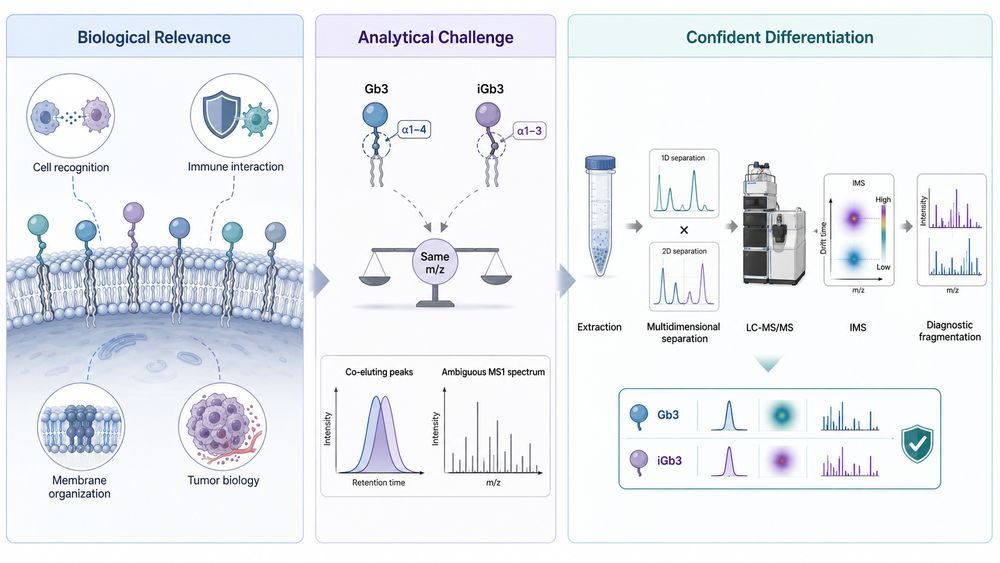
Fig.1 Background of globo and isoglobo glycosphingolipids analysis.
Analytical Challenges and Platform Response for Globo-Series Analysis
We separates the research challenge from the analytical response so investigators can quickly judge whether the platform fits their sample type, target list, and confidence requirements.
Isomeric Overlap
Gb3 and iGb3 may share the same mass, making linkage assignment difficult without orthogonal evidence.
Low-Abundance Signals
Neutral GSLs can be present at low levels in complex matrices and may require enrichment or pilot optimization.
Ceramide Heterogeneity
Different fatty acyl chains and sphingoid bases increase the number of molecular species to annotate.
Matrix Interference
Serum, plasma, tissues, and cell extracts contain lipids that can suppress ionization or complicate quantification.
Ion Mobility Separation
IMS adds a structural dimension that helps distinguish species with similar m/z and retention behavior.
Targeted LC-MS/MS
Optimized MRM or high-resolution MS/MS acquisition supports sensitive detection and confirmatory fragments.
Multidimensional LC
HILIC, reversed-phase LC, or tailored gradients can be selected according to sample complexity and target scope.
Custom Data Review
Annotation is reviewed using mass accuracy, retention behavior, MS/MS pattern, and project-specific standards when available.
Services We Provide for Globo- and Isoglobo-Series Profiling
Creative Biolabs supports standardized and custom globo-series analysis service programs. Depending on the project goal, we can focus on targeted globo-series quantification, exploratory lipidomics, linkage-specific differentiation, or method development for special sample matrices. When a study also requires ganglio series glycosphingolipids analysis, ganglio series LC-MS/MS, or custom ganglio series profiling service, related targets can be discussed during project scoping so the final panel remains scientifically coherent.
Analytical Platforms and Methods for Globo-Series LC-MS/MS
Our analytical strategy combines LC-MS/MS with ion mobility spectrometry to improve isomeric differentiation and annotation confidence. IMS separates ions according to gas-phase mobility, adding collision cross section-related information that can complement retention time and MS/MS spectra. For complex sample sets, HILIC, reversed-phase LC, or multidimensional separation can be incorporated to reduce co-elution and support cleaner quantification. This integrated strategy is particularly valuable when a project requires globo-series profiling, globo-series quantification, targeted ganglio series profiling service, or comparative GSL lipidomics service for research.
Structural Annotation
- Accurate mass and isotope pattern review
- MS/MS glycan and ceramide fragments
- Retention and mobility behavior comparison
Quantitative Support
- Targeted LC-MS/MS acquisition
- Peak area tables and normalization
- Relative or absolute strategies when standards are available
Problem Solving
- Gb3 and iGb3 differentiation planning
- Low-abundance GSL optimization
- Cross-matrix method adaptation
Recommended Workflow for Globo- and Isoglobo-Series Analysis
Each project begins with sample context and target scope. We then define extraction, separation, acquisition, and reporting parameters before full-scale analysis. For low-abundance or unusual matrices, a pilot run is recommended to evaluate signal intensity, matrix effects, and feasibility of linkage-specific interpretation.
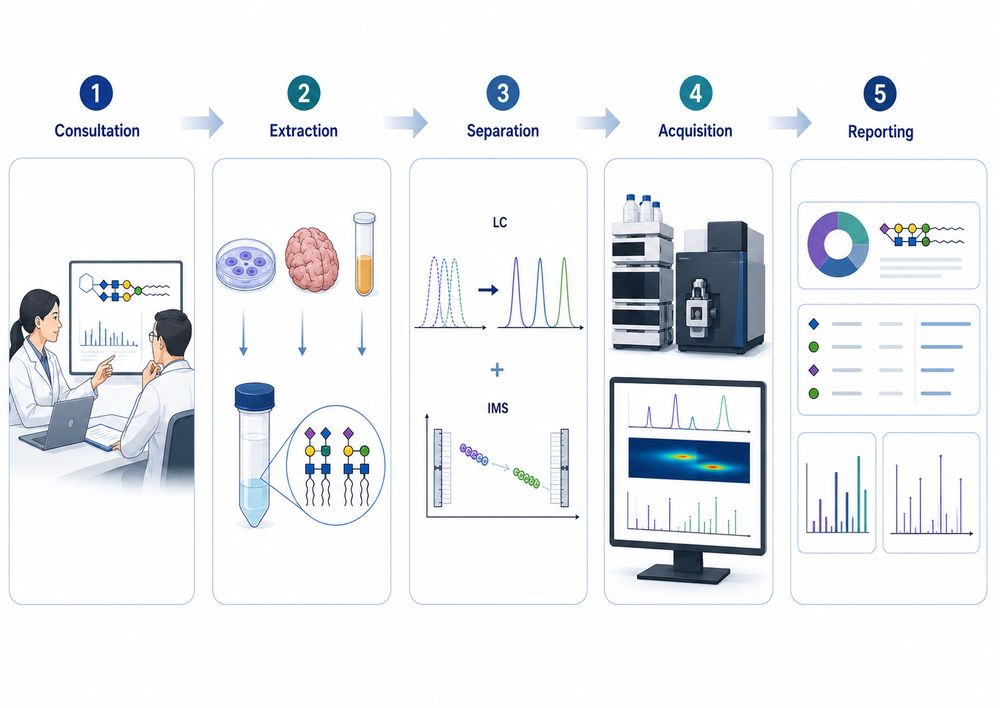
Fig.2 Globo- and isoglobo-series glycosphingolipids analysis workflow overview.
Consultation
Define target GSLs, matrix type, comparison groups, and reporting needs.
Extraction
Prepare lipid fractions with protocols adjusted for neutral GSL recovery.
Separation
Apply LC and optional IMS separation to reduce overlap and improve confidence.
Acquisition
Collect LC-MS/MS or LC-IMS-MS/MS data with target-aware parameters.
Reporting
Deliver annotated species, quantitative tables, spectra, and interpretation notes.
Sample Requirements for Globo- and Isoglobo-Series Quantification
We can support cells, tissues, serum, plasma, immune cell preparations, enriched lipid fractions, and selected natural product matrices. Final amount requirements depend on matrix complexity, expected abundance, target scope, and whether a pilot or full comparative study is planned.

Suggested Submission Information
- Sample type, species source, storage condition, and available sample amount.
- Target list, including Gb3, Gb4, iGb3, related globosides, or comparative ganglio series quantification service targets.
- Study design, group number, replicate number, and expected comparison strategy.
- Preferred output format, including targeted tables, spectra, IMS data, or broader lipidomics summary.
- Any known low-abundance concern, extraction limitation, or reference standard availability.
Deliverables and Data Outputs for Globo-Series Analysis
Deliverables are designed to help research teams evaluate GSL composition, compare biological groups, and plan follow-up experiments. Reports are prepared for scientific interpretation rather than clinical decision-making.
Typical Deliverables
- Annotated list of globosides, isoglobo-series species, and selected related GSLs.
- Quantitative or semi-quantitative tables with peak areas, normalized values, and comparison metrics.
- Representative MS/MS spectra, IMS data, and method notes for key assignments.
- Summary report covering sample preparation, platform settings, data quality, and interpretation guidance.

Why Choose Creative Biolabs for Globo- and Isoglobo-Series Analysis
Creative Biolabs designs each globo- and isoglobo-series project around the biological question, target list, and matrix constraints. Our strength lies in building an analytical route for extremely similar isomers rather than treating every GSL as a generic lipidomics feature. With LC-MS/MS, IMS-assisted separation, diagnostic fragmentation review, and custom reporting, we help research teams obtain more actionable data for cell-surface glycolipid changes, immune biology, tumor-associated GSL research, and custom ganglio series biomarker analysis when relevant to the same study design.
Need a Custom Globo- or Isoglobo-Series Profiling Plan?
Share your sample matrix, target GSLs, and study design with Creative Biolabs. Our team can recommend whether targeted LC-MS/MS, IMS-assisted differentiation, pilot testing, or a broader glycolipid panel is the most efficient route for your research objective.
Literature-Supported Confidence in Globo- and Isoglobo-Series Profiling
Recent glycosphingolipidomics research highlights why GSL analysis often requires more than precursor mass measurement alone. In a 2025 study, a 4D-RP-LC-TIMS-PASEF workflow integrated extraction and fractionation, reversed-phase LC separation, ion mobility-derived CCS information, and MS/MS spectra to expand glycosphingolipidome profiling in human serum. Although the study was not designed specifically for globo- and isoglobo-series differentiation, it provides relevant methodological evidence for addressing GSL structural heterogeneity, isomerism, and ceramide diversity in complex biological matrices.
Key Findings From the Published 4D Glycosphingolipidomics Study
The reported workflow is useful as a methodological reference for our globo- and isoglobo-series analysis strategy. The study shows that GSL annotation can benefit from combining multiple descriptors, including m/z, retention time, CCS, and MS/MS spectra. This is especially relevant for neutral GSL research because globo- and isoglobo-series species may differ by subtle structural features while sharing similar mass behavior. For Creative Biolabs service projects, these literature-supported principles inform careful method design, orthogonal separation planning, and conservative data interpretation rather than relying on a single analytical readout.
- RP-LC and ion mobility provide complementary separation dimensions for GSL structural heterogeneity.
- CCS, retention time, m/z, and MS/MS spectra can strengthen annotation confidence when used together.
- MS/MS fragmentation supports interpretation of both glycan-related features and ceramide composition, depending on ion mode and analyte class.
- For globo- and isoglobo-series projects, linkage-level claims should be supported by appropriate standards, separation behavior, and diagnostic spectral evidence when available.
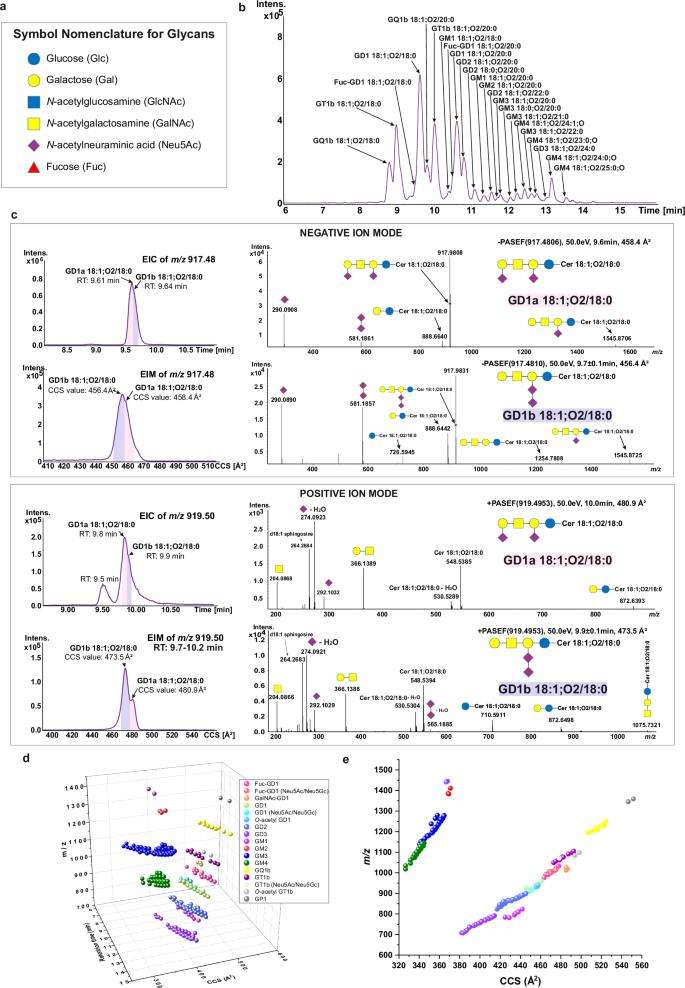
Fig.3 4D RP-LC TIMS-PASEF workflow for GSL profiling.1
Customer Review
Recommended Products
These related research-use products may support glycan-focused assay development, glycolipid recognition studies, and downstream validation after globo- or isoglobo-series profiling.
Carbohydrate Antigen Products
A research-use collection of carbohydrate antigens, including oligosaccharides, nucleosides, monosaccharides, neoglycolipids, and glycans, suitable for glycan-focused binding studies and assay development.
Learn MoreMonoclonal Antibody Products
Designed for precise glycoepitope recognition, these monoclonal antibody products support high-specificity glycan detection, cell-surface profiling, and related research workflows.
Learn MorePolyclonal Antibody Products
These polyclonal antibody products offer broad epitope recognition and flexible use in glycoantigen detection, immunoassays, and exploratory glycan research.
Learn More