


Lactosylceramides Analysis Service
LC-MS/MS-Based Lactosylceramide Profiling and Quantification
Creative Biolabs provides research-use lactosylceramides analysis services for profiling and quantifying LacCer molecular species in cells, tissues, serum, plasma, and lipid extracts. As part of our GSL analysis capabilities, this service helps researchers evaluate LacCer as a pathway node connecting glucosylceramide/HexCer metabolism with downstream neutral and acidic GSL branches, including globo-, ganglio-, lacto-, and neolacto-series structures.
Project Fit
- Standalone LacCer analysis for research screening or treatment comparison.
- Custom LacCer profiling with adjacent GlcCer/HexCer, Gb3, GA2, and ganglioside nodes.
- Pathway-context interpretation that avoids overstating enzyme activity or disease conclusions.
Why Lactosylceramide Is a Useful GSL Pathway Node
Lactosylceramide (LacCer; Galβ1-4Glcβ-Cer) is produced from glucosylceramide and provides a common precursor pool for multiple downstream glycosphingolipid families. In membrane biology, inflammation, differentiation, immune-cell activation, and sphingolipid metabolism studies, LacCer measurements can help place an observed lipid change into a broader pathway context.
Because LacCer lies between the GlcCer/HexCer node and higher-order GSLs, LacCer profiling can help researchers assess whether early glycosylceramide remodeling is accompanied by downstream GSL changes. LacCer abundance alone, however, should not be treated as a direct readout of one specific enzyme without appropriate substrates, products, controls, and complementary assays.
- LacCer connects early glycosylceramide metabolism with downstream neutral and sialylated GSL branches.
- LacCer analysis supports research comparisons involving treatments, genotypes, differentiation states, immune activation, or time courses.
- Species-level profiles help distinguish a focused LacCer shift from broader remodeling across related GSL classes.
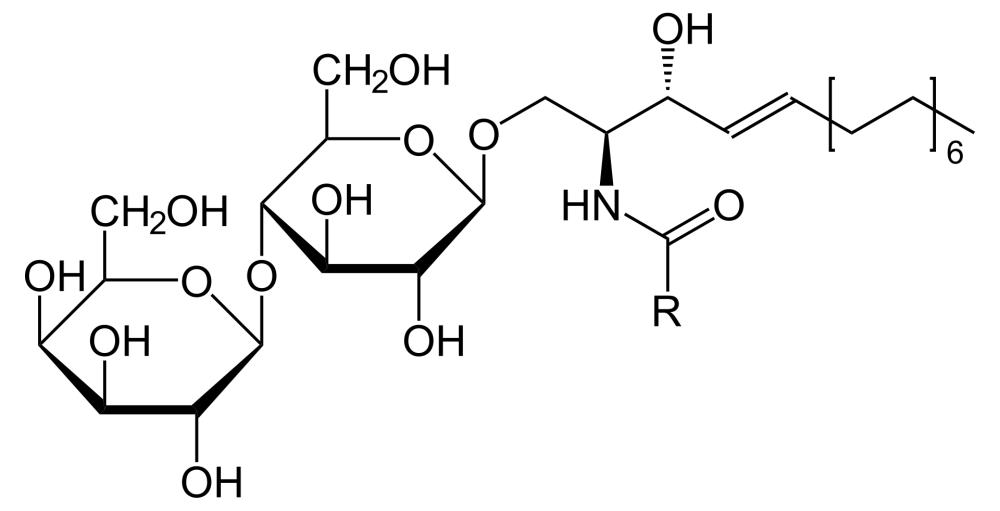
Fig.1 Lactosylceramide structure.
Analytical Challenges in Lactosylceramide Profiling and Solutions
Reliable lactosylceramide analysis must address low-abundance species, matrix effects, ceramide backbone heterogeneity, possible co-elution with related neutral GSLs, and limited availability of matched standards for every molecular species. These factors influence annotation confidence, quantification strategy, and cross-sample comparability.
Low Abundance
Minor LacCer species can be difficult to measure when sample input is limited or matrix background is high.
Isomer and Class Context
GlcCer/GalCer and related GSLs may need chromatographic separation or careful panel design for confident interpretation.
Backbone Diversity
Fatty acyl chain length, saturation, hydroxylation, and sphingoid-base variation can affect retention and signal response.
Interpretation Limits
A LacCer shift is best interpreted with study context, adjacent pathway nodes, and appropriate biological controls.
Targeted LC-MS/MS
MRM-based acquisition can support sensitive relative or standard-supported quantification of predefined LacCer species.
HRMS/MS Profiling
Accurate-mass and MS/MS-supported profiling can be considered for exploratory or annotation-focused projects.
Custom Separation
HILIC, RP-LC, or project-specific LC conditions can be selected according to class coverage and target-panel needs.
Pathway Context
GlcCer/HexCer, Gb3, Gb4, GA2, and ganglioside readouts can be added when broader GSL interpretation is needed.
Our Lactosylceramides Analysis Services
Creative Biolabs offers lactosylceramide identification and quantification service options for focused LacCer projects and pathway-integrated GSL studies. Each project can be configured by matrix type, sample number, target species, available standards, and preferred quantification mode.
What Problems Our LacCer Analysis Helps Researchers Solve
Researchers often need to know whether LacCer changes under treatment, genotype, differentiation, inflammatory stimulation, immune-cell activation, or metabolic-enzyme study conditions. LC-MS/MS-based LacCer analysis can help clarify whether the observed signal appears isolated, is linked to upstream GlcCer/HexCer changes, or is accompanied by downstream GSL remodeling.
Screening Readout
Use LacCer as an initial research readout before expanding into a larger glycolipid panel.
- Treatment comparison
- Cell membrane research
- Time-course studies
Pathway Interpretation
Connect LacCer shifts with upstream and downstream GSL species when a broader panel is included.
- GlcCer/HexCer remodeling
- Downstream conversion patterns
- Complex GSL remodeling
Enzyme Hypotheses
Generate pathway hypotheses that can guide follow-up enzyme or functional assays.
- Substrate/product patterns
- Comparative controls
- Complementary assay planning
Recommended Workflow for Lactosylceramides Analysis
Our lactosylceramide profiling workflow is structured for standalone LacCer quantification, targeted LacCer-centered panels, or broader multi-class LC-MS/MS analysis when pathway interpretation is needed.
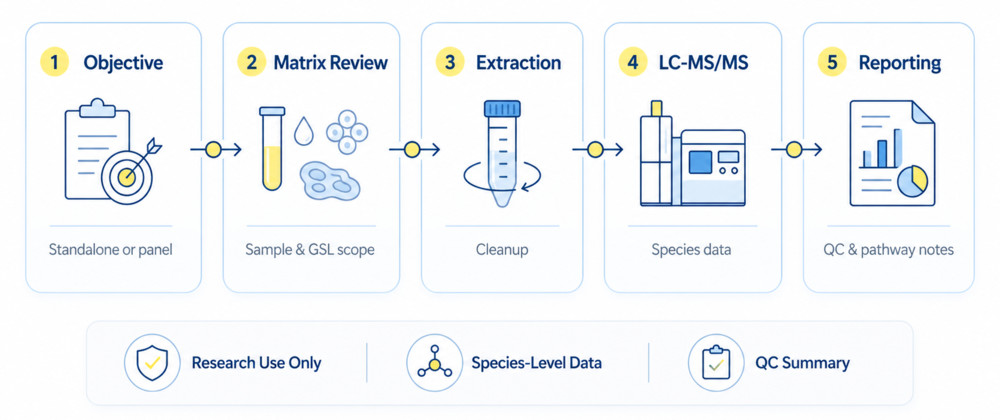
Fig.2 Lactosylceramide profiling workflow overview.
Objective
Define standalone LacCer analysis or a LacCer-centered GSL panel.
Matrix Review
Review matrix, sample amount, abundance expectations, and related GSL targets.
Extraction
Apply lipid extraction and cleanup procedures suitable for LacCer and selected GSL classes.
LC-MS/MS
Acquire targeted LC-MS/MS data or HRMS/MS-supported profiling data according to project scope.
Reporting
Deliver data tables, QC notes, method details, and a restrained pathway-context summary.
Sample Types We Can Support
Creative Biolabs supports research-use LacCer analysis for cultured cells, tissues, serum, plasma, lipid extracts, and enriched GSL fractions. Other biofluids or disease-model samples can be reviewed for feasibility based on matrix complexity, available amount, and target-panel design. For best planning, please share sample matrix, storage condition, target pathway, group design, and any existing upstream or downstream lipid data.
Sample Handling Notes
LacCer and related GSL measurements are sensitive to matrix effects, extraction efficiency, and storage history. We recommend consistent collection, rapid freezing when appropriate, avoidance of repeated freeze-thaw cycles, and matched handling across comparison groups.
- Cells, tissues, serum, plasma, lipid extracts, or enriched GSL fractions
- Feasibility review for other research matrices
- Matched handling across all groups whenever possible
Suggested Submission Information
- Sample matrix, storage condition, and available amount.
- Project objective and group comparison logic.
- Target LacCer species or broader GSL panel.
- Existing ceramide, GlcCer/HexCer, globoside, GA2, or ganglioside data.
- Preferred relative, standard-supported absolute, or screening-first analysis.
Deliverables and Data Outputs
Our deliverables are designed to support transparent data review and follow-on study planning. For pathway-focused projects, the report can include an upstream/downstream pattern summary while clearly separating measured results from biological hypotheses.
Typical Deliverables
- LacCer species abundance table and group comparison.
- Retention time, ion transition, and annotation-confidence notes where applicable.
- Internal-standard information and quantification approach.
- QC summary, matrix notes, and a technical report for research interpretation.
How Results Are Interpreted
We help clients read LacCer changes in the context of study design and related GSL nodes. The report can highlight patterns consistent with broader pathway remodeling, but it will not claim enzyme activity, diagnosis, or therapeutic effect without direct supporting assays.
- Measured data are separated from interpretation.
- Standard availability is stated for absolute quantification.
- Follow-up assays can be recommended when needed.
Start a Lactosylceramides Analysis Project
To begin a custom LacCer profiling service, please provide sample type, objective, sample number, target LacCer species, related GSLs, and preferred quantification mode. We will recommend a feasible analysis plan based on your research question and available material.
Published Data Supporting LacCer-Centered GSL Profiling
Published LC-MS/MS studies support the use of LacCer as one node within targeted GSL panels rather than as a standalone mechanistic conclusion. The open-access study cited below developed a multiplexed targeted LC-MS/MS method for serum gangliosides and glycosphingolipids, including GlcCer, LacCer, Gb3, GA2, and multiple ganglioside classes. This supports the analytical logic of placing LacCer next to adjacent pathway nodes in research-use panel design.
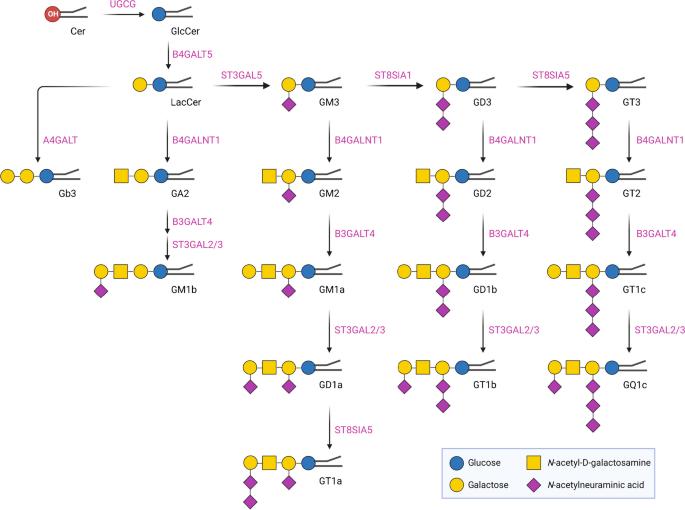
Fig.3 Glycosphingolipid pathway context for LacCer.1
Customer Review
Recommended Products
These research-use product categories may support glycan-focused assay development, method setup, and related glycoanalysis projects. Product suitability depends on the assay format, target glycoepitope, and intended research application.
Carbohydrate Antigen Products
Research-use carbohydrate antigens for glycan-focused assay design and analytical method support.
Learn MoreMonoclonal Antibody Products
Monoclonal antibody products for selected glycoepitope-recognition and detection research assays.
Learn MorePolyclonal Antibody Products
Polyclonal antibody products for selected glycoantigen detection and assay-support workflows.
Learn More