


Targeted Glycosphingolipid Quantification Analysis Service
Absolute Glycosphingolipid Quantification by LC-MS/MS and MRM Assay Design
Creative Biolabs provides targeted glycosphingolipid quantification analysis for research teams that need sensitive, reproducible, and interpretable GSL data from complex biological matrices. For broader glycolipid profiling needs, our glycolipid analysis services support upstream method planning, while this targeted glycosphingolipid quantification service focuses on LC-MS/MS quantification, multiple reaction monitoring (MRM) lipidomics, internal standard selection, calibration, and absolute quantification of selected GSL species.
Service Focus
- Targeted glycosphingolipid quantification by LC-MS/MS for predefined GSL species or custom targeted GSL panels.
- MRM assay development using triple quadrupole platforms for high-sensitivity lipid quantification.
- Absolute glycosphingolipid quantification with calibration curves, surrogate internal standards, and LOD/LOQ reporting.
Background of Targeted Glycosphingolipid Quantification
Glycosphingolipids are membrane-associated lipids with diverse glycan headgroups and ceramide backbones. Their biological interpretation often depends on small but meaningful differences among GSL classes, fatty acyl chain lengths, and isomeric or near-isomeric structures. In many studies, researchers do not need a broad untargeted survey alone. They need reliable lipid quantification for defined targets such as GM1, GM2, GM3, GD3, LacCer, GlcCer, Gb3, globosides, or gangliosides across matched sample sets.
Targeted glycosphingolipid quantification by LC-MS/MS is designed for this need. By combining chromatographic separation, optimized MRM transitions, appropriate internal standards, and calibration-based data processing, Creative Biolabs helps researchers monitor GSL abundance changes with higher confidence than broad profiling approaches that may lack compound-specific quantitative control.
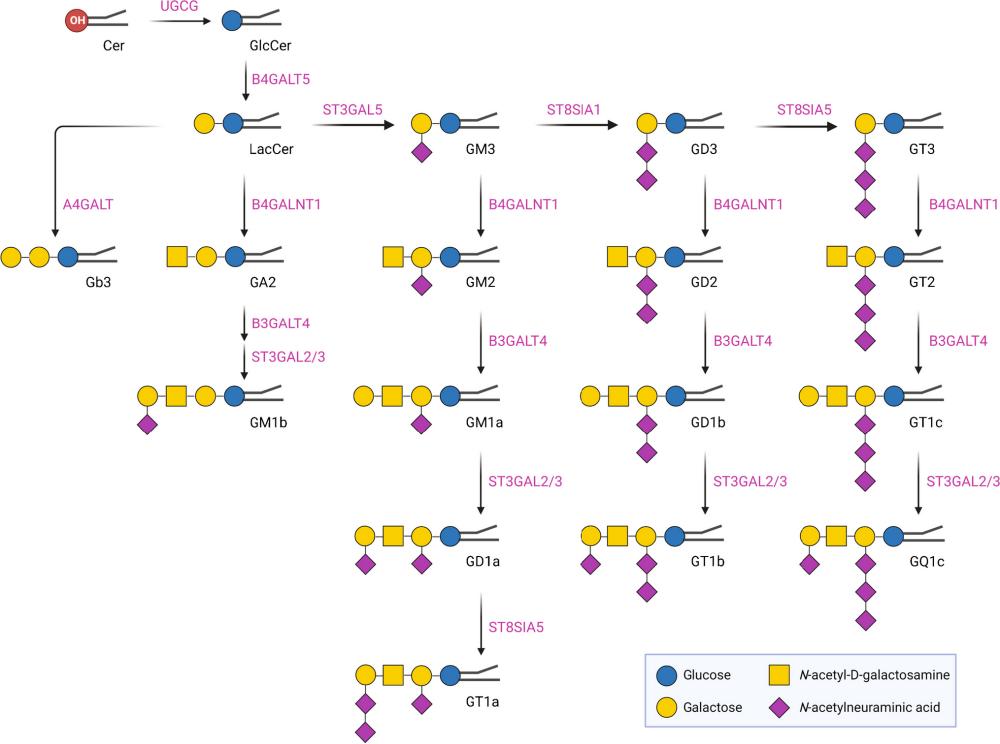
Fig.1 Ganglioside and glycosphingolipid classes targeted by multiplexed LC-MS/MS analysis.1
What Problems We Help Researchers Solve
Glycosphingolipid quantification is technically demanding because GSLs contain both glycan and lipid structural diversity. Closely related species may share fragment ions, ionization can vary by class, and suitable isotope-labeled standards are not always commercially available. These issues can make it difficult to compare target abundance across cell lines, serum cohorts, immune cell preparations, natural products, or mechanistic studies.
Low-Abundance Targets
Some GSL species occur at low levels and require sensitive LC-MS/MS quantification rather than broad signal detection.
Isomeric Complexity
Similar headgroups or ceramide compositions can require optimized chromatography and transition selection.
Internal Standard Gaps
Perfect isotope-labeled internal standards may not exist for every target in a custom panel.
Matrix Effects
Serum, cells, immune cells, and natural product extracts may differ in extraction efficiency and ion suppression.
MRM Sensitivity
Triple quadrupole MRM analysis improves sensitivity and quantitative consistency for predefined GSL targets.
Chromatographic Control
Method conditions are adjusted to support separation of selected GSL classes and structurally similar species.
Surrogate Standards
Scientifically matched surrogate internal standards are selected when ideal labeled standards are unavailable.
QC-Driven Reporting
Calibration curves, LOD/LOQ evaluation, and QC review support defensible lipid quantification.
Platforms and Methods for Glycosphingolipid MRM Analysis
Creative Biolabs uses triple quadrupole or equivalent QqQ-based LC-MS/MS platforms for MRM lipidomics. Method planning may include analyte selection, extraction optimization, chromatographic adjustment, precursor/product ion monitoring, retention time confirmation, calibration curve generation, and data normalization using internal standards or surrogate internal standards.
Workflow for Targeted Glycosphingolipid Quantification
Our targeted glycosphingolipid quantification workflow starts with target selection and matrix review, then moves into extraction, LC-MS/MS method configuration, MRM assay acquisition, calibration, QC assessment, and final data reporting. The workflow can be adapted for exploratory verification, focused lipid biomarker analysis, or longitudinal comparison of selected GSL species.
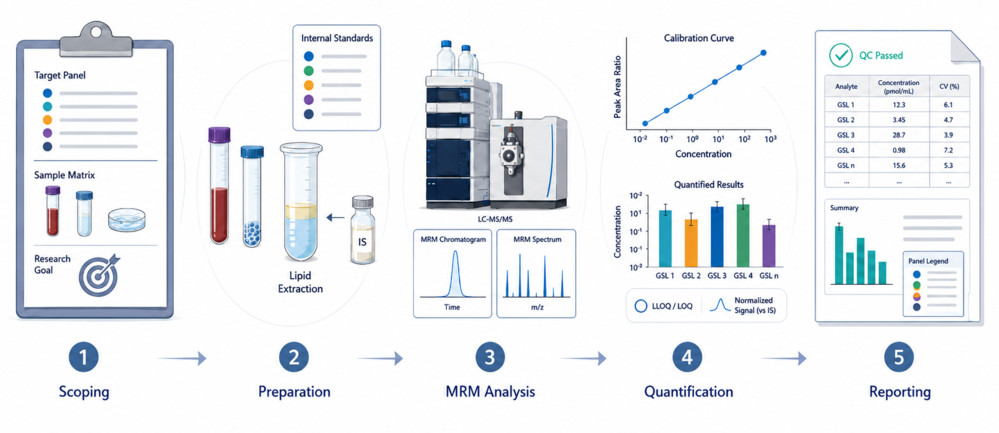
Fig.2 Targeted glycosphingolipid quantification workflow overview.
Scoping
Confirm target GSL species, sample matrix, expected concentration range, and research goal.
Preparation
Extract lipids using matrix-appropriate procedures and add selected internal standards.
MRM Analysis
Acquire targeted LC-MS/MS data using optimized MRM transitions and retention time windows.
Quantification
Generate calibration curves, calculate concentrations, and review LOD/LOQ performance.
Reporting
Deliver quantitative tables, QC summaries, method notes, and interpretation-ready outputs.
Sample Types We Can Support
We support targeted glycosphingolipid quantification across a range of research samples. Before project initiation, our team reviews the matrix, available volume, expected lipid class, storage history, and whether the study requires absolute quantification, relative comparison, or a custom targeted GSL panel service.

Suggested Submission Items
- Cell pellets, cultured cells, immune cells, serum, plasma, tissue extracts, or natural product fractions.
- Target analyte list, preferred GSL classes, and any required ganglioside quantification targets.
- Sample amount, storage condition, freeze-thaw history, and extraction restrictions if applicable.
- Study design information, including group labels, replicate numbers, and comparison strategy.
- Any available reference standards, benchmark data, or preferred internal standard glycosphingolipid analysis strategy.
Deliverables and Data Outputs
The final report is designed to support downstream data review, manuscript preparation, internal research decision-making, or follow-up assay planning. Deliverables can be adjusted according to whether the project focuses on targeted glycosphingolipid quantification by LC-MS/MS, serum glycosphingolipid targeted analysis service, or focused lipid biomarker analysis.
Typical Deliverables
- Quantitative concentration tables for selected GSL species and sample groups.
- Calibration curves, linearity information, and concentration range notes when applicable.
- LOD/LOQ report, QC review, internal standard response, and method performance summary.
- Representative chromatograms, peak integration review, and MRM assay parameter notes.
- Research-use final report with data files prepared for downstream statistical analysis.

Why Choose Creative Biolabs for Quantification
Creative Biolabs combines lipidomics method development, glycan-aware structural understanding, and service-oriented project management to support targeted glycosphingolipid quantification service needs. We help researchers translate a target list into a feasible LC-MS quantification workflow with suitable extraction, MRM assay selection, internal standards, calibration, and reporting design.
High-Sensitivity Platforms
Triple quadrupole LC-MS/MS workflows provide sensitive MRM acquisition for defined glycosphingolipid and ganglioside quantification targets.
Flexible Standard Strategy
When ideal isotope-labeled standards are unavailable, we apply scientifically matched surrogate internal standards and transparent reporting.
Research-Focused Delivery
Our reporting is structured for research interpretation, comparison, and follow-up assay planning without clinical-use positioning.
Ready to Build a Targeted GSL Quantification Project?
Share your GSL target list, sample type, expected concentration range, and preferred quantitative goal. Creative Biolabs can help evaluate whether a standard targeted glycosphingolipid quantification workflow or a custom MRM lipidomics panel is more suitable for your research.
Published Data
Published targeted LC-MS/MS research provides a relevant methodological reference for monitoring defined ganglioside and glycosphingolipid species in serum. The cited study developed a multiplexed method for 84 species across ganglioside and other glycosphingolipid classes, using MRM acquisition, chromatographic separation, calibration assessment, and internal standard-based normalization to support structured quantitative analysis.
What This Study Shows for Targeted GSL Analysis?
The selected open-access study demonstrates a multiplexed targeted LC-MS/MS method for profiling serum gangliosides and glycosphingolipids.
- The method targeted 84 species across 10 ganglioside classes and 4 other glycosphingolipid classes in serum.
- Figure 3 shows separation of selected standards, extracted ion chromatograms from normal serum lipid extracts, a retention-time elution map, and an MS/MS spectrum of GM1.
- Internal standards with odd-numbered or deuterated acyl chains were used, and chemically closest internal standards were applied when matching deuterated standards were unavailable.
- Calibration curves, LOD assessment, reproducibility testing, extraction efficiency, matrix effect, and sample stability were evaluated as part of method validation.
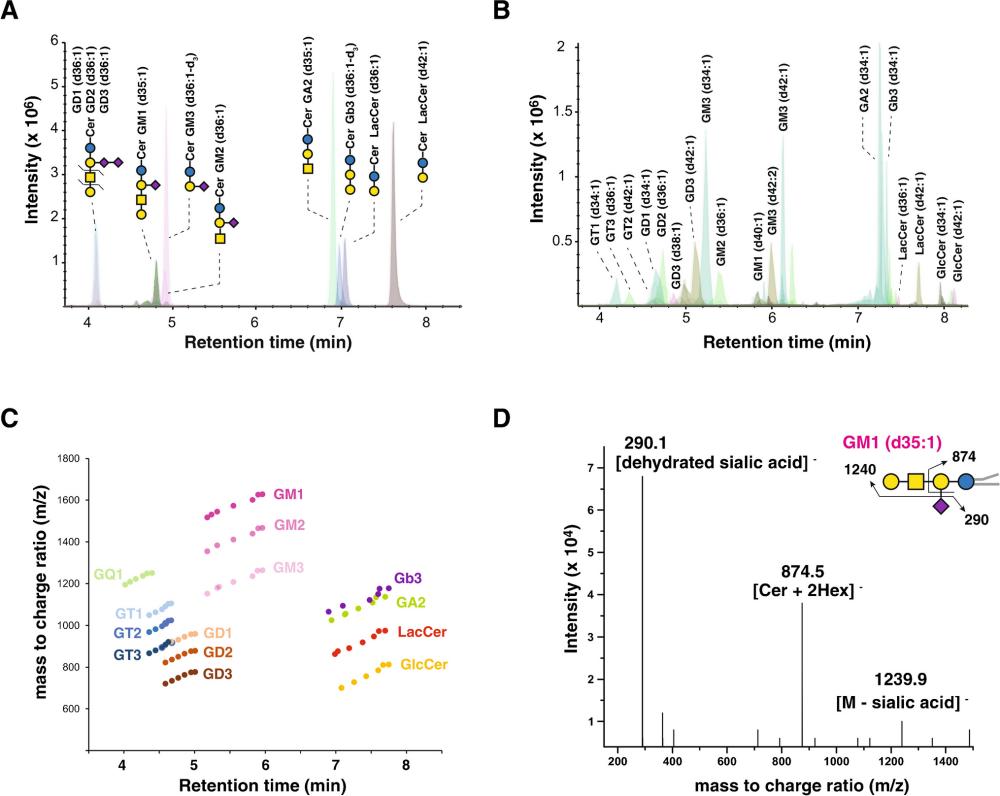
Fig.3 Multiplexed LC-MS/MS detection of gangliosides and glycosphingolipids.1
Customer Review
Recommended Products
These related research-use product categories may support glycan and glycolipid studies that require reference materials, assay development tools, or antibody-based follow-up experiments after targeted lipid quantification.
Carbohydrate Antigen Products
A research-use collection of carbohydrate antigens, including oligosaccharides, nucleosides, monosaccharides, neoglycolipids, and glycans, suitable for glycan-focused assay development and reference studies.
Learn MoreMonoclonal Antibody Products
These monoclonal antibody products support precise glycoepitope recognition, specificity evaluation, and downstream assay development for glycan and glycolipid research programs.
Learn MorePolyclonal Antibody Products
Polyclonal antibody products offer broad epitope recognition and flexible research utility in glycoantigen detection, immunoassays, and exploratory validation workflows.
Learn More