


Glycosphingolipid Structural Analysis Service by GC-MS
GC-MS Glycosphingolipid Analysis for Component-Level Structural Support
Creative Biolabs offers research-use glycosphingolipid analysis by GC-MS as a focused extension of our glycolipid analysis capabilities. The service is designed for teams that need component-level evidence from purified GSL fractions, enriched extracts, or project-defined research samples, including fatty acyl composition, derivatized sugar profiles, and supportive annotations that can complement intact LC-MS/MS-based GSL profiling.
Project Fit
- Suitable when intact GSL profiling needs additional component-level support from released fatty acids or sugars.
- Useful for fatty acyl chain length, saturation, hydroxylation-related evidence, and selected unsaturated fatty acyl isomer studies.
- Best suited to purified or enriched GSL fractions; feasibility for complex matrices is assessed during project scoping.
Background for GC-MS-Based Glycosphingolipid Component Analysis
Glycosphingolipids combine a carbohydrate head group with a ceramide backbone, creating high structural diversity across glycan sequence, linkage, branching, fatty acyl length, unsaturation, and hydroxylation. Direct GC-MS analysis of intact GSLs is generally not practical because these molecules are polar, nonvolatile, and thermally labile. A practical GC-MS workflow therefore relies on controlled release and derivatization steps, converting fatty acids into fatty acid methyl esters and released carbohydrates into volatile derivatives such as trimethylsilyl methyl glycosides.
This component-based strategy does not replace intact GSL structural analysis. Instead, it answers questions that intact LC-MS/MS may leave unresolved, especially when researchers need orthogonal evidence for fatty acyl composition, released sugar composition, linkage-related information from methylation analysis, or selected double-bond localization through DMOX derivatization. For custom GSL structural analysis projects, GC-MS adds a practical layer of supporting evidence while keeping the limits of derivative-based interpretation clear.
- GC-MS glycosphingolipid analysis is strongest at the released-component level, especially fatty acid and carbohydrate derivative profiling.
- FAMEs and TMS methyl glycoside derivatives improve volatility, chromatographic separation, and electron-ionization spectral interpretation.
- Methylation analysis can support linkage-related questions when sample quality and purification level are appropriate.
- DMOX derivatization may be selected when double-bond position information is relevant for unsaturated fatty acyl isomer studies.
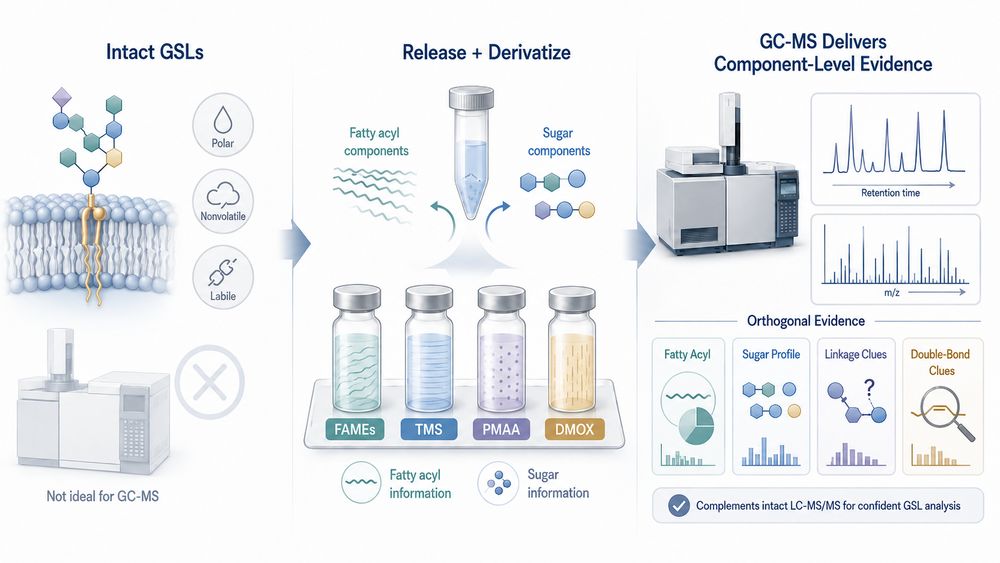
Fig.1 Rationale and workflow for GC-MS-based glycosphingolipid component analysis.
GSL Component Analysis Challenges and GC-MS Method Response
GSL interpretation is challenging because the glycan and ceramide portions contribute different sources of heterogeneity. This section separates common analytical obstacles from the GC-MS response so researchers can quickly judge whether a component-level workflow fits their question.
Low Volatility
Native GSLs are not well suited to direct gas-phase separation, making hydrolysis and derivatization necessary.
Structural Isomers
Similar intact masses may reflect different fatty acyl chains, unsaturation patterns, hydroxylation states, or carbohydrate compositions.
Matrix Effects
Cells, tissues, plasma, serum, and natural extracts can contain lipids, salts, and other matrix components that affect recovery and data quality.
Limited Standards
Reference availability for complex GSL structures may constrain absolute confirmation and quantification scope.
Derivatized Analysis
FAMEs, TMS methyl glycoside derivatives, and optional DMOX chemistry improve GC compatibility and component-level readout.
Orthogonal Evidence
GC-MS can complement intact GSL mass spectrometry by clarifying released fatty acyl and carbohydrate components.
Sample Optimization
Extraction, hydrolysis, cleanup, and derivatization can be adjusted according to matrix and target class.
Transparent Reporting
Deliverables distinguish confirmed, putative, and method-supported annotations to avoid overinterpretation.
Services We Provide for GC-MS Glycosphingolipid Component Analysis
Creative Biolabs designs each GC-MS glycosphingolipid analysis project around the sample matrix, target GSL class, required depth of annotation, and whether the study needs compositional screening, comparative profiling, or a customized component-support workflow.
Analytical Method Options for GC-MS-Based GSL Analysis
Our workflow combines sample preparation, derivatization chemistry, GC separation, mass spectral acquisition, and expert annotation. Typical method options include FAMEs analysis for fatty acyl composition, TMS methyl glycoside analysis for released monosaccharides, methylation analysis for linkage-related interpretation, and DMOX derivatization for selected unsaturation studies. The final method is scoped according to whether the study prioritizes screening, comparative profiling, or supportive structural interpretation.
Fatty Acyl Readout
- Chain length and saturation annotation
- FAMEs chromatograms and spectra
- Optional DMOX-based position support
Glycan Composition Readout
- Released monosaccharide profiling
- TMS methyl glycoside interpretation
- Linkage analysis when methylation is selected
Integrated Interpretation
- Cross-checking with known GSL classes
- Compatibility with LC-MS/MS findings
- Confidence levels for supported annotations
Research Questions Our GC-MS Glycosphingolipid Analysis Service Helps Address
Researchers often use GC-MS after intact lipid data suggest a GSL change but do not fully explain its component origin. Our service helps evaluate whether differences may be associated with fatty acyl chain remodeling, carbohydrate composition, ceramide-related variation, or sample preparation effects. This information is valuable for lipid metabolism studies, sphingolipid pathway research, glycolipid biochemistry, natural product characterization, and comparative analysis of engineered or biological samples.
Composition Confirmation
Support assignments by confirming released fatty acid and sugar components.
Isomer Support
Add DMOX and linkage-focused options for selected, method-appropriate structural questions.
Matrix Adaptation
Adjust cleanup and derivatization for different research sample types.
Decision-Support Data
Provide spectra, tables, and cautious interpretation to support follow-up study planning.
Glycosphingolipid GC-MS Analysis Workflow
The glycosphingolipid GC-MS workflow is designed to protect analytical quality at each stage, from sample receipt and extraction to derivative-based GC-MS analysis and final interpretation. Method details can be customized when the sample is scarce, highly complex, or targeted to a defined GSL subclass.
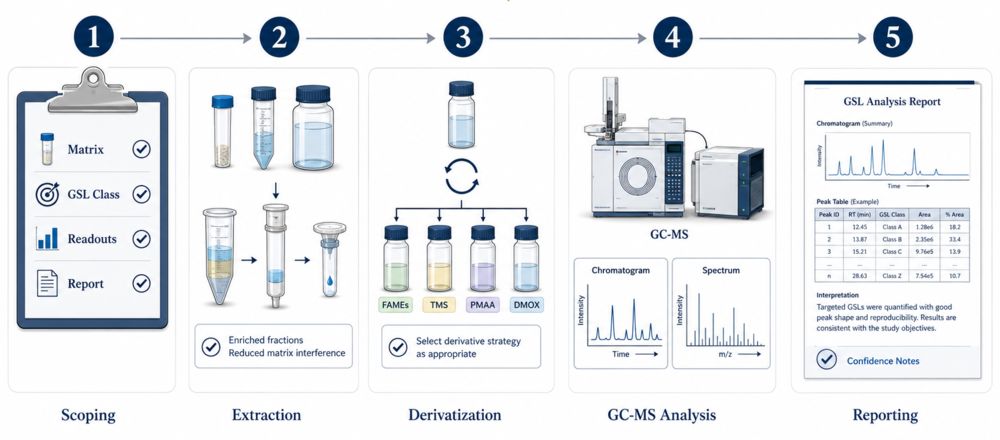
Fig.2 Workflow for glycosphingolipid component analysis by GC-MS.
Scoping
Define sample matrix, target GSL class, analytical readouts, and reporting depth.
Extraction
Prepare enriched or purified fractions and reduce matrix interference where needed.
Derivatization
Generate FAMEs, TMS methyl glycosides, partially methylated derivatives, or DMOX derivatives as appropriate.
GC-MS Analysis
Acquire chromatographic and mass spectral data under selected method conditions.
Reporting
Deliver annotated spectra, peak tables, and interpretation with confidence notes.
Sample Types and Project Information We Can Support
Sample planning is essential because GSL abundance, extraction behavior, purification status, and derivatization performance vary by matrix. Please share the available sample amount, storage conditions, expected GSL class, and any previous LC-MS/MS or TLC information so our scientists can recommend a realistic GC-MS strategy.

Suggested Submission Information
- Purified GSLs and enriched lipid fractions are preferred; cells, tissues, plasma, serum, or natural product extracts may be discussed for feasibility.
- Estimated sample amount, solvent history, storage temperature, and freeze-thaw information.
- Target readouts such as FAMEs, TMS methyl glycosides, methylation analysis, or DMOX support.
- Known standards, expected GSL subclasses, and comparison groups when available.
- Any constraints related to sample scarcity, matrix complexity, or required turnaround time.
Deliverables and Data Outputs for GSL Component Analysis
The final deliverable is built to help researchers understand what was detected, how each annotation was supported, and where additional analysis may be needed. Data interpretation is provided within the analytical limits of the selected derivatization chemistry, purification level, and reference strategy.
Typical Deliverables
- FAMEs and TMS methyl glycoside GC-MS chromatograms with peak tables.
- Fatty acyl chain, released sugar composition, and selected linkage- or double-bond-related annotations.
- Representative mass spectra, interpretation notes, and method summary.
- Relative abundance data when method-appropriate, comparison tables, and project-specific reporting comments.

Why Choose Creative Biolabs for GC-MS GSL Component Analysis
Creative Biolabs combines lipid-oriented sample preparation, derivatization-aware method selection, and careful interpretation of GC-MS data for glycosphingolipid research. We align the chemistry, acquisition strategy, and reporting format with the research question, whether the focus is fatty acyl composition, released sugar composition, ceramide-related support, or comparison across experimental groups.
Orthogonal Strategy
GC-MS can be paired with intact GSL mass spectrometry to strengthen component-supported interpretation.
Method Selection
FAMEs, TMS methyl glycosides, methylation, and DMOX options are selected according to project goals.
Research-Focused Scope
Projects are designed for exploratory, comparative, and mechanistic research use.
Clear Communication
Reports separate direct evidence, supported annotations, and tentative structural assignments.
Need a Custom GC-MS Workflow for GSL Component Analysis?
Send us your sample type, target GSL class, and preferred readouts. Our team will recommend a practical GC-MS glycosphingolipid workflow, including whether FAMEs analysis, carbohydrate GC-MS, methylation analysis, DMOX derivatization, or complementary LC-MS/MS is most appropriate for your research objective.
Literature-Supported Confidence in GC-MS Glycosphingolipid Analysis
Published glycosphingolipid studies show that GC-MS can provide practical component-level evidence after appropriate purification, release chemistry, and derivatization. The cited open-access study used GC-MS analysis of O-trimethylsilyl methyl glycoside derivatives generated from TLC-purified sphingolipids, showing how released sugar components can support the interpretation of glycosphingolipid species such as glucosylceramide.
GC-MS Confirmation of Sugar Components in Purified Glycosphingolipids
This study connects purified sphingolipid preparation with derivatized carbohydrate GC-MS and downstream interpretation. For service planning, it supports a modular analytical strategy in which TLC or fraction-based purification, acid methanolysis, TMS methyl glycoside derivatization, and GC-MS sugar profiling are used to support glycosphingolipid identity when intact lipid data alone do not fully resolve the structural question.
- Purified sphingolipid fractions can be processed into GC-compatible derivatives for released-component interpretation.
- GC-MS of TMS methyl glycosides can provide sugar composition evidence in glycosphingolipid characterization.
- Released-component analysis can help support GSL assignments such as glucosylceramide.
- Our reporting approach applies the same principle by separating direct GC-MS evidence from broader structural interpretation.
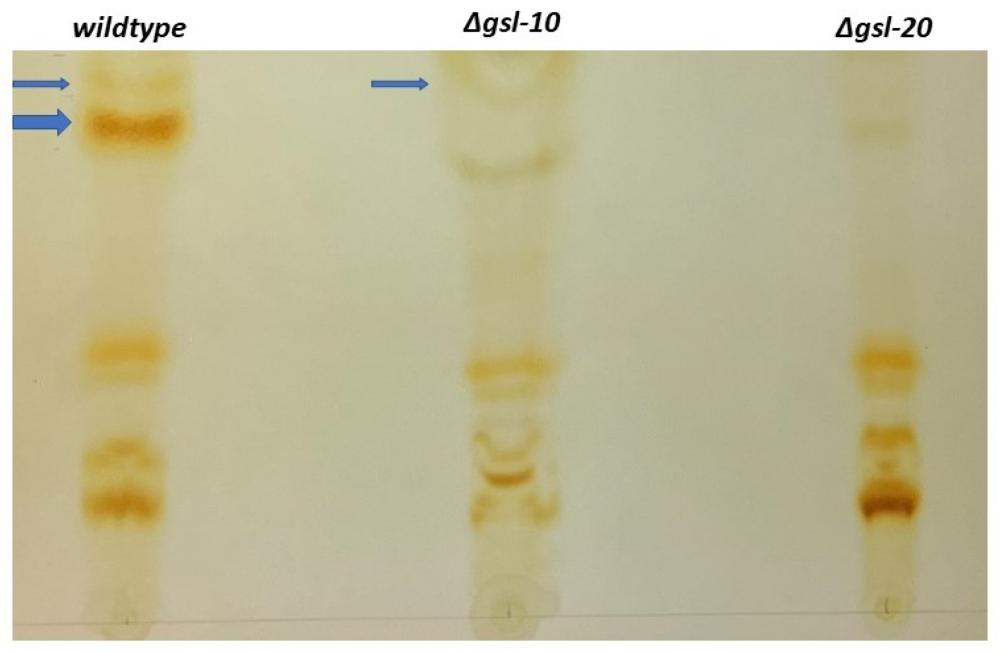
Fig.3 Purified neutral glycosphingolipid fractions prepared for GC-MS sugar component analysis.1
Recommended Products
These related product categories may support glycan-focused assay development, antibody-based recognition studies, and complementary research workflows around glycolipids and carbohydrate antigens.
Carbohydrate Antigen Products
A research-use collection of carbohydrate antigens, including oligosaccharides, nucleosides, monosaccharides, neoglycolipids, and glycans for glycan-focused binding studies and assay development.
Learn MoreMonoclonal Antibody Products
Designed for precise glycoepitope recognition, these monoclonal antibody products support high-specificity glycan profiling and related research applications.
Learn MorePolyclonal Antibody Products
These polyclonal antibody products offer broad epitope recognition and flexible use in glycoantigen detection, immunoassays, and exploratory research applications.
Learn More