


Globosides Analysis Service
Globoside Profiling and Quantification
Creative Biolabs provides research-use-only globosides analysis services for profiling and quantifying neutral complex glycosphingolipids, including Gb3, Gb4, and related globo-series species where analytical feasibility supports the requested targets. As a focused extension of our glycosphingolipids analysis capabilities, this service helps researchers interpret downstream neutral GSL changes within LacCer-centered biosynthetic pathways. Globosides are relevant to cell recognition, immune biology, inflammation, tumor research, receptor biology, and host-pathogen interaction studies, while their ceramide backbone heterogeneity makes fit-for-purpose analytical design essential.
Service Focus
- Targeted Gb3/Gb4 analysis and custom globoside quantification service options.
- Semi-targeted globoside profiling for comparative research across sample groups.
- Optional integration with HexCer, LacCer, gangliosides, or broader GSL panels.
What Are Globosides and Why Analyze Them?
Globosides and related globo-series glycosphingolipids are neutral GSLs with oligosaccharide headgroups attached to ceramide. Their ceramide moieties can vary in long-chain base type, fatty acyl length, unsaturation, and hydroxylation, creating multiple molecular species even within the same headgroup class. In a biosynthetic context, Gb3 and Gb4 are downstream of LacCer-centered pathways, so isolated globoside results are most informative when upstream LacCer and adjacent GSL classes are considered during interpretation.
Researchers request globoside analysis when they need to compare Gb3, Gb4, or related species across cultured cells, tissue models, immune-cell preparations, inflammatory research systems, drug-treated samples, serum/plasma, or receptor biology studies. Because these targets may be low-abundance and can coexist with structurally related neutral GSLs, a fit-for-purpose strategy is more reliable than a generic untargeted lipidomics screen when target-level confidence is required.
Why Globoside Analysis Is Technically Challenging and How We Address It
Globoside profiling is analytically demanding because molecular complexity occurs at both the glycan headgroup and ceramide backbone levels. Compared with HexCer or LacCer, Gb3/Gb4 and related species contain larger neutral glycan headgroups, while the ceramide portion still generates multiple lipoforms that may share close mass, retention, or fragmentation behavior. Low abundance, coexisting neutral GSLs, isomeric or isobaric interference, phospholipid-driven matrix effects, and limited availability of authentic standards can all reduce annotation confidence.
Low Abundance
Globoside-series species may be present at much lower signal intensity than dominant phospholipids and other co-extracted lipids, requiring careful extraction, enrichment decisions, and acquisition settings.
Isomeric Interference
Closely related neutral GSLs can share mass features, so retention behavior and fragment-ion evidence are important for confident annotation.
Matrix Effects
Serum, tissue, and cell extracts may contain phospholipids that suppress signal or complicate low-level globoside detection.
Standard Availability
Not every globoside species has an authentic standard, so annotation confidence should be reported transparently.
Selective Preparation
Optional neutral GSL enrichment or fractionation can be considered when matrix complexity limits sensitivity.
LC-MS/MS Acquisition
Targeted transitions support globoside quantification when suitable targets and reference materials are available.
HRMS/MS Annotation
Accurate-mass and fragmentation-supported approaches help expand structural coverage in discovery-oriented projects.
Confidence Notes
Where authentic standards, retention evidence, and diagnostic MS/MS evidence are available, confidence can be strengthened without overstating structural certainty.
Our Globosides Analysis Services
Creative Biolabs supports standalone globoside analysis as well as integrated GSL projects in which globosides are interpreted together with LacCer, HexCer, gangliosides, or broader glycolipid data. Our service can be configured for focused target verification, comparative profiling, or pathway-aware research, depending on sample type, expected abundance, available standards, and the biological question.
Analytical Platforms and Method Options
For target-focused globoside profiling projects, LC-MS/MS is typically recommended when the target list and quantification mode are defined. HRMS/MS can be used when accurate-mass information and fragmentation-supported annotation are needed. For complex matrices or low-abundance targets, optional neutral GSL enrichment or fractionation can improve detectability and reduce interference. Ion mobility or multidimensional separation may be considered for selected isomeric cases when the research question justifies additional analytical depth.
We also help researchers position globosides within a broader GSL framework. This is important because changes in Gb3/Gb4 abundance may reflect upstream LacCer availability, glycosyltransferase activity, cellular state, or broader glycolipid remodeling rather than a single isolated lipid event.
What Problems We Help Researchers Solve
A custom globoside profiling service can support studies that examine how Gb3, Gb4, or related species change in tumor models, immune-cell activation, inflammation research, lipid metabolism, drug treatment, or host-pathogen interaction samples. In receptor biology studies, Gb3 is frequently evaluated in Shiga toxin-host interaction models, while Gb4 is relevant to selected parvovirus B19 research contexts. These applications require well-controlled measurement and cautious interpretation rather than diagnostic claims.
- Compare globoside abundance across treated and untreated cell or tissue groups.
- Evaluate globosides together with upstream LacCer or downstream ganglioside data.
- Support host-pathogen interaction research while avoiding clinical diagnostic, prognostic, or treatment claims.
- Prioritize target species for follow-up validation, manuscript figures, or internal R&D decisions.
Recommended Workflow for Globosides Analysis
The globoside profiling workflow is designed around the research question, target species, sample matrix, and required confidence level. For low-abundance samples, limited material, or phospholipid-rich matrices, Creative Biolabs may recommend pilot profiling before full panel execution to refine species selection, extraction strategy, and reporting scope.
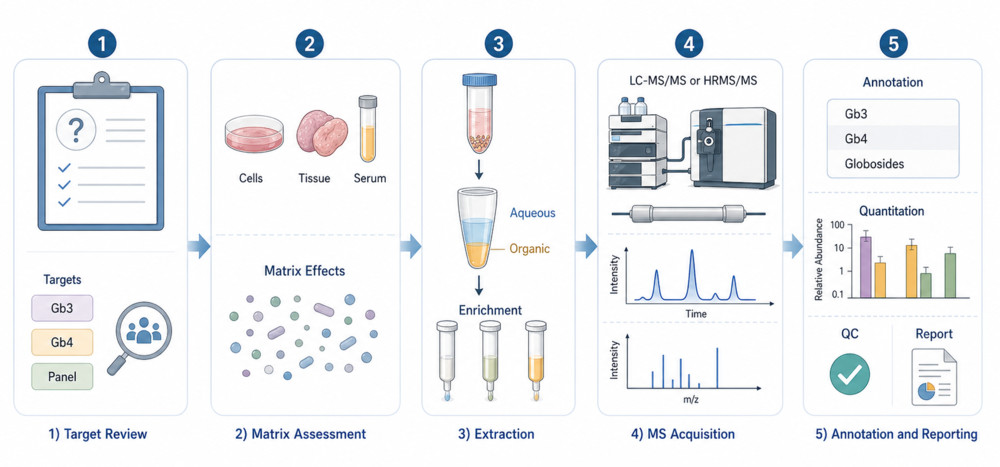
Fig.1 Globoside profiling workflow overview.
Target Review
Clarify the research question, target globoside species, comparison groups, and whether Gb3/Gb4-focused or broader globoside profiling is required.
Matrix Assessment
Evaluate sample type, lipid complexity, available material, matrix effects, and whether pilot profiling is needed for challenging samples.
Extraction and Enrichment
Perform lipid extraction with optional neutral GSL enrichment or fractionation to improve detectability and reduce interference from abundant co-extracted lipids.
MS Acquisition
Apply LC-MS/MS for targeted globoside measurement or HRMS/MS for accurate-mass and fragmentation-supported profiling, depending on project goals.
Annotation and Reporting
Annotate Gb3, Gb4, or broader globoside species, compare abundance across groups, and deliver a technical report with QC metrics and confidence notes.
Sample Types We Can Support
Globoside analysis for serum, plasma, tissue, and cell samples requires careful planning because extraction efficiency, matrix complexity, and target abundance can vary substantially. Please provide sample origin, cell type, treatment design, infection or receptor biology context when relevant, expected target species, and whether upstream LacCer or adjacent ganglioside information is required.

Suggested Submission Information
- Cultured cells, tumor or disease-model tissues, immune-cell preparations, plasma, serum, or prepared lipid extracts.
- Sample amount, storage condition, extraction history, and available biological replicates.
- Target globosides, preferred quantification mode, and comparison design.
- Request for standalone globoside profiling or broader GSL pathway interpretation.
- Any known matrix constraints that may influence enrichment, acquisition, or reporting scope.
Deliverables and Data Outputs
Deliverables are designed to make the data usable for research interpretation, internal R&D decisions, or manuscript-oriented follow-up. For key target species, chromatographic and fragment-ion evidence can be summarized to support confidence in the reported results.
Typical Deliverables
- Globoside species list and Gb3/Gb4 or target-panel abundance table, reported as absolute, relative, or semi-quantitative values according to method feasibility.
- Retention time, precursor/product ion information, and MS/MS evidence where available.
- QC metrics, group comparison summaries, and pathway-context interpretation for research use.
- Annotation confidence notes and technical report for research-use interpretation.

Why Choose Creative Biolabs for Globosides Analysis
Creative Biolabs uses a neutral GSL-aware workflow that connects globosides with LacCer-centered biosynthesis and broader glycolipid remodeling. Our team supports Gb3/Gb4-focused research, comparative globoside profiling projects, and pathway-linked interpretation for host-pathogen, tumor, immune, and candidate biomarker research studies. Rather than promising complete globosideome coverage, we define fit-for-purpose target coverage and report annotation confidence transparently.
Start a Globosides Analysis Project
Share your sample type, target globosides, biological model, sample number, preferred quantification mode, and whether broader GSL pathway interpretation is required. Our team will help define a fit-for-purpose target coverage strategy for globoside analysis.
Published Data Supporting Globoside Profiling
Published immunolipidomics data provide direct research context for Gb3/Gb4-focused globoside profiling. In primary human macrophages stimulated with LPS, Muralidharan and colleagues measured lipidomic and transcriptomic changes over time and reported that glycosphingolipids belonging to the globoside family, including Gb3 and Gb4, increased during the resolution phase of the inflammatory response. These findings support the value of targeted, time- and context-aware globoside measurement in immune and inflammation research, while remaining preclinical and research-use evidence rather than diagnostic or therapeutic validation.
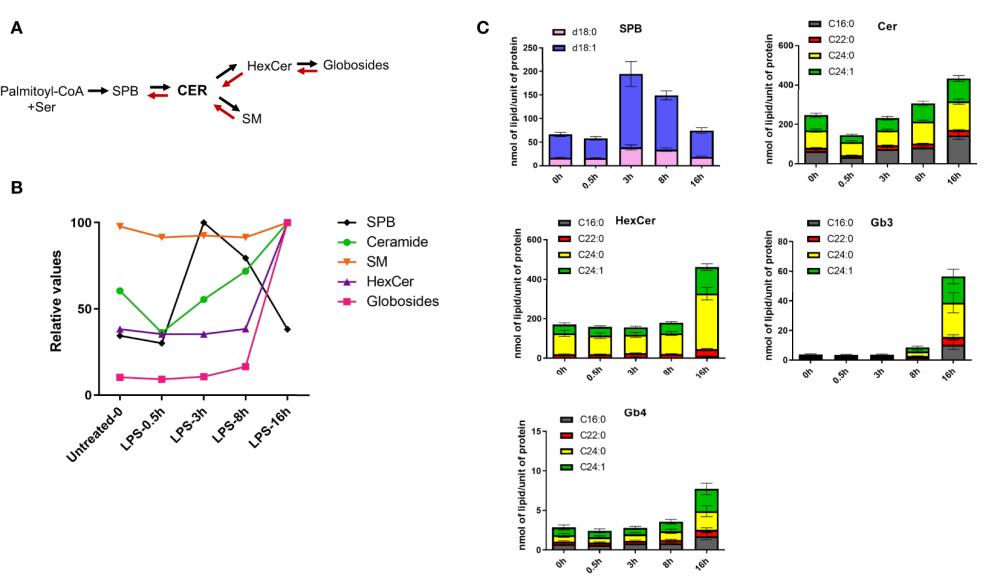
Fig.2 LPS-induced sphingolipid synthesis and Gb3/Gb4 globoside dynamics in human macrophages.1
LC-MS/MS Evidence for Gb3/Gb4 Dynamics
The cited Frontiers in Immunology study used LC-MS/MS-based lipidomics to evaluate time-dependent lipid changes in LPS-stimulated primary human macrophages. The authors reported that globoside-family glycosphingolipids, including Gb3 and Gb4, showed resolution-phase increases and high inter-individual variability. This supports the practical need for carefully designed Gb3/Gb4 profiling when researchers compare immune-cell states, stimulation time points, or donor-derived biological variation.
Method-Relevant Interpretation
The same study measured multiple globoside species and discussed analytical caution around selected isobaric or closely related glycosphingolipids. For a CRO service page, this evidence supports targeted LC-MS/MS, transparent annotation confidence, and matrix-aware reporting. It should not be presented as proof that any globoside readout is clinically diagnostic, prognostic, or predictive of treatment response.
Customer Review
Recommended Products
These related research-use products may support glycan-focused assay development, binding studies, and adjacent anti-glycan research programs.
Carbohydrate Antigen Products
A research-use collection of carbohydrate antigens, including oligosaccharides, nucleosides, monosaccharides, neoglycolipids, and glycans, suitable for glycan-focused binding studies and assay development.
Learn MoreMonoclonal Antibody Products
Designed for precise glycoepitope recognition, these monoclonal antibody products support high-specificity screening workflows for glycan profiling and detection research.
Learn MorePolyclonal Antibody Products
These polyclonal antibody products offer broad epitope recognition and flexible use in glycoantigen detection, immunoassays, and high-sensitivity research applications.
Learn More