


Glycosphingolipid Isomer Resolution Analysis Service
LC-MS Workflows for HexCer, Ganglioside, and Broader GSL Profiling
Creative Biolabs supports research teams through glycolipid analysis and fit-for-purpose glycosphingolipid isomer resolution analysis. Our service can combine optimized chromatography, high-resolution LC-MS/MS, and optional ion mobility/CCS-supported annotation to improve confidence in HexCer, ganglioside, neutral GSL, and sulfatide analysis. For challenging isomers such as GlcCer/GalCer or closely related ganglioside species, feasibility is evaluated against matrix type, target abundance, standard availability, and the required reporting depth before a project plan is finalized.
Service Focus
- Project-specific separation and annotation strategies for neutral GSLs, HexCer species, selected gangliosides, and sulfatides.
- Integration of retention time, accurate mass, MS/MS fragments, and, when applicable, IMS/CCS evidence for more transparent structural assignment.
- Data packages designed for discovery research, pathway interpretation, comparative lipidomics, and method-development studies.
Scientific Background for Glycosphingolipid Isomer Resolution
Glycosphingolipids (GSLs) are lipids composed of a ceramide backbone linked to one or more carbohydrate residues. Their biological interpretation depends on both the glycan portion and the ceramide portion, including monosaccharide composition, linkage and branching patterns, sialylation or sulfation, ceramide chain length, unsaturation, and hydroxylation. These structural variables create many isobaric or near-isobaric features in LC-MS datasets, so a single nominal mass is often not enough for confident GSL reporting.
In research lipidomics, GSL isomer resolution typically requires orthogonal evidence. Reversed-phase LC can help separate species according to ceramide hydrophobicity, while ion mobility and CCS values can provide additional gas-phase separation based on ion size and conformation. MS/MS then helps localize informative glycan and ceramide fragments. This combined strategy is especially useful when projects involve HexCer isomers, ganglioside series, neolacto-series species, sulfatides, or class-level comparisons across complex biological matrices.
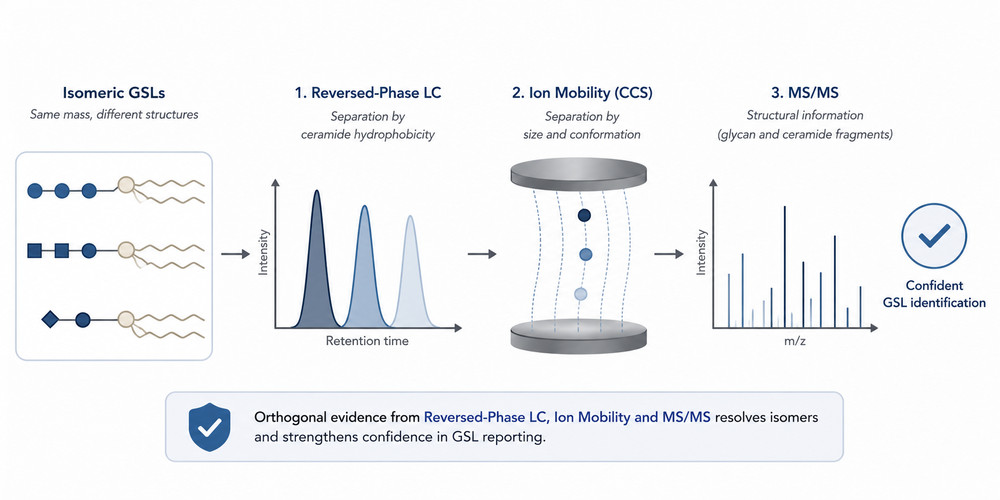
Fig.1 Glycosphingolipid isomer resolution analysis background.
Analytical Challenges and Method Selection in GSL LC-MS Analysis
Glycosphingolipid LC-MS projects can be limited by overlapping signals, uncertain isomer assignments, class-specific extraction behavior, and incomplete reference coverage. Our service helps research teams decide which questions can be addressed by targeted quantification, which require deeper structural profiling, and which should be reported with cautious annotation tiers.
HexCer Isomer Overlap
GlcCer, GalCer, and related HexCer species can share mass and similar fragments, so separation and confirmation strategies must be selected carefully.
Ganglioside Complexity
Ganglioside analysis must consider sialylation, linkage variation, multiple charge states, labile fragments, and ceramide heterogeneity.
Annotation Ambiguity
Database matching alone may not distinguish linkage isomers, chain isomers, class-related coelution, or isomers resolved only by mobility.
Quantification Limits
Internal standards are not available for every GSL subclass, so absolute quantification may not be appropriate for all targets.
Chromatographic Separation
RP-LC or other suitable LC conditions are selected to improve separation of ceramide-driven or glycan-driven structural differences.
IMS and CCS
Ion mobility and CCS values can add orthogonal evidence when mass, retention time, and MS/MS data do not provide enough confidence.
MS/MS Review
Fragment-level review helps distinguish glycan-series information from ceramide-related evidence and supports transparent annotation.
Targeted or Discovery Mode
MRM or LC-MS/MS panels can be built around defined targets, while broader profiling can be used for discovery-stage comparisons.
Tailored Strategies and Platforms for Glycosphingolipid Analysis
Creative Biolabs applies a method-matching strategy rather than a single fixed workflow. Depending on matrix type, target class, expected isomer pattern, standard availability, and quantification depth, we can design LC-MS/MS and lipidomics workflows with optional IMS/CCS-supported annotation for glycosphingolipid analysis.
Structured Workflow for Glycosphingolipid Isomer Analysis
Our workflow is built to clarify project goals before instrument time begins. We evaluate the requested GSL classes, matrix type, standard availability, expected dynamic range, and whether the main question requires discovery-level profiling, targeted lipidomics, or semi-quantitative/quantitative reporting.
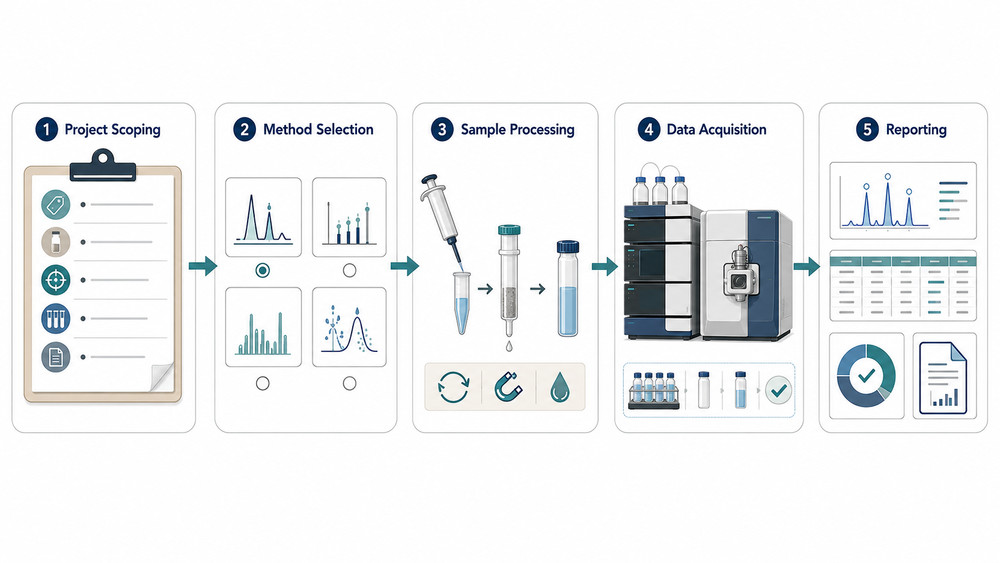
Fig.2 Glycosphingolipid isomer resolution analysis workflow overview.
Project Scoping
Define GSL classes, matrix type, target isomers, sample number, and reporting expectations.
Method Selection
Select LC-MS/MS, targeted MRM, broader profiling, or IMS/CCS-supported analysis according to the analytical question.
Sample Processing
Perform extraction, cleanup, enrichment, fractionation, and standard-supported preparation where appropriate.
Data Acquisition
Acquire LC-MS/MS and, when applicable, mobility data with defined QC checks, blanks, and pooled samples.
Reporting
Deliver annotated features, quantitative or semi-quantitative tables, QC summaries, and interpretation-ready files.
Sample Requirements for GSL Profiling and HexCer Analysis
Sample requirements depend on the matrix, target lipid class, expected abundance, and whether absolute, relative, or semi-quantitative reporting is requested. Please contact us before shipment when working with low-volume, precious, or unusual biological materials.

Suggested Submission Information
- Sample type, species, storage condition, collection buffer or anticoagulant, and freeze-thaw history.
- Target list for GlcCer analysis, GalCer analysis, ganglioside analysis, sulfatide analysis, or broader glycolipid profiling.
- Requested mode, such as discovery profiling, targeted quantification, or lipid isomer separation.
- Available internal standards, reference materials, pooled QC samples, or prior LC-MS data.
- Research objective, group design, expected comparison, and preferred data output format.
Project Output and Deliverables for GSL Analysis
Our deliverables are designed to support analytical review and downstream biological interpretation without overstating structural certainty. For each project, output depth is aligned with the selected platform, sample quality, and available reference standards.
Typical Deliverables
- Experimental summary covering sample processing, LC-MS/MS conditions, and QC strategy.
- Annotated GSL table with retention time, m/z, MS/MS evidence, and IMS/CCS information when available.
- Relative, semi-quantitative, or absolute quantification tables for selected HexCer, ganglioside, sulfatide, or broader GSL targets, depending on standards and method design.
- Representative chromatograms, extracted ion traces, mobility plots, spectra, and transition-level review files when applicable.
- Final report describing method suitability, data quality, annotation confidence, and research-use interpretation boundaries.

Need Help Designing a GSL Isomer Resolution Project?
Share your matrix type, target lipid classes, expected isomers, sample number, and preferred reporting depth. Our team can recommend a fit-for-purpose plan for HexCer isomer analysis, ganglioside LC-MS/MS, sulfatide profiling, or broader glycosphingolipid profiling.
Published Data Supporting Advanced Glycosphingolipidomics
A 2025 Nature Communications study reported a multidimensional glycosphingolipidomics workflow that combined GSL extraction/fractionation, µL-flow RP-LC with trapped ion mobility MS/MS analysis, semi-quantification, and referential m/z, RT, and CCS values.
Multidimensional Glycosphingolipidomics Expands Structural Coverage in Human Serum
The study showed that multidimensional glycosphingolipidomics can extend structural coverage in a complex biological matrix. In human serum, the authors reported 376 GSLs in total, including 159 ganglio- and neolacto-series sialylated GSLs, 145 neutral GSLs, and 72 sulfatides. They also highlighted the value of combining RP-LC, TIMS/CCS, and high-resolution MS/MS fragmentation for distinguishing GSL subclasses and selected isomeric features.
- RP-LC helped separate GSLs according to ceramide-related hydrophobicity and reduced isotopologue overlap.
- TIMS/CCS provided orthogonal evidence for selected isomers, including partial GD1a/GD1b separation and separation of GM1 from Neu5Ac-nLc4Cer in the reported serum workflow.
- MS/MS evidence was used to support glycan-chain and ceramide structural interpretation.
- The paper also emphasized known limitations, including the need for manual curation, limited internal standard availability for some GSL classes, and the challenge of fully overlapping isomers.
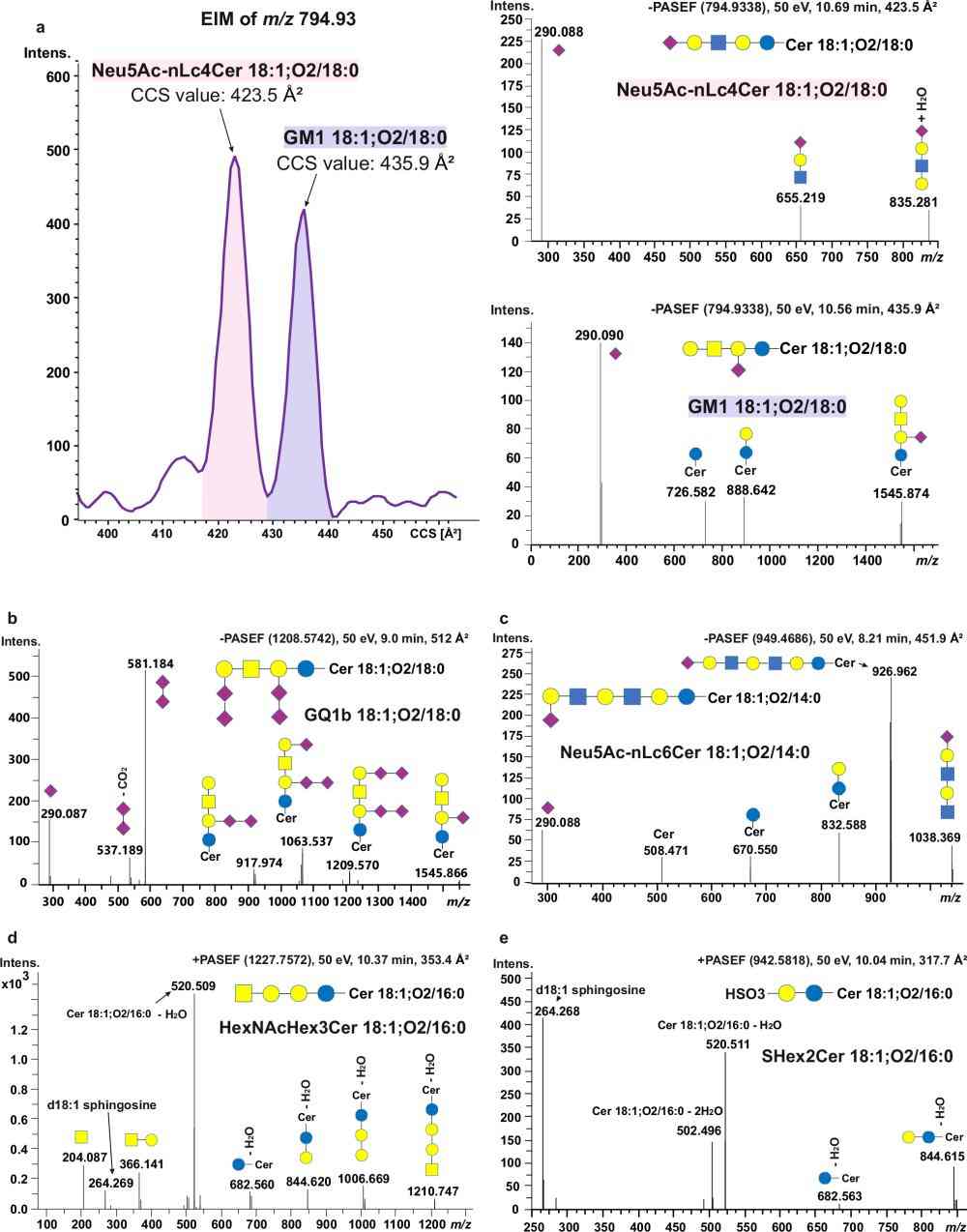
Fig.3 Representative MS/MS spectra of glycosphingolipids in human serum reported in the referenced multidimensional LC-TIMS-MS study.1
Customer Review
Recommended Products
These related product categories can support glycan-focused research workflows, including glycoantigen preparation, antibody-based detection, assay development, and exploratory validation around glycolipid biology.
Carbohydrate Antigen Products
A research-use collection of carbohydrate antigens, including oligosaccharides, nucleosides, monosaccharides, neoglycolipids, and glycans, suitable for glycan-focused assay development and binding studies.
Learn MoreMonoclonal Antibody Products
Designed for precise glycoepitope recognition, these monoclonal antibody products support high-specificity research applications and glycan-related assay development.
Learn MorePolyclonal Antibody Products
These polyclonal antibody products offer broad epitope recognition and flexible use in glycoantigen detection, immunoassays, and other research applications.
Learn More