Liposome for Cell-Free DNA Replication
Introduction Research Insights Products & Services Resources
Replicating the complex, tightly regulated processes of DNA transcription, translation, and replication outside of a living organism presents immense biochemical and structural challenges. Researchers often struggle to maintain the stability, concentration, and functional synergy of these biomolecular machineries in open aqueous environments, severely limiting the advancement of synthetic minimal cells. Lipid-based drug delivery systems, specifically phospholipid vesicles, offer a robust and biologically relevant solution by providing confined, compartmentalized environments that mimic natural cellular membranes. By leveraging these advanced liposomal architectures, Creative Biolabs provides clients with the strategic formulation solutions needed to overcome these barriers and pioneer new breakthroughs in cell-free gene expression and DNA replication research.
Bridging Synthetic Biology & Lipid Nanotechnology
To fully appreciate the innovations in cell-free systems, it is essential to understand the foundational elements that make the replication of life's central dogma possible in an artificial setting.
The Concept of the Synthetic Minimal Cell
-
Definition: A bottom-up approach in synthetic biology aiming to construct artificial cells containing only the minimal essential components required for life (replication, metabolism, and a boundary).
-
Significance: Helps researchers understand the origins of life and enables the creation of highly controllable, programmable biological micro-factories for producing therapeutics.
Cell-Free Gene Expression (CFE) Systems
-
Mechanism: Utilizes biological machinery extracted from cells (like ribosomes, tRNAs, and enzymes) to transcribe and translate DNA into proteins in vitro, independent of living host cells.
-
Advantage: Eliminates the constraints of cellular toxicity and allows for precise, rapid manipulation of genetic circuits and protein synthesis environments.
The Role of Phospholipid Vesicles (Liposomes)
-
Function: Act as the structural boundary or "chassis" for synthetic cells.
-
Relevance: By encapsulating CFE systems within liposomes, researchers achieve a high local concentration of reactants, shield the reaction from external degradation, and closely mimic the natural thermodynamic environment of a biological cell.
In Vitro DNA Replication within Micro-Compartments
The pursuit of a fully functional synthetic cell relies heavily on proving that DNA can be replicated and its information utilized within an artificial boundary. Recent breakthroughs have successfully demonstrated this by reconstructing the DNA replication machinery of the Φ29 virus. The following insights provide a roadmap for leveraging these concepts in your own biomolecular engineering and drug delivery research.
Implementation of the Viral Replication Machinery in a Cell-Free System
To initiate the replication cycle, it is crucial to first establish a functional expression environment. Researchers successfully implemented the DNA replication machinery of the Φ29 virus within a cell-free gene expression system. The significance of this step lies in proving that complex, multi-protein viral replication machineries can be synthesized de novo from a DNA template without a living host. The analysis of this expression confirms that self-encoded proteins can fold correctly and assemble into a functional replication complex in vitro, providing a foundational model for engineering self-sustaining genetic circuits.
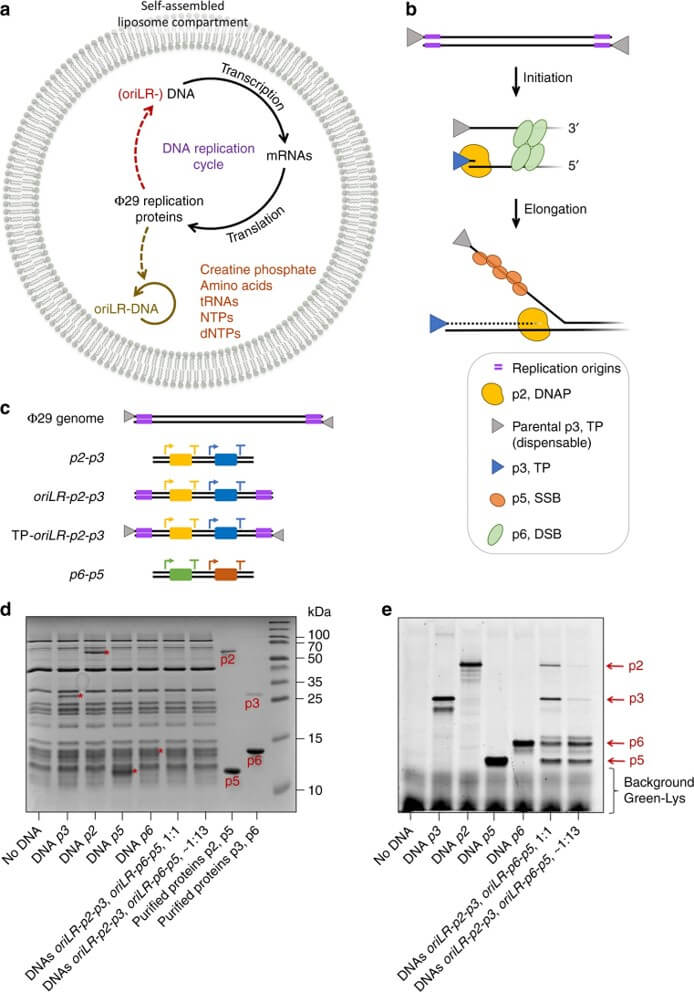 Fig. 1 Basic elements of the DNA self-replication strategy. 1
Amplification and Functional Transfer of DNA Templates
Beyond mere expression, the ultimate goal of a minimal cell is functional propagation. Studies demonstrated the successful amplification of a linear DNA template by the newly synthesized Φ29 proteins. More importantly, complete information transfer was validated when the copied DNA successfully served as a functional template for further gene expression. This represents a monumental leap: the creation of an autocatalytic DNA replication cycle. For researchers, this result validates the feasibility of creating self-replicating synthetic systems, a crucial feature for the next generation of smart, autonomous drug delivery vehicles and biological sensors.
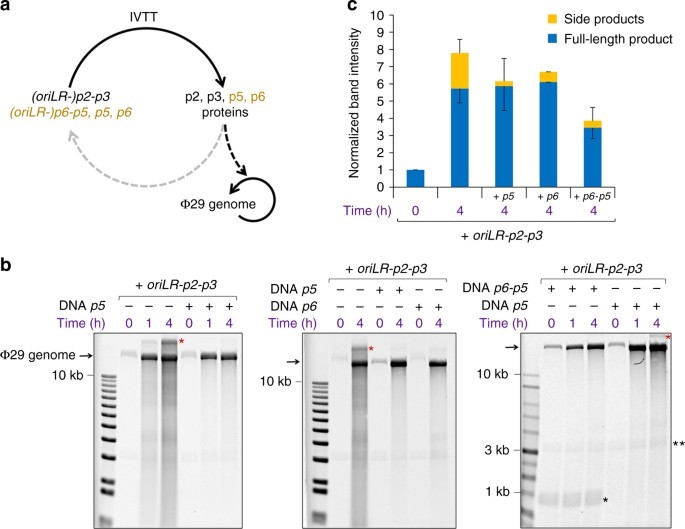 Fig. 2 Replication of the Φ29 genome with de novo synthesized proteins. 1
Compartmentalization of DNA Replication within Phospholipid Vesicles
The critical transition from an open biochemical reaction to a true "synthetic cell" requires a physical boundary. The final, pivotal advancement was the successful compartmentalization of the coupled DNA replication and gene expression systems inside phospholipid vesicles (liposomes). The purpose of this compartmentalization was to provide a stable, biomimetic chassis for the reaction. The results demonstrated that the liposomal microenvironment supported the complex enzymatic cascades required for the central dogma of molecular biology to cycle continuously. This directly highlights the power of lipid nanotechnology in shielding, concentrating, and enabling complex biological functions, offering profound implications for advanced drug carrier design.
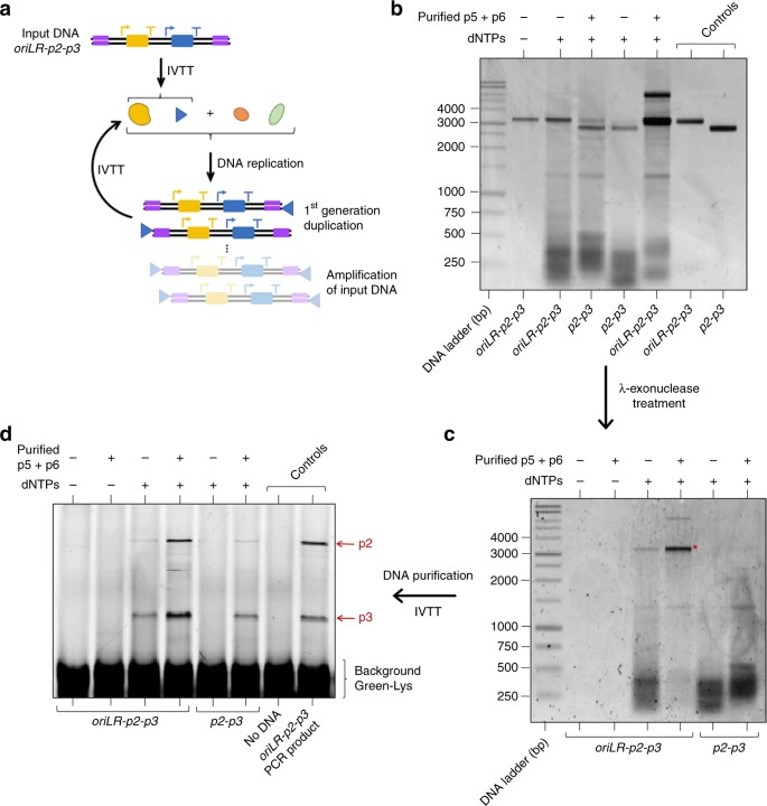 Fig. 3 Replication of DNA by its encoded proteins. 1
Ready to push the boundaries of synthetic minimal cells and cell-free replication? Partner with Creative Biolabs to engineer robust liposomal micro-compartments precisely tuned for complex in vitro genetic circuits. Contact our scientific team today to discuss your specific encapsulation requirements, and discover how our tailored lipid nanotechnology solutions can accelerate your next major breakthrough.
Related Services & Products
Navigating the complexities of cell-free expression and synthetic biology requires precision-engineered lipid vehicles. Creative Biolabs offers specialized services related to Liposomes for Cell-Free DNA Replication, leveraging our deep expertise in lipid-based drug delivery systems. We seamlessly translate cutting-edge synthetic biology concepts into viable, highly characterized liposomal formulations, accelerating your path from structural design to functional validation.
|
Services/Products
|
Description
|
Inquiry
|
|
Liposome Development
|
Custom formulation of phospholipid vesicles optimized for the encapsulation of complex cell-free gene expression machinery.
|
Inquiry
|
|
Comprehensive Liposome Characterization
|
Comprehensive analysis including size, PDI, zeta potential, drug loading, and membrane fluidity assessments.
|
Inquiry
|
|
High-Purity Lipid Components
|
A vast catalog of synthetic and natural phospholipids, sterols, and PEGylated lipids for custom vesicle construction.
|
Inquiry
|
|
Analytical Lipid Standards
|
Highly calibrated reference standards essential for the precise quantification and validation of your lipid formulations.
|
Inquiry
|
Resources
Reference
-
Van Nies, Pauline, et al. "Self-replication of DNA by its encoded proteins in liposome-based synthetic cells." Nature communications 9.1 (2018): 1583. Distributed under Open Access license CC BY 4.0, without modification. https://doi.org/10.1038/s41467-018-03926-1.

For Research Use Only. Not For Clinical Use