Anionic Protein mediated Liposome Formulation
Introduction Research Insights Products & Services Resources
Achieving efficient delivery into mammalian cells remains a significant challenge for the broad application of proteins as research tools and therapeutics, often hindered by low delivery potency and cellular membrane barriers. To address this, advanced lipid-based drug delivery systems, particularly those utilizing anionic protein-mediated encapsulation strategies, have emerged as a highly promising solution to facilitate robust intracellular access. Recognizing the transformative potential of this approach, Creative Biolabs provides tailored, end-to-end solutions that help customers translate these innovative delivery concepts into tangible research breakthroughs. Our specialized services are designed to overcome delivery limitations, equipping your pipeline with the optimal formulation strategies needed for next-generation protein therapeutics.
Breaking the Cellular Barrier: The Evolution of Protein Delivery Vehicles
Developing effective carriers for proteins requires a deep understanding of macromolecular interactions, electrostatics, and lipid chemistry. The integration of polyanionic mediators represents a critical leap forward in formulation science.
The Intracellular Delivery Dilemma
Delivering functional proteins directly into the cytosol is complicated by the inherent properties of proteins themselves.
-
Size and Structure: Proteins are large, complex, and prone to denaturation.
-
Charge Variations: The variable surface charge of native proteins makes uniform encapsulation difficult.
-
Endosomal Entrapment: Even if endocytosis occurs, proteins frequently degrade in lysosomes before reaching the target site.
Harnessing Cationic Lipids for Protein Transport
Cationic lipids are highly effective at neutralizing negatively charged cargo (like nucleic acids) and facilitating cellular uptake via interactions with the anionic cell membrane.
-
Mechanism: They spontaneously form complexes (lipoplexes) with negatively charged molecules.
-
Limitation: Because many therapeutic proteins lack a strong, uniform negative charge, traditional cationic lipid encapsulation is often inefficient, resulting in poor delivery potency.
The Role of Polyanionic Fusion Strategies
To bridge the gap between cationic lipids and protein cargo, researchers utilize highly negatively charged "adaptor" molecules.
-
Electrostatic Bridging: By fusing or associating a target protein with a highly anionic (negatively charged) protein domain, the cargo mimics a nucleic acid.
-
Enhanced Encapsulation: This drives robust electrostatic interaction with cationic lipids, significantly increasing encapsulation efficiency and subsequent cytosolic release.
Insights from Polyanionic Protein-Mediated Encapsulation
Recent advancements have shed light on the structural and electrostatic requirements for optimizing cationic lipid-mediated protein delivery. By exploring naturally occurring, intrinsically disordered human proteins, researchers can identify novel carriers that significantly enhance encapsulation efficiency and cellular uptake. These insights provide a critical blueprint for developing high-potency formulations for complex gene-editing tools and therapeutics.
Screening & Identification of Optimal Polyanionic Carriers
The discovery process for superior delivery vehicles involves evaluating various negatively charged natural human proteins against existing synthetic or engineered benchmarks (such as highly negatively charged GFP variants). Analytical studies have demonstrated that small, intrinsically disordered proteins—such as ProTα—can dramatically outperform previous standards, yielding up to a 10-fold increase in delivery efficiency. This highlights the profound importance of structural flexibility and spatial charge distribution in forming stable, cell-permeable lipid-protein complexes, providing researchers with a roadmap for selecting the optimal carrier architecture.
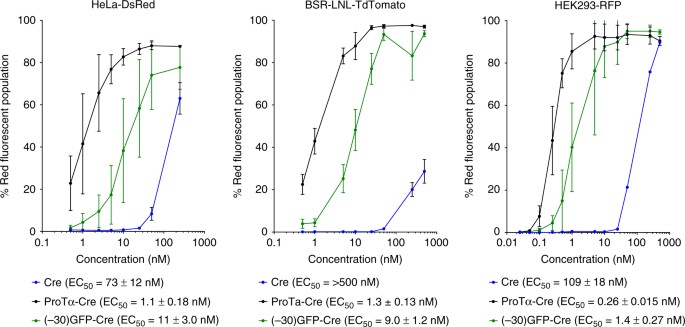 Fig. 1 ProTα enables efficient cationic lipid-mediated protein delivery into cell. 1
Low-Concentration Efficacy in Genome Editing Delivery
A major hurdle in applying protein therapeutics, particularly for genomic engineering, is achieving profound biological activity at clinically relevant, low doses. Utilizing optimized polyanionic carriers enables the robust delivery of distinct, complex functional proteins—such as Cre recombinase and zinc-finger nucleases—at low- to mid-nanomolar concentrations. Under conditions where traditional cationic lipids or sub-optimal fusions fail to produce substantial activity, these advanced anionic mediators ensure high intracellular bioavailability and functional gene editing, proving vital for translation into scalable therapeutic applications.
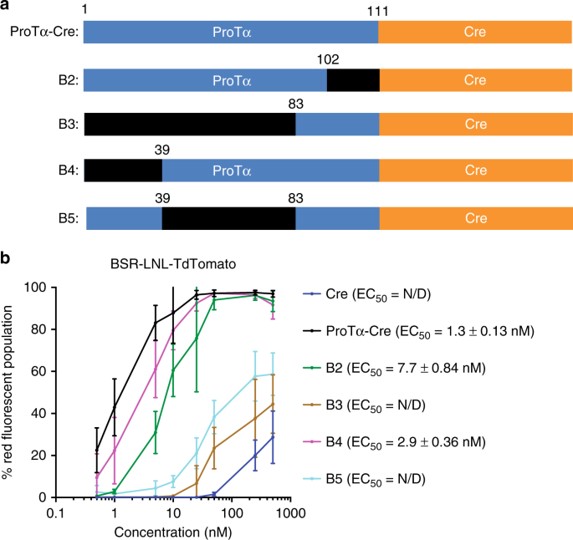 Fig. 2 Truncation of ProTα. 1
Overcoming Delivery Potency Limitations in Primary Cells
The true test of a delivery system's viability lies in its performance across difficult-to-transfect, biologically relevant cell lines, including human primary fibroblasts. Validation studies confirm that employing highly active, naturally occurring polyanionic proteins as mediators effectively bypasses the restrictive potency limitations typically observed in primary cells. This breakthrough translates to broader application possibilities for ex vivo cell therapies, sophisticated in vitro disease modeling, and advanced drug screening platforms.
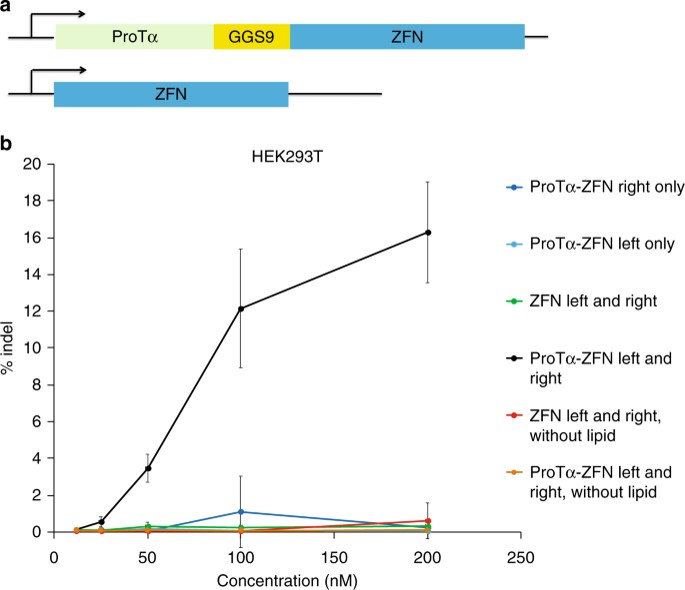 Fig. 3 Delivery of nucleases using ProTα. 1
Ready to overcome your most complex protein delivery bottlenecks? Partner with Creative Biolabs to harness the power of advanced lipid-based technologies. Let our experts elevate your formulation strategy. Contact us today to discuss your project requirements and accelerate your therapeutic development.
Related Services & Products
Creative Biolabs offers specialized, end-to-end services tailored to the intricacies of Anionic Protein-Mediated Liposome Formulations. We bridge the gap between discovery and application by providing comprehensive support in advanced lipid-based drug delivery systems. From initial design to final validation, our expert team ensures your therapeutic proteins are delivered with maximal efficiency and minimal toxicity.
|
Services/Products
|
Description
|
Inquiry
|
|
Protein Delivery Optimization
|
End-to-end formulation strategies specifically focused on overcoming intracellular barriers for the efficient cytosolic delivery of complex therapeutic proteins.
|
Inquiry
|
|
Liposome Development
|
Custom formulation of high-efficiency cationic/anionic lipid complexes tailored to your specific protein cargo.
|
Inquiry
|
|
Advanced Lipid Components
|
Premium-grade DOTAP, DOPE, and functionalized lipids for customized, bottom-up formulation design.
|
Inquiry
|
|
Process Optimization
|
Scaling, refining, and stabilizing complex formulations for reproducible manufacturing and optimal performance.
|
Inquiry
|
Resources
Reference
-
Kim, Y. Bill, et al. "An anionic human protein mediates cationic liposome delivery of genome editing proteins into mammalian cells." Nature communications 10.1 (2019): 2905. Distributed under Open Access license CC BY 4.0, without modification. https://doi.org/10.1038/s41467-019-10828-3.

For Research Use Only. Not For Clinical Use