Creative Biolabs designs glycan and glycopeptide immunogens around recognition goals,
presentation chemistry, matched controls, and downstream antibody screening requirements for focused
research programs.
Your downstream antibody project may need to recognize a glycan across several proteins, distinguish one
site-specific glycopeptide, or avoid the carrier and peptide backbone entirely. The immunogen is successful
only when its presentation steers discovery toward that recognition profile and leaves practical controls for
screening. Creative Biolabs starts with the future antibody’s job, then works backward
through epitope architecture, peptide context, attachment, linker, carrier, and display density. This approach
connects glycan immunogen design with candidate-selection logic instead of treating synthesis and screening as
separate decisions.
Why Glycan Immunogen Design Requires More Than Epitope
Selection
A carbohydrate epitope may be too small or too weakly immunogenic to function as an effective immunogen on its
own. Conjugation solves part of the presentation problem but introduces new variables: attachment site, linker
length, carrier identity, surface density, glycan orientation, and conformational freedom can all influence
which molecular feature dominates the response.
For glycopeptides, the peptide backbone and glycosylation site are integral to the antigenic surface. An
antibody intended to recognize a site-specific glycopeptide requires different design logic from one intended to
bind the glycan across multiple proteins. Counter-antigens must be planned alongside the immunogen so that these
outcomes can be distinguished during screening.
Candidate selection is strengthened by:
Positive constructs that represent the intended glycan or glycopeptide surface in more than one presentation
when feasible.
Unglycosylated peptide, alternative glycoforms, carrier-only, and linker controls that reveal off-target
selection.
A downstream assay context that guides density, orientation, and the degree of conformational freedom built
into the design.
Our Glycan and Glycopeptide Immunogen Design Services
Creative Biolabs translates the intended recognition profile into four linked design decisions: epitope format,
carrier and linker, presentation, and positive/counter-antigen design. These choices are evaluated together so
the immunogen and the later screening strategy test the same recognition boundary.
Glycan and Glycopeptide Design
Defined glycans, glycopeptides, multivalent displays, or carrier conjugates are considered according to the
intended molecular context. For glycopeptides, peptide length, glycosylation site, flanking residues, and
conformational constraints are evaluated together rather than as independent variables.
Carrier, Linker, and Control Design
Carrier, linker, attachment position, and display density are assessed for chemical feasibility and for the
risk that presentation components dominate candidate selection. The design also leaves practical matched
controls for downstream screening.
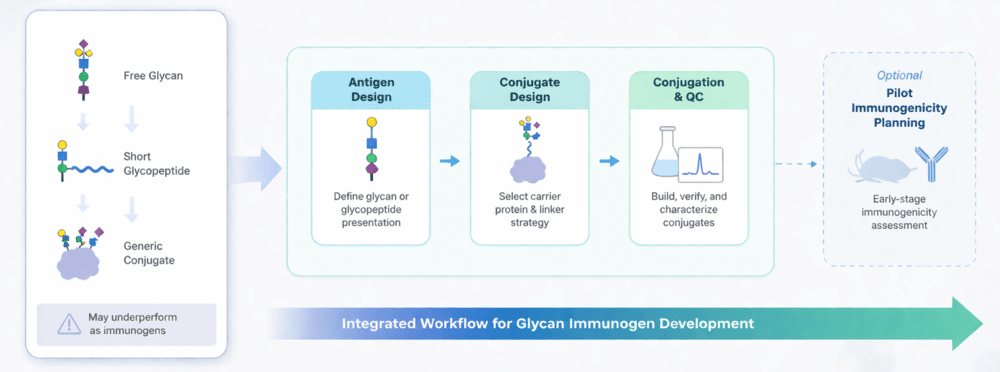
Fig. 1. Integrated glycan immunogen development links antigen presentation with conjugate design,
conjugation quality assessment, and optional pilot immunogenicity planning.
From Recognition Goal to Immunogen Architecture
The first decision is the recognition boundary: glycan-focused recognition, site-specific glycopeptide
recognition, or broader context-tolerant binding. That boundary determines which molecular surfaces should be
preserved in the positive construct and which should be represented in counter-selection.
A glycan-focused objective may favor repeated carbohydrate exposure while minimizing scaffold-specific
features. A glycopeptide objective may require a defined glycosylation site and enough flanking sequence to
reproduce the intended surface. Presentation should support recognition without making the screen depend on an
artificial avidity state that is absent from the intended assay.
Building Counter-Screening into the Immunogen Plan
Counter-screening is planned before candidate generation because negative antigens can influence the immunogen
itself. An unglycosylated peptide can reveal peptide-backbone recognition; an alternative glycoform can test
glycan selectivity; and carrier-only or linker-bearing controls can identify presentation-component binding.
For context-tolerant antibodies, the positive panel may include more than one relevant background. For
context-restricted antibodies, matched constructs that vary one feature at a time provide a clearer route to
down-selection.
Our Immunogen Design Workflow
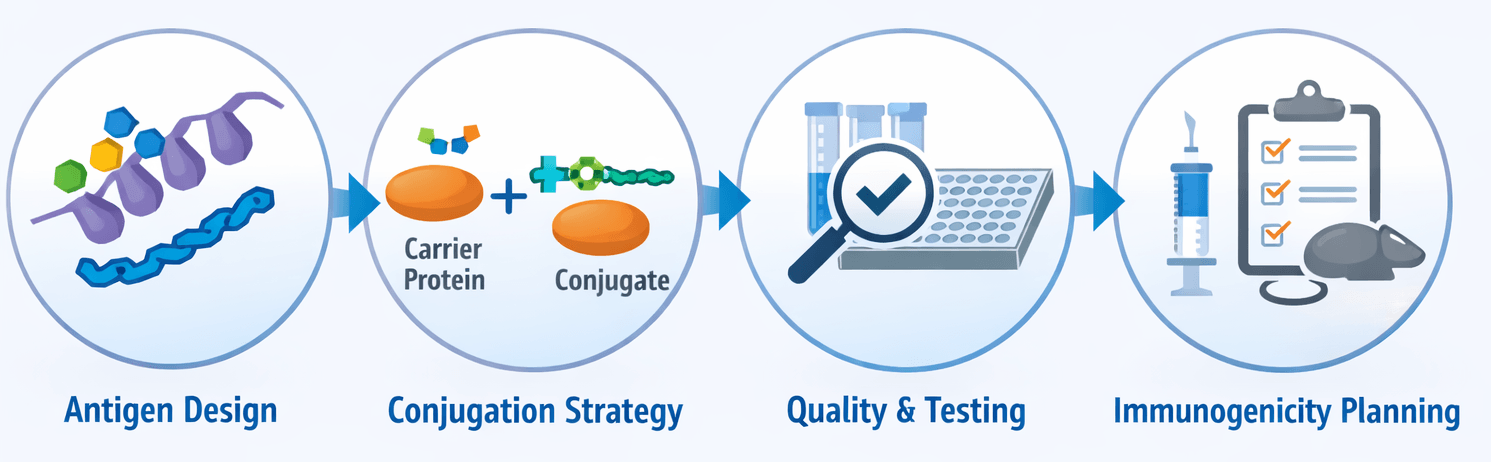
Fig. 2. Four connected stages provide a practical framework for glycan or glycopeptide immunogen
planning and assessment.
Define the target structure, recognition breadth, excluded features, intended assay, and downstream
antibody format.
Select a glycan or glycopeptide architecture that presents the relevant molecular surface.
Evaluate carrier, linker, conjugation site, density, solubility, and synthesis feasibility.
Design matched screening and counter-screening antigens before finalizing the immunogen.
Review the design package with the downstream discovery route and sample context in mind.
Confirm the recommended design, limitations, and handoff requirements for synthesis or antibody
generation.
The illustrated sequence organizes the work from antigen definition through conjugation and quality assessment,
with pilot immunogenicity planning available when it supports the downstream program. It is a flexible framework
rather than a fixed construct recipe: carrier, linker, scaffold, conjugation position, density, analytical
checks, discovery host, and project outputs are selected according to the target and intended validation
environment.
Project Requirements and Deliverables
Immunogen design depends on both molecular detail and the
experimental decision that the future antibody must support. Missing information should be identified as a
design uncertainty rather than filled with a default construct.
Project Input
Project Requirements
Provide the complete glycan structure.
Peptide sequence and glycosylation site when relevant.
Desired recognition breadth and excluded structures.
Carrier or chemistry constraints.
Intended assay and downstream discovery route.
Project Output
Design Deliverables
The agreed design package may include immunogen architecture.
Attachment and carrier rationale.
Recommended control antigens.
Feasibility considerations.
A handoff plan for synthesis or antibody development.
It is a design output and does not predict immune response or antibody performance.
Recommended Services or Products You May Need
Natural follow-on work can connect the design directly to candidate generation and specificity testing.
Depending on the discovery route, relevant next steps include hybridoma screening for anti-glycan binders, phage
display screening for anti-glycan antibodies, and glycan microarray-based antibody screening. Product
suggestions still require exact structural matching and should not be made from a broad glycan name alone.
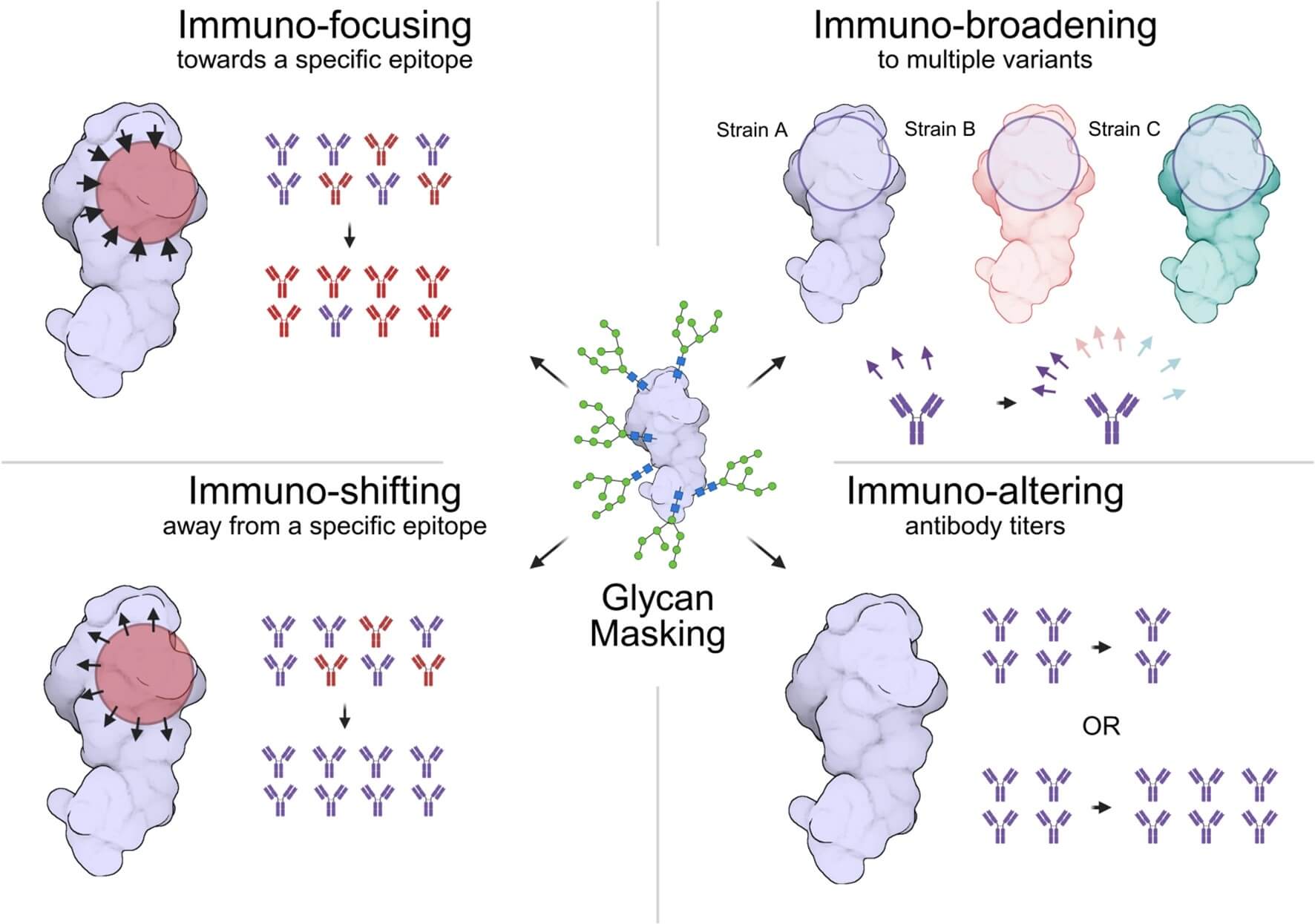
Araiza and colleagues reviewed glycan masking as a strategy for redirecting antibody responses through rational
immunogen design. Engineered N-glycosylation can suppress recognition of selected surface regions and produce
four broad outcomes: immuno-focusing, immuno-broadening, immuno-shifting, and immuno-altering. Importantly,
effective glycan placement depends on more than introducing an N-glycosylation sequon. Solvent accessibility,
structural context, proximity to desired or undesired epitopes, protein folding, glycan occupancy, and
expression behavior all influence the resulting antigenic surface. Computational prediction, structural
modeling, and comparison with homologous glycoproteins can help prioritize candidate positions, but experimental
confirmation of glycosylation and retained antigen structure remains necessary. This framework reinforces a
practical principle for glycan and glycopeptide immunogen design: epitope architecture, neighboring glycans, and
downstream specificity controls should be considered together so that antibody discovery is directed toward the
intended molecular surface rather than incidental presentation features.
Fig.3 Glycan placement can focus, broaden, shift, or alter epitope recognition, illustrating how
immunogen architecture redirects antibody responses.¹
Structure-Guided Glycopeptide Evidence
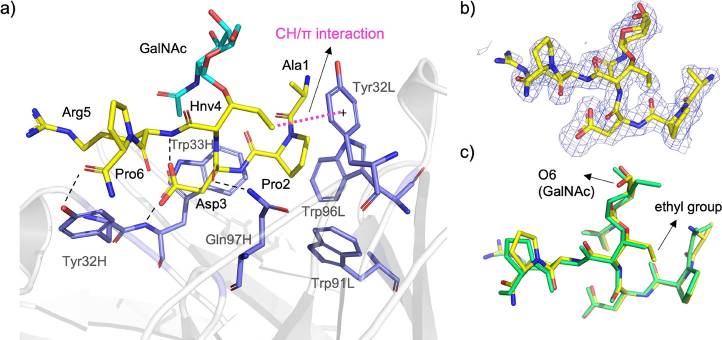
Bermejo and colleagues used a structure-guided strategy to engineer MUC1 glycopeptide antigens while preserving
molecular recognition of the native glyco-epitope. They replaced threonine within the immunodominant MUC1 APDTRP
region with the noncanonical amino acid hydroxynorvaline and compared the resulting GalNAc glycopeptides with
natural threonine-containing counterparts. BLI and SPR measurements showed that the engineered glycopeptides
retained similar binding affinity for the anti-MUC1 antibody SM3. NMR, molecular dynamics, and a 1.85 Å crystal
structure further showed that the engineered glycopeptide adopted a closely related bound conformation, while
local side-chain geometry altered CH/π interactions with the antibody. When incorporated into a nanoparticle
immunogen, the engineered antigen also generated anti-MUC1 IgG responses comparable to the natural derivative.
Together, these results demonstrate that peptide sequence, glycosylation context, three-dimensional
presentation, and antibody-contact geometry are interconnected variables that should be evaluated when designing
glycopeptide immunogens and corresponding screening controls.
Fig.4 Structural comparison of engineered and natural MUC1 glycopeptides shows how local
glycopeptide conformation and side-chain interactions shape antibody recognition.²
Start a Project Conversation
To help us prepare a focused feasibility discussion, please share:
complete target structure and desired recognition breadth
positive, negative, and counter-target materials already available
sample type and intended validation environment
preferred antibody format and downstream assay
known chemistry, handling, timeline, or project constraints
Plan Your Glycan or
Glycopeptide Immunogen
Frequently Asked Questions
What information is needed to begin immunogen design?
Provide the complete glycan structure, peptide sequence and glycosylation site when relevant, desired
recognition profile, excluded structures, intended assay, and downstream antibody format. Known chemistry,
carrier, solubility, or sample constraints are also useful. We use these inputs to identify which
presentation variables and screening controls need deliberate design.
When is a glycopeptide preferable to a glycan conjugate?
A glycopeptide is often more informative when the peptide sequence, glycosylation site, or local
conformation is part of the intended epitope. A glycan conjugate may better suit context-tolerant
carbohydrate recognition. The choice follows the future antibody’s job and the positive and negative
constructs available for screening.
Which counter-antigens should be designed with the immunogen?
Useful controls may include unglycosylated peptide, alternative glycoforms, structural-neighbor glycans,
unconjugated carrier, and linker-bearing carrier. Their value depends on the intended recognition boundary.
Planning them early helps ensure that candidate screening can distinguish glycan, peptide, glycopeptide,
carrier, and presentation-dependent responses.
Can customer-provided sequences or materials be incorporated?
Yes, subject to feasibility and rights to use the submitted material. Customer peptide sequences, glycan
structures, reference samples, or prior assay data can help preserve biological relevance. We review purity,
format, available quantity, handling needs, and controls before relying on supplied material in a design or
validation plan.
How does the validation environment influence immunogen architecture?
The intended assay determines how much density, orientation, and molecular context the future antibody must
tolerate. A highly multivalent immunogen may favor avidity-dependent candidates that underperform on a
sparse native target. We therefore connect presentation choices to orthogonal screening and, where possible,
the customer’s final sample environment.
Does immunogen design determine the final antibody format?
No. Immunogen architecture shapes the response or discovery landscape, while antibody format is selected
for the downstream application. We can design with future isotype, valency, labeling, or recombinant
reformatting in mind, but performance is confirmed experimentally because format changes may alter avidity,
accessibility, and background binding.
References
Araiza, Grace, et al. Glycan Masking in Immunogen Design: Computational and Experimental Methods. Frontiers in Immunology 16 (2025): 1726810. Distributed under Open Access license CC BY 4.0, without modification. https://doi.org/10.3389/fimmu.2025.1726810
Bermejo, Iris A., et al. Structure-Guided Approach for the Development of MUC1-Glycopeptide-Based Cancer
Vaccines with Predictable Responses. JACS Au 4.1 (2024): 150-163. Distributed under Open Access license CC BY 4.0, without modification. https://doi.org/10.1021/jacsau.3c00587
Project Inquiry
!For Research Use
Only.Not for clinical or diagnostic use.