
High-Fat Diet (HFD) induced Hyperlipidemia Modeling & Pharmacodynamics Service
Creative Biolabs offers a variety of advanced and reliable models for evaluating the efficacy of therapeutic agents targeting hyperlipidemia. These models are designed to support your research and therapeutic development with high-quality data and comprehensive services.
Introduction
Hyperlipidemia is a condition characterized by abnormally high levels of lipids in the blood, primarily cholesterol and triglycerides. This metabolic disorder is a major risk factor for cardiovascular diseases such as atherosclerosis, coronary artery disease, and stroke. Hyperlipidemia can be categorized into two types: primary (genetic) and secondary (due to other conditions such as obesity, diabetes, or poor dietary habits). Primary hyperlipidemia arises from inherited genetic mutations that affect lipid metabolism, while secondary hyperlipidemia results from external factors like diet, lack of physical activity, and certain medical conditions. Elevated levels of low-density lipoprotein (LDL) cholesterol and triglycerides lead to plaque formation in the arteries, causing narrowing and hardening, which increases the risk of heart attacks and strokes. Early detection and management of hyperlipidemia are critical in preventing long-term cardiovascular damage. Treatment typically includes lifestyle modifications, such as diet and exercise, and pharmacological interventions, including statins, fibrates, and other lipid-lowering medications.
Disease Models and Applications
The High-Fat Diet induced Hyperlipidemia Model is commonly used to study the effects of diet induced lipid abnormalities in rodents. The model is established by feeding animals a high-fat diet (HFD) for a specified period, typically 4 to 12 weeks, to induce elevated blood lipid levels, resembling human hyperlipidemia. This model is effective for evaluating the impact of various dietary interventions and pharmacological agents on lipid metabolism. The high-fat diet leads to significant increases in total cholesterol, triglycerides, and LDL cholesterol levels in the bloodstream. One of the key advantages of this model is its simplicity and reproducibility, making it widely used in preclinical research. However, it has limitations, including a lack of long-term progression of cardiovascular diseases, which may limit its use in studying the chronic effects of hyperlipidemia.
- Simulates: The High-Fat Diet induced Hyperlipidemia Model simulates lipid abnormalities in humans, such as elevated cholesterol and triglyceride levels, which are key contributors to cardiovascular diseases.
- Evaluates Drugs: This model is used to evaluate drugs targeting lipid-lowering agents, including statins, fibrates, and novel compounds aimed at reducing cholesterol and triglyceride levels, as well as those focused on improving overall lipid metabolism.
Measurements
We offer a variety of measurements for evaluating drug efficacy in the High-Fat Diet induced Hyperlipidemia Model, utilizing an array of advanced technologies, including but not limited to:
General observations: Body weight, food intake, and serum lipid levels (total cholesterol, LDL, HDL, triglycerides).
Lipid profile analysis: Serum cholesterol and triglyceride quantification using enzymatic assays.
Histopathological analysis: Evaluation of atherosclerotic plaque formation and fatty liver via H&E and Oil Red O staining.
Cytokine profiling (e.g., ELISA): Expression levels of inflammatory markers such as TNF-α, IL-6, and CRP.
Gene/protein expression profiling: RT-qPCR and Western blotting to assess markers of lipid metabolism (e.g., PPAR-α, SREBP-1c, LDLR).
Our scientific team is available to assist with experimental design, model selection, and data analysis, ensuring a customized and effective approach to your project.
Related Services
In addition to the High-Fat Diet induced Hyperlipidemia Model, we offer other methods for inducing hyperlipidemia, such as the genetic ApoE knockout model, which mimics familial hyperlipidemia, and the STZ induced model, which combines diabetes with lipid abnormalities. These models provide alternative platforms for evaluating lipid-related therapeutic interventions and understanding the multifactorial nature of hyperlipidemia.
Advantages
- Expertise and Experience: Our team has extensive experience in hyperlipidemia research, offering detailed insights into lipid metabolism and cardiovascular disease.
- Advanced Technology: We utilize state-of-the-art technologies and methods, ensuring high-quality data and reproducible results.
- Tailored Solutions: Our models and services are customizable to meet the unique needs of your research, providing optimal conditions for studying hyperlipidemia.
- Comprehensive Support: From study design to data analysis, we provide continuous support throughout the research process to ensure the success of your project.
- High-Quality Models: We offer well-established and reliable models for hyperlipidemia, helping accelerate the development of effective therapeutic strategies.
Work with Us
- Summarize the project requirements and fill in the information collection form.
- Sign a CDA from both parties to further communicate information, such as targets.
- Select an animal model, discuss experimental design, and determine assay parameters.
- Project costing and project schedule forecasting.
- We provide a detailed project plan, including the required sample quantities, methods, and protocols.
- Both parties confirm the project details and start the project.
- Confirm the timeline of the project.
- We provide periodic results and information on the animal's condition.
- We will work together to make project adjustments as necessary.
- We provide a comprehensive project report promptly.
- We arrange transportation for the produced samples.
- We provide a discussion of the project results and help to arrange the next steps.
- Data storage and archiving.
FAQs
-
Q: What are the benefits of using the High-Fat Diet induced Hyperlipidemia Model?
A: This model is cost-effective and reliable for studying lipid metabolism and evaluating the effects of lipid-lowering drugs, making it ideal for preclinical research.
-
Q: Can the High-Fat Diet induced Hyperlipidemia Model be used for long-term studies?
A: While this model is effective for short- to medium-term studies (4-12 weeks), it may not fully replicate the long-term progression of cardiovascular diseases seen in humans.
-
Q: What drugs can be tested using this model?
A: The model is suitable for testing statins, fibrates, PCSK9 inhibitors, and other lipid-lowering therapies, as well as compounds aimed at improving lipid metabolism.
-
Q: Do you offer custom modifications to the High-Fat Diet induced Hyperlipidemia Model?
A: Yes, Creative Biolabs provides custom modifications to the model based on your specific research needs, including changes to diet composition or duration.
-
Q: How do I get started with your services?
A: You can contact us directly for an initial consultation, and our team will help guide you through model selection, experimental design, and data analysis for your research.
Published Data
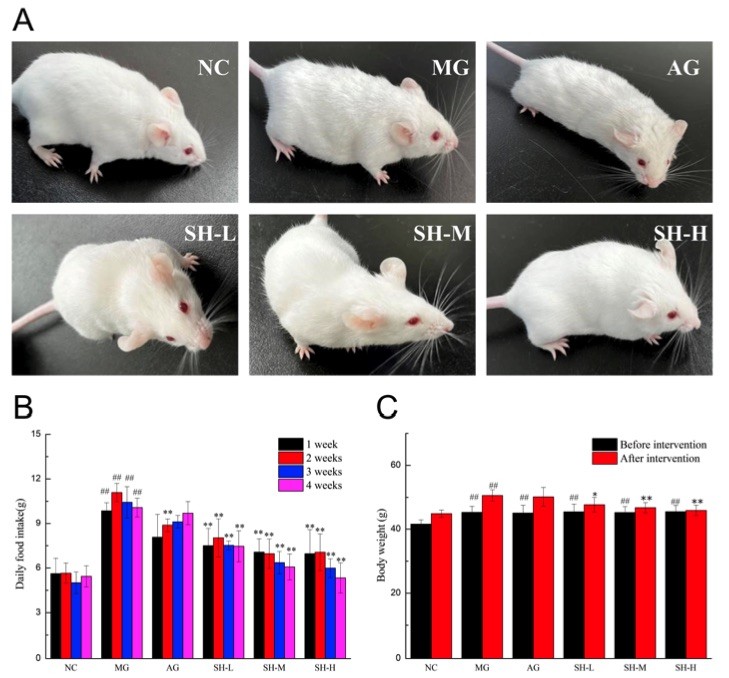 Fig. 1 Effect of Stachys sieboldii Miq. Huangjiu (CSCHJ) on the mouse physiological state.1
The intervention of CSCHJ in various dosage groups of mice demonstrated a dose-dependent improvement in overall mental state, increased reaction sensitivity, enhanced activity, and improved fur color and glossiness. Compared to the MG group, food intake decreased, and feces were well-formed. The daily food intake of each group before and after the intervention is shown in Figure 1B. The NC group maintained stable food intake around 5.5 g, while the MG and AG groups showed a significant increase in food intake (p < 0.01), with AG exhibiting slightly lower intake than MG due to balanced energy metabolism. Mice in the CSCHJ dose group had significantly lower food intake compared to the MG group (p < 0.01), suggesting that CSCHJ regulates appetite. Regarding body weight (Figure 1C), the NC group remained stable at 41 g, while high-fat diet-fed mice in all groups gained weight, reaching 45 g (p < 0.01). After CSCHJ intervention, body weight changes were observed. The MG group showed a significant increase of 11.60% (p < 0.01), indicating severe metabolic disturbances. In contrast, the AG group had slightly lower body weight (50.16 g), suggesting alcohol had no effect on body weight regulation. The CSCHJ-treated groups exhibited a reduced growth rate, with the SH-L group showing a 4.81% increase in body weight (p < 0.05), while the SH-M and SH-H groups showed reductions of 3.36% and 0.83%, respectively (p < 0.01). These results indicate that CSCHJ effectively modulates body weight gain in hyperlipidemic mice, with a negative correlation between weight gain and polysaccharide concentration.
Reference
- Geng, Jingzhang et al. "Alleviation of High-Fat Diet induced Hyperlipidemia in Mice by Stachys sieboldii Miq. Huangjiu via the Modulation of Gut Microbiota Composition and Metabolic Function." Foods (Basel, Switzerland) vol. 13,15 2360. 26 Jul. 2024, DOI:10.3390/foods13152360. Distributed under an Open Access license CC BY 4.0, without modification.
For Research Use Only.