
- Summarize the project requirements and fill in the information collection form.
- Sign a CDA from both parties to further communicate information, such as targets.
- Select an animal model, discuss experimental design, and determine assay parameters.
- Project costing and project schedule forecasting.
Heart Failure Modeling & Pharmacodynamics Services
Creative Biolabs stands at the forefront of preclinical research, leveraging state-of-the-art technology platforms and a comprehensive array of well-established animal models (Mouse, Rat, Rabbit, Dog, NHPs) to provide robust, reproducible data for evaluating drug efficacy against HF. Our models encompass surgical, chemically induced, and spontaneous etiologies, meticulously designed to meet diverse study endpoints and propel your therapeutic development forward.
Introduction
Heart failure (HF) is a formidable global health challenge, affecting millions and imposing a substantial burden worldwide. This progressive and complex syndrome is characterized by the heart's diminished capacity to pump sufficient blood to meet the body's metabolic demands. Clinical presentation manifests as debilitating symptoms like breathlessness, fatigue, and fluid retention. While current treatments aim to manage symptoms and slow progression, a critical need persists for novel diagnostics, preventative strategies, and more effective therapies.
Available Heart Failure Models at Creative Biolabs
Animal models (rodents and non-rodents) are the cornerstone of cardiovascular drug discovery. They serve as essential bridges, enabling controlled study of complex disease mechanisms, systematic evaluation of novel therapeutics, and validation of biomarkers in a living system. Model construction often involves precise surgical interventions, targeted pharmacological agents, or genetic predispositions, recapitulating human HF progression and treatment response. Creative Biolabs employs rigorous strategies for model development and characterization, ensuring high fidelity and translational relevance.
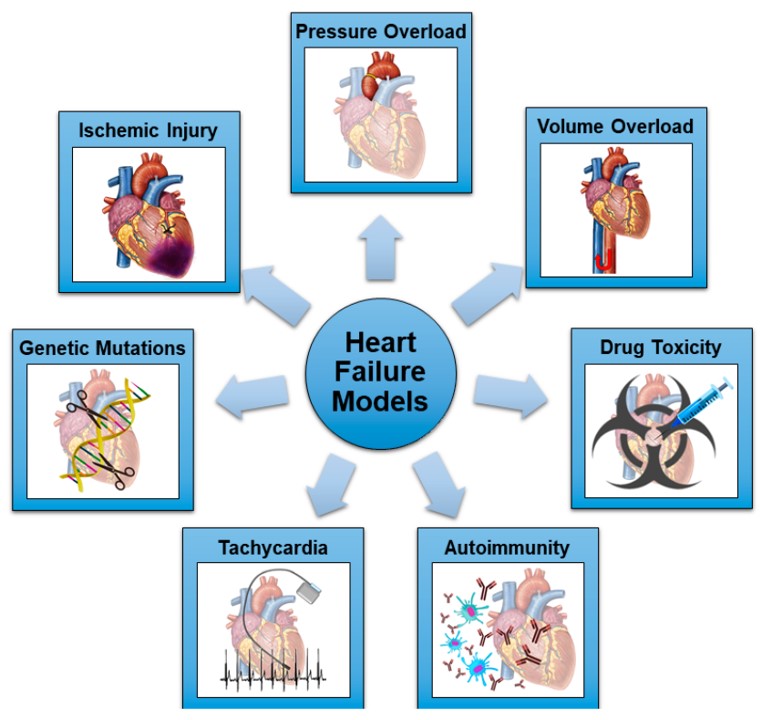 Fig.1 The most common mechanisms utilized in rodent models of HF.1,3
| Heart Failure Models | Modeling and applications | Animal species |
|---|---|---|
| Acute Myocardial Ischemia (AMI) induced Left Heart Failure (HF) Model | LAD coronary artery ligation creates myocardial ischemia and infarction, vital for studying post-infarction remodeling and regeneration therapies. | Mouse, Rat, Rabbit, Dog, NHPs |
| Pulmonary Artery (PA) Constriction induced Right Heart Failure (HF) Model | Surgically constricting the pulmonary artery increases right ventricular afterload, leading to hypertrophy and failure, ideal for pulmonary hypertension research. | Rat |
| Ascending Aortic Arch Constriction induced Post-Pressure Overload Heart Failure Model | Chronic left ventricular pressure overload is induced by aortic constriction, widely used for studying hypertrophy, fibrosis, diastolic dysfunction, and HF transition. | Mouse |
| Abdominal Aortic Stenosis induced Left Heart Failure (HF) Model | Surgical narrowing of the abdominal aorta increases systemic resistance, creating left heart pressure overload to examine chronic hypertension's cardiac remodeling. | Rat, Rabbit, Dog |
| DOCA & Salt induced Left Heart Failure (HF) Model | DOCA and a high-salt diet (often uninephrectomized) induce severe hypertension, hypertrophy, and fibrosis, valuable for mineralocorticoid-induced cardiac pathologies in HF with preserved ejection fraction (HFpEF). | Rat |
| Salt induced Left Heart Failure (HF) Model in Dahl Salt-Sensitive Rats | A high-salt diet alone induces severe hypertension and HF in genetically predisposed rats, excellent for salt-sensitive hypertension studies. | Rat |
| Adriamycin induced Left Heart Failure (HF) Model | Chronic Adriamycin administration causes cardiotoxicity, dilated cardiomyopathy, and oxidative stress, crucial for understanding chemotherapy-induced cardiotoxicity and developing cardioprotective strategies. | Rat, Rabbit, Dog |
| Isoproterenol induced Chronic Heart Failure Model | Repeated isoproterenol infusion induces chronic myocardial stress, hypertrophy, fibrosis, and HF, useful for investigating adrenergic signaling and novel therapies. | Mouse |
| AngII induced Chronic Heart Failure Model | Continuous AngII infusion induces hypertension, cardiac hypertrophy, and fibrosis, progressing to HF. This model is valuable for studying the RAAS and testing related inhibitors. | Mouse |
| ACF induced Anterior Pressure Overload Heart Failure Model | A surgical aortocaval shunt induces volume overload, leading to cardiac dilation and failure, ideal for high-output HF and eccentric hypertrophy. | Mouse |
| High-Fat Diet induced Heart Failure Model | Long-term high-fat feeding induces obesity, insulin resistance, and metabolic syndrome, contributing to HFpEF. Essential for examining metabolic disorders and evaluating relevant therapies. | Mouse |
| High-Fat and High-Cholesterol Diet induced Heart Failure Model | Similar to high-fat but with added cholesterol, this accentuates dyslipidemia and metabolic dysfunction, impacting cardiac health for comprehensive cardiovascular studies. | Mouse |
| 5/6 Nephrectomy induced Heart Failure Model | Subtotal renal mass removal leads to CKD, hypertension, and cardiorenal syndrome, culminating in HF. Critical for investigating cardiorenal interactions and testing therapies. | Mouse |
| Pulmonary Hypertension induced Right Heart Failure Model | Induced by chronic hypoxia or monocrotaline, this model leads to pulmonary arterial hypertension and right ventricular hypertrophy/failure, designed for studying RV pathological remodeling. | Rat |
| Renal Artery Constriction induced Hypertensive Heart Failure Model | Renovascular hypertension is induced by renal artery narrowing, leading to chronic pressure overload, enabling investigation of hypertension's cardiac remodeling and anti-hypertensive drug efficacy. | Rat, Rabbit, Dog |
| Doxorubicin induced Cardiomyopathy Model | Doxorubicin induces dose-dependent cardiotoxicity, causing dilated cardiomyopathy and cardiac dysfunction. This model is essential for studying chemotherapy-induced cardiotoxicity and developing cardioprotective agents. | Mouse |
Evaluation Platform
At Creative Biolabs, we utilize a diverse array of state-of-the-art technologies to perform endpoint analyses of drug efficacy, ensuring the highest quality and most reproducible data for your projects. Our comprehensive evaluation platform includes:
- Imaging: Echocardiography, MRI for detailed cardiac function (LVEF, LV dimensions, wall thickness), strain analysis.
- Physiological Measurements: Hemodynamic assessments (pressure-volume loops), telemetry for continuous blood pressure and ECG monitoring.
- Biochemical Analysis: Serum biomarkers (e.g., BNP, troponins), enzyme activity, metabolic panels.
- Molecular Analysis: Gene expression (qPCR), protein expression (Western blot, ELISA), signaling pathway analysis.
- Histopathological Analysis: Myocardial fibrosis quantification (e.g., picrosirius red staining), cardiomyocyte hypertrophy, inflammatory cell infiltration.
- Cellular Assays: Isolated cardiomyocyte contractility, mitochondrial function.
Applications
Disease Simulation: Accurately mimicking human conditions like ischemic cardiomyopathy, hypertensive heart disease, chemotherapy-induced cardiotoxicity, and inherited cardiomyopathies.
Drug Evaluation: Assessing efficacy and safety of novel small molecules, biologics, and gene therapies.
Therapy Advancement & Mechanistic Insight: Driving strategies to prevent disease progression, reverse cardiac remodeling, improve cardiac function, and enhance survival. We also elucidate fundamental molecular mechanisms and validate novel diagnostic/prognostic biomarkers.
Related Cardiovascular Models
Our Advantages
- Diverse Animal Species: Access to a wide range of rodent and non-rodent models, expertly selected for specific HF etiologies.
- Integrated In Vivo Evaluation: Comprehensive, one-stop preclinical services ensuring robust and integrated evaluation of drug candidates in living systems.
- Expert Team & Quality Systems: Our professional team of cardiovascular biologists, coupled with a perfect quality management system, ensures scientific rigor and data integrity.
Work with Us
Inquiry Stage
Project Start
- We provide a detailed project plan, including the required sample quantities, methods and protocols.
- Both parties confirm the project details and start the project.
- Confirm the timeline of the project.
Project Progress
- We provide periodic results and information on the animal's condition.
- We will work together to make project adjustments as necessary.
Project Completion
- We provide a comprehensive project report promptly.
- We arrange transportation for the produced samples.
- We provide a discussion of the project results and help to arrange the next steps.
After-Sales Support
- Data storage and archiving.
Contact Us
Creative Biolabs offers customized experimental designs, expert scientific guidance, and comprehensive consultancy to advance HF research. Our extensive experience, gained from numerous successful projects, establishes us as an authoritative partner to propel your studies forward. Contact us to discuss your project and discover the significant value our services provide.
FAQs
-
Q1: How do you ensure the translational relevance of animal HF models to human conditions?
A: We meticulously characterize our models using advanced physiological, imaging, and molecular techniques that parallel human diagnostic approaches. Furthermore, for challenging areas like HFpEF, we integrate clinical scoring systems, such as the H2FPEF criteria, into our preclinical validation, enhancing the direct applicability of our findings to clinical scenarios.
-
Q2: Can you customize an HF model or study design to fit a unique research question?
A: Absolutely. Our core strength lies in our flexibility and scientific expertise. We offer highly customized study designs, tailoring model selection, treatment protocols, and endpoint analyses to precisely align with your unique research objectives and therapeutic hypotheses.
-
Q3: What types of compounds can be tested in your HF models?
A: Our platforms are equipped to evaluate a broad spectrum of therapeutic agents, including small molecules, biologics (e.g., antibodies, peptides), gene therapies, and cell-based therapies. Our team will work with you to determine the optimal delivery route and dosing regimen for your specific compound.
-
Q4: Is Creative Biolabs compliant with animal welfare regulations and ethical guidelines?
A: Maintaining the highest ethical standards and ensuring animal welfare is paramount to our operations. All studies conducted at Creative Biolabs strictly adhere to national and international animal care and use guidelines, and our facilities are fully accredited and regularly inspected by relevant regulatory bodies.
Published Data
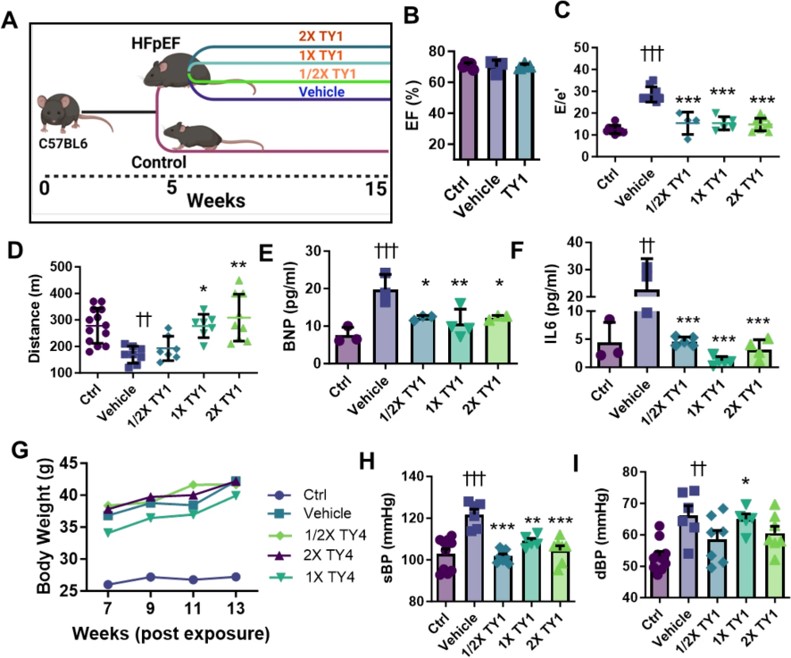 Fig.2 The therapeutic bioactivity of TY1 is verified in a mouse model of HFpEF.2,3
In a recent study, researchers investigated the efficacy of a synthetic RNA drug, TY1, in a two-hit obese-hypertensive mouse model of HFpEF. The project successfully demonstrated that intravenous and oral administration of TY1 effectively reversed cardiac and systemic manifestations of HFpEF, including improved diastolic function, exercise endurance, and reduced circulating biomarkers. This case exemplifies the ability of a cardiometabolic mouse model to evaluate novel therapeutic modalities for complex HF subtypes.
References
- Ponzoni, Matteo et al. "Rodent Models of Dilated Cardiomyopathy and Heart Failure for Translational Investigations and Therapeutic Discovery." International journal of molecular sciences vol. 24,4 3162. 5 Feb. 2023, DOI:10.3390/ijms24043162.
- Miyamoto, Kazutaka et al. "Intravenous and oral administration of the synthetic RNA drug, TY1, reverses heart failure with preserved ejection fraction in mice." Basic research in cardiology vol. 120,2 (2025): 363-371. DOI:10.1007/s00395-024-01095-5
- Distributed under Open Access license CC BY 4.0, without modification.
For Research Use Only.
Online Inquiry