
- Summarize the project requirements and fill in the information collection form.
- Sign a CDA from both parties to further communicate information, such as targets.
- Select an animal model, discuss experimental design, and determine assay parameters.
- Project costing and project schedule forecasting.
Ventricular Tachycardia Modeling & Pharmacodynamics Services
Introduction
Ventricular tachycardia (VT) is a severe cardiac arrhythmia originating in the heart's lower chambers, characterized by rapid and often life-threatening electrical activity. It can stem from various causes, including myocardial scarring, genetic channelopathies, or drug-induced effects, frequently leading to debilitating symptoms or, tragically, sudden cardiac death.
At Creative Biolabs, we provide a diverse array of well-established and meticulously validated VT models, crucial for evaluating the efficacy of novel therapeutics and refining treatment strategies.
Available Ventricular Tachycardia Models at Creative Biolabs
VT models are indispensable tools for dissecting the intricate mechanisms underlying this complex arrhythmia, facilitating the discovery of new antiarrhythmic agents, and optimizing existing therapies. Our approach to model construction integrates deep physiological understanding with advanced experimental techniques, ensuring that each model accurately recapitulates key aspects of human VT pathology. These platforms enable controlled, reproducible investigations that are often unfeasible in clinical settings, thereby accelerating the translational research pipeline from bench to bedside.
Our team provides the following cutting-edge VT models for comprehensive preclinical evaluation:
-
Barium Chloride induced Ventricular Tachycardia Model
- Modeling: This robust in vivo platform in rats or rabbits, established via intraperitoneal BaCl2 injection, modulates cardiac ion channels, reproducibly inducing VT and VF. This convenient model is ideal for initial screening and efficacy testing of antiarrhythmic compounds in acute arrhythmia research.
- Animal species: Rat, Rabbit
-
Epinephrine induced Ventricular Tachycardia Model
- Modeling: This model mimics catecholaminergic stress-related arrhythmias through controlled epinephrine infusion, valuable for investigating conditions like CPVT and Long QT Syndrome. Precise epinephrine dosage allows studying triggered activity and enhanced automaticity, offering insights into mechanisms and therapeutic targets for genetically influenced VTs.
- Animal species: Rabbit
Evaluation Platform
Creative Biolabs' state-of-the-art facilities are equipped with advanced instrumentation for a thorough evaluation of VT models. We offer a comprehensive suite of biochemical, molecular, cellular, histopathological, behavioral, and imaging analyses.
Key Test Indicators:
- Electrophysiological: ECG parameters (heart rate, QRS duration, QT interval, ST-segment changes), arrhythmia incidence, duration, and morphology (monomorphic vs. polymorphic VT, VF).
- Cellular/Molecular: Ion channel expression and function, calcium handling, gap junction integrity, fibrosis markers.
- Histopathological: Myocardial scar size and distribution, inflammatory cell infiltration, cardiomyocyte hypertrophy.
- Hemodynamic: Blood pressure, cardiac output, ejection fraction via echocardiography.
Applications
Disease Simulation: These models are adept at simulating various forms of VT, including scar-related re-entrant VT, drug-induced arrhythmias, and channelopathy-associated VTs such as those seen in Long QT Syndrome and Catecholaminergic Polymorphic VT. They provide a controlled environment to study disease progression and underlying pathophysiology.
Drug Evaluation: Our platforms are ideal for the preclinical evaluation of novel antiarrhythmic drugs across all classes (e.g., sodium channel blockers, beta-blockers, potassium channel blockers, calcium channel blockers). We also assess the efficacy of gene therapies and other innovative pharmacological interventions aimed at preventing or terminating VT episodes.
Therapy Development: Beyond drug screening, our models are instrumental in optimizing non-pharmacological therapies. This includes refining catheter ablation strategies by identifying critical VT circuits and evaluating the effectiveness of device-based interventions, such as implantable cardioverter-defibrillators (ICDs), to improve patient outcomes.
Related Cardiovascular Models
Our Advantages
- Extensive Animal Species: Access to a wide range of rodent models, ensuring the most appropriate physiological context for your research.
- Integrated Evaluation: Seamless, one-stop evaluation combining in vitro, in vivo, and computational approaches for comprehensive insights.
- Expert Team: A highly professional team of experienced biologists and technicians, coupled with a perfect quality management system, guarantees reliable and high-quality results.
- Ethical Compliance: Strict adherence to international ethical guidelines for animal welfare and research integrity.
Work with Us
Inquiry Stage
Project Start
- We provide a detailed project plan, including the required sample quantities, methods and protocols.
- Both parties confirm the project details and start the project.
- Confirm the timeline of the project.
Project Progress
- We provide periodic results and information on the animal's condition.
- We will work together to make project adjustments as necessary.
Project Completion
- We provide a comprehensive project report promptly.
- We arrange transportation for the produced samples.
- We provide a discussion of the project results and help to arrange the next steps.
After-Sales Support
- Data storage and archiving.
Contact Us
Leverage Creative Biolabs's profound strength and extensive experience in cardiovascular research. We are poised to support your preclinical studies with precision and dedication. Contact us today to explore how our advanced VT models can propel your research forward.
FAQs
-
Q1: How do you ensure the physiological relevance and translatability of your in vivo models?
A: We meticulously validate our in vivo models against established clinical and pathophysiological characteristics of human VT. This involves careful selection of induction methods, comprehensive electrophysiological monitoring, and correlation of findings with known human disease mechanisms to maximize their predictive value for clinical translation.
-
Q2: Can your VT models be adapted for personalized medicine approaches, such as testing patient-specific drug responses?
A: While our primary animal models offer general insights, we are actively developing and utilizing advanced in vitro platforms, such as induced pluripotent stem cell (iPSC)-derived cardiomyocytes from patient samples, which hold immense potential for patient-specific drug screening and personalized medicine applications in VT.
-
Q3: Does Creative Biolabs offer custom VT model development if our research requires a unique approach?
A: Absolutely. Creative Biolabs prides itself on its flexibility and scientific expertise. We welcome discussions regarding custom model development or adaptation of existing models to meet the unique and specific requirements of your research project, ensuring our services are perfectly aligned with your objectives.
-
Q4: What is the typical success rate for inducing stable and reproducible VT in your established animal models?
A: Our established animal VT models, such as the barium chloride-induced model, are highly optimized for reproducible VT induction. We consistently achieve high success rates for inducing stable and measurable arrhythmias, ensuring the reliability and statistical power of your experimental data.
-
Q5: What validation processes do you employ to ensure the scientific rigor and reliability of its VT models?
A: Our models undergo rigorous internal validation, comparing their characteristics to established literature and clinical observations. This includes demonstrating consistent arrhythmia induction, predictable responses to known antiarrhythmic drugs, and correlation with key pathophysiological markers, ensuring the scientific integrity of our data.
Published Data
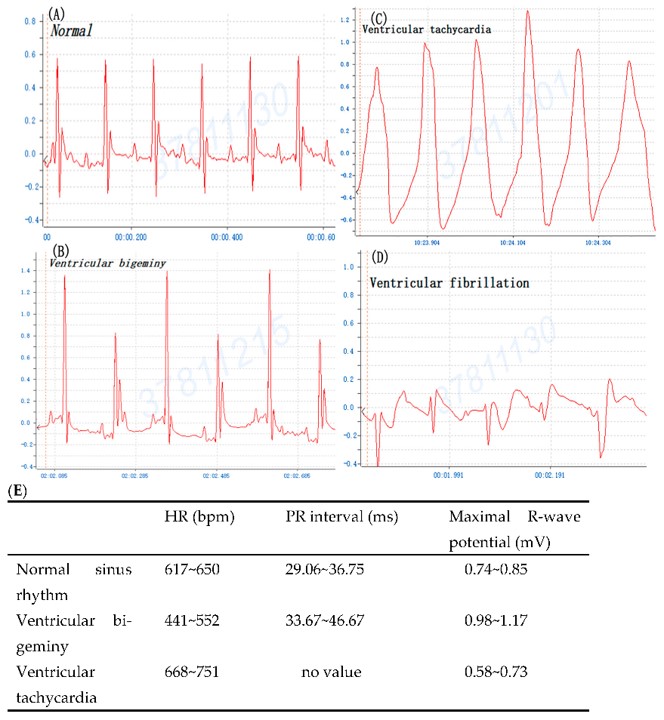 Fig.1 The typical profile of mouse cardiogram of BaCl2-induced arrhythmia.1
The study highlighted the utility of the barium chloride-induced VT model in preclinical drug discovery. Researchers utilized this model to evaluate a novel antiarrhythmic compound. Following intraperitoneal administration of BaCl2, mice consistently developed ventricular bigeminy, sustained VT, and ventricular fibrillation. Treatment with the investigational compound significantly reduced the incidence and duration of these arrhythmias, demonstrating its potent antiarrhythmic effects. This project successfully validated the compound's efficacy in an in vivo setting, paving the way for further development. The findings underscore the reliability of this rodent model for screening potential antiarrhythmic therapies.
Reference
- Zeng, Mengting et al. "Barium Chloride-Induced Cardiac Arrhythmia Mouse Model Exerts an Experimental Arrhythmia for Pharmacological Investigations." Life (Basel, Switzerland) vol. 14,8 1047. 22 Aug. 2024, DOI:10.3390/life14081047.Distributed under Open Access license CC BY 4.0, without modification.
For Research Use Only.
Online Inquiry