
Abdominal Aorta Constriction induced Hypertension Modeling & Pharmacodynamics Service
Introduction
Hypertension, a pervasive global health challenge, significantly elevates the risk of severe cardiovascular and renal complications. Developing innovative and effective treatments requires robust preclinical models that accurately mimic the human condition.
Creative Biolabs stands as your trusted partner, offering a comprehensive suite of well-established hypertension models to rigorously evaluate the efficacy of novel therapeutic compounds and strategies.
Abdominal Aorta Constriction-Induced Hypertension Model
The abdominal aorta constriction (AAC) model is a highly regarded and reproducible preclinical tool for inducing chronic hypertension, particularly renovascular hypertension, and its associated end-organ damage, including cardiac remodeling and heart failure. This model effectively recapitulates key pathophysiological mechanisms, making it invaluable for investigating disease progression, identifying novel therapeutic targets, and evaluating the efficacy of potential drug candidates. Its ability to induce gradual cardiac pathology closely mirrors the clinical progression of hypertensive heart failure.
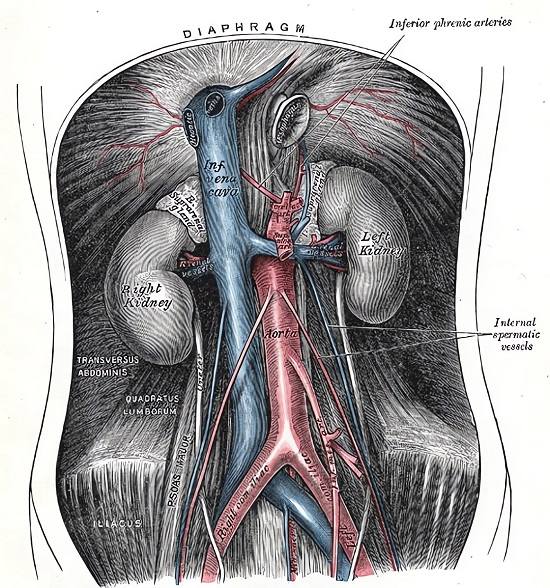 Fig.1 The abdominal aorta and its branches.Distributed under Public Domain, from Wiki, without modification.
Model Construction Steps
The construction of the AAC model involves a precise surgical intervention to create a controlled pressure overload. This strategy is efficient, highly reproducible, and minimally invasive, facilitating consistent outcomes.
01Anesthesia and Incision
Animals are anesthetized, and a midline abdominal incision is made to expose the abdominal aorta.
02Aortic Isolation
The abdominal aorta adjacent to the renal arteries is carefully isolated.
03Constriction with Silk Thread
A 0.72 mm loop, formed by a 4-0 silk thread, is meticulously placed around the isolated segment of the abdominal aorta. This precise constriction reduces blood flow to the downstream vasculature and kidneys, initiating the hypertensive cascade.
04Closure
The incision is closed in layers, and the animals are allowed to recover under close monitoring.
05Post-Operative Care
Animals receive appropriate analgesia and supportive care throughout the study duration, ensuring their welfare and optimal model development.
Strengths and Limitations
Strengths:
- Physiological Relevance: Mimics renovascular hypertension and its chronic effects, including cardiac remodeling.
- High Reproducibility: Standardized surgical techniques ensure consistent and predictable hypertensive responses.
- Chronic Disease Induction: Allows for long-term studies of hypertension progression and therapeutic interventions.
- Mechanism-Driven: Clearly involves RAAS activation and sympathetic nervous system engagement, offering defined targets.
- Surgical Simplicity: Considered a more straightforward surgical procedure compared to some alternative constriction models.
Limitations:
- Invasive Procedure: Requires surgical intervention, which necessitates careful post-operative monitoring.
- Specific Etiology: Primarily models renovascular hypertension, which may not encompass all forms of human hypertension.
- Potential Variability: Requires highly skilled surgical execution to minimize inter-animal variability.
Evaluation Platform
Creative Biolabs provides a comprehensive evaluation platform to assess the efficacy of your compounds in the AAC model, leveraging a diverse array of techniques and instruments. Our capabilities span biochemical, molecular, cellular, histopathological, behavioral, and advanced imaging techniques.
We assess a broad range of parameters including:
- Blood pressure (telemetry) and heart rate.
- Cardiac function (e.g., ejection fraction, fractional shortening via echocardiography).
- Left ventricular hypertrophy.
- Renal function (e.g., proteinuria, creatinine clearance).
- Vascular reactivity.
- Circulating renin-angiotensin-aldosterone system components.
- Inflammatory markers.
- Tissue fibrosis (e.g., cardiac and renal).
Applications
- Simulation of Diseases: Primarily models renovascular hypertension, hypertensive heart disease, cardiac hypertrophy, and associated kidney damage.
- Evaluation of Drug Classes: Ideal for assessing the efficacy of RAAS inhibitors (ACE inhibitors, ARBs), beta-blockers, diuretics, calcium channel blockers, and novel compounds targeting specific molecular pathways like the (pro)renin receptor.
- Assessment of Treatments: Used to evaluate pharmacological interventions aimed at blood pressure reduction, prevention or reversal of cardiac and renal remodeling, and improvement of overall cardiovascular function.
- Mechanism Elucidation: Crucial for unraveling the molecular and cellular mechanisms underlying hypertension pathogenesis and progression, including specific signaling pathways such as the (P)RR-PLC-β3-PKC-ERK1/2-Raf-1 cascade.
Related Hypertension Models
Our Advantages
- Precision Surgery: Highly skilled surgical teams ensure consistent and reproducible model induction.
- Comprehensive Phenotyping: State-of-the-art instruments for detailed physiological and molecular characterization.
- Customized Studies: Flexible study designs tailored to your specific research objectives and timelines.
- Rigorous Quality Control: Adherence to stringent quality standards for reliable and robust data.
- Ethical Compliance: All studies conducted under strict ethical guidelines and regulatory oversight.
Work with Us
- Summarize the project requirements and fill in the information collection form.
- Sign a CDA from both parties to further communicate information, such as targets.
- Select an animal model, discuss experimental design, and determine assay parameters.
- Project costing and project schedule forecasting.
- We provide a detailed project plan, including the required sample quantities, methods, and protocols.
- Both parties confirm the project details and start the project.
- Confirm the timeline of the project.
- We provide periodic results and information on the animal's condition.
- We will work together to make project adjustments as necessary.
- We provide a comprehensive project report promptly.
- We arrange transportation for the produced samples.
- We provide a discussion of the project results and help to arrange the next steps.
- Data storage and archiving.
Contact Us
Leverage Creative Biolabs' extensive experience and advanced capabilities in the AAC model. We provide comprehensive services to accelerate your hypertension drug discovery programs. Contact us today to discuss your research needs and how we can support your next breakthrough.
FAQs
-
Q1: How is blood pressure accurately measured in animals undergoing the AAC procedure?
A: Accurate blood pressure measurement is critical. Creative Biolabs primarily utilizes telemetry-based systems, which involve implanting a small transmitter that continuously monitors blood pressure in conscious, unrestrained animals. This method eliminates stress-induced fluctuations associated with traditional tail-cuff measurements, providing highly reliable data.
-
Q2: Can the AAC model be customized to investigate specific aspects of hypertension or heart failure?
A: Absolutely. Creative Biolabs specializes in customized study designs. We can adjust the constriction severity, duration of the study, and specific endpoints to focus on particular aspects such as early-stage hypertension, advanced cardiac fibrosis, or the impact on renal function, aligning precisely with your research goals.
-
Q3: How do you ensure the reproducibility and consistency of the AAC model?
A: Reproducibility is paramount. Our approach includes using highly trained and experienced surgeons for precise clip placement, standardized surgical protocols, rigorous quality control checks at every stage, and comprehensive post-operative care. This meticulous attention to detail minimizes variability and ensures reliable results across studies.
-
Q4: Is the AAC model suitable for evaluating both acute and chronic drug treatments?
A: The AAC model is highly versatile for both acute and chronic treatment evaluations. For acute studies, compounds can be administered once hypertension is established. For chronic studies, treatments can be initiated either prophylactically (before or immediately after constriction) or therapeutically (after hypertension is stable) over extended periods.
-
Q5: How does the AAC model compare to other hypertension models, such as Angiotensin II infusion or DOCA-salt hypertension?
A: Each model has unique strengths. The AAC model specifically mimics renovascular hypertension and its associated pressure overload, leading to robust cardiac remodeling. In contrast, Angiotensin II infusion directly activates RAAS, while DOCA-salt hypertension focuses on volume overload. The choice depends on the specific research question and the desired pathophysiological mimicry.
Published Data
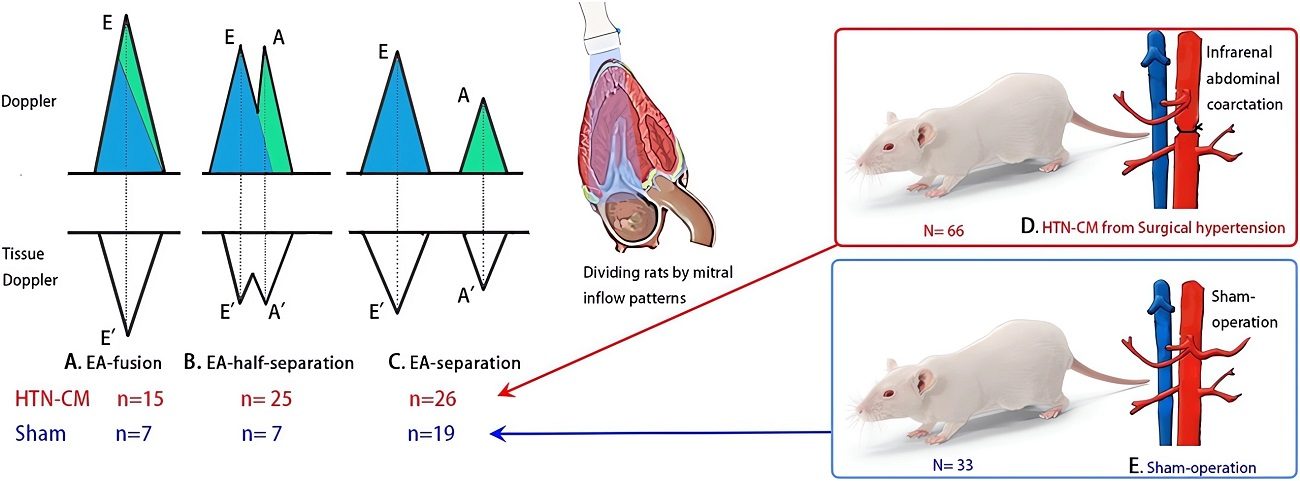 Fig.2 HTN-CM from abdominal aorta coarctation and mitral inflow patterns.1
This article utilized abdominal aorta coarctation to induce hypertensive cardiomyopathy (HTN-CM) in rats. The project results provided valuable insights into how trans-mitral flow patterns and heart rate are differentially influenced in the early stages of HTN-CM, demonstrating the model's capacity for detailed cardiac physiological assessments. This case exemplifies the model's utility in exploring complex hemodynamic changes associated with hypertension.
Reference
- Hirose, Miki et al. "Effects of trans-mitral flow patterns and heart rate on intraventricular pressure gradients and E/E' in the early stage of a rat model of hypertensive cardiomyopathy." Frontiers in veterinary science vol. 12 1507817. 19 Feb. 2025. Distributed under Open Access license CC BY 4.0, without modification. https://doi.org/10.3389/fvets.2025.1507817
For Research Use Only.